
A recent controversy shows once again the deep link between dress and identity. Some weeks ago the President of Ghana, John Dramani Mahama, paid a state visit to Zambia (Fig. 1). He was warmly greeted at the airport by Zambia's President Hakainde Hichilema, who was wearing a Western business suit.
President Mahama was wearing a traditional Ghanaian tunic called a fugu. According to a BBC report, some Zambians began mocking the garment on social media, calling it a “blouse”, and wondering why a head of state would wear such a garment on a formal occasion.
 Fig. 1. President of Ghana, John Dramani Mahama, wearing a fugu when arriving in Zambia for a state visit, photographed together with his wife. Courtesy The Office of the Presidency, Republic of Ghana.
Ghanaians quickly defended the fugu on social media, pointing out that the garment has associations with authority, even royalty. The Zambian President joined the fray and announced that he would be ordering the cloth from Ghana, while Ghana's Tourism Minister Abla Dzifa Gomashie encouraged Ghanaians to wear the garment "with pride....in all its diverse forms, designs, and expressions, complemented by its distinctive and beautiful accessories".
The TRC has a fugu in its collection (Fig. 2). Made from handwoven cotton cloth, this 20th century fugu (TRC 2012.0259) measures 130 x 90 cm and comes from the north of Ghana. The colours are white, blue and black. It is decorated around the neck and pockets, and on the chest and back, with appliqué and machine-made embroidery. The TRC example has short sleeves and this type is called a “banaga.” The woven cloth (hand-dyed cotton yarn woven into bands of 7.5 cm) is thick enough to protect against cold. At the same time the garment is loose enough to avoid being too warm.
The word fugu comes from the Mossi language, and means cloth or fabric. Fugu, like Ghana’s more famous fabric, kente, is actually a weaving technique. The smock-like garment made from fugu is called a batakari, though the two words have now become almost synonymous. Like the TRC fugu, they are stitched together from long bands of cloth, and often decorated around the neck, chest and back, with embroidery. It’s a deliberately loose fitting garment, with vertical pleats from the high waist.
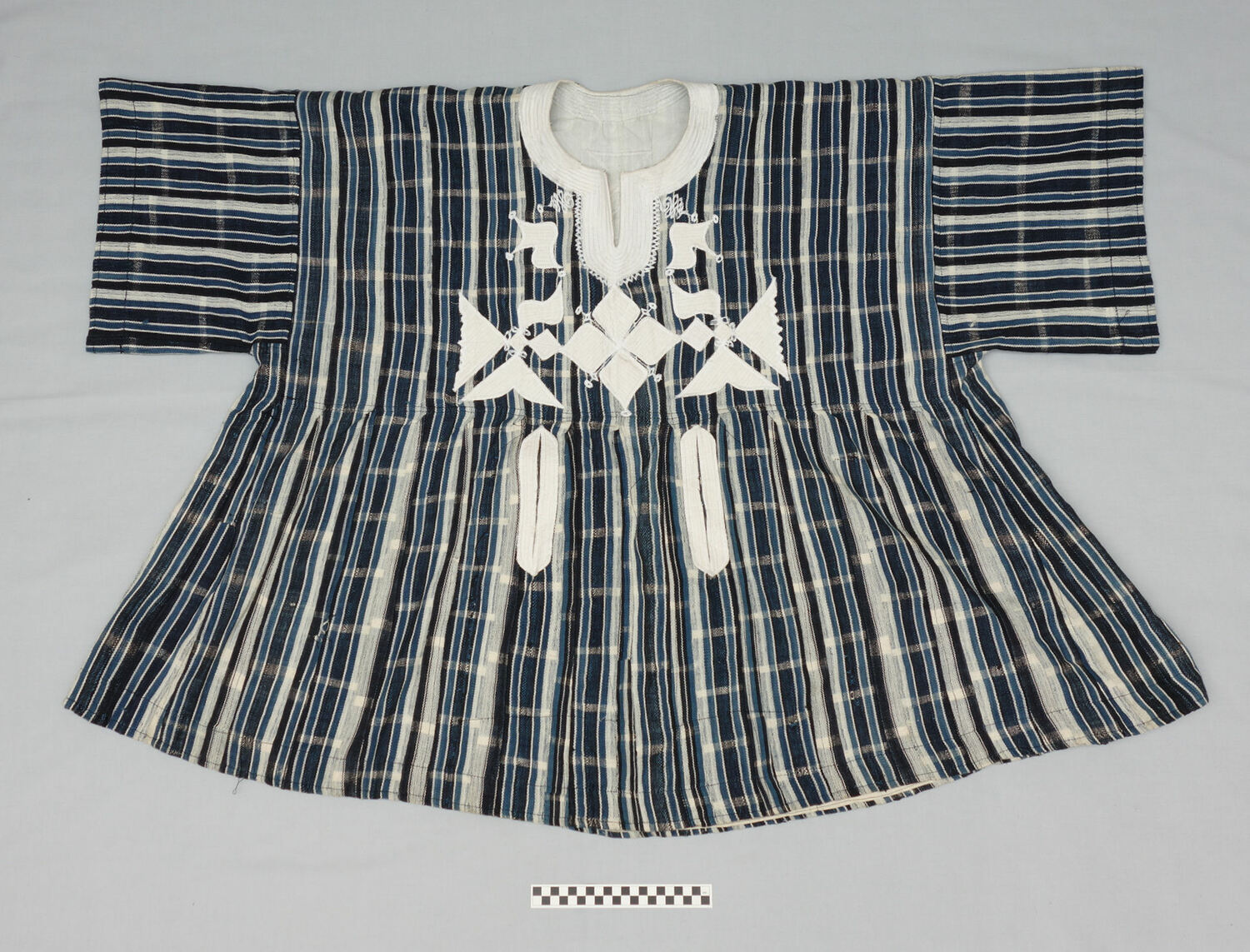 Fig. 2. Tunic from Ghana, 20th century, locally called a fugu or banaga (TRC 2012.0259).
Once worn only by men, one theory is that the garment originated around the 1600s in the Dagbon kingdom of northern Ghana, during the reign of Yaa Naa Zanjina (from 1648 to 1677). Some researchers, however, think the garment originated in nearby Burkina Faso, and spread from there. In any case, today you can find fugu across Ghana, on men, women (sometimes with an elastic band at the waist, or a belt) and children. Fugu are also now seen in the US and the Caribbean, perhaps spread by immigrants or by the popularity of Ghanaian films.
Fugu have different names, depending on the length of the sleeves, or if the tunic is sleeveless; and if it reaches below the waist, or to the knees (fugu for women sometimes reach to the ankles, as a dress). Fugu can also have a ceremonial function. In the past, chiefs in northern Ghana wore a white or cream coloured fugu (called a kparigu), with no decoration, on two occasions: when they were enthroned, and when they were buried. Traditional drummers wore sleeveless fugu. Other fugu, with protective amulets, were worn by warriors or hunters. Today, fugu are most often worn on special occasions such as weddings or festivals.
On men, the fugu can be accompanied by a cap, made from the same fabric as the tunic, or from entirely different material, depending on the wearer’s preference. Such cloth caps, called zipligu, can point to the wearer’s wealth and social status. If the top part of the cap points towards the sky, the wearer is asserting his superiority and uniqueness. Chiefs wear their caps with the top part folded towards the back, to indicate that they have followers - Chiefs have the right to fine commoners wearing their caps in such a way. Ordinary men wear their caps with flattened tops.
Commoner or royalty, Ghanaians have embraced the fugu. Ghanaian luxury brands such as Boyedoe and Kente Gentlemen have incorporated the garment into high fashion. Artist Ibrahim Mahama stitched some 100 fugu into the 2,000 square metres of hand woven cloth in his installation “Purple Hibiscus”, which was exhibited in London’s Barbican Centre (UK). Since the recent controversy, the government has even declared Wednesdays as “Fugu Day” , and encouraged people to wear their fugu to work. “Fugu is an easy wear,” said one civil servant to the BBC. “You pick it and off you go. You don't have to iron it." Others commented on how comfortable the tunic is to wear.
Many Ghanaians remember with pride how government leaders wore the fugu to celebrations marking the country’s independence in 1957. Today, Ghana's Tourism Minister Abla Dzifa Gomashie sees the resurgence in wearing the fugu as a symbol of national pride. "The government hopes that this collective embrace of fugu will strengthen national unity, stimulate the creative economy, and serve as a powerful symbol of Ghana's cultural confidence and self-expression," she is quoted as saying.
By Shelley Anderson, 19 February 2026