I have been thinking a lot lately about political textiles. It’s a broad term that encompasses many different things.
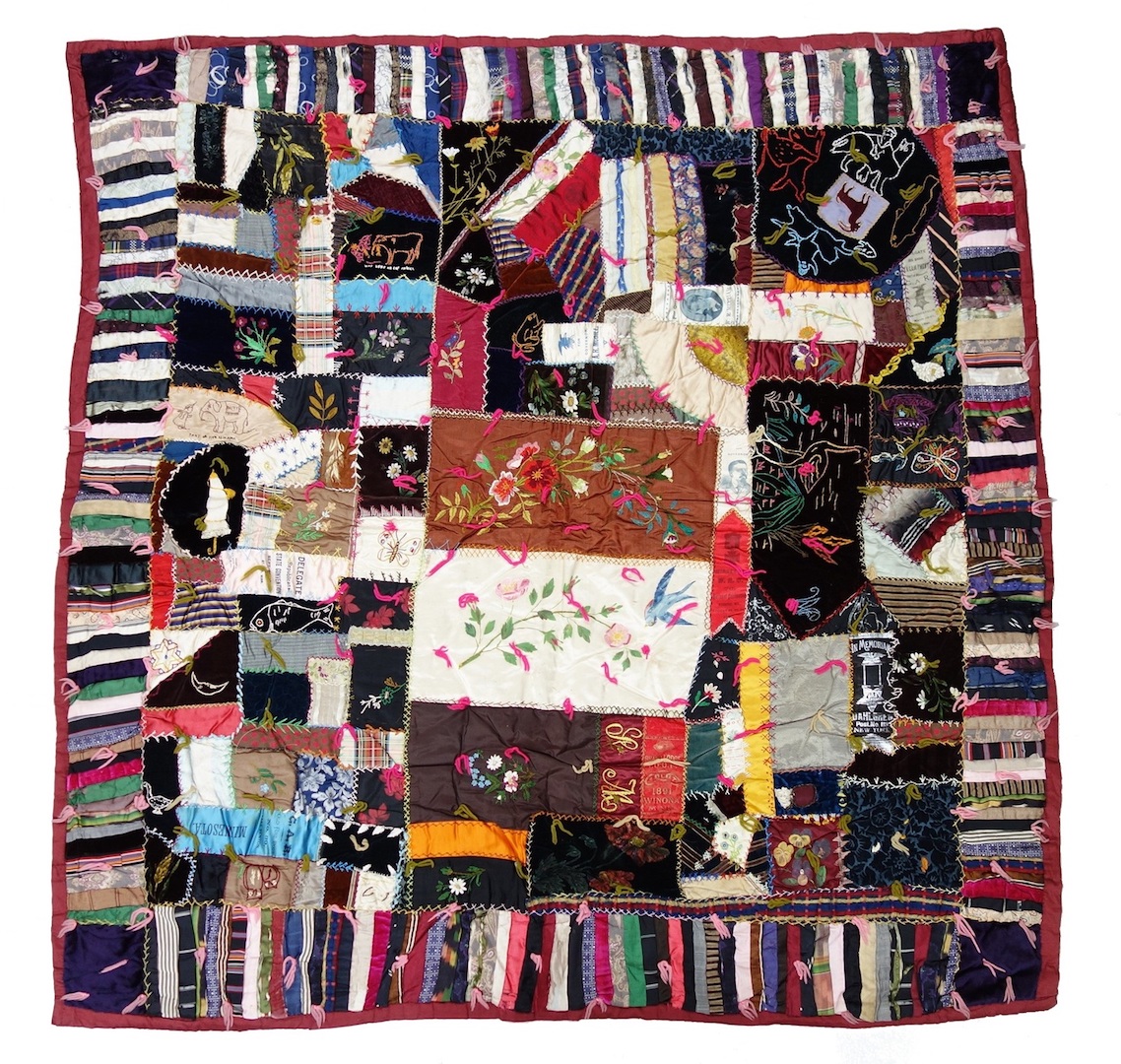 Fig. 1. Crazy quilt made from a variety of materials, as well as embroidered panels, painted panels and ribbons from various Republican political rallies. USA, 1890s (TRC 2019.2925).
A political textile may point to or promote a specific political party. The TRC collection includes a wonderful American crazy quilt from the 1890s. This quilt (Fig. 1. TRC 2019.2925, 146 X 145 cm) is made from a variety of fabrics (including velvet). It also includes “newer” fabrics of the time, such as silks and satins.
Stitched into the quilt are numerous silk and satin ribbons. These were worn by delegates to various Republican party rallies held throughout the mid-Western state of Minnesota. One such ribbon reads “Winona 1891”, an agricultural city in the southern part of the state. The quilter also hand-embroidered a small elephant on the quilt, a symbol which still stands for the Republican Party. With its bright colours and colourful piano key border of strips, the quilt celebrates both the maker’s sewing skills, and their loyalty to a specific political party.
But a political textile may also make a statement, or take a position about a current social issue, without belonging to a specific political party. Textiles can represent protest, when other means of expression, like demonstrations or debates, are forbidden. At first glance, for example, the handmade arpilleras of Chile look like charming folk art. Looking closer, you see scenes of hungry people waiting in line for soup, or a sad family gathered around a dinner table for dinner, with an empty chair.
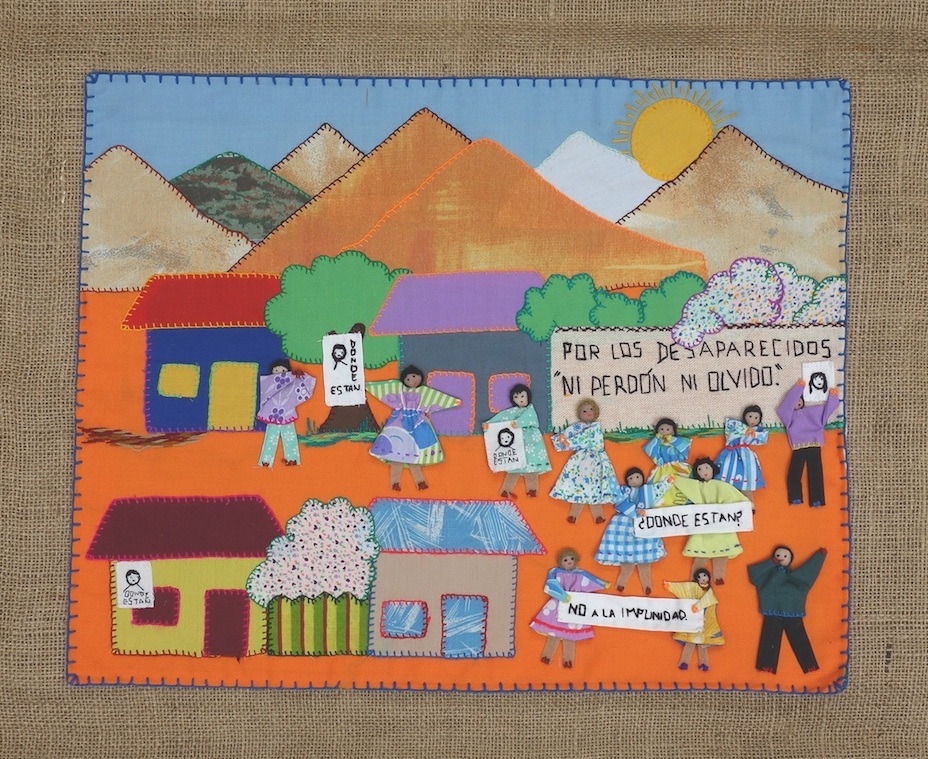 Fig. 2. Arpillera made by Aurora Ortiz Diaz, Santiago de Chile, 2015 (TRC 2015.0401).
Arpilleras are scenes of daily life made from patchwork, appliqué, and embroidery, hand stitched onto a hessian ground cloth. (The word arpillera is Spanish for hessian). In the 1970s and 1980s, poor women in Chile produced arpilleras both to generate income and as a protest against the abuses of the Pinochet dictatorship.
The military dictatorship considered arpilleras a threat and banned their production and sale. An example in the TRC collection (Fig. 2. TRC 2015.0401) shows women protesting with banners that read “No Impunity”, “Where are they?”, and “For the disappeared: No pardon. No forgetting.” They are demanding justice for family members who had been “disappeared”—kidnapped and killed by the dictatorship.
Textiles have always been a way for women, often closely involved in textile production and needlecraft, to express themselves. Over a 150 years ago, American women sewed quilts, produced embroideries, knitted stockings and purses, to sell at bazaars in order to raise money for causes like ending slavery or women’s suffrage.
Last week (28 January 2026), hundreds of Dutch women affiliated with feminist group Dolle Mina 2025 met at train stations across The Netherlands to sew, knit and crochet together, as a way to protest gender violence and femicide. They were joined by women doing the same in 29 other countries.
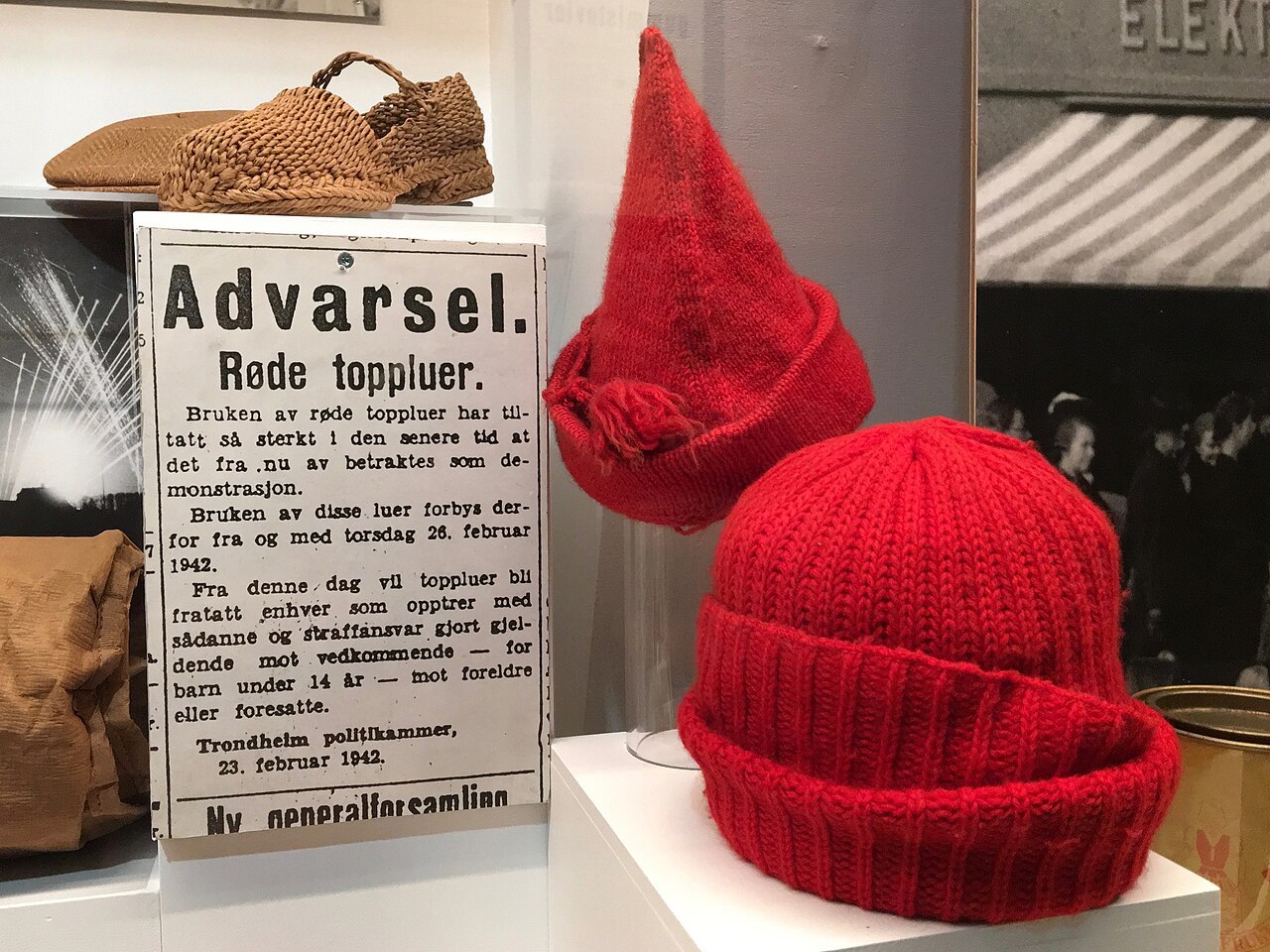 Fig. 3. Norway's WW2 Resistance Museum Oslo Hjemmefrontmuseet. The Austerity of Occupation red woollen caps, outlawed in 1942 as symbols of national unity against NAZI occupation.
Textiles can be used to protest, but also as a way to recognise allies and to build community. In the early 1940s in occupied Norway, people began to wear red knitted caps (in some regions with a tassel or pom pom) to show they were either a member of the Resistance or sympathetic to it. The idea for the red cap (Fig. 3) came from an unusual source—a Christmas card from 1940. The card pictured the Norwegian flag and Norwegian elves in traditional red caps. The card was quickly banned by Nazi officials, but the idea of wearing a red woollen cap as a sign of Norwegian unity against the occupation began to spread. The wearing of a red cap was officially outlawed in February 1942.
The knitted red cap as a symbol of resistance has been recently revived in Minnesota, where controversial raids by federal immigration police (called ICE) have deeply angered people. A local yarn shop named Needle & Skein discovered the cap’s history, and posted a “Melt the ICE” pattern on the popular website for knitters and crocheters, Ravelry. Any money from the pattern’s sale would be donated to local groups supporting immigrants. In less than two weeks, over 70,000 patterns were sold, raising US$ 250,000.
Textiles, it seems, can be very political indeed.
By Shelley Anderson, TRC volunteer. 1 February 2026
- For more information on the red cap in Minnesota, and a copy of the pattern, click here.
- For more on the history of the Second World War Norwegian red cap, click here.
.