Sunday lecture, 21 June 2026: Fashion from the 1920s
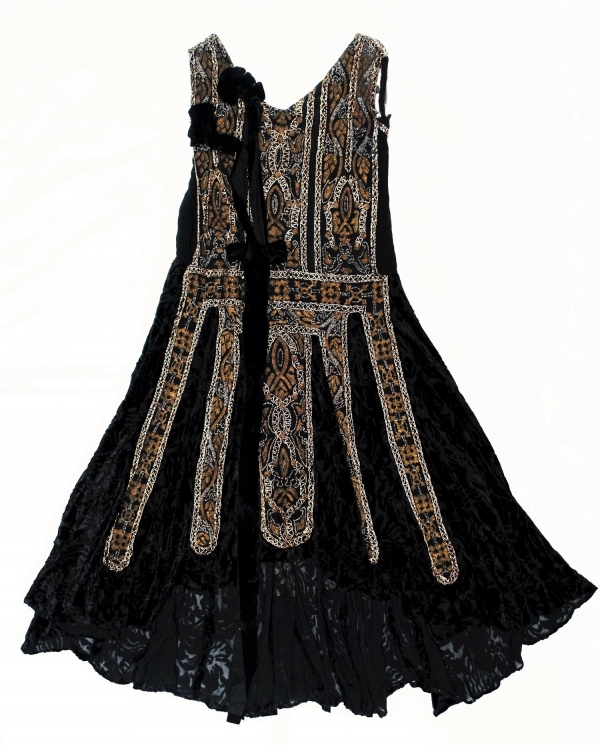 Long, black velvet dress, The Netherlands, 1920sAfter World War One, a feeling of freedom, wealth and liberation changed how women dressed themselves. Women were becoming an increasingly larger segment of the workforce in the Western world and their clothing reflected the need for practicality and use, but also a desire to be fashionable and have fun.
The 1920s were an important period in dress history for women. They became more liberated in how they dressed. Designers like Coco Channel made their debut during this time and became popular fashion icons. Beauty ideals changed and femininity expressed itself differently: you had to look modern and boyish, practise sports, emulate film stars and look very fancy at evening parties with elaborate dresses and headwear that catched the eye and light.
This lecture will be given by Augusta de Gunzbourg. She has previously curated an exhibition about 1920's fashion and written our online exhibition on the subject. See also a series of blogs about the physical exhibition:
- Opening at the TRC of the 1920's fashion exhibition
- The 1920s from head to toe: Fashion from 100 years ago
- New TRC exhibition: The 1920s from head to toe
All participants will also be able to visit the TRC's first exhibition in our new building about Khayamiya and our mini-exhibition about card-weaving.
Augusta de Gunzbourg is head of exhibitions and education at the TRC, and has been studying the TRC collection closely for the past five years, working on telling its many stories. She has a Master’s degree of Leiden University and her research focuses on historical fashion and Asian textiles.
- Date: Sunday, 21 June 2026.
- Time: 14.00 - 15.00 pm (the TRC will remain open for participants until 16.00).
- Venue: TRC Leiden, Boerhaavelaan 6, 2334 EN, Leiden.
- Lecturer: Augusta de Gunzbourg.
- Language: English.
- Costs: 7.50 euros (to be paid on the day itself). Coffee/tea are provided.
Please register in advance: Dit e-mailadres wordt beveiligd tegen spambots. JavaScript dient ingeschakeld te zijn om het te bekijken.