Two months ago, we published a blog on fashion during the communist period in Romania. Today, on Sunday, 26 April 2020, TRC volunteer Heidi Stanionyte from Estonia writes about fashion in Eastern Europe and in her country during the period of Soviet domination (1940-1990/1991):
During Communism, people had a limited choice of clothes to buy. As the Cold War, which started soon after the Second World War, became more prominent in the 1950's, salaries remained low and international trade was limited without access to modern, Western clothes. For instance, the Hungarian Statistical Agency reported in 1956 that Hungarian women could on average afford one winter coat in a decade, one simple dress in three years, and an inexpensive cotton dress once every year.
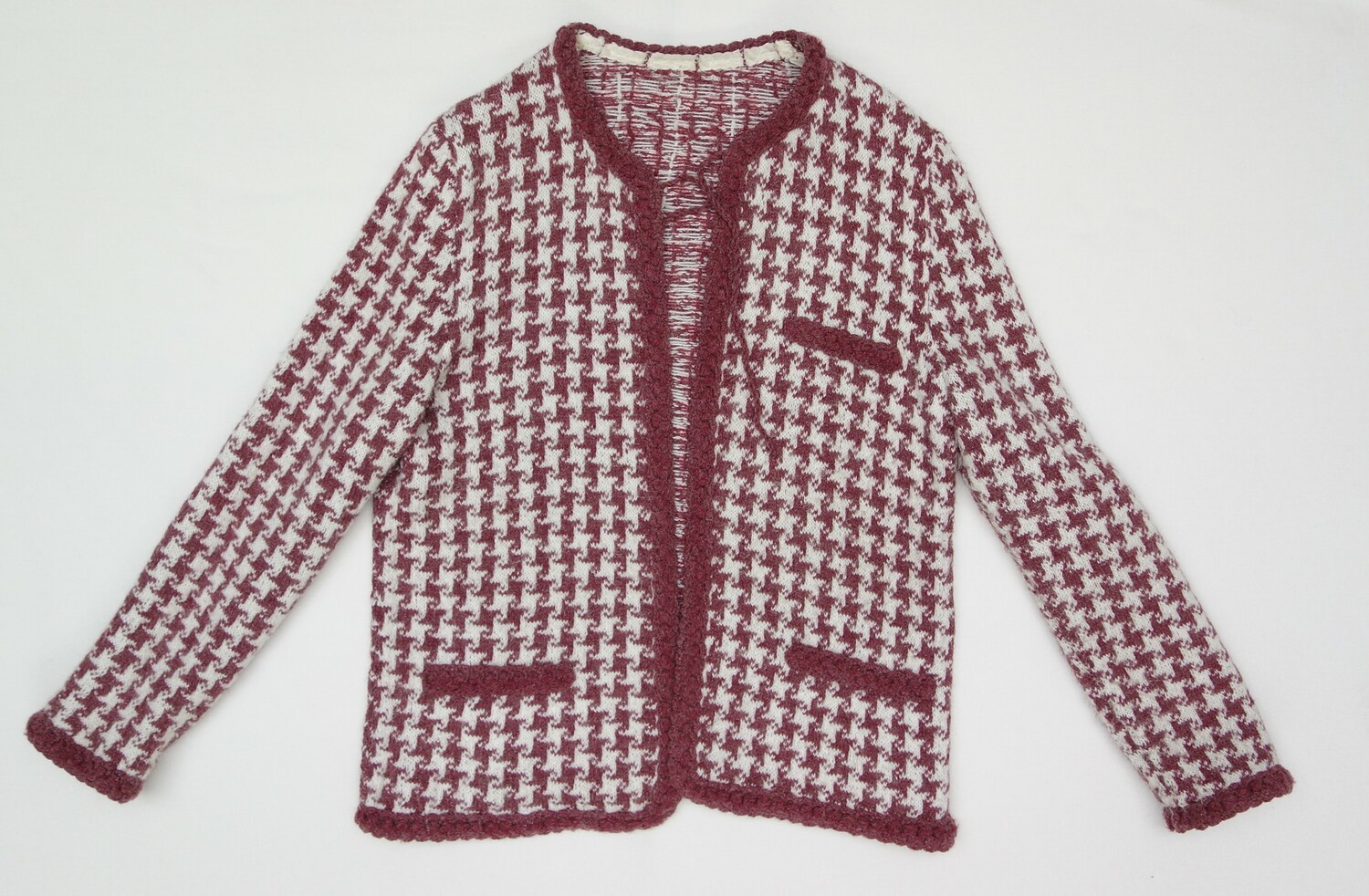 Hand knitted, woollen jacket, Romania, 1970's and 1980's. Donation Radu family (TRC 2020.0347a). The jacket and skirt were made in the style of the fashion house of Chanel. in Paris.
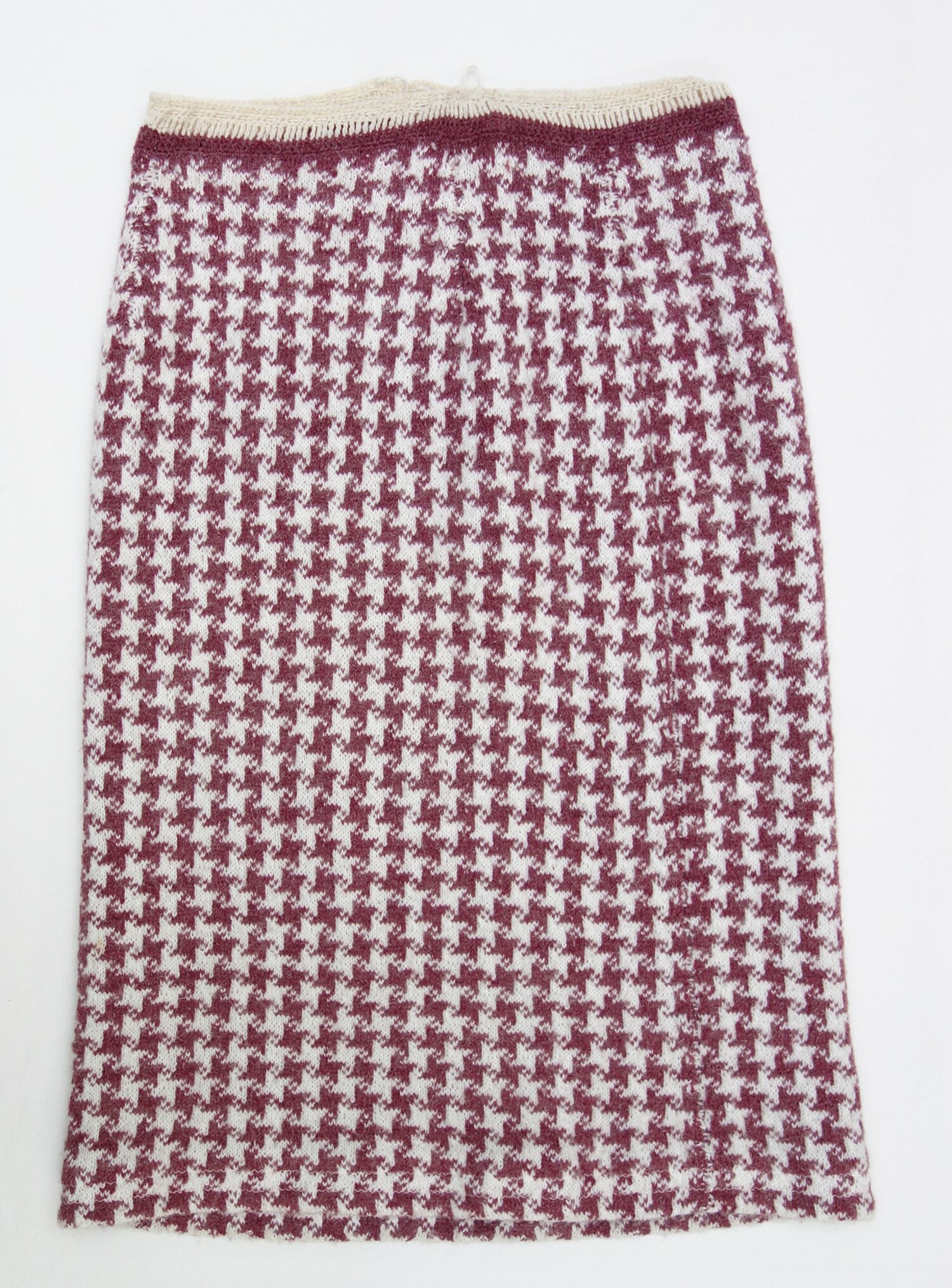 Hand knitted, woollen skirt, Romania, 1970's and 1980's. Donation Radu family (TRC 2020.0347b). The jacket and skirt were made in the style of the fashion house of Chanel, Paris.
In many communist countries of Eastern Europe, people had to be creative in making clothes. That meant making and re-making clothes and using old garments to make new ones. For example, in Hungary, many sweaters were unravelled and re-knitted, coats were re-cut and hemlines lowered. Many women bought the incorrect size (there were only few sizes available) and later on adapted the garment to their own needs.
The quality of these home-(re)made clothes was good, because of the women's skills of knitting, crocheting, dyeing, sewing and embroidering. For example, in Poland, people dyed gauze bandages and turned them into ruffled skirts. A Polish woman named Iwona Koczwanska made a summer dress out of a duvet cover. Furthermore, among recycled material were parachutes or silk escape maps. In many cases these items were quite often part of allied pilots’ equipment from the Second World War.
The clothes were mostly made or remade by people themselves. However, some help often came from professionals. Therefore, a seamstress among one's acquaintances was considered a valuable asset because most of them had gained a lot of experience before the war.
Sometimes it was possible to obtain clothes and other products from Western countries. Many people had relatives who had emigrated during the Second World War. For example, in Estonia relatives in the USA, Canada and Sweden sent home parcels with magazines such as Vogue and Burda. These magazines were kept at home or sold in second hand bookstores. Therefore, there were some direct sources about the latest trends in fashion outside of the Soviet Union. The same situation applied to underwear, brassieres, etc. In Hungary and other communist countries, items were available through illegal or alternative channels. For example, jeans became very popular in the seventies. However, they were still scarce and very expensive. In Poland it was possible to obtain such clothes from state operated shops with dollars and coupons. In Estonia, foreign items were available through sailors.
People in communist countries wanted to be just as fashionable as their Western counterparts. In Estonia a very important source of inspiration came from a magazine called ‘’Siluett’’, which was well known all over the Soviet Union. Another source of inspiration was Finnish TV, which was accessible to people in Tallinn and in Northern Estonia.
Overall people had to be creative when making their clothes. It is interesting to look back, when shops are full of clothes, although the issue of sustainability has led people to re-use old clothes.