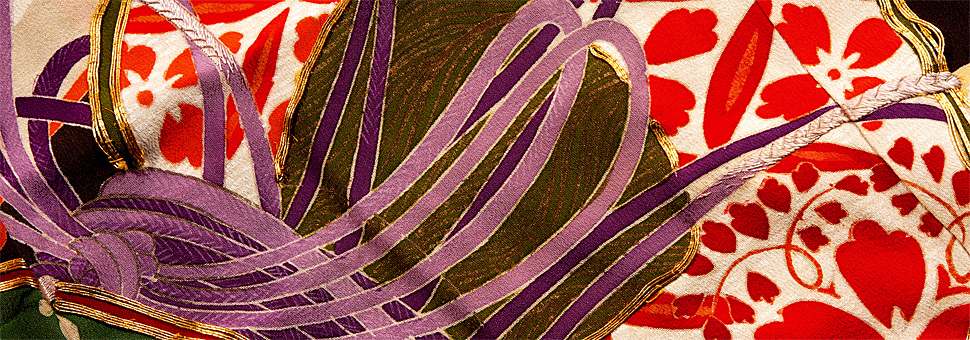

 Embroidered panel with flowers, birds, and animals, South Africa, early 21st century (TRC 2021.0189). 2021 has been such a strange year, open, shut, open, postpone, expand, talk, share, mutter mightily, people going into quarantine, and making plans for the future. It has all been happening, sometimes everything at the same time or so it has felt! I have been asked on various occasions ‘What word characterises the TRC?’ After this year it's simple: ‘flexibility’, the ability to change and adapt to changing circumstances, to greet visitors, photograph textiles, discuss ongoing research, and wash the tea and coffee cups, while enjoying what we are doing and why. 2021 has shown that flexibility at all levels is essential!
We have been fortunate that there have been several, very generous donations that have meant the TRC Leiden not only survived 2020 and 2021 and all the havoc caused by the various waves of the Covid19 virus, but unexpectedly we have actually thrived. The closures have meant we have had time to work on the collection, including cataloguing, photography and putting objects away. In 2021, for example, a total of 4259 items were added to the collection. As a result there are now nearly 37,000 items online and open to everyone to learn from and be inspired by.
 Set of three stamps depicting traditional costumes of the Netherlands, the Gambia, 2002 (TRC 2021.0692).It was very clear throughout 2021 that people have been tidying up their homes as object donations came in on a regular basis, including items from Japan, India, Nepal, Turkey, Italy, France, South Africa, Guatemala, Mexico, and many other countries and cultures, not to mention over 500 pieces of laces and lace bobbins. We have also started a new section in Western dress for Dutch fashion designers such as Edgar Vos. We are not deliberately collecting these and similar items, but should they be offered as a donation we would not say no!
The work of the depot staff is getting harder and busier, especially and not so surprisingly, we are rapidly running out of space and face various decisions about the nature and the potential future of the Collection! We will stress the fact that the TRC Collection reflects a myriad of textile techniques, which is used for its many educational responsibilities. Perhaps people can help suitable storage space in Leiden or environs, where we can store materials (mannequins, showcases etc.) that we need for exhibitions and other events.
People’s generosity was also shown in the number of donations to the TRC Library, including one that contained over 200 books on lace, including many publications about various techniques and the history of lace in general. This donation resulted in us buying new bookshelves and re-organising the library to accommodate all the books! The Library is becoming a very valuable resource.
 Huipil from Guatemala, late 20th century (TRC 2021.0696).The TRC Blogs have proved especially popular in 2021 and were being put online every few days. These have been written by various TRC members and as a result the blogs cover a very diverse range of technical, design, historical, social, political and historical subjects. One thing we have learnt over the last twelve months is that keeping in touch via the internet has and is proving to be very important for everybody concerned.
Significantly, 2021 saw a sea change taking place as more and more people wanted to know about textiles, artisanship and skills. In response, we were able to run workshops on diverse themes such as pre-industrial sewing, Jordanian embroidery and sprang, not to mention to present a new series of workshops on bobbin lace making. Many more workshops are being planned for 2022.
 Upright bobbin lace pillow for Maltese lace, Malta, early 21st cenury (TRC 2021.3237).In 2021 the TRC’s Intensive Textile Course was run on four different occasions, and attracted participants from many parts of the world who especially came to Leiden. They included people from Belgium, England, France, Germany, Greece, the Netherlands, Poland, as well as the US.
In addition, we were able to stage the Paisley exhibition, about a global motif that can be found in many different forms around the world. The exhibition was made by a group of TRC students ‘trapped’ in Leiden as they could not go back to their homes in France, Italy and Poland. It has been a lovely, friendly, colourful exhibition that brought rest into the lives of those who visited it. Although there have been visitors who thought the TRC was a shop and wanted to buy various items…
Speaking of which, the TRC Shop has been doing well and carries a wide range of textile objects from various countries, as well as many new and second-hand books about textiles and dress. Some of these items are made by TRC volunteers, others are duplicate items donated to the TRC, which we are allowed to sell as a form of financial support for our many activities. In the past we have also supported artisans and craft groups from various countries, but due to the Corona crisis this is no longer possible (some groups have simply stopped working), but it is one of our aims to help and support textile crafts and crafts people in this practical manner.
A highlight of 2021 was the crowdfunding campaign in November/December to raise money for two donations that will be coming to the TRC in 2022. The money was needed for transportation costs, customs, and processing at the TRC. We wanted to raise a minimum of 6000 euro, but in the end we received over 18500 euro, which wll help us to buy various extra equipment, and make sure that the objects will be made accessible online as soon as possible. An amazing result! What was very important for the TRC was the realisation how many people and groups were willing to support the activities and growth of the TRC.
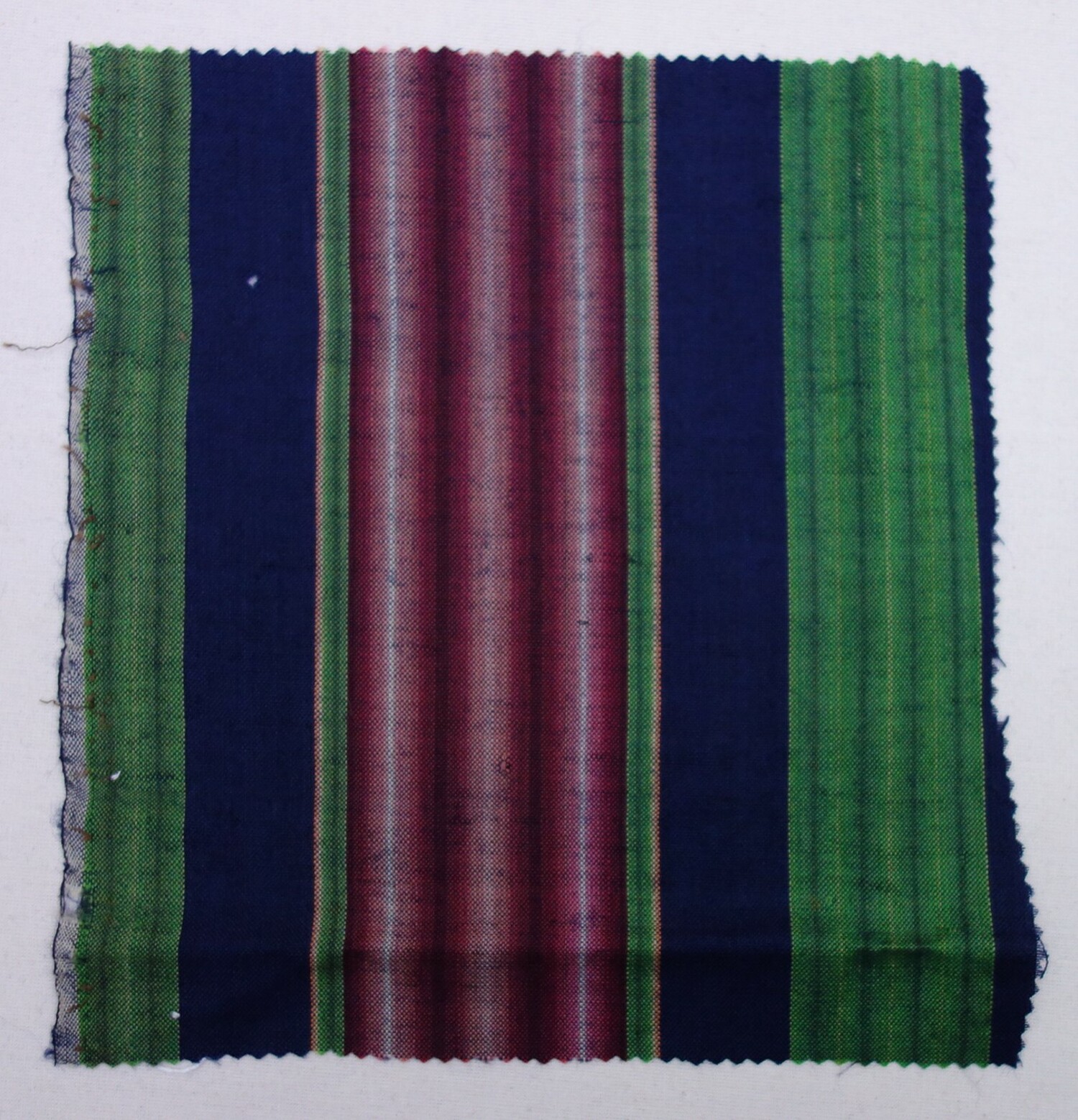 Sample of 'grein' cloth, Britain / the Netherlands, 18th century (TRC 2021.3328). Grein is a type of worsted cloth, possibly from Norwich and exported to Holland.Visitors remain an important aspect of the TRC’s daily routine. They ranged from school children, to students, researchers and those who ‘simply’ love textiles in all their myriad forms. They also including various members of Leiden Council, notably Yvonne van Delft, Wethouder Cultuur. We have been talking about the future of the TRC and its role in “Leiden: City of Textiles”
And so we are now looking hard at and wondering about all the possibilities that might and will happen with respect to the TRC in 2022. What is certain is that it is going to be another interesting year with a variety of big and little challenges (not problems), and that the TRC is looking forward to presenting a busy and varied programme for textile lovers everywhere.
Gillian Vogelsang, Director TRC, 29 December 2021