
It is noticeable from the increased number of emails and phone calls that word about the work, collection and courses associated with TRC is rapidly spreading both nationally and internationally. The diversity of what we do and the wide range of backgrounds of those who reach out to the TRC is a sure sign we are doing something that is needed!
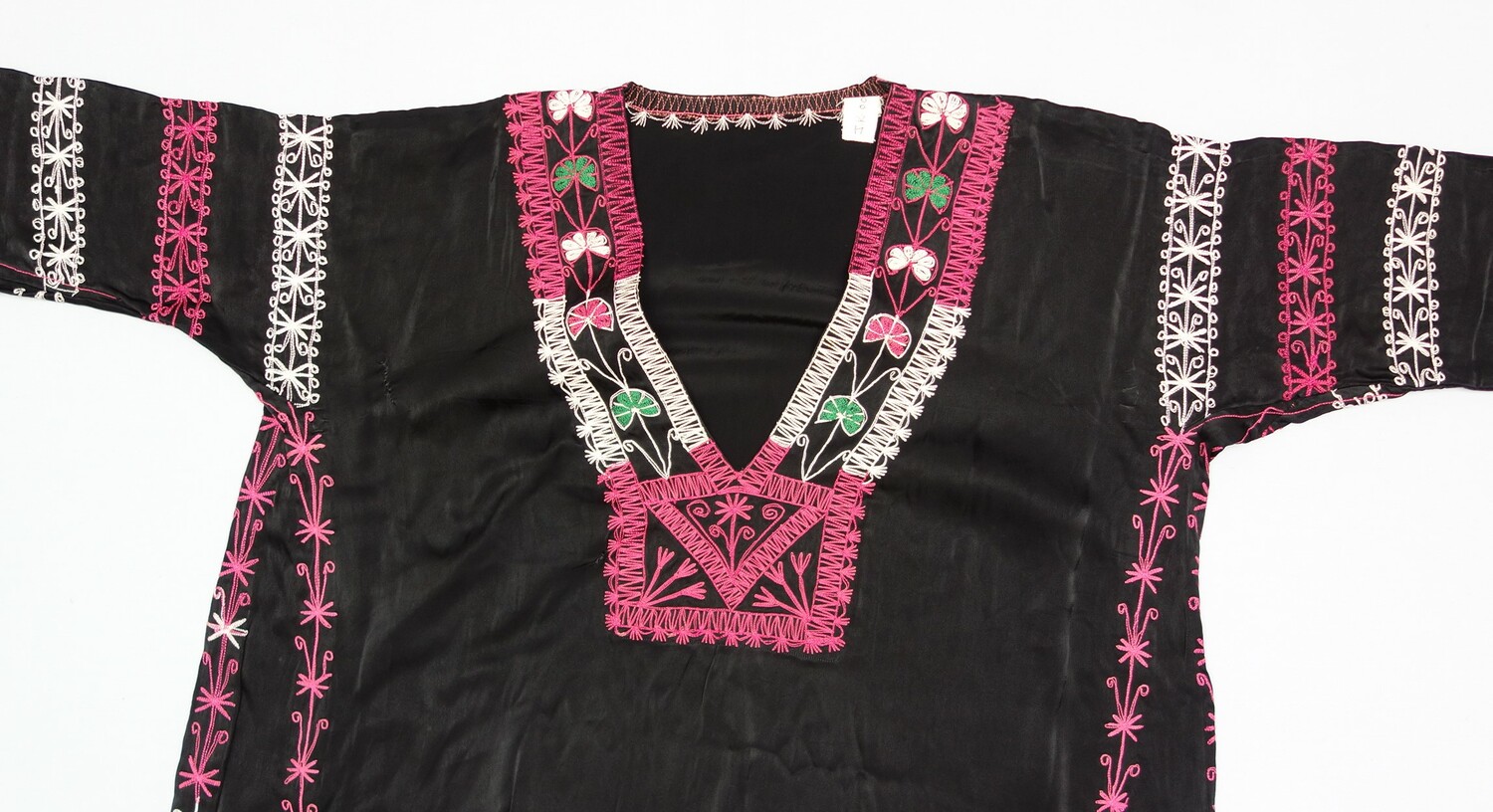 Detail of an embroidered dress from northern Jordan (TRC 2005.0078).
We have just heard, for example, about two academic articles that refer to the work of the TRC. The first is called 'Endangered heritage: Protecting the vanishing textile heritage of Jordan through art and assembly' (Museums, Collections and Society Yearbook 2021, Leiden University 2022, pp. 121-130) and is co-authored by Fatima Abbadi, a Palestinian photographer and textile heritage specialist living in Capelle aan den IJssel, the Netherlands and Holly O’Farrell ( LUCAS/Leiden University Centre for the Arts in Society).
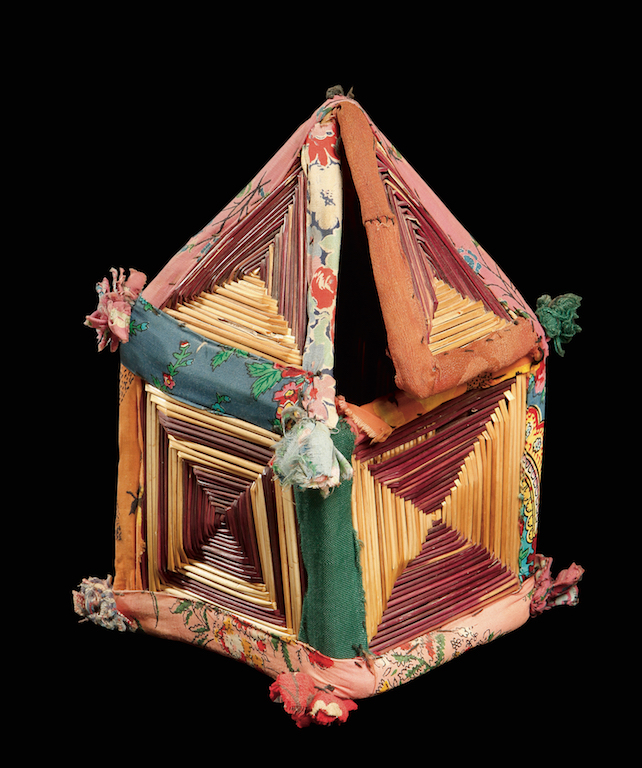 Handmade straw sewing basket, Jordan, 1930s (TRC 2005.0132).The article discusses the role of regional dress in Jordan, and more specifically two important collections in Amman, namely that of Saadia Al Tar (housed in the Jordanian Museum), and that of Widad Kawar (Tiraz). The article focusses on a project by Fatima Abbadi to record Jordanian regional dress and especially its embroidery, by setting up:
"an actual and digital archive presenting the scope and variety of regional dress and textile traditions of Jordan. Furthermore, the project will examine the lives and collecting practices of Al Tal and Kawar, questioning their motivations and contributions to Jordanian heritage preservation" (abstract and introduction).
Fatima was inspired and supported by the work of the TRC and in particular its collection of Middle Eastern regional dress and embroidery, to explore Jordanian regional dress in greater detail.
The second article is about a specific aspect of the TRC Collection, namely those items associated with the British Grand Dame of archaeological textiles, Grace Crowfoot (1879-1957). The article was written by Holly O’Farrell, 'Finds, fragments, and friendship: The Grace Crowfoot collection at the Textile Research Centre, Leiden, and Its value as historical record', Collections: A Journal for Museum and Archives Professionals (September 5, 2022).
The items that are the focus of the article were given to the TRC in 2014 by John Crowfoot, the grandson of Grace, or rather ‘Molly’ as she preferred to be called.
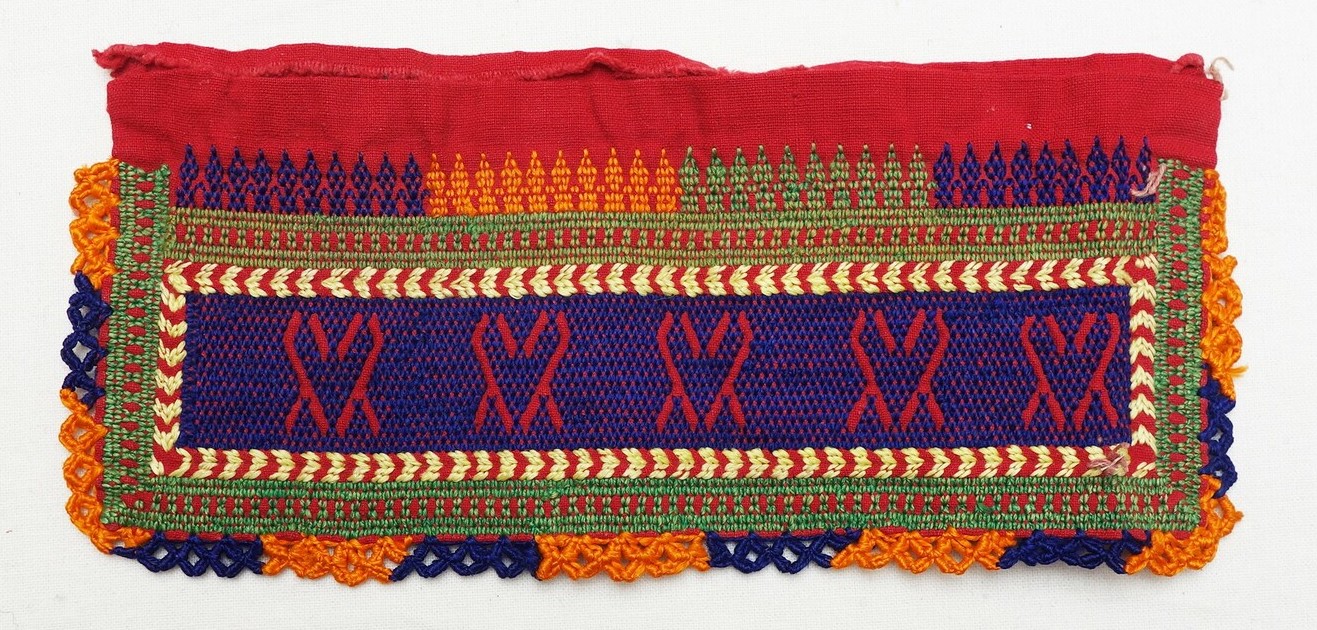 Sample of red cloth with an embroidered panel with a negative design set within a purple ground. Jordan, 20th century (TRC 2019.1715).
The collection includes fibres and spinning and weaving equipment. Grace Crowfoot collected the items between 1909 and 1937 when she and her husband, John Crowfoot, worked and lived in the Middle East. The objects include Sudanese, Palestinian, Syrian, as well as European items, notably a collection of spindles and whorls, a bedouin spinning stone, sword beaters, weaving shuttles, pin beaters, and samples of Sudanese cotton. All are neatly labelled with information as to where the objects come from.
"The paper questions how small, diverse collections can be useful for academic research. How can a small collection like the Crowfoot collection be used and how can it contribute to our understanding of the individual and wider society? This paper explores the opportunities and scope in analyzing smaller collections themselves as historical records." (introduction of the article)
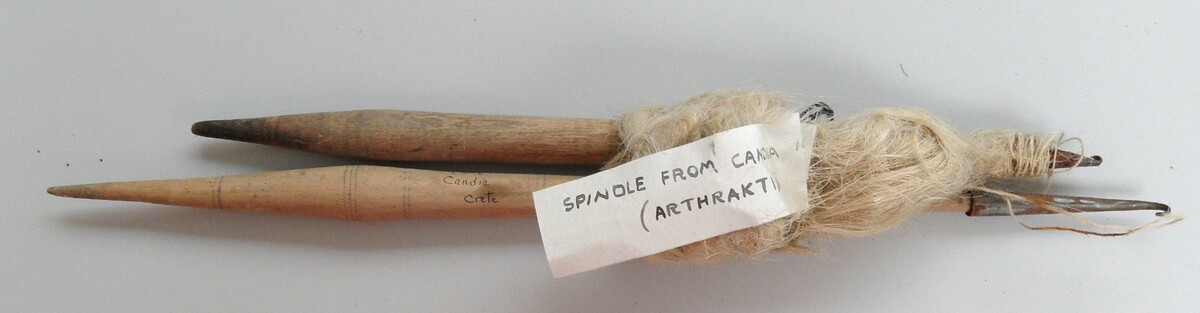 Distaff from Skyros, Greece, 1920s-1930s, collected by Grace Crowfoot (TRC 2014.0770a).
In fact the article explores more than indicated in the quotation given above, as it looks at the role of Crowfoot, her collection that is now in the TRC Leiden, Crowfoot’s association with Richard Charleston (who was later a curator in the Victoria and Albert Museum), the role of women academics and collectors, and their legacies that are often forgotten in favour of much larger and more ‘prestigious’ collections (made by male counterparts). As it is said:
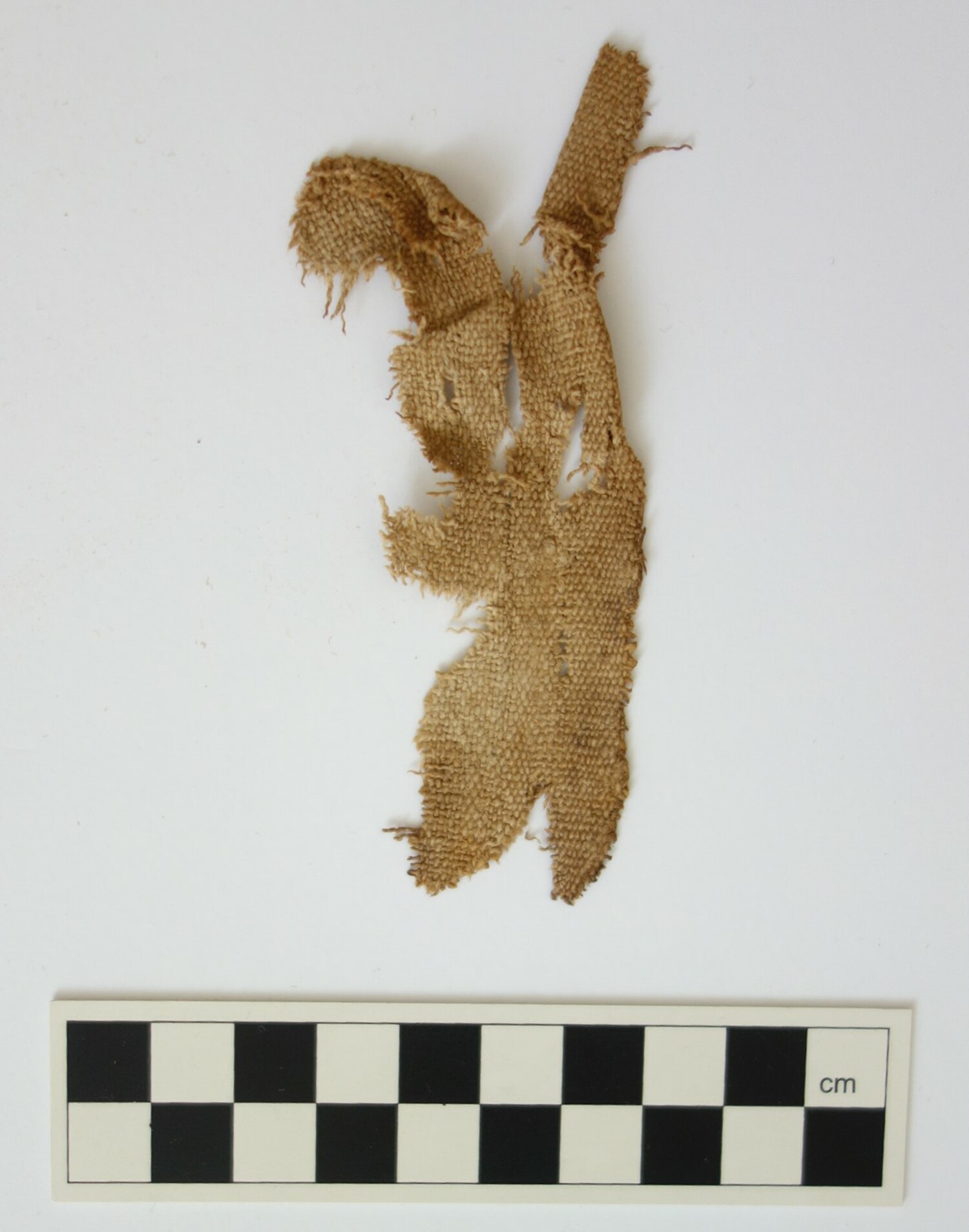 Cloth fragment from Qumran, Dead Sea, collected by Grace Crowfoot. Westbank, c. 100 AD (TRC 2019.2423)."The Grace Crowfoot collection allows for analysis from many different angles and is useful in gaining insight not only in textile archaeology but also into the life of one of the forerunners in this emerging academic field. The various components of the collection have significance for those working in a number of areas and the importance of the Textile Research Centre, Leiden, in preserving the collection must be acknowledged. The collection being intact, rather than being divided among different departments in a museum, means that it can be analyzed as a representation of the collectors’ interests along with the individual objects being of cultural and historical value. The collection has been a starting point for my own research as I am sure it will be for others."
There are many more aspects to the TRC Leiden Collection and indeed the work of the TRC. There is so much to be done in order to record and preserve textiles and dress, an essential aspect of world heritage and culture!
Gillian Vogelsang-Eastwood, 2 October 2022