Before the Nakba of 1948, the creation of embroidered cushions in Palestine was an integral part of a bride's dowry and a way to adorn her home with handmade beauty. These cushions were not just functional items but intricate masterpieces, decorated with sophisticated embroidery patterns. Each piece was crafted with care, symbolizing the pride and skill of the embroiderer, as well as the traditions that were passed down through generations.
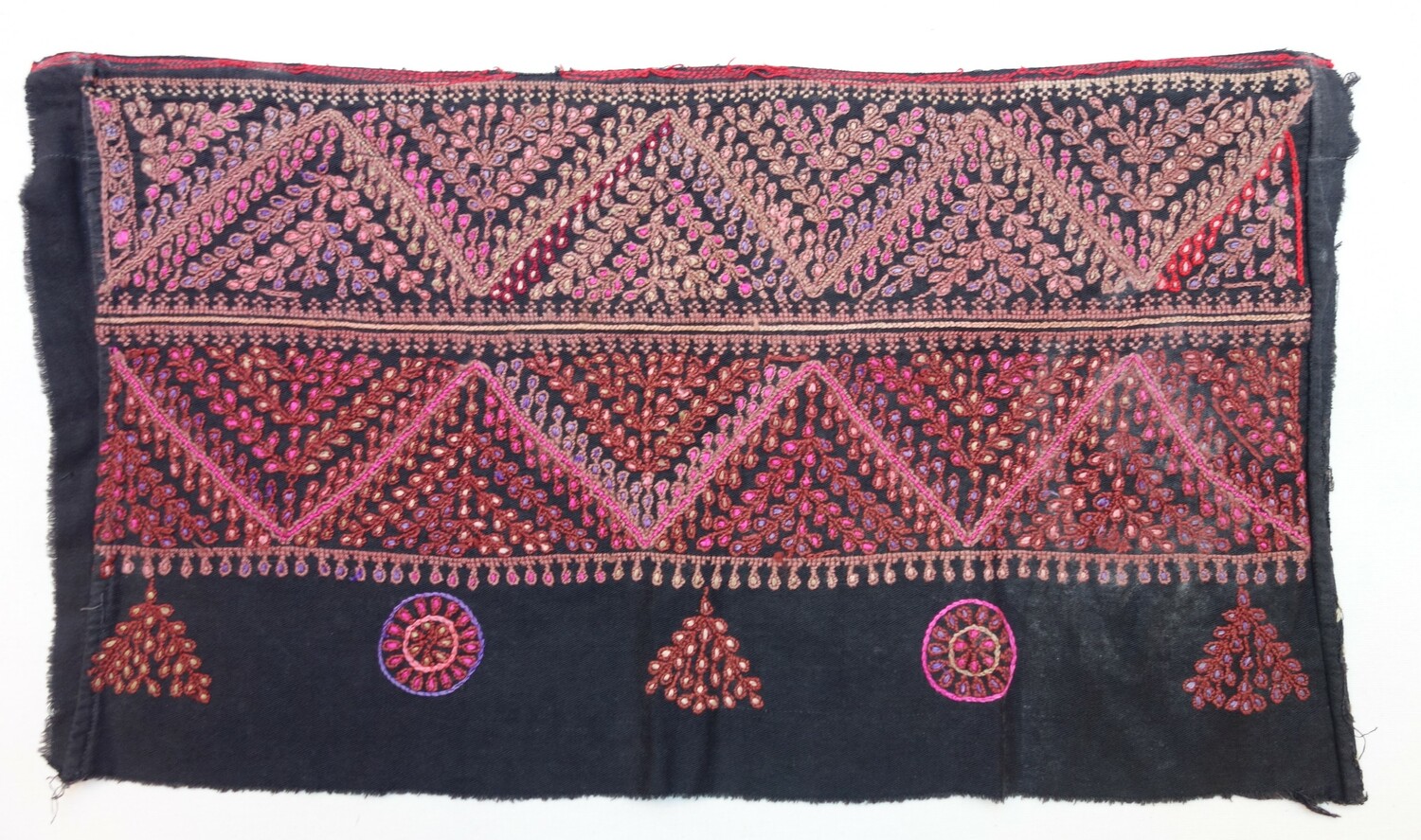 Part of an embroidered cushion cover, Palestine, 1920s (TRC 2025.0007).
Embroidery was a widespread art in pre-Nakba Palestine, often used to embellish a variety of household items like perfume holders, Kajal containers, mirrors, and, of course, cushions. Cushions were typically made of linen, cotton, or silk and were adorned with elaborate geometric designs. These designs mirrored the embroidery styles used in traditional Palestinian dresses.
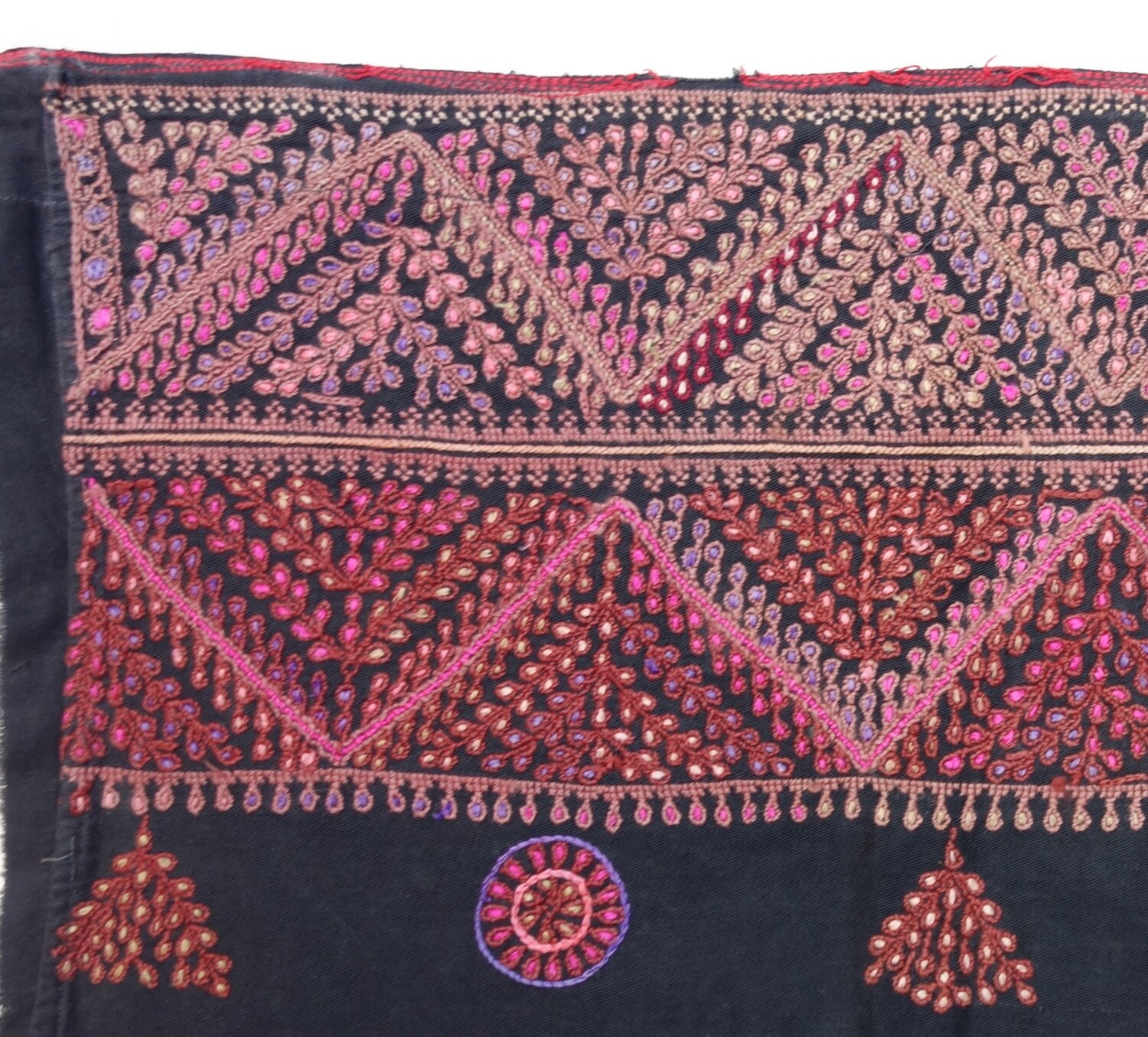 Detail of TRC 2025.0007.In the Hebron area, women were especially renowned for their craftsmanship, creating silk cushions with fine, delicate stitches using silk thread. Some of the women embroidered without counting stitches or using waste-canvas fabric, resulting in unique, asymmetrical designs that are both distinctive and personal.
The uniqueness of the cushions in the TRC collection (for instance TRC 2025.0007) lies in their use of the couching technique, which sets them apart from the more common Palestinian cross-stitch embroidery. The floral motifs often mirror the natural surroundings of the embroiderer, drawing inspiration from the local fauna. Sadly, these cushions are rare and are believed to have originated from towns such as Tal Al-Safi, Al-Masmiya, and Samuel, as well as areas around Hebron, Gaza, and Beersheba. The history of these cushions is deeply intertwined with the significant changes in Palestine following the Nakba, or "catastrophe", of 1947–49.
During this period, more than 500 Palestinian towns and villages were depopulated, and over 750,000 people were displaced in the creation of the State of Israel. These handcrafted treasures now carry the weight of displacement, embodying a connection to a land and heritage that many Palestinians can no longer physically return to. This specific type of embroidered cushion tells a story of loss and resilience. It symbolizes the enduring impact of displacement, the impossibility of returning to one's home, and the memory of what was left behind.
Yet, it is through the preservation of such objects, along with historical archives and oral histories, that the memory of pre-Nakba Palestine persists. These items serve as beacons of hope, reminding us that one day, the people of these lands will reconnect with their heritage. Just as the embroidered flowers once flourished under the hands of skilled artisans, there is hope that the land and its people might bloom together again.
Fatima Abbadi, volunteer and teacher at the TRC, 18 January 2025