• F1
  • F3
  • F4
  • F2

Postcard with two German soldiers and two women in Volendam-style costume, 1943 (TRC 2019.1436).Postcard with two German soldiers and two women in Volendam-style costume, 1943 (TRC 2019.1436).On Friday night, 17 May 2019, Willem Vogelsang wrote:

Tonight Gillian and yours truly watched a music show by André Rieu (we are not proud). What struck us was a group of supposedly Dutch girls in folkloristic costume dancing on the stage. They looked perfect. That is, from a distance. Long blond hair, blue eyes, and you could imagine tulips sticking out of their ears.

But a closer look revealed that their costume was rather weird: they covered their head with the Volendam cap, which, I know, appears to be world-famous and for many is The cliché of Holland. That is fine, but they also wore bright yellow and painted clogs, which again seem to be very Dutch (although I have never worn them and I am afraid my Dutchness is beyond doubt). A little detail, however, is that the Volendam cap and yellow clogs do not go well together. Women in Volendam wore black, carved clogs during the week, and shoes on Sundays. A little detail, but still...

That was not all. In between the Volendam cap and non-Volendam clogs the girls on André Rieu's stage also wore what looked like South German / Austrian Dirndl outfits. I like these costumes, and all they contain, but not really what one would expect to see anywhere in Holland. 

TRC sheet of embroidered designs for WW1 postcards, on display in Kansas City (TRC 2015.0422).TRC sheet of embroidered designs for WW1 postcards, on display in Kansas City (TRC 2015.0422).The National World War 1 Museum and Memorial of the United States, in Kansas City, USA, has mounted a special exhibition called 'Colour of Memory'. It includes souvenirs from the war front, but also an item from the TRC Collection (TRC 2015.0422).

It is a sheet of embroidered designs for decorated postcards, to be sent home by soldiers fighting in the war. The sheet was identified by the museum after looking at the TRC's digitial exhibition on WW1 postcards. The interesting detail about this sheet is that the designs are dated to 1919, and were obviously prepared before the war was ended on 11th November 1918.

Detail of an Elizabethan (late 16th century) British embroidery (Cotsen collection, Los Angeles).Detail of an Elizabethan (late 16th century) British embroidery (Cotsen collection, Los Angeles).On Sunday, 28th April 2019, Gillian Vogelsang writes:

My recent trip to Los Angeles was also intended to help with the TRC/Bloomsbury series about the history of world embroidery (the first volume came out in 2016, another on Central Asian, Iranian Plateau and Indian sub-continent embroidery will be available within 12 months).

I was invited by Lyssa Stapleton of the Cotsen Family Foundation to see an amazing group of embroideries. These form part of the Cotsen textile collection that will shortly be leaving LA for their new home in The Textile Museum, Washington D.C. They are to be the core of a new textile study centre that is going to be opened later this year.

I was able to examine a group of medieval embroideries, as well some fantastic 17th century English stumpwork and more ‘normal’ embroidery (tent stitch). We hope to study these embroideries in greater detail in due course.

Central and Eastern Europe were not forgotten, as the Fowler Museum has a wonderful collection of textiles and outfits from this part of the world. Marla Berns, the Director of the Fowler Museum, has very kindly agreed to allow me the use of their collection and to provide high resolution photographs of the objects for use in the relevant volume.

Two developments that mean that the Encyclopaedia of Embroidery series is going to be really well illustrated, which is so important for texitle and embroidery lovers!

Entrance to the Fowler Museum and exhibition, with in the centre a poster of the 'Dressed with Distinction' exhibition.Entrance to the Fowler Museum and exhibition, with in the centre a poster of the 'Dressed with Distinction' exhibition.On Sunday, 28 April, Gillian Vogelsang writes:

I have just spent a very busy week in Los Angeles, US, working at the Fowler Museum, UCLA, and talking with textile enthusiasts and visiting various collections, museums and art gallaries. In particular, thanks to the kindness of David and Elizabeth Reisbord, I also went to the amazing Huntington Gardens and Galleries and had High Tea in the Rose Garden.

One very unusual aspect of the trip was that David and Elizabeth currently have two exhibitions running, about very diverse groups of textiles originally from their private collection, at two different LA venues. There is a Central Asian ikat exhibition at the Los Angeles County Museum of Art (LACMA) called 'Power of Pattern‘ (curated by Clarissa Esguerra) and the 'Dressed with Distinction' exhibition at the Fowler Museum, about Ottoman Syrian clothing.

My trip was the culmination of several years of work by various members of the Fowler Museum, co-ordinated by curator Joanne Barrkman, with David and Elizabeth Reisbord and myself. The project revolved around a donation of some Ottoman Syrian garments to the museum by David Reisbord. They included items of attire from the late 19th century to the 1930’s.

The main focus of the collection is a range of abayas, which are cloak-like garments that are worn in both public and in private by men, women and children. The garments are on display in the Fowler Museum from the 17th March to the 18th August 2019. They also appear in a beautifully illustrated catalogue (with some amazing garment photographs taken by Don Cole), which will be available from June.

 
David and Elizabeth Reisbord, Los Angeles, April 2019.David and Elizabeth Reisbord, Los Angeles, April 2019.As part of the celebrations around the exhibition I was asked to give various presentations at the museum, including an informal talk for museum staff and a formal lecture on the 27th of April for a general audience. Over 150 people came to the lecture and many, understandably, were stunned by the beauty of the garments, but also very surprised about the long history of Syrian textile production, the international nature of the trade in raw materials, textiles and garments, and the sad fact that due to the current civil war in the country, this ancient tradition has probably come to an end. The events on Saturday ended with a reception in the Davis courtyard of the museum and a light buffet of Middle Eastern food. Perfect.

In addition to the activities surrounding the Ottoman Syrian garments, I was also asked on Wednesday (24th April) to give a talk about Levantine embroidery, namely the embroidery styles, techniques and uses from Syria, Jordan, Lebanon, Palestine and northern Egypt. I could talk about a colourful, surprising and stimulating range of embroideries (not that I am biased of course).

An unexpected bonus of seeing David and Elizabeth, is that David has very kindly given the TRC a selection of mainly Syrian textiles and garments. These items will really help in building up the Cultural Ark for Syrian textiles, which the TRC is actively engaged in building up. These and the other items given by David will be photographed and catalogued by the end of May and can be viewed via the TRC Online Collection. I would like to say a very big ‘Thank You’ to both David and Elizabeth for all their help and kindness to me, they are lovely people!

View of one of the gardens at the Zhuo Ye Cottage indigo dyeing centre, in Miaoli, Taiwan.View of one of the gardens at the Zhuo Ye Cottage indigo dyeing centre, in Miaoli, Taiwan.Willem Vogelsang writes on Easter Sunday, 2019: For long I have been convinced that the Textile Research Centre in Leiden was absolutely unique in its combination of research, display and teaching. I was wrong, fortunately. I found a little textile paradise elsewhere in the world: Yesterday I had the pleasure of visiting the Zhuo Ye Cottage, south of Taipei, in Taiwan, famous for its indigo dyeing centre.

This centre is beautifully located against the wooded flanks of a mountain ridge, and was built up since the early 2000s by a gifted couple, Mr ZUO Ming-Bang and his wife, ZHENG Mei-Shu.

It now includes a small picturesque village, but more importantly, it also includes a group of buildings that are used for indigo production and indigo dyeing. There is also ample space for workshops, and students and others who are interested can attend courses in various aspects of indigo dyeing. And all of it is surrounded by beautiful gardens and indigo fields. It really is an unique resort for the study of an ancient craft and tradition in Taiwan. 

War-time blouse sold by the firm of Hirsch & Cie, Amsterdam (TRC 2007.0885). The back of the garment, normally not visible, is made of a cheap material (net). The label with the name of the Jewish firm of Hirsch & Cie. was made illegible.War-time blouse sold by the firm of Hirsch & Cie, Amsterdam (TRC 2007.0885). The back of the garment, normally not visible, is made of a cheap material (net). The label with the name of the Jewish firm of Hirsch & Cie. was made illegible.In 2020 we will celebrate the 75th anniversary of the end of World War 2 (1939-1945). As part of the research for a new exhibition about textiles and clothing made and worn during the war, the TRC has been looking into the fascinating history of the Dutch company of Hirsch & Cie, Amsterdam.

This line of research was suggested by the identification of two Hirsch & Cie garments in the TRC’s collection. The first is a blue silk dress with a hand embroidered collar (TRC 2007.0718), while the second is a blouse (TRC 2007.0885). Both garments date to the early 1940’s and were donated to the TRC by the family of Westerman Holstijn, who used to live in Leiden.

The item of particular interest is the blouse, because at first glance it looks normal – but it only has a front, the back is a piece of net. It dates to a period when textiles were scarce and many garments were still made of good cloth, but only at those places where the cloth was visible (such as the front of a blouse), but made of another material (in this case net) at places hidden by other garments.

But who was the company of Hirsch & Cie and what story can they tell about life during the war? The fashion house was named after its original founder, the Jewish entrepreneur, Leo Hirsch (1842-1906). The first establishment was in Brussels, followed by subsidiaries in Amsterdam, Cologne, Dresden and Hamburg. The company of Hirsch & Cie Amsterdam was founded in 1882 by Sylvain Kahn and his colleague Albert (Sally) Berg, who previously had worked together in the main subsidiary in Brussels.

Gillian Vogelsang writes on 31st March:

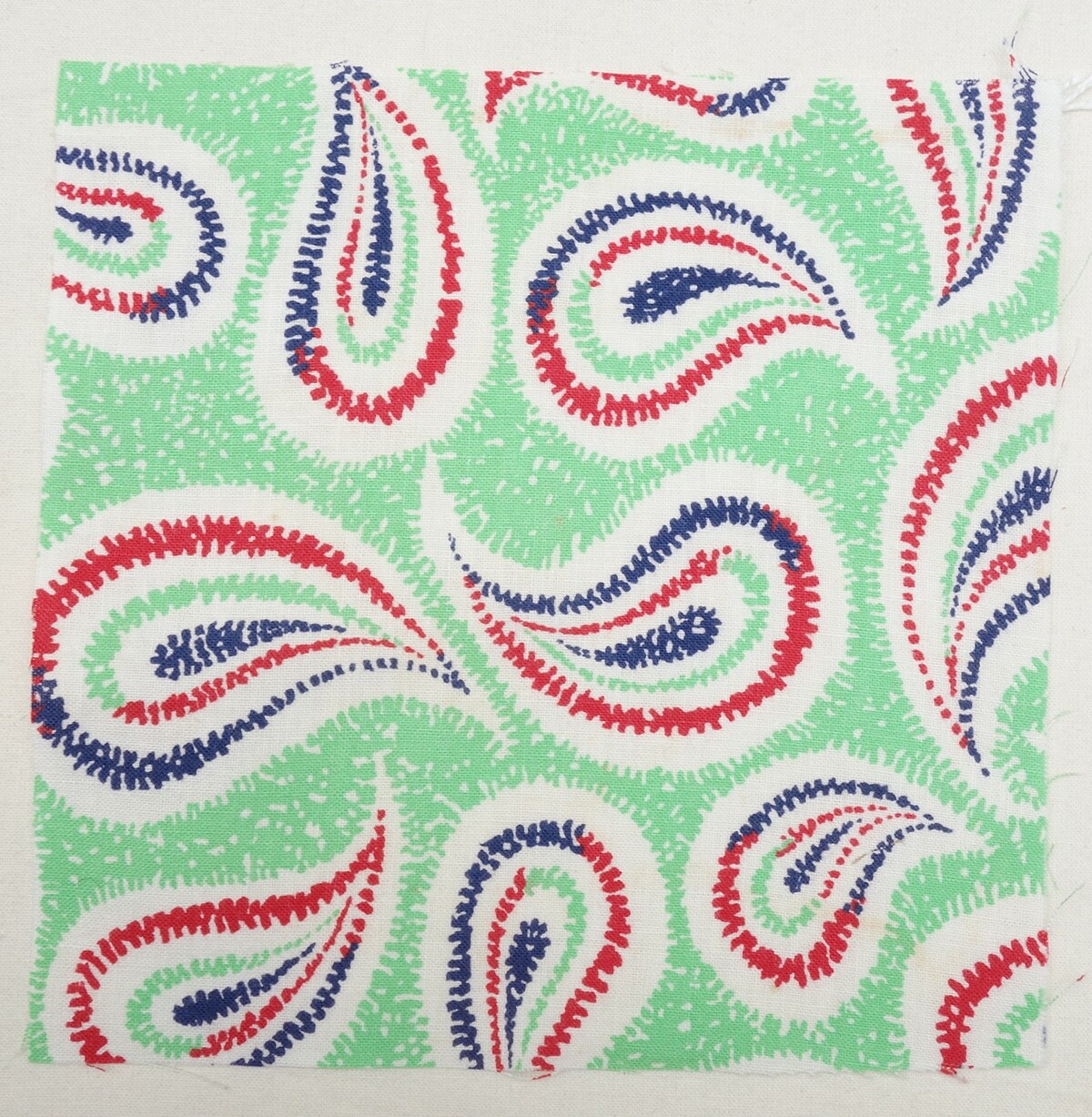
The TRC has just received another box from Sherry Cook in Washington, USA, this time filled with eight quilts and 200 feedsack samples. There was also a copy of the Skamania County Pioneer newspaper, of Wednesday, March 13th, 2019. It contains an article entitled 'Quilters collection featured by Dutch textile museum.' The article tells the story of Sherry Cook's life-long interest in quilts and quilting, and how she came into contact with the Textile Research Centre along the Hogewoerd in Leiden. The article can be downloaded here.

Reem El Mutwalli (left) and Gillian Vogelsang (right), at the new Friday mosque of Abu Dhabi, Monday 18 March 2019.Reem El Mutwalli (left) and Gillian Vogelsang (right), at the new Friday mosque of Abu Dhabi, Monday 18 March 2019.On Wednesday, 20 March 2019, Gillian Vogelsang reports:

This weekend was spent with Willem, my husband, in Dubai. The main focus of the weekend was getting to know Dr. Reem El Mutwalli of the Zay initiative. She is an amazing, enthusiastic colleague with a passionate love and knowledge of textiles and dress from the Gulf region.

During the intense two-day meeting, some of the discussions took place in a car travelling between various venues, including going to the emirates of Sharjah and Abu Dhabi. In Abu Dhabi we had the chance to visit the beautiful Friday mosque (while the Abu Dhabi Louvre was closed ). We also attended an art gallery event and a preview of a Sotheby’s Islamic Art auction in Dubai. A representative of Skira Art Books, Milan, was present at the latter and we had a brief discussion with him about the TRC Collection and using it for art publications. They will be contacting the TRC shortly.

But back to the main themes of the visit. Dr. Reem is a very active business woman used to living within the art/cultural world, as well as being very used to move in both the Arab and European environments and she understands the differences (as well as explaining them). She will probably be coming in July 2019 to Leiden to help with the large TRC Asia Week, to coincide with the even larger ICAS Asian conference. The TRC will have a week of lectures and workshops during the conference, including at least one talk by Dr. Reem on Asian influences on Middle Eastern dress.

One of the many questions raised was concerned with how the Zay Initiative and the TRC could work together to raise international awareness of Arabian Peninsular dress. Various possibilities are being explored and as more details and information become available we will let you know. One thing that is clear: Another visit to Dubai is being planned, but perhaps not during the summer months, when we ‘ Northerners ‘ would simply wilt in the hot, humid conditions of the Gulf.

Zoek in TRC website

Contact

Boerhaavelaan 6
2334 EN Leiden.
Tel. +31 (0)6 28830428  
office@trcleiden.org

facebook 2015 logo detail


instagram vernieuwt uiterlijk en logo


Bankrekening

NL39 INGB 0002 9823 59, t.a.v. Stichting Textile Research Centre.

Openingstijden

Het TRC is gesloten tot maandag 4 mei vanwege de verhuizing naar de Boerhaavelaan. We blijven bereikbaar via email (office@trcleiden.org) of telefoon: 06-28830428.

Financiële giften

Het TRC is afhankelijk van project-financiering en privé-donaties. Al ons werk wordt verricht door vrijwilligers. Ter ondersteuning van de vele activiteiten van het TRC vragen wij U daarom om financiële steun:

Giften kunt U overmaken op bankrekeningnummer (IBAN) NL39 INGB 000 298 2359, t.n.v. Stichting Textile Research Centre. BIC code is: INGBNL2A

U kunt ook, heel simpel, indien u een iDEAL app heeft, de iDEAL-knop hieronder gebruiken en door een bepaald bedrag in te vullen: 


Omdat het TRC officieel is erkend als een Algemeen Nut Beogende Instelling (ANBI), en daarbij ook nog als een Culturele Instelling, zijn particuliere giften voor 125% aftrekbaar van de belasting, en voor bedrijven zelfs voor 150%. Voor meer informatie, klik hier