• F4
  • F2
  • F3
  • F1

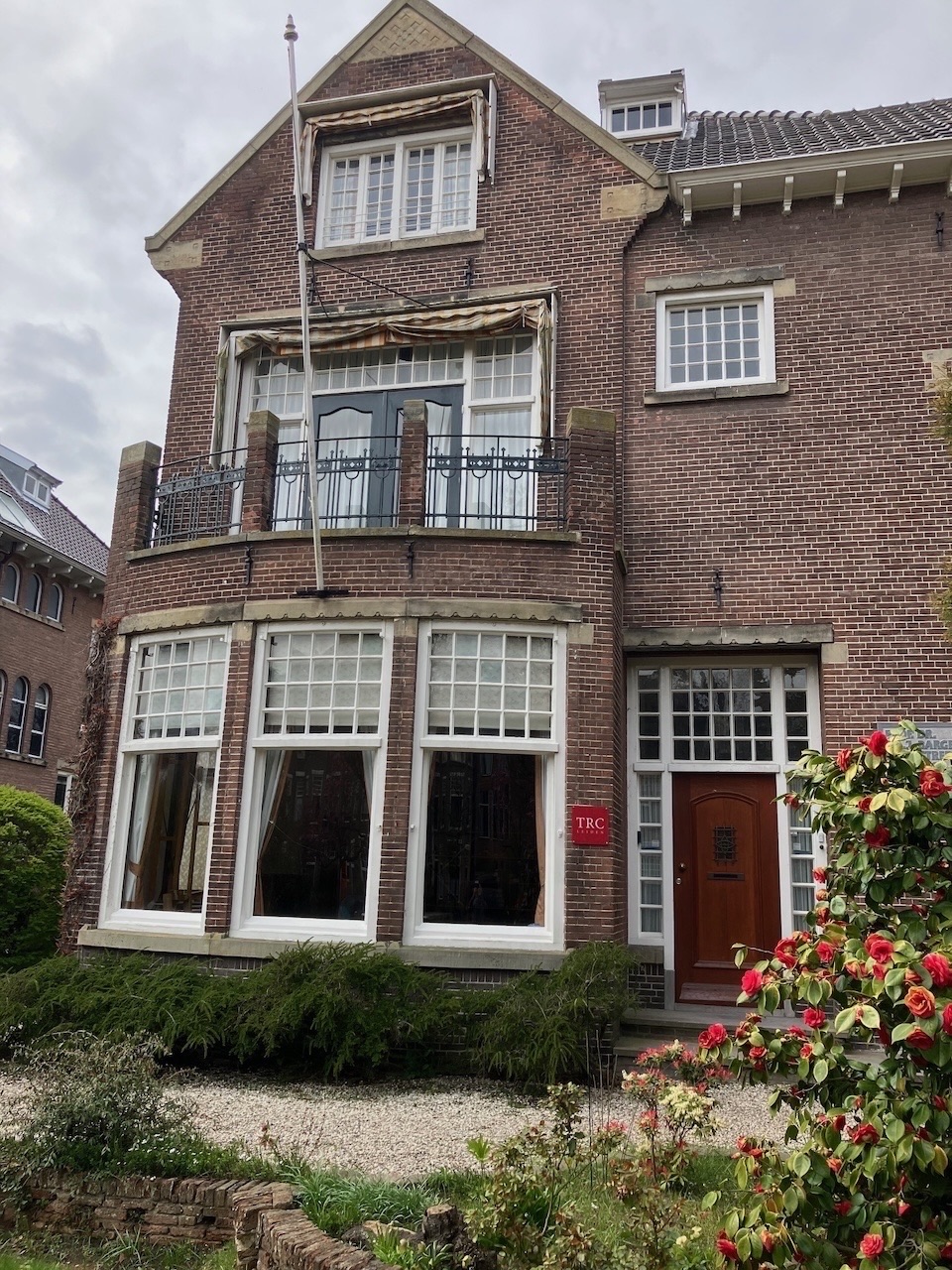
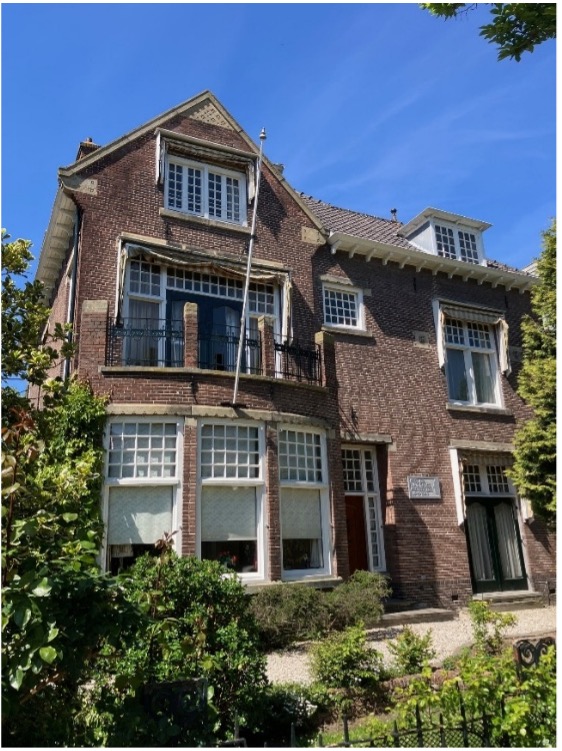
(Leiden, 5 Nov. 2025) The Stichting (Foundation) Monumentenbezit, the owner of Boerhaavelaan 6 where the TRC soon hopes to find a new home, has published an article about the building, its history and its architectural jewels, but also about the new occupants of the building, namely the TRC. You can read or download the article, which contains a number of beautiful photographs, here.

Boerhaavelaan 6 LeidenBoerhaavelaan 6 Leiden

Princeton University Press has just announced the upcoming publication (Febr. 2026)  of The Atlas of World Embroidery: A Global Exploration of Heritage and Styles. The book was written by Gillian Vogelsang-Eastwood, director of the TRC, and uses a large number of textiles housed in the TRC Collection.

The book is described in the announcement as "A richly illustrated history of embroidery and needlework, showcasing the glorious range of styles, motifs, and materials used around the world."

"Embroidery is one of the world’s most widely shared forms of creative expression—and one of its most varied and diverse. It can be found in every region, yet its visual languages, themes, and techniques vary greatly: some are marked by unique styles and others show influences from neighboring cultures. The Atlas of World Embroidery examines many distinctive embroidery styles and traditions found across the Americas, Europe, Africa, Asia, and Australasia."

"From the quillwork and birch boxes of Indigenous North America to the decorative matyo style of Hungary, the zardozi embroiderers of India, and the satin stitches of Han Dynasty China, Gillian Vogelsang-Eastwood provides a comprehensive history of embroidery, describing its materials and tools, its designs and symbols, and its uses and makers. Emphasizing the visual aspects of embroidery across cultures, the atlas features an unprecedented array of color images celebrating the art form."

There are lots of things happening at the moment at the TRC, including preparing for some very, very big changes. As readers of the TRC Blog and Newsletter will know we have been working with various groups to move the TRC to larger premises so we can expand our range of activities, collection and teaching commitments as an international centre (hub!) for textile knowledge and skills in all their diverse forms.

Yes: We hope to move soon. Showcases are being emptied.Yes: We hope to move soon. Showcases are being emptied.Leiden: City of Textile Knowledge

Leiden Council is actively helping us on many levels – they really want us to expand as a knowledge centre, serving an international community of textile lovers who want to pass onto the next generation(s) skills and knowledge about this fundamental aspect of human life and culture. With the Council's help, we are talking with various school groups, Leiden University, etc., about increasing the teaching of textiles and dress studies and making the TRC Collection, Library and research facilities more widely known and available, also online (compare the recent blog about 360-photography of TRC items).

There will also be an expanded number of workshops, courses, study days, weekend events and lectures. We are talking, for example, with various potential teachers to offer an increased range of subjects, from ancient Egyptian textiles to a history of jewellery.

In addition, a range of exhibitions that vary in size, from a single showcase to two large rooms are planned. These will be used to show the range, size and diversity of both the world of textiles and dress as well as the TRC’s amazing collection.

A blog that I wrote in October 2024 (to be downloaded here) described my study of  a recent donation to the TRC of 65 metal buttons. The buttons were collected without any context in the Netherlands. In this blog, I would like to elaborate on my findings of last year.

In the previous blog I suggested that, based on the shank type, these buttons could not be older than the 19th century. However, I was wrong. I now know that the oldest buttons are medieval (see TRC 2024.2625) and the group presents, in fact, a fair representation of buttons from every century since then until the 19th.

Metal button with a five-petalled flower and a key shank with a tiny hole. Part of the button has broken off. Medieval. TRC 2024.2625.Metal button with a five-petalled flower and a key shank with a tiny hole. Part of the button has broken off. Medieval. TRC 2024.2625.

Key shank with tiny hole. Metal button TRC 2024.2625.Key shank with tiny hole. Metal button TRC 2024.2625.

Clare Waight KellerClare Waight KellerWe are very happy to announce that international Fashion Designer and Creative Director, Clare Waight Keller, has very kindly agreed to become a member of the TRC Board.

Clare has worked as a designer for various fashion houses, including Calvin Klein (New York), Ralph Lauren, and Gucci. She was also artistic/creative director for Pringle of Scotland, Chloé, and Givenchy. More recently she has taken on the role of Global Creative Director of Uniqlo.

Clare has sent the following message about this amazing new development:

"I’m thrilled to join the Board of the TRC and to be part of helping Dr Gillian preserve the future of historic textiles. This knowledge is vital and an incredibly important part of our collective cultural history. What has been achieved so far has already contributed significantly to the prevention of the loss of ancient and unique textiles and clothing for future generations. In my role I hope to bring even more significant value and support to ensuring this expertise is not lost and its value is protected. I’m truly looking forward to contributing to the long term future of the TRC and highlighting its unique importance to our social history and society."

Clare’s knowledge of textiles and fashion will be a great boon for the current and future work and development of the TRC.

Sheet of buttons made from corozon nuts, Europe, 20th century (TRC 2025.0851).Sheet of buttons made from corozon nuts, Europe, 20th century (TRC 2025.0851).We have recently been sorting through a collection of buttons that were part of a large donation (c. 6,000 items) by Hennie Stevan-Bathoorn and Sjoerd Stevan and formed part of the former Museum voor Naaldkunst in Winschoten.

Over the last year we have been (slowly) adding more and more Winschoten items to the TRC Collection and we are now looking at the various boxes of buttons.

Among these boxes there are several examples that look as if they were made of bone or ivory, but are in fact made of slices of corozon nut (TRC 2025.0851 to TRC 2025.0855). Equally interesting, there are some of the actual nuts themselves (TRC 2025.0856a-d).

Corozon nuts

Corozon nuts come from the tagua palm trees of the Arecaceae family, which grow in Central and South America. More specifically, they grow in southern Panama, Ecuador, Columbia, Bolivia, in parts of Brazil and Peru. Based on the information that came with the nuts, the examples now in the TRC Collection derive from Ecuador (P. aequatorialis).

Four corozon nuts from Equador, 20th century (TRC 2025.0856a d).Four corozon nuts from Equador, 20th century (TRC 2025.0856a d).The nuts are also known as palm ivory, ivory nuts and vegetal ivory. These terms refer to the white kernel (endosperm) that is nutrient-rich and can be found in many types of seeds from flowering plants, such as the white layers from the coconut, wheat and rice).

The seeds are harvested when ripe. The outer layer (pericarp) is removed and then the kernels are allowed to dry. With respect to the corozon nut, once the kernel (endosperm) has thoroughly dried, they become very hard, scratch-free, water proof and durable and can be used for a variety of objects, including buttons.

Corozon nuts, ballast and buttons

It would appear that dried corozon nuts were first introduced to Europe in the late 18th and early 19th century as ballast (rather than sand) on some wooden sailing ships, in particular, for the ships sailing between South America and Germany.

Pair of buttons made from the corozon nut, with a carved leather design. The Netherlands, 1930s (TRC 2018.1768a b).Pair of buttons made from the corozon nut, with a carved leather design. The Netherlands, 1930s (TRC 2018.1768a b).It would seem that someone in Germany saw the potential of these hard nuts to make a range of small items, such as needles and buttons.

Ivory nut buttons started to be manufactured in various countries in Europe by the mid-19th century. In general they are flat disc forms with two to four sewing holes. Some also have a dark brown layer around the outer edges (TRC 2025.085).

The TRC Collection includes other examples of ivory nut buttons, which come from the USA and date to the 1930s. One set of buttons is dome-shaped and they were carved to imitate buttons made from strips of leather (TRC 2018.1768a-b, compare TRC 2018.2197a-d).

Set of leather buttons. Europe, 1930s (TRC 2018.2197a d).Set of leather buttons. Europe, 1930s (TRC 2018.2197a d).Nut buttons stopped being industrially produced in the 1930s with the advent of cheaper, plastic buttons.

There has been a trend to re-introduce corozo nut items in order to replace small, elephant-ivory products (including parts for bagpipes!). There is a movement among some bespoke clothing groups to re-introduce corozo nut buttons, bearing in mind that they are more expensive than modern plastic buttons, but they are of vegetable-origin and sustainable.

Gillian Vogelsang-Eastwood, 14 July 2025

USA-based donors can make tax-deductible contributions to the "Friends of the TRC Leiden" at Myriad USA. Because Myriad USA is a public charity, within the meaning of Sections 501(c)(3) and 509(a)(1) of the IRC, donors may claim the maximum tax benefits allowed by USA tax law for their contributions. Myriad USA works closely together with Every.org (San Francisco).

For the dedicated TRC site on Every.Org, click here.

If you wish to support us, here is how to proceed:

  • Gifts by check: Address your check to Myriad USA, write "Friends of the TRC Leiden" in the memo section of the check, and send it to Myriad USA at 551 Fifth Avenue, Suite 2400, New York, NY 10176
  • Gifts by credit card, bank transfer, Paypal, etc, via Every.org: click Myriad button above.
  • Gifts by wire transfer or to contribute other types of property: Contact Myriad USA via email at This email address is being protected from spambots. You need JavaScript enabled to view it. or phone (212) 713-7660. 

The TRC Board has recently approved the Annual Report for 2024. We are very pleased to present an overview of what happened in the last year and in particular to highlight all the TRC blogs that were published and represent the diverse nature of all the many activities that take place at the Hogewoerd 164.

Detail of an embroidered top for a Ukrainian woman, early 21st century. Acquired in 2024 (TRC 2025.0149).Detail of an embroidered top for a Ukrainian woman, early 21st century. Acquired in 2024 (TRC 2025.0149).

Many changes have taken place and many more are due to take place. it is clear from the report that we may be small space wise, but we are big in activities and in our support of textile and dress studies in all their myriad of different forms.

The TRC Annual Report 2024 can be accessed here.

Search in the TRC website

Contact

Boerhaavelaan 6
2334 EN Leiden.
Tel. +31 (0)6 28830428  
office@trcleiden.org 

facebook 2015 logo detail 

instagram vernieuwt uiterlijk en logo


Bank account number

NL39 INGB 0002 9823 59, in the name of the Stichting Textile Research Centre.

TRC closed until 4 May 2026

The TRC is closed to the public until Monday, 4 May 2026, due to our move to the Boerhaavelaan. The TRC remains in contact via the web, telephone and email. For direct contact and personal visits, please contact the TRC at office@trcleiden.org, or by mobile, 06-28830428.

Donations

The TRC is dependent on project support and individual donations. All of our work is being carried out by volunteers. To support the TRC activities, we therefore welcome your financial assistance: donations can be transferred to bank account number (IBAN) NL39 INGB 000 298 2359, in the name of the Stichting Textile Research Centre. BIC code is: INGBNL2A.

 You can also, very simply, if you have an iDEAL app, use the iDEAL button and fill in the amount of support you want to donate: 


Since the TRC is officially recognised as a non-profit making cultural institution (ANBI), donations are tax deductible for 125% for individuals, and 150% for commercial companies. For more information, click here