September 2022
- Hogewoerd 164, 2311 HW, Leiden
- klik This email address is being protected from spambots. You need JavaScript enabled to view it.
klik website - +31 (0)71-5134144
- +31 (0)6-28830428.
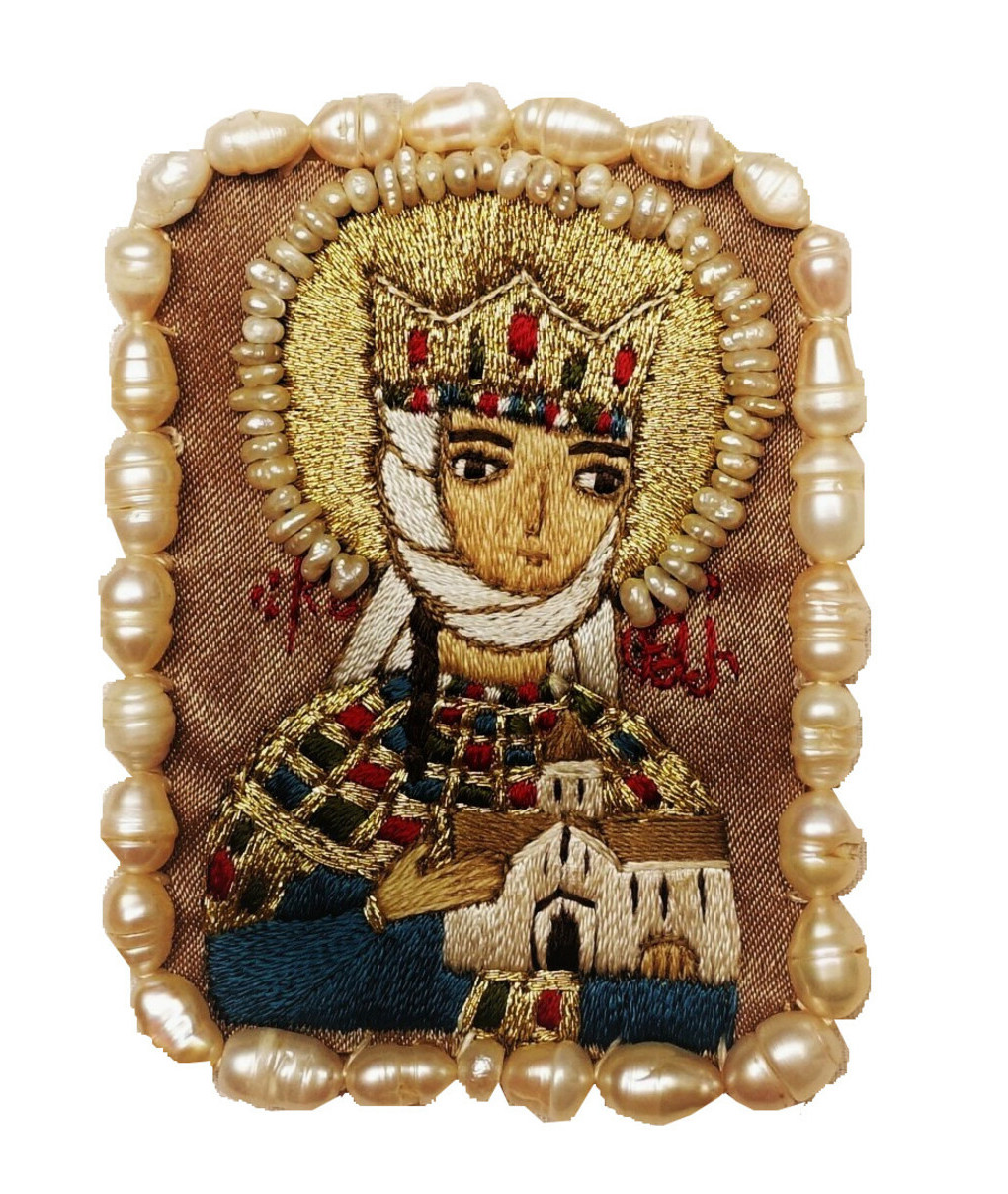 Een recente aanwinst voor de TRC collectie: Kleine geborduurde icoon van koningin Tamar van Georgië die een kerk vasthoudt. Georgië, begin 21e eeuw (TRC 2022.2250b).De vakanties zijn bijna voorbij, en we hopen u binnenkort weer bij het TRC te mogen verwelkomen. Ondertussen zijn we op maandag 22 augustus al begonnen met de TRC Intensieve Textielcursus. Deelnemers uit alle windstreken worden ingeleid in de fascinerende wereld van textiel.
De eerste bijeenkomst waar we iedereen die wil komen willen ontmoeten is op zondagmiddag 28 augustus, van drie tot vijf. AJ Salter, een van onze vrijwilligers, zal kort iets vertellen over een heel opvalled kledingstuk uit Albanië, dat heel lang geleden nog is gefotografeerd door Aard den Doolard, de schrijver van De Herberg met het Hoefijzer (zie de foto hieronder).
U kunt zondagmiddag ook kijken naar de tentoonstelling in opbouw, over Aziatische/Afrikaanse/Europese invloeden op kleding en textiel, die op 12 september wordt geopend.
Vrienden van het TRC
Het TRC werkt op projectbasis en met financiële donaties uit officiële, commerciële en particuliere bronnen. De financiering wordt gebruikt voor speciale projecten, het in stand houden van de collectie, het opzetten van tentoonstellingen en algemene lopende kosten. Door de jaren heen hebben we veel Vrienden gehad die het werk van het TRC ondersteunen met donaties, zowel financieel als materiaal voor de collectie. Voor het Vrienden van het TRC-programma, klik hier.
*****
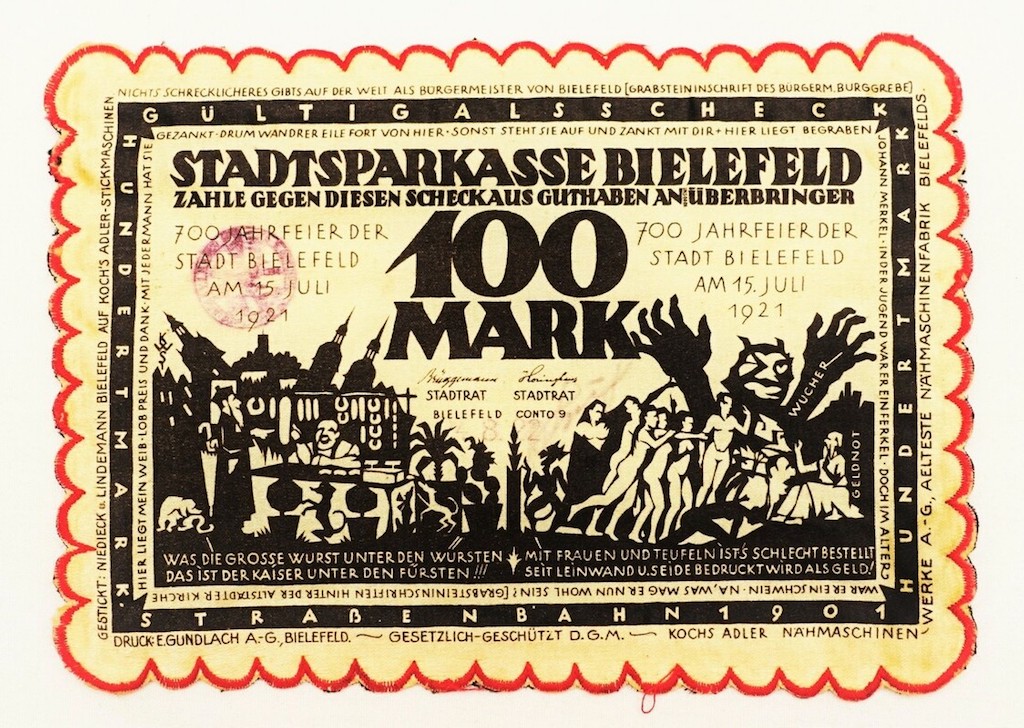 Bankbiljet van textiel, geproduceerd in 1921 door de Stadtsparkasse Bielefeld voor de som van 100 mark (TRC 2022.2252).Meest recente blogs
Denkt u eraan om regelmatig even te kijken naar de nieuwste blogs op de TRC webpagina's? Of laat het ons weten als u automatisch bericht wilt ontvange als er weer een nieuwe blog is verschenen. Hieronder geven we een lijstje met wat er tot nu toe in augustus is verschenen.

Donaties
Het TRC wordt geheel verzorgd door vrijwilligers. Steun ons door een bedrag naar keuze over te maken via onderstaande iDEAL knop: Doneer nu door een bepaald bedrag in te vullen! TRC is een erkende Culturele ANBI, waardoor uw gift, als u in Nederland belasting betaalt, tot 125% fiscaal aftrekbaar is.
*****
Agenda
Zondagmiddag-lezing, 28 augustus: De Xhubleta Rok Uit Albanië.
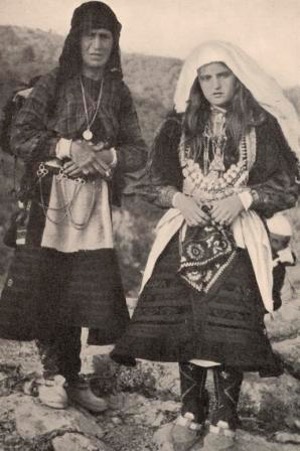 Twee Albanese vrouwen met hun klokvormige xhubleta rok/lijfje, jaren '30. Foto genomen door Aard den Doolaard, pseudoniem voor Bob Spoelstra en de auteur van 'De Herberg met het Hoefijzer' (1933). De foto heeft het onderschrift: "16-jarige Malissoren-bruid met haar moeder."Het TRC hoopt u zondagmiddag 28 augustus vanaf 15.00 uur te mogen begroeten en samen te luisteren naar een informele lezing door AJ Salter, stagiaire TRC en Masterstudent aan de Universiteit Leiden (zie een blog over haar MA-scriptie).
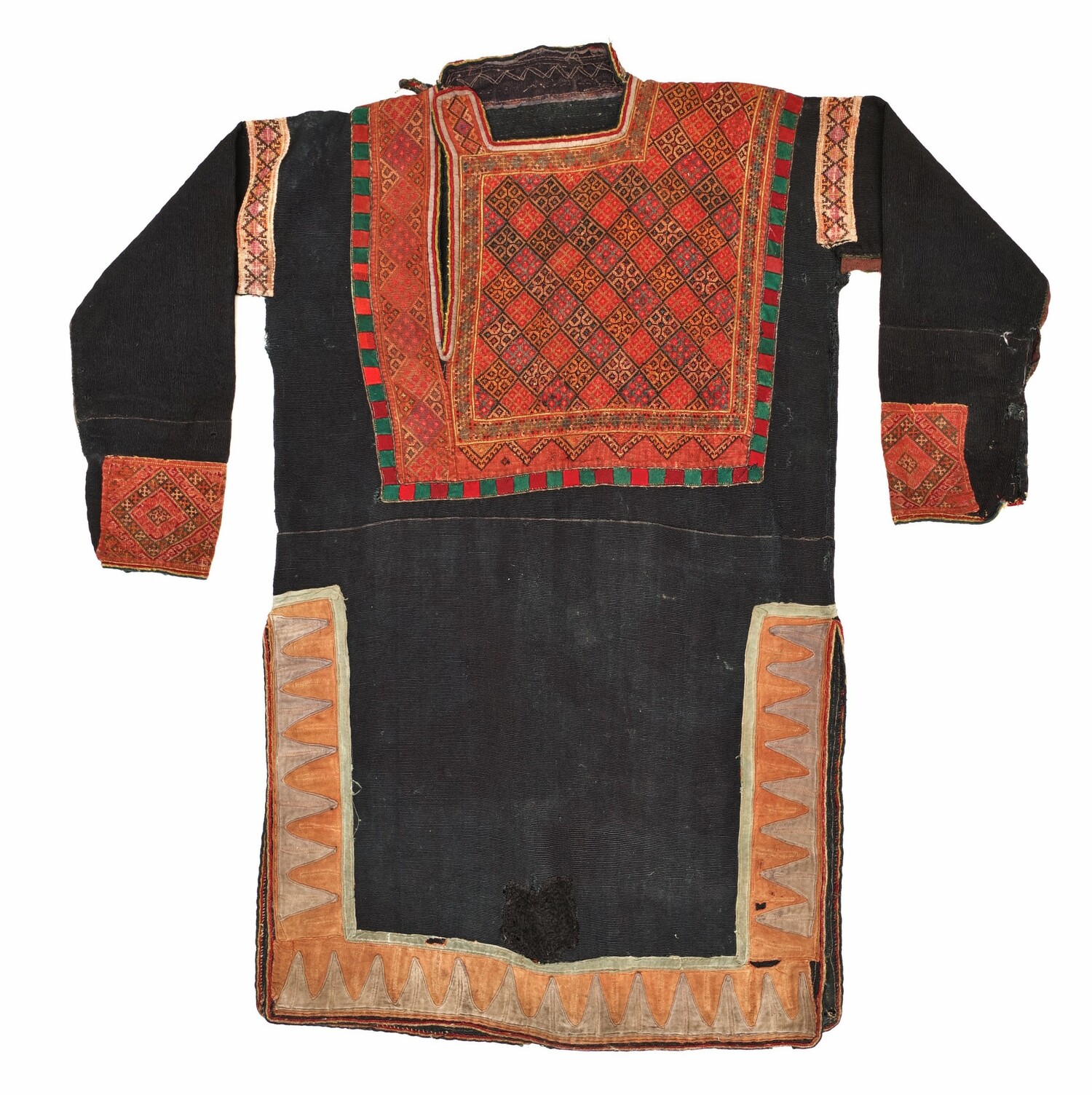
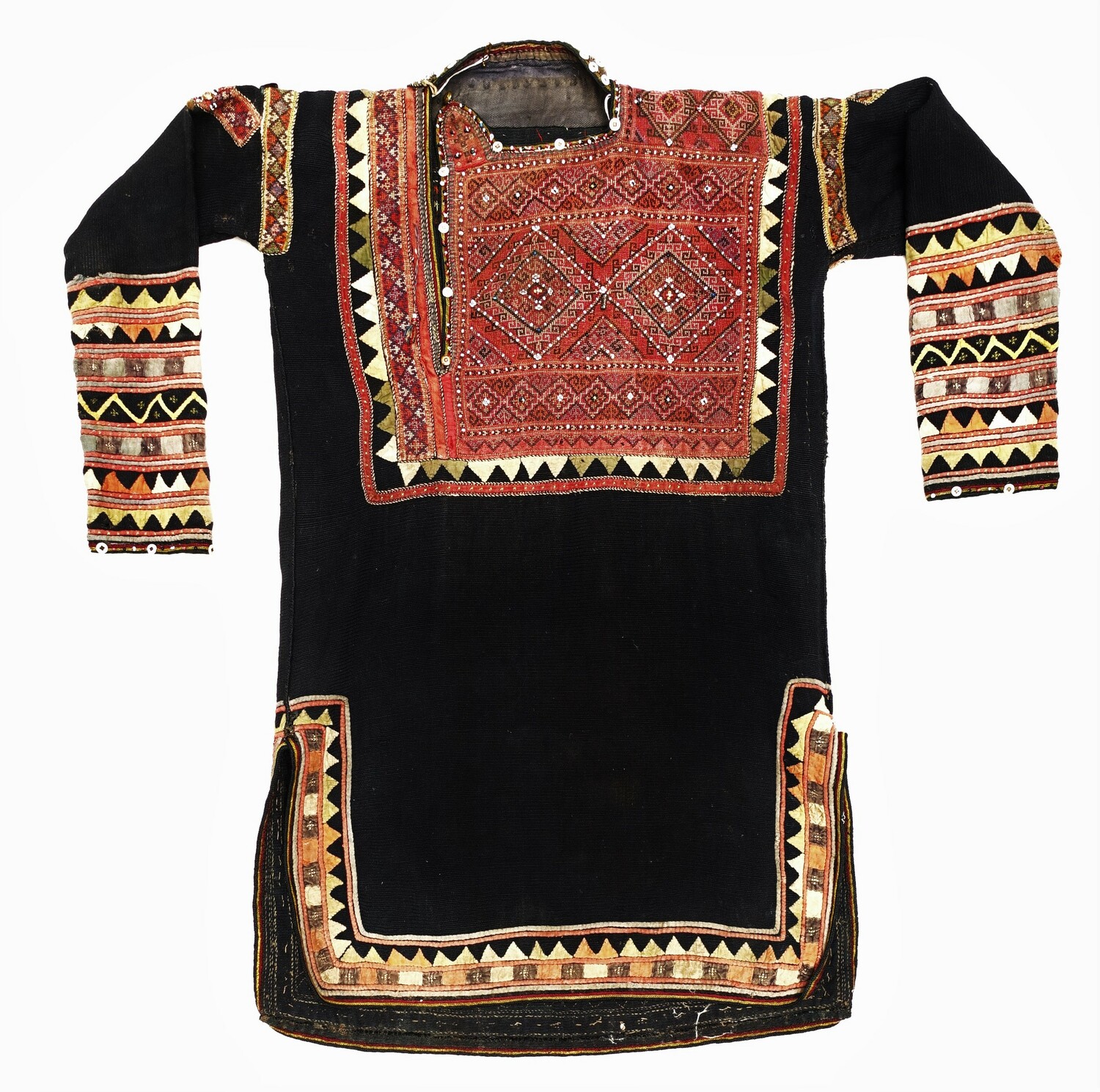
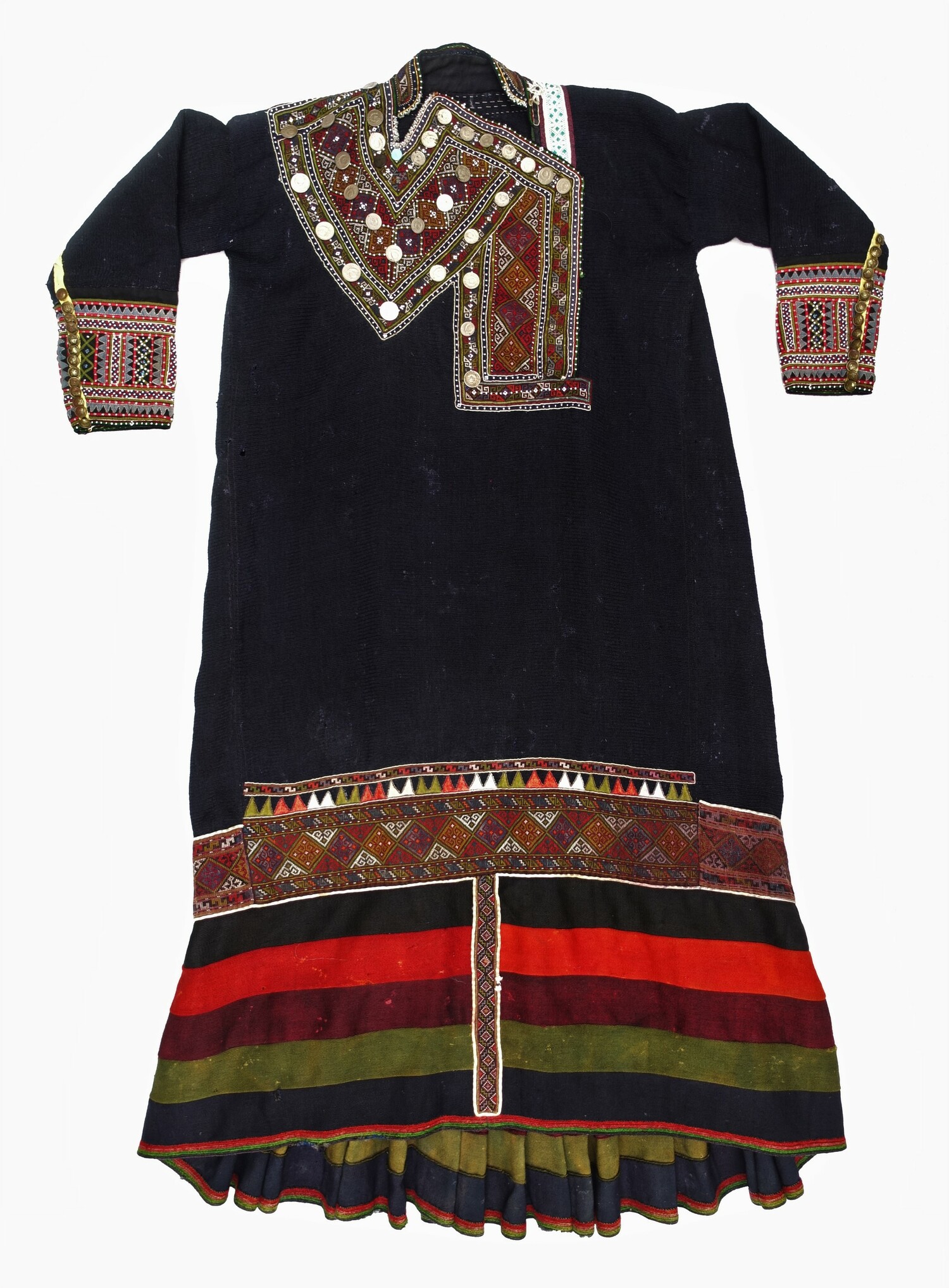
Ze zal praten over een heel typische, lange rok/lijfje uit Albanië met een rijke geschiedenis, dat bijna negentig jaar geleden de aandacht trok van Aard den Doolaard, de schrijver van De Herberg met het Hoefijzer. Het TRC heeft een aantal exemplaren van de xhubleta in de collectie, en die zullen ook worden getoond.
Na de lezing van AJ is er volop gelegenheid voor een gespek met haar en de andere bezoekers, onder het genot van koffie/thee of andere verfrissingen. U kunt dan ook de nieuwe galerij-tentoonstelling zien!
Datum: 28 augustus. Tijd: 15.00 - 17.30 uur (de lezing is vanaf ongeveer 15.30 uur, en wordt gegeven in het Engels). Toegang is gratis. Locatie: TRC Leiden, Hogewoerd 164, 2311 HW Leiden. Het wordt op prijs gesteld als u ons even laat weten of u erbij wilt zijn (This email address is being protected from spambots. You need JavaScript enabled to view it.).
*****
Workshop woensdag 7 september; Wat Is Borduurwerk?
Borduurwerk is een oude en gevarieerde traditie voor de versiering van kleding en ander textiel rond het huis en in openbare gebouwen. Er zijn vele vormen van borduurwerk, letterlijk honderden, van de kettingsteek-voorbeelden in het graf van Toetankhamoen (gestorven ca. 1323 v.Chr.) tot de dubbelzijdige borduurwerken van Han China rond het begin van onze jaartelling.
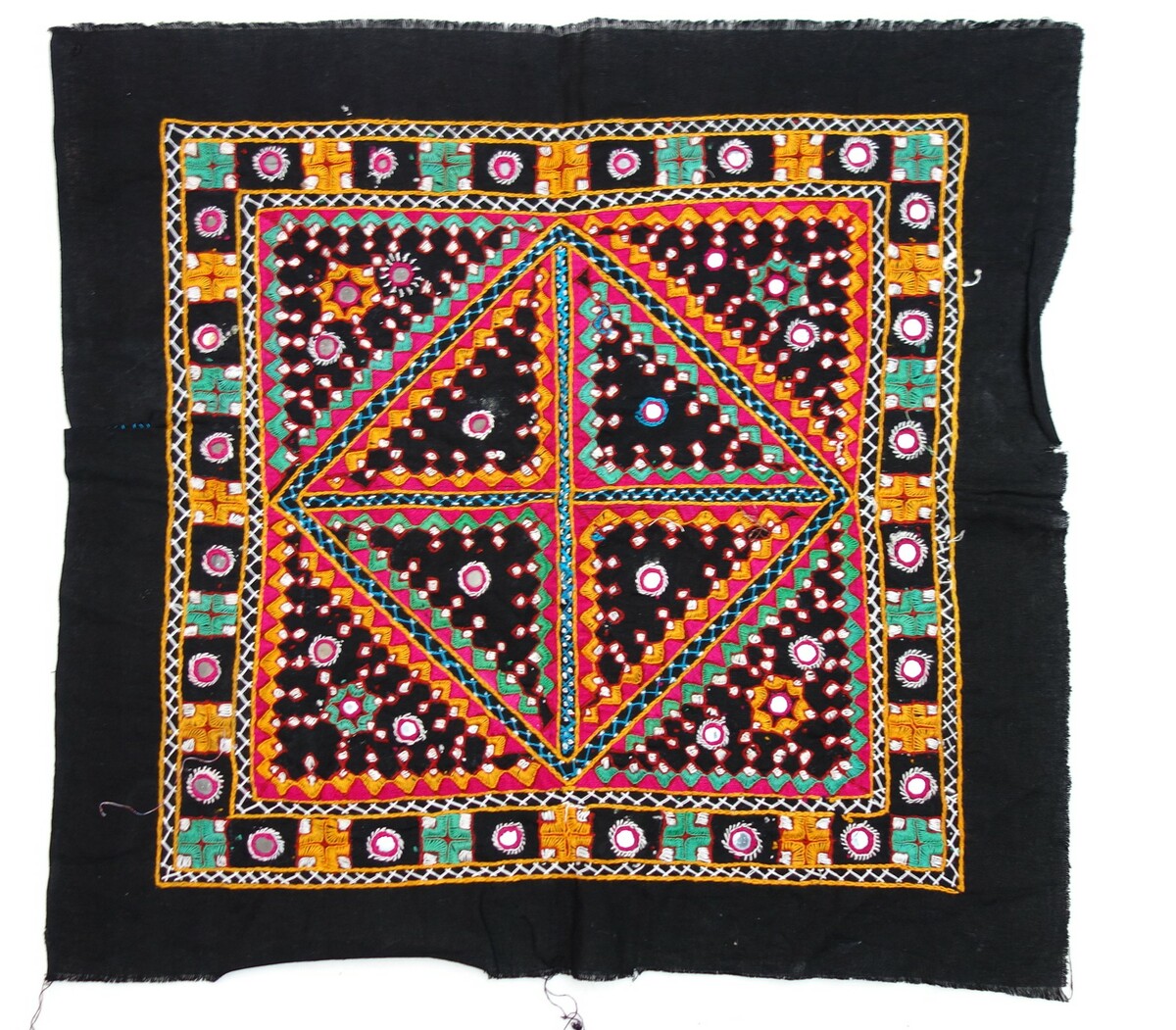 Geborduurd zwart katoenen lapje met verschillende onderling verbonden geometrische vormen en toegepaste stukjes glas. Fabrieksgeweven handborduurwerk (India, eind 20ste eeuw, TRC 2019.0286).
Tijdens de workshop worden de belangrijkste technieken besproken, maar ook kijken we naar de verschillende hulpmiddelen en de materialen die worden gebruikt tijdens het borduren. Natuurlijk gaan we ook zelf aan de slag.
Gedurende de workshop zullen voorbeelden uit de uitgebreide collectie van het TRC van over de hele wereld worden onderzocht om te zien hoe mannen en vrouwen door de eeuwen heen deze decoratieve vorm van handwerk hebben gemaakt en gebruikt.
De workshop wordt geleid door Dr. Gillian Vogelsang-Eastwood, een specialist op het gebied van borduurgeschiedenis en auteur van de serie Encyclopedia of Embroidery from ..... (Londen: Bloomsbury 2016ff.).
Datum: woensdag 7 september 2022. Tijd: 10.00 - 13.00 uur. Lokatie: TRC Leiden, Hogewoerd 164, 2351 HW Leiden, Nederland. Docent: Gillian Vogelsang-Eastwood. Taal: Nederlands/Engels. Kosten: 35 euro (te betalen op de dag zelf). Materialen / koffie / thee worden verstrekt. Max. aantal deelnemers: 10. Meldt u zich alstublieft tevoren aan: This email address is being protected from spambots. You need JavaScript enabled to view it..
*****
Vanaf donderdag 8 september: TRC cursus Stropkant Maken
Stropkant, in het Engels torchon lace or beggar's lace, is een van de meest voorkomende vormen van kloskant, en misschien ook wel de eenvoudigste. Basis en motieven worden tegelijkertijd gemaakt, oorspronkelijk in stroken van 2,5 tot 5 cm breed, maar tegenwoordig in verschillende maten.
De cursus wordt gegeven in twee series van elk drie bijeenkomsten. U kunt deelnemen aan alle zes de lessen, of éen van de twee. Als u alleen wilt deelnemen aan de tweede serie, verwachten wij dat u de basisbeginselen van stropkantmaken onder de knie hebt.
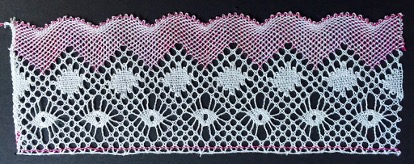 Voorbeeld van stropkant.
De cursus wordt gegeven door Gon Homburg. Ze leerde kantklossen van haar moeder en vanaf 1983 staat ze officieel ingeschreven als lerares kantklossen. Ze geeft les aan liefhebbers en geeft workshops aan verschillende opleidingen, waaronder het TRC.
- Eerste reeks: 8 september; 29 september; 20 oktober.
- Tweede reeks: 10 november; 1 dec; 15 dec.
Plaats: TRC Leiden, Hogewoerd 164, 2351 HW Leiden. Docent: Gon Homburg. Taal: Nederlands. Kosten: 35 euro per donderdag (te betalen op de dag zelf). Voor materiaal/koffie/thee wordt gezorgd. Maximaal aantal deelnemers: 10. Graag tevoren aanmelden voor drie of zes lessen: This email address is being protected from spambots. You need JavaScript enabled to view it..
*****
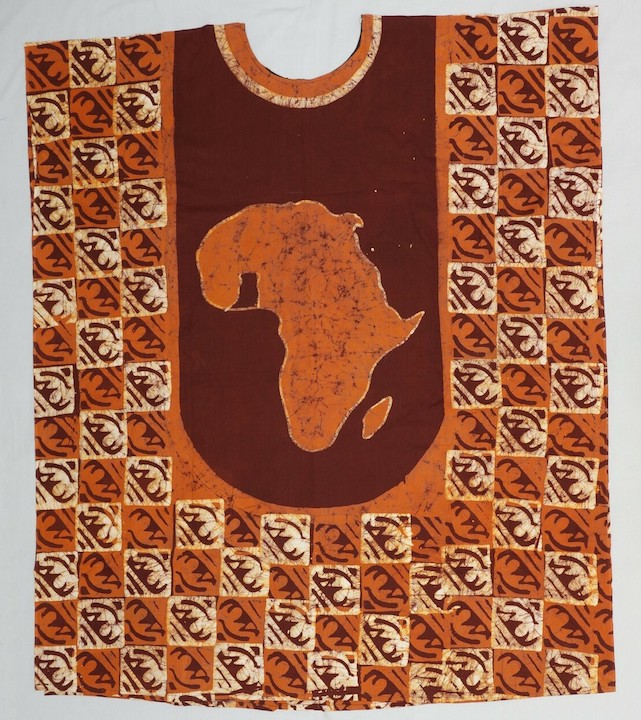 Handgemaakt, resist-geverfd hemd uit Ghana, 20ste eeuw (TRC 2010.0330).Dinsdag 20 sept 11.00-12.00: Lezing over West-Afrikaans batik, door Addoley Dzegede
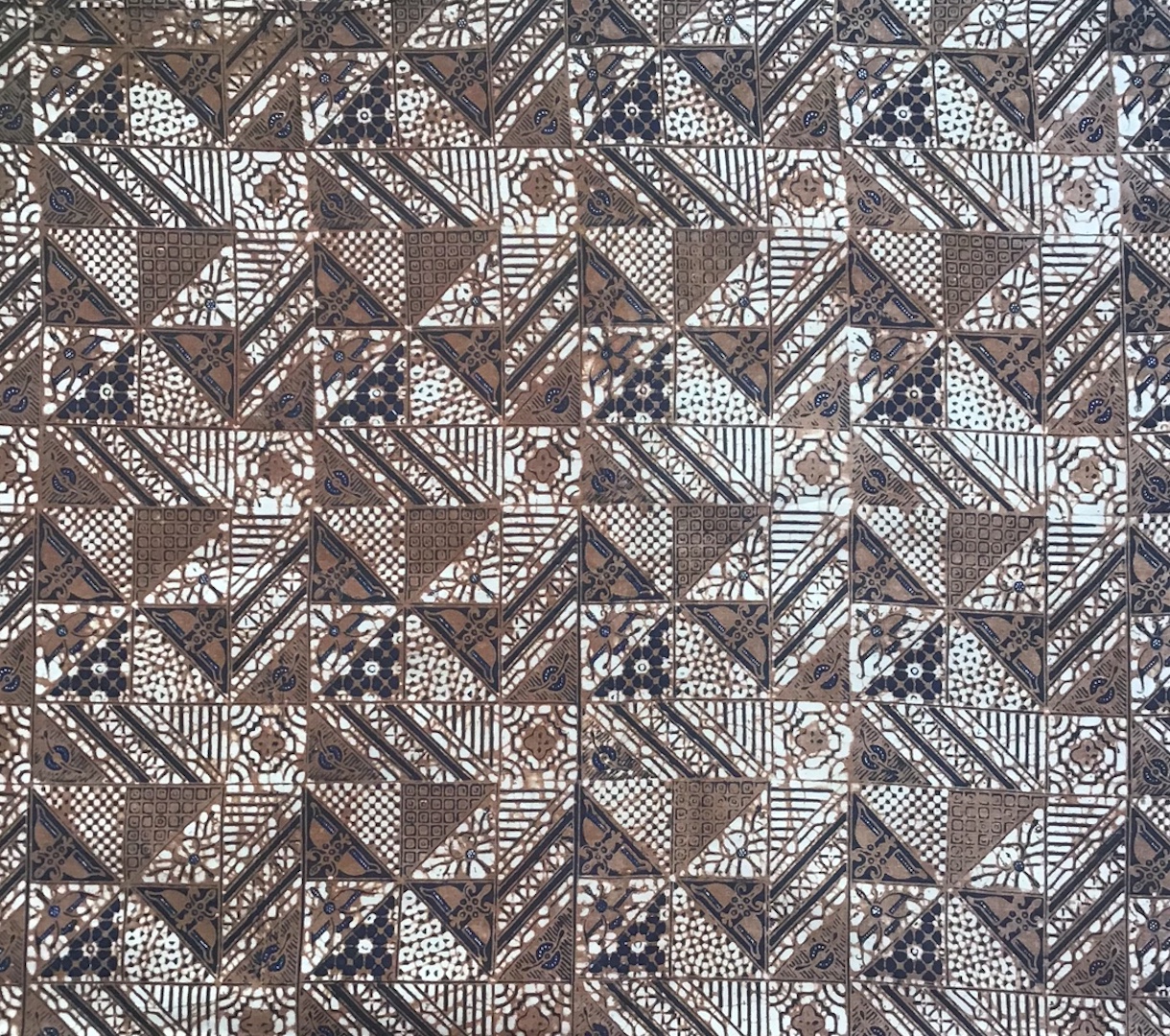
Batik is een soort resist-geverfde stof die vooral bekend is uit Indonesië (batik). Het wordt echter ook op grote schaal geproduceerd en gedragen in West-Afrika, en een machinaal geproduceerde versie werd in de negentiende eeuw in West-Afrika geïntroduceerd door Europese bedrijven, vooral uit Nederland, zoals door de Vlisco in Helmond.
Addoley Dzegede, een Ghanees-Amerikaanse kunstenaar en Fulbright-winnaar nu in Nederland, zal vertellen wat ze heeft geleerd over West-Afrikaanse batik tijdens een verblijf bij Osei Duro (in een atelier voor handgeverfde kleding in Accra) in 2019, en de manieren bespreken waarop zij gebruik maakt van batiktechnieken in haar kunstwerken, die vaak geïnspireerd zijn door de geschiedenis van Nederlandse wasdrukken.
Datum: dinsdag 20 sept. Tijd: 11.00 - 12.00 uur. Taal: Engels. Lokatie: TRC Leiden, Hogewoerd 164, 2311 HW Leiden. Entree is gratis. Het wordt op prijs gesteld als u ons laat weten of u erbij wilt zijn (This email address is being protected from spambots. You need JavaScript enabled to view it.).
*****
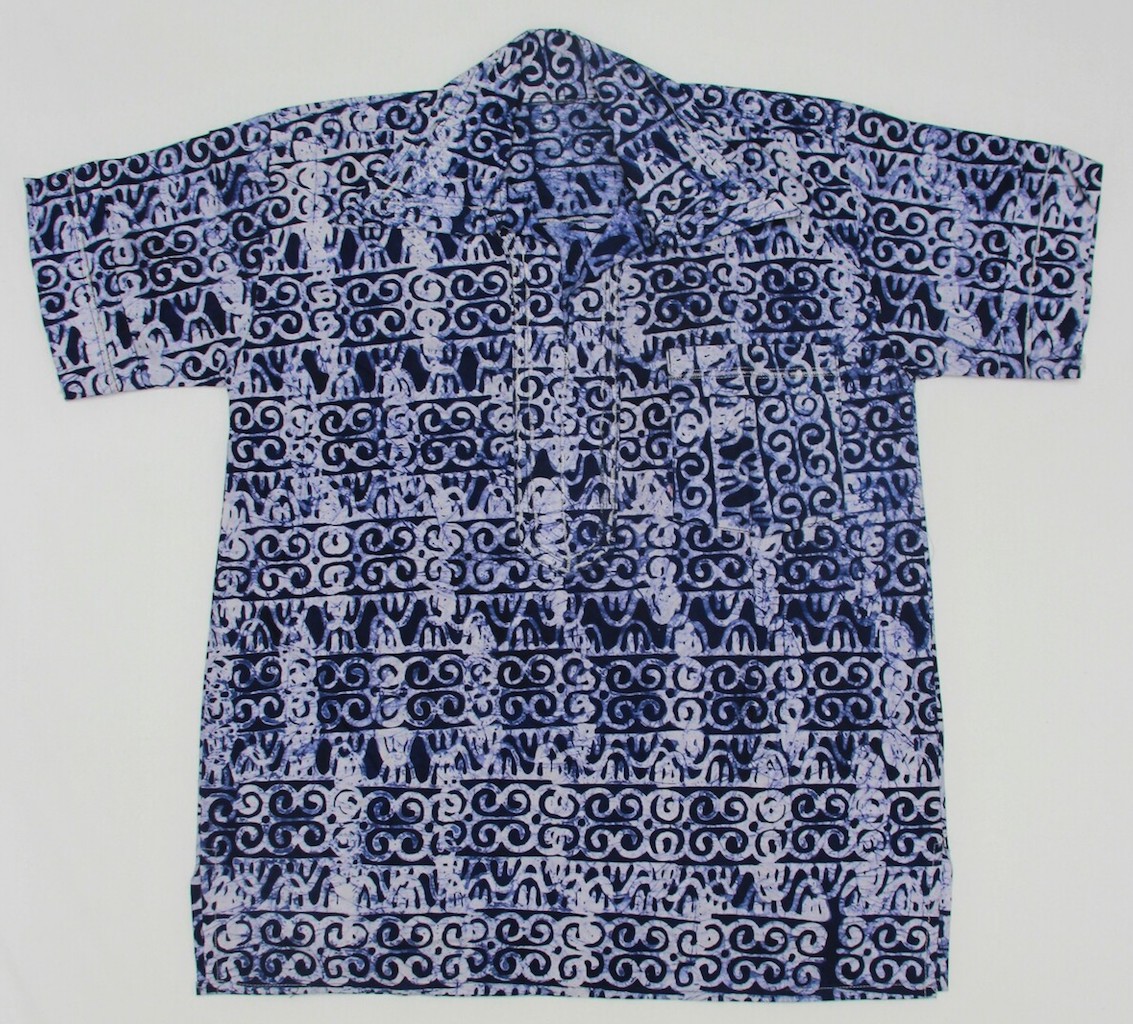 Handgemaakt, resist-geverfd shirt uit Ghana, 20ste eeuw (TRC 2010.0330).Dinsdag 20 sept 13.00-16.00: Workshop West-Afrikaans batik
(wordt herhaald op woensdag 21 september, 14.00-17.00)
Batik is een soort resist-geverfde stof die vooral bekend is uit Indonesië (batik). Het wordt echter ook op grote schaal geproduceerd en gedragen in West-Afrika, en de machinaal geproduceerde versie werd in de negentiende eeuw in West-Afrika geïntroduceerd door Europese bedrijven, zoals Vlisco in Nederland.
De workshop wordt gegeven door Addoley Dzegede, die ook de llezing geeft in de ochtend. In deze interactieve workshop zal Addoley Dzegede batiktechnieken demonstreren die ze in Ghana heeft geleerd met behulp van gesneden schuim en gesneden houten stempels om repeterende patronen op katoen te creëren.
Datum: dinsdag 20 sept. Tijd: 13.00 - 16.00 uur, en woensdaag 21 sept. van 14.00-17.00 uur. Taal: Engels. Lokatie: TRC Leiden, Hogewoerd 164, 2311 HW Leiden. Maximaal aantal deelnemers: 10. Kosten: 35 euro. Het wordt op prijs gesteld als u ons van tevoren laat weten of u erbij wilt zijn (This email address is being protected from spambots. You need JavaScript enabled to view it.).
*****
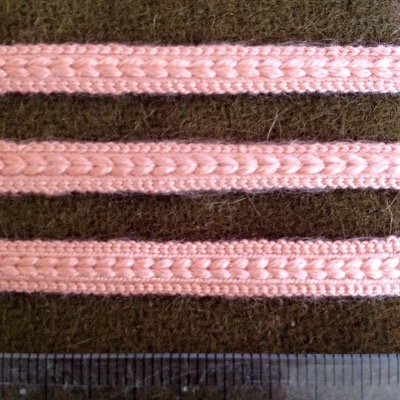 Voorbeeld van modern passement.Woensdag 21 sept 10.00-13.00: Workshop, 16de en 17de eeuws passement.
Wambuizen, broeken en andere kledingstukken werden in de 16de en17de eeeuw vaak versierd en verstevigd met vele meters passement: smalle bandjes van zijde of wol, geweven of gevlochten. Tijdens deze workshop maken we kennis met de verschillende weef- en vlechttechnieken en maken we kleine voorbeeldjes van passement.
Deelnemers hoeven in principe niets mee te nemen, maar wie kaartweefkaartjes en/of een bandweefraampje heeft, mag die uiteraard meebrengen.
Deze woensdagochtend-workshop wordt gegeven door Dorothee Olthof, een deskundige op het gebied van archeologisch textiel en de reconstructie van middeleeuws en later textiel.
Datum: woensdag 21 september 2022. Tijd: 010.00 - 13.00 uur. Lokatie: TRC Leiden, Hogewoerd 164, 2351 HW Leiden, Nederland. Docent: Dorothee Olthof. Taal: Nederlands. Kosten: 35 euro (te betalen bij start bijeenkomst). Materiaal / koffie / thee worden verstrekt. Max. aantal deelnemers: 10. Graag tevoren aanmelden: This email address is being protected from spambots. You need JavaScript enabled to view it..
*****
TRC Boekenmarkt, zaterdag 8 oktober
Op zaterdag 8 oktober organiseert het TRC een markt van tweedehands textiel- en kledingboeken. Een breed scala aan boeken (van technische tot historische onderwerpen) worden verkocht tegen sterk gereduceerde prijzen. Het TRC is geopend van 10.00 tot 15.00 uur.
Bezoekers krijgen ook de kans om de nieuwe tentoonstelling van het TRC te zien over de Aziatisch-Afrikaans-Europese handel in en invloeden op textiel en kleding.
*****
TRC Intensieve Textiel Cursus. Volgende editie: 10-14 oktober
Deze cursus wordt sinds vele jaren gegeven door dr. Gillian Vogelsang-Eastwood en trekt belangstellenden uit de hele wereld. De cursus combineert theorie met praktijk, met een nadruk op het uitproberen van verschillende technieken zoals spinnen, weven en verven, het onderzoeken en analyseren van organische en niet-organische vezels, en het bestuderen van complete stoffen.
De meest recente bespreking van de cursus is geschreven door Monica Chen from Heidelberg, die deelnam aan de april 2022 cursus.
Voor de rest van 2022 en in 2023 wordt de cursus gegeven op de volgende data: 10-14 oktober, 21-25 november. In 2023 gelden de volgende data: 20-24 febr; 24-28 april; 19-23 juni; 21-25 aug; 23-27 okt.