
Some six months ago we published a blog about various types of face masks recently added to the TRC Collection as a reflection of dress and identity in the era of the covid-19 pandemic. Over the last few months we have been given more face masks of three very different types, with very different backgrounds.
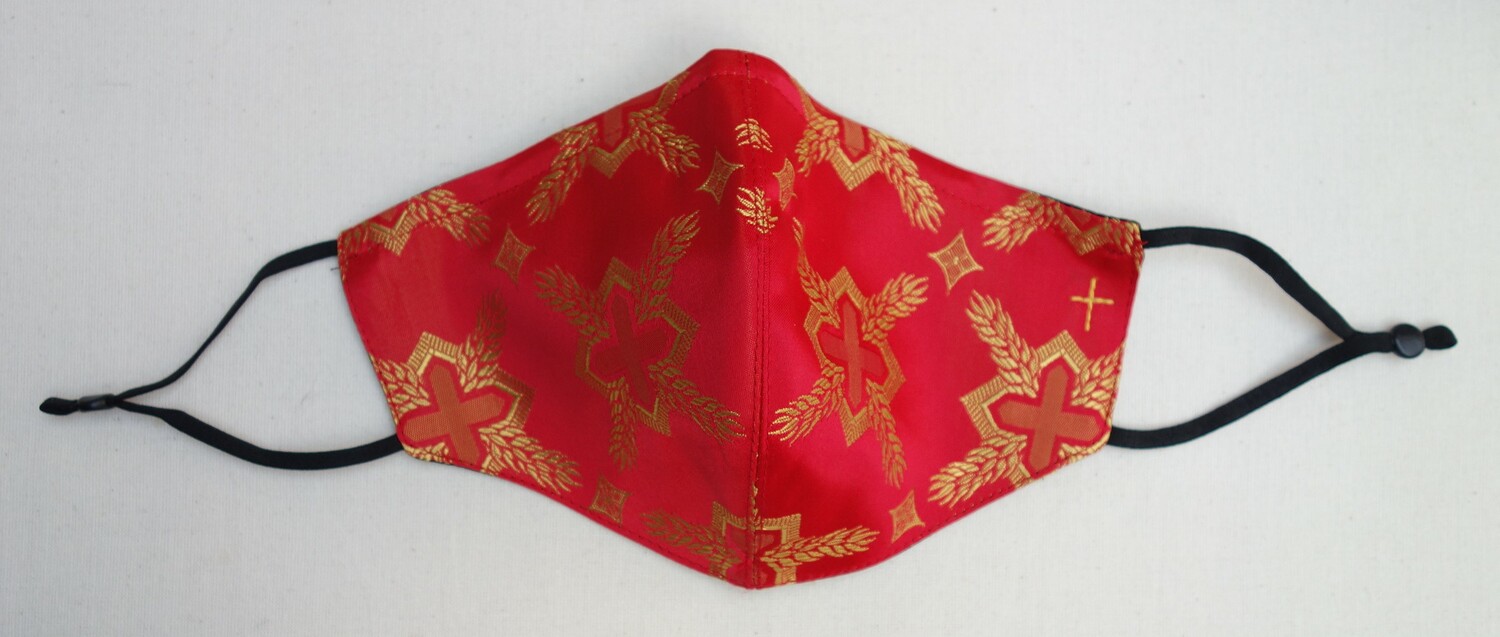 Face mask with Christian symbols, used in one of the Eastern Orthodox Churches, early 2021 (TRC 2021.0621).
The first group consists of three masks made for priests of the (Eastern) Orthodox Christian Church during services and masses (TRC 2021.0620, TRC 2021.0621 and TRC 2021.0622). These masks were spotted and acquired by Shelley Anderson, one of the TRC volunteers. They were made using cloth of various colours with Christian symbols, as well as embroidered crosses. For some time we have been expanding our collection of textiles and garments that reflect different religious groups and how the garments and textiles can play such important roles in various situations, rituals and moments. These masks constitute a welcome addition.
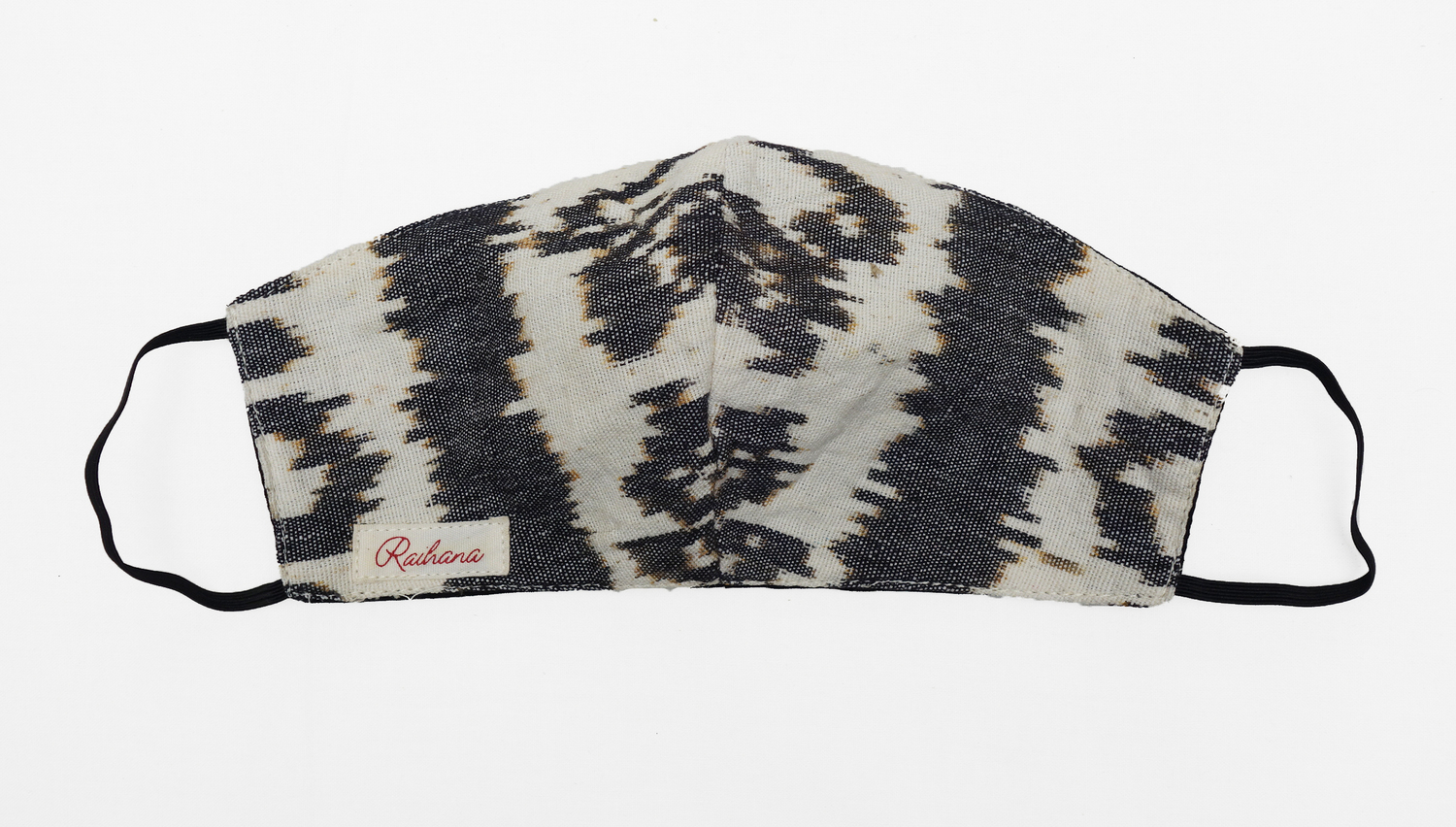 Face mask made from ikat material, Indonesia, 2020/2021 (TRC 2021.1352).
Then came a couple of ikat examples from Indonesia via the Family Bloembergen, Leiden, who have given a range of other items, including Japanese and Indonesian textiles and garments (TRC 2021.1352 and TRC 2021.1353). The masks are made of ikat cloth and they will be on display in our forthcoming exhibition simply called IKAT (opening February 2022). The exhibition will explore the dyeing and weaving techniques associated with this historic form of cloth, which can be found in various countries and cultures from Indonesia to Guatemala (and many other places in-between! ). We are currently looking for examples of ikat from other countries including Spain (Majorca) and France, and also from West Africa. More about this exhibition will be published shortly.
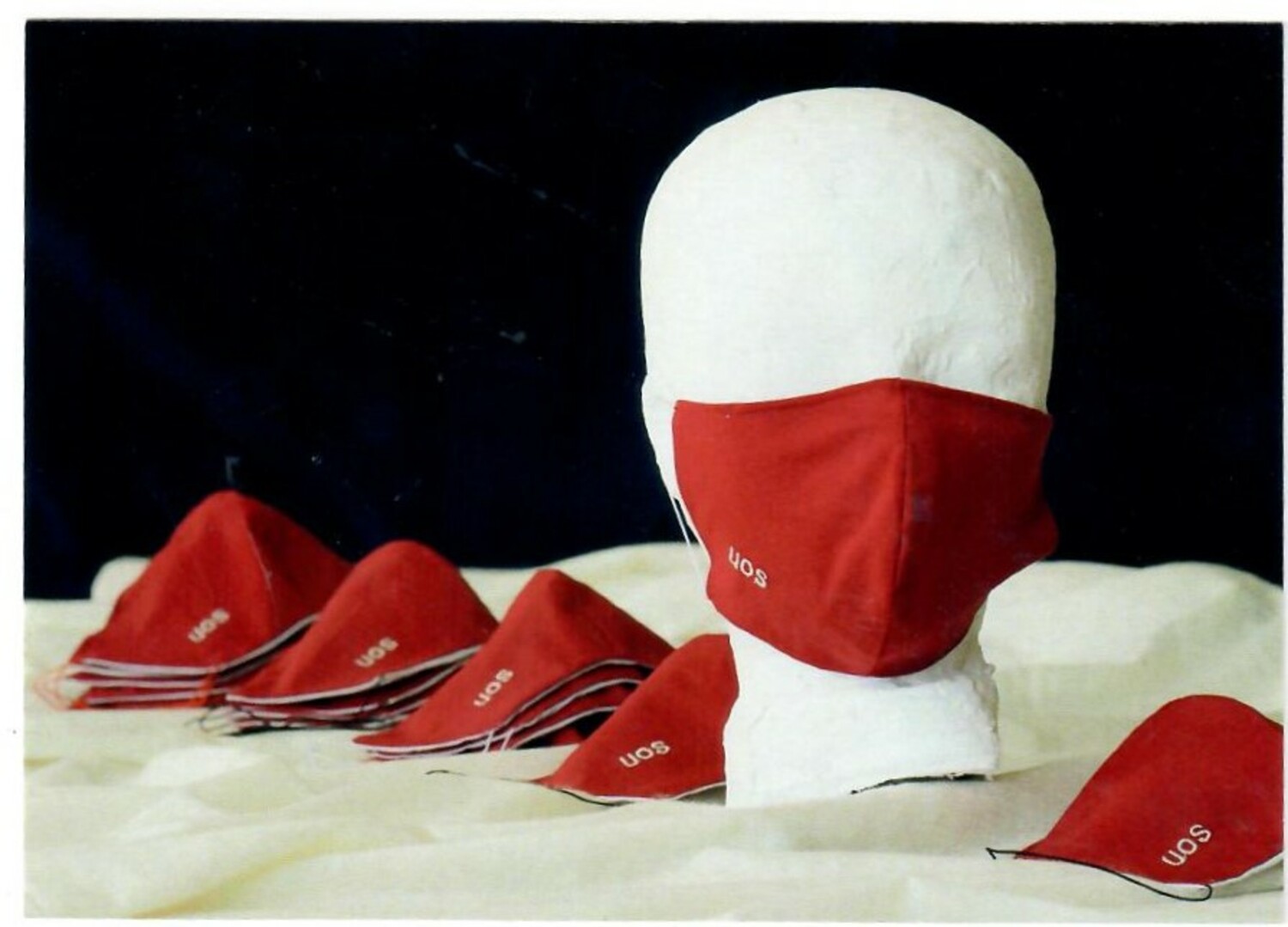 Postcard with face masks, produced by Osnabrück University, Germany, 2020/2021 (TRC 2021.1494).
The latest group of face masks arrived yesterday (on Monday, 3 May) through the post thanks to the kindness of Prof. Bäbel Schmidt, Osnabrück University, Germany (TRC 2021.1492, TRC 2021.1493 and TRC 2021.1494 (a postcard)). These are made in the textile department of the university especially for staff and students, using donated cloth. We have been discussing for some time now how the TRC and the students of Osnabrück University can continue working together after an initial visit of a group of students before the corona crisis. Despite the current situation, or perhaps because of it, we have come up with quite a few actual and digital plans, which will be further worked out later this year.
In addition, we have included several paisley (buteh) face masks and neck gaiters in the TRC exhibition on the history and use of paisley. This exhibition, by the way, will (all being well) be re-opened on the 1st June and we have extended it to 16 December 2021 to give people a chance to see an amazing range of items decorated with the ubiquitous paisley motif.
Gillian Vogelsang, Director TRC, 4 May 2021.