



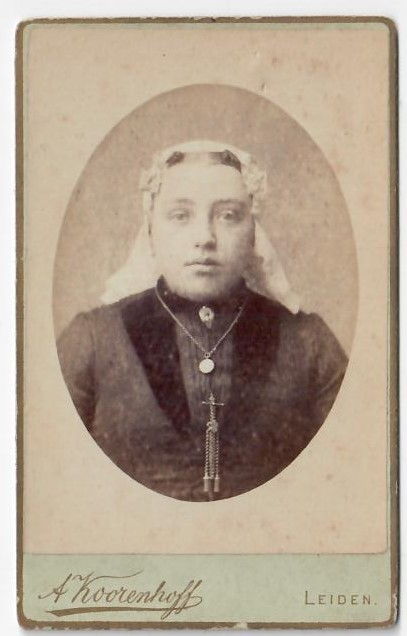
 Photograph of a young woman wearing a so-called lange cap (long cap) from the Rijnland region, c. 1888 (TRC 2021.2439f). The photograph was taken by Abraham Koorenhoff from Leiden.Rijnland is the name for part of the Netherlands that lies around the ancient city of Leiden. It used to have a special dress tradition, marked by lace caps for women.
Last week I was wondering how to present an exhibition on Rijnland caps and the women wearing them, and would we find that elusive rode draad (‘red thread’ in Dutch, which is appropriate for a textile tale) to hold the story together? We put out a call for help and the response has already been very fruitful. We now have many different aspects we can and will pursue, in fact there are enough potential stories to make a booklet, as well as a small exhibition!
What has happened? Well, thanks to the generosity, for example, of Nel de Wit, we have been given a photo album with images dating from the late nineteenth century, all of them, so it appears, showing men and women from the Van den Akker family from Zoeterwoude and beyond, just to the east of Leiden. Nel de Wit grew up on the farm Cronesteyn, near Lammenschans, and the farm is still there, now being used as a health centre. Her mother, Marijtje de Wit, née Rijnsburger, was born in Weipoort, a small village now part of Zoeterwoude. The images include people with a wide variety of ages, wearing Sunday best outfits, but also daily forms and dress for wearing when in mourning, not to mention men in regional and urban dress and in military uniform. Some of these people are named and it has been possible to identify them.
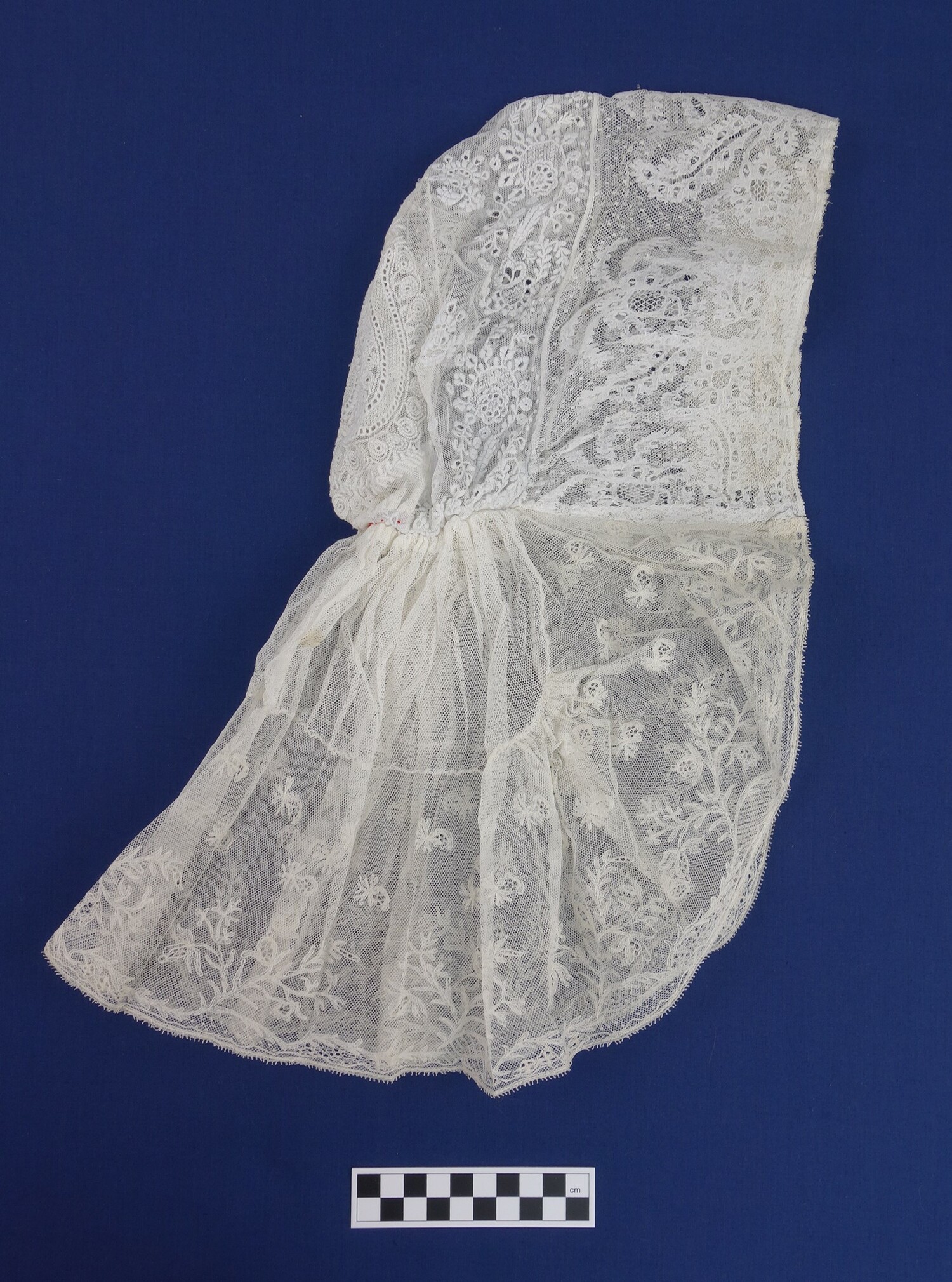 Lange kap (long cap) from the Rijnland area, decorated with bobbin lace, c. 1880 (TRC 2016.1153).Another side, literally, to this story is who took the photographs? Fortunately, there are details on the reverse sides of the photographs of at least three, mid- to late nineteenth century professional photographers from Leiden, namely Jean Henry Hoffmeister (1823-1904), Abraham Koorenhoff (1867-1917), Israel David Kiek (1811-1899), and Jan Goedeljee (1824-1905). Amazingly the latter had a studio at the Hogewoerd 160/162, literally next door to the TRC’s current location at Hogewoerd 164! And Kiek was the man who lent his name to the Dutch expression "een kiekje nemen', for taking a snapshot.
Someone else who has been particularly helpful with both time and information is Jankees Goud (Atelier Dracht, Putten). We have acquired from Jankees a small collection of short, Rijnland caps of various types and moments.
Together with the caps we already had in the TRC Collection we now have a variety of caps dating from the 1860s to the 1930s, including long and short versions, some of which were worn with an oorijzer (ornate metal bands worn around the head) and others without an oorijzer. Based on the lace types and changes to the caps it is clear that some of them would have been worn by rich women, others by poorer ones. There are Sunday best forms and some for in mourning, not to mention an example for a Rijnland badgasten ('tourist) cap. Because of the caps, the TRC Collection also now contains a range of hand and machine laces and embroidered nets, and a variety of floral designs. In other words, lots of social and technical details that can be explored.
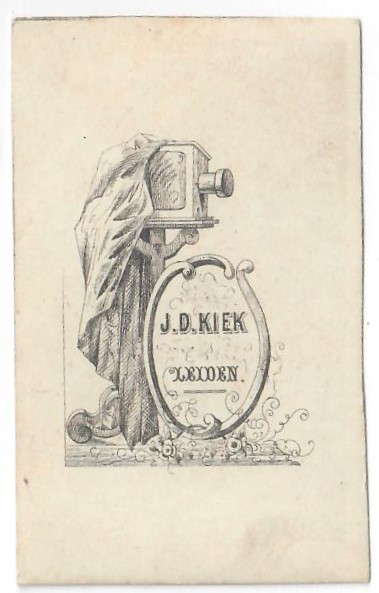 Reverse of a photograph taken by Israel David Kiek from Leiden, (ca. 1880). He lent his name to the Dutch phrase "Een kiekje maken' ('to take a snapshot'; TRC 2021.2439d). So over the next few months we will be working on the histories of the Van den Akker families and their links to Leiden and Zouterwoude. In particular, we will be looking at how the various lace caps worn in the photographs help tell and explain some Leiden and Rijnland stories of farming and urban life in the late 19th century. We are going to link actual cap types to what women are wearing in the photographs, as well as to the technical, social, family and economic stories behind the lace caps. And some say the study of textiles and clothing is boring…..
We will keep looking for more examples and information, and especially the stories relating to the women wearing these caps. Any help is most welcome.
Gillian Vogelsang, 5 August 2021


