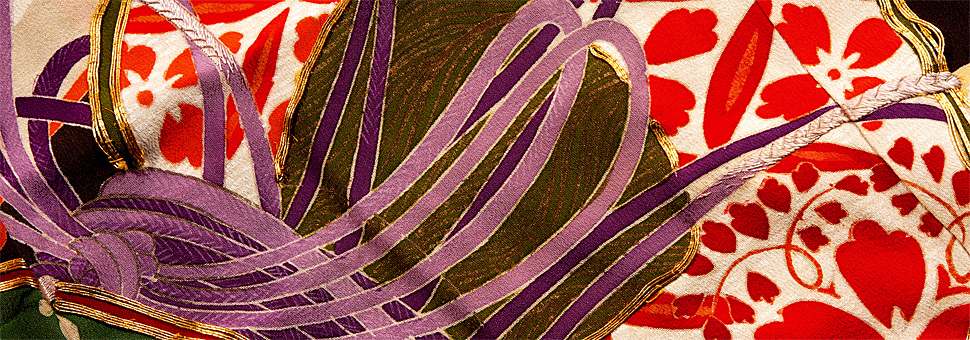


On the 6th August there was a Study Day at the TRC on the topic of Indian an Pakistani embroidery. It quickly became apparent that these two countries are truly extraordinary centres for hand embroidery in all manners and forms.
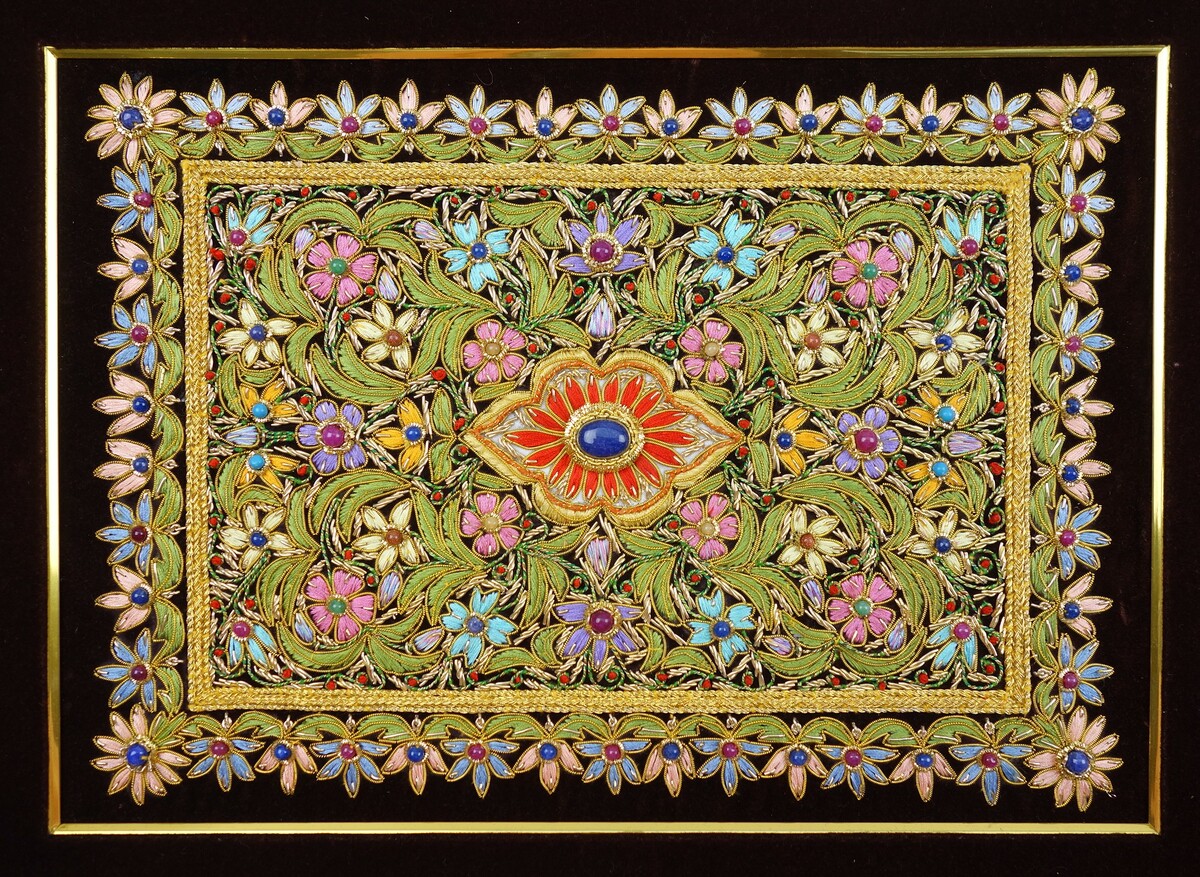 An example of Agra ‘garden’ embroidery using silk and semi-precious gems, date: 2017 (TRC 2017.2786).
A relevant theme that is often explored at the TRC is how important trade and other dynamics across history have promoted the development of hand embroidery. One would obviously and immediately think of the Silk Road, colonial influences or even grand power structures such as the Mughal Empire when we discuss how textiles, skills and styles travelled across and towards the subcontinent, but these are far from being the only notable dynamics in this field.
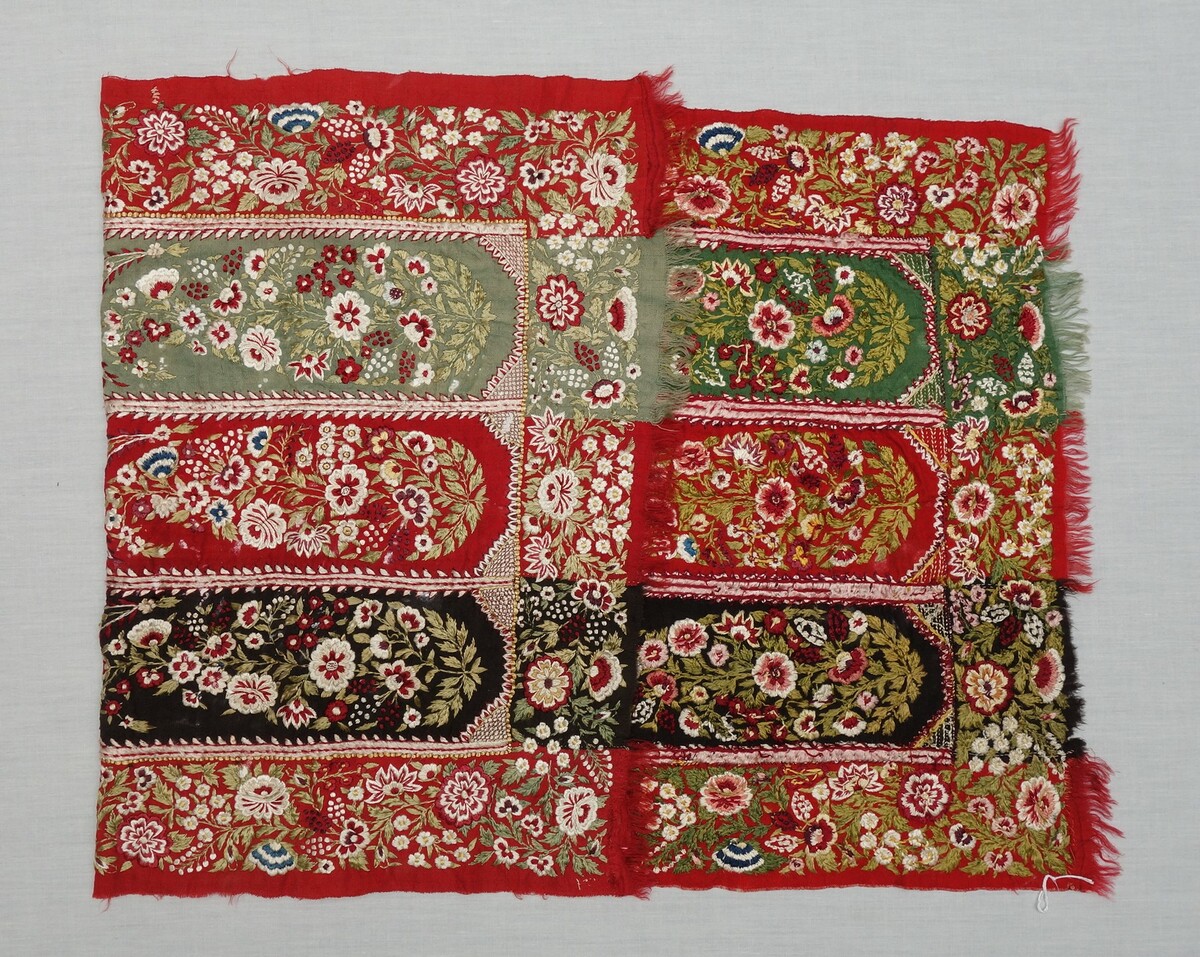 An example of Delhi embroidery in floss silk on wool, date: 19th century (TRC 2018.2234).In the south of India near Goa, a Christian Syriac community that was established more than 600 years ago still produces liturgical embroidery for Orthodox communities abroad. Another example is the Parsi community from around Mumbai and elsewhere in India, who descends from various Iranian Zoroastrian groups who migrated to India when pushed away by the growing tide of Islam in Iran. This group mixes Indian, Persian and even Chinese designs in their embroidered shawls!
Diversity was really the main word of the day: the vast number of boxes filled with examples of embroidery that were taken out from the TRC Collection reflected on the incredible variety in terms of materials used, tools, types of embroidery stitches and designs.
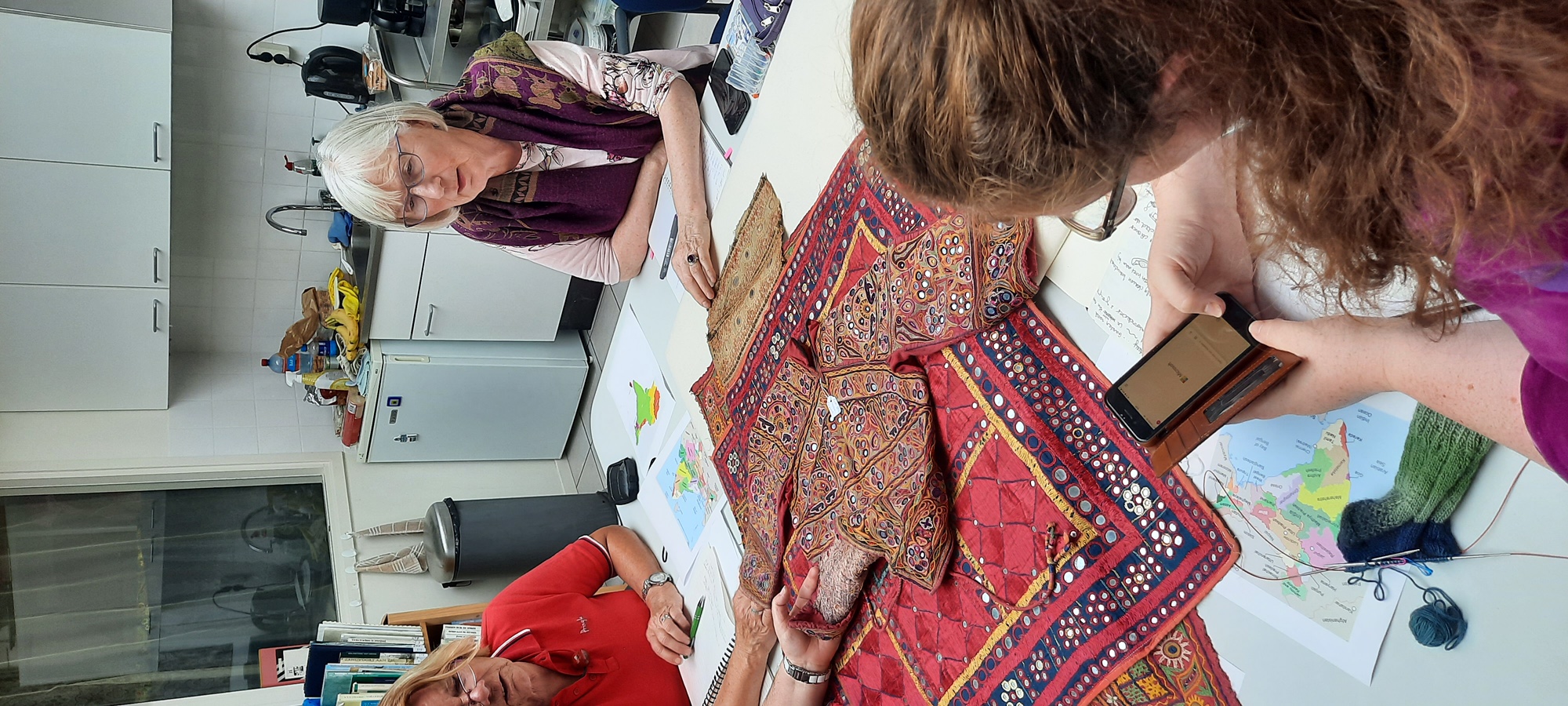 Group of participants at the TRC Study Day on Indian subcontinent embroidery, 6th August 2021. Photograph by Augusta de Gunzbourg.As such, nettle cloth and orchids threads can be used in Nepal, Delhi embroiderers use flossed silk on wool, Agra is famous for its gold and gem inlaid pieces while the Jain communities prefer to use synthetic silk in order to abide by their spiritual conviction not to not any life forms. In Pakistan, embroidery can be found on leather shoes or, among some ethnic groups, worked with interesting decorative materials such as coins and buttons used to adorn women’s dresses.
With regards to tools and techniques, the same variation applies all over the subcontinent; hooks, needles, frames, no frames, laying out designs by memory or by pre-printing them with blocks, all these things can be found across that area of the world.
A true highlight of these study days is always the possibility to see with one’s own eyes the examples that are talked about during the day. Nothing compares to being able to touch, analyse and even turn over pieces of embroidery in order to consider their texture, look at the stitches or see how the light reflects on them.
The truth is that one day is not enough to cover the amazing complexity of Indian and Pakistani embroidery and we all came out a little dazzled by the amount of information and beautiful examples that were shown. A suggestion that was made was to have a two-day course on the same topic, as it was so vast!
Augusta de Gunzbourg, 14th August 2021