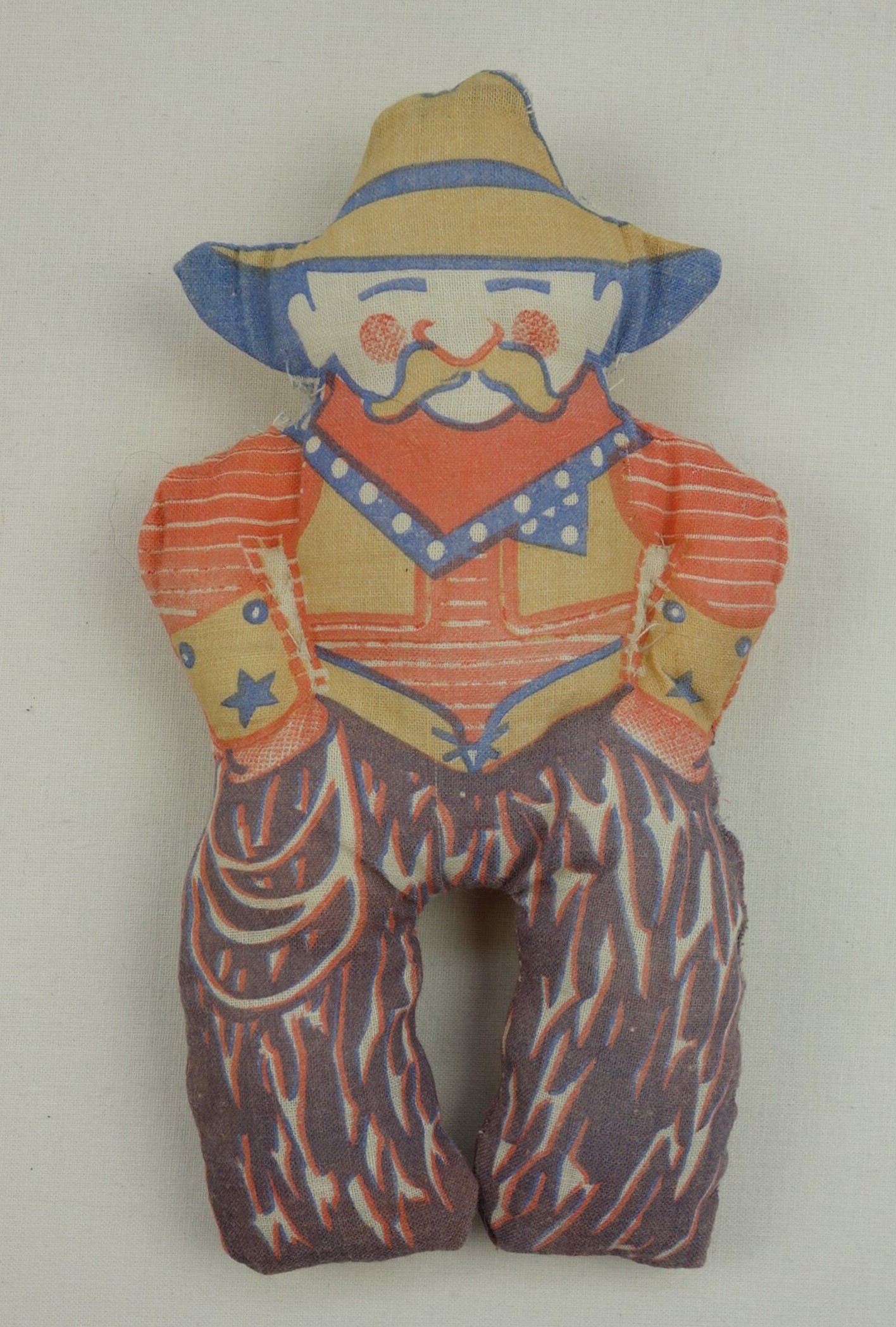
 Cowboy cloth doll, USA, 1937. TRC 2017.3276The TRC has some cotton dolls with real history in its collection. They are from the US, dated to the 1930s , and were preprinted on feed sacks. After the sugar or flour sack was emptied, thrifty housewives would sew the front and backs of the sacks together, stuff the doll, and have a new toy for their children.
You can see examples like Miss Supreme (TRC 2018.009) or Rodkey’s Rag Darling (TRC 2017.3232), or Dusty the cowboy (TRC 2017.3276) (who happens to be my favourite; now on loan to the Museum of Fashion & Textiles in London).
But the artist and citizen historian Rita Maasdamme (1944-2016) brought the art of making cloth dolls to a whole other level. Born in Aruba, Maasdamme started making dolls under her Surinamese mother’s tutelage when she was nine.
When she was 19 she left with her sister for Amsterdam, where she studied couture, and eventually worked teaching handicrafts. She became passionate about the folklores, histories and cultures of the Dutch Antilles and Suriname, and used her amazing needlework skills to tell these histories from the perspectives of the Caribbean people themselves.
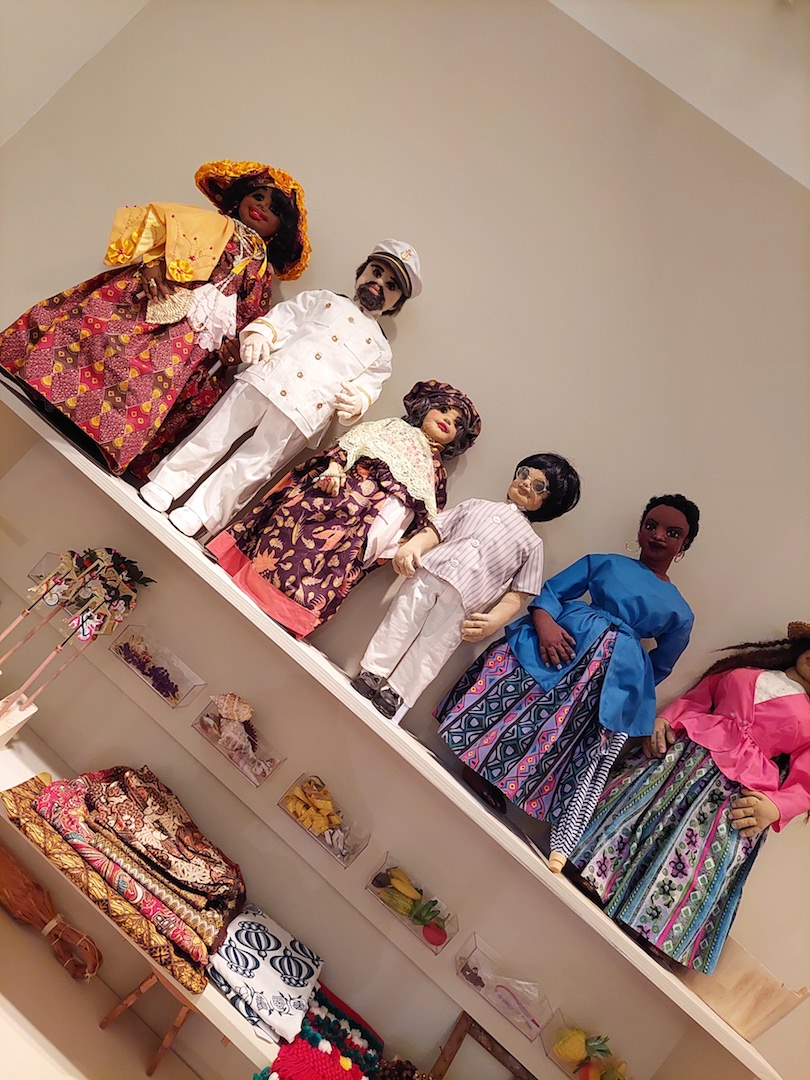 Sampling of dolls from the Maasdamme Collection. Photo: Shelley AndersonMaasdamme made some 250 dolls, or creatures, as she called them. Each has an individual name, varying skin tone and hair, ten toes and fingers, and genitals. After meticulous research, which included study trips to Aruba, Curacao and Suriname to search archives, take photographs and collect fabrics and artifacts, she also constructed settings to place the dolls in dioramas.
Seventeen of these dioramas, which give a fascinating account of Dutch colonial history, are now on display at the Amsterdam Museum aan de Amstel.
There are plantation scenes where enslaved Africans cut sugar cane while the plantation owner enjoys tea on his porch. Another diorama shows pre-colonial life in an indigenous Kari’na village in Suriname. The details in this particular diorama are striking—one of the dolls wears a beautifully beaded belt, while the hammock another doll lies in, and the matapi (a tool used to grate cassava) were handmade in Suriname.
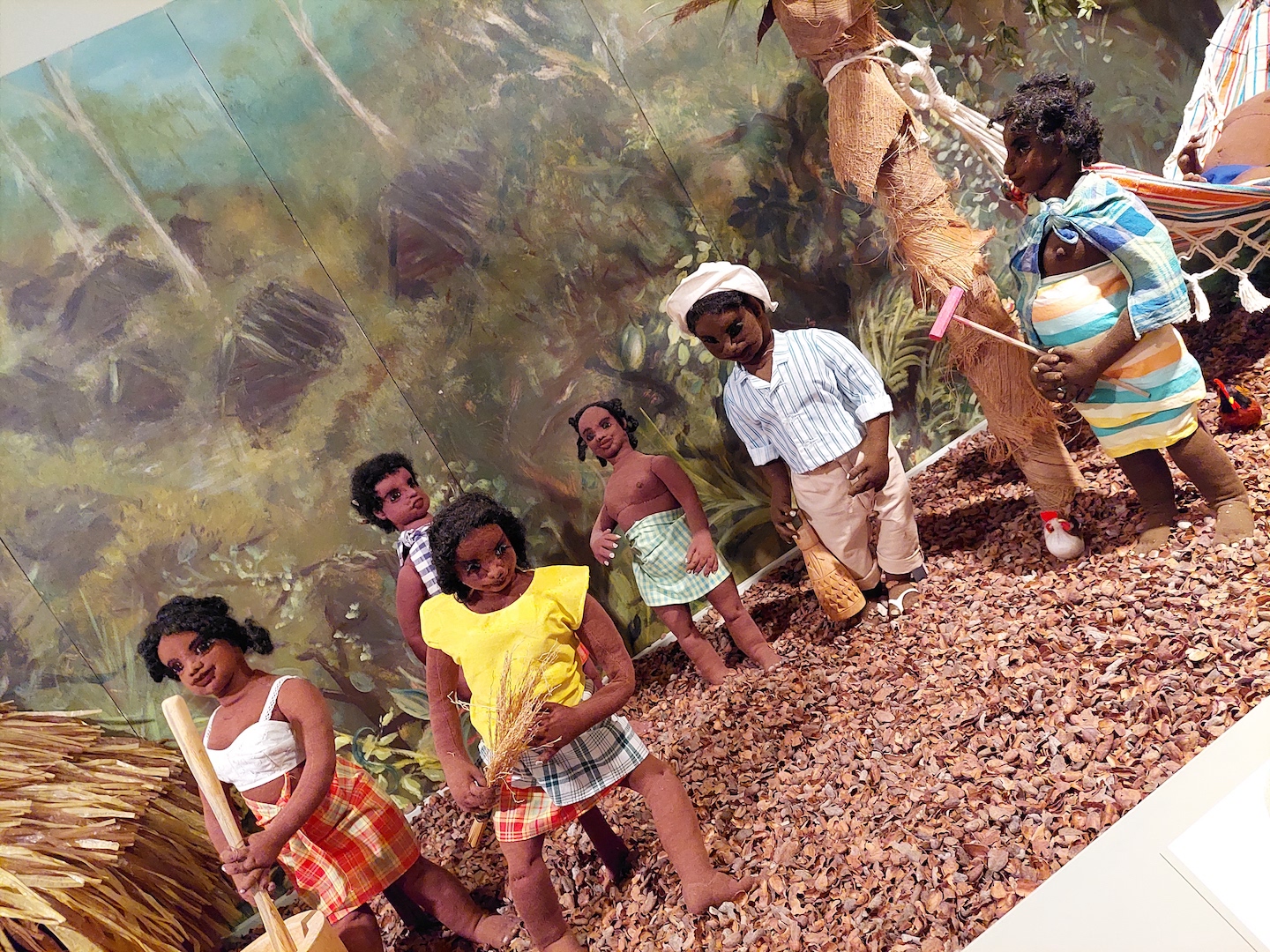 Diorama of modern Maroon village in Suriname. Photo: Shelley AndersonYou can see this same attention for detail in a diorama of a contemporary Maroon village, where the dolls wear the typical checked cotton fabrics of the Maroons. The women wear a wraparound skirt called a pangi, while the men wear a loin cloth called a kamisa (for more on Surinamese textiles see the TRC blog of 15 October 2019).
Maroons were enslaved people who freed themselves. They escaped slavery and formed their own independent communities, many of which survive to this day throughout the Caribbean and in Suriname. In 1760, unable to defeat them, the Dutch colonial government was forced to sign a peace treaty with the Ndyuka Maroon people.
 Scene inside the famous Campo Alegre brothel, Curacao. Photo: Shelley AndersonThere are several dioramas of Maroon leaders like Tula, Baron, Kuami and others, who all resisted enslavement. There are some wonderful modern scenes, too, of dances and celebrations. These include an indoor scene of a famous legal brothel, Campo Alegre, established in Curacao in the 1950s to serve workers at the Shell oil refineries (be sure to look for the tiny condoms on the table).
Maasdamme conducts tours of these dioramas for schoolchildren and others, and exhibits her collection at the Historical Museum in Aruba, in order to pass a proud and rich heritage. Her collection may become part of the future National Museum of Slavery, which is being developed in Amsterdam.
The Maasdamme Collection will be on display at the Amsterdam Museum aan de Amstel until 3 September, 2023.
Shelley Anderson, 26 July 2023