
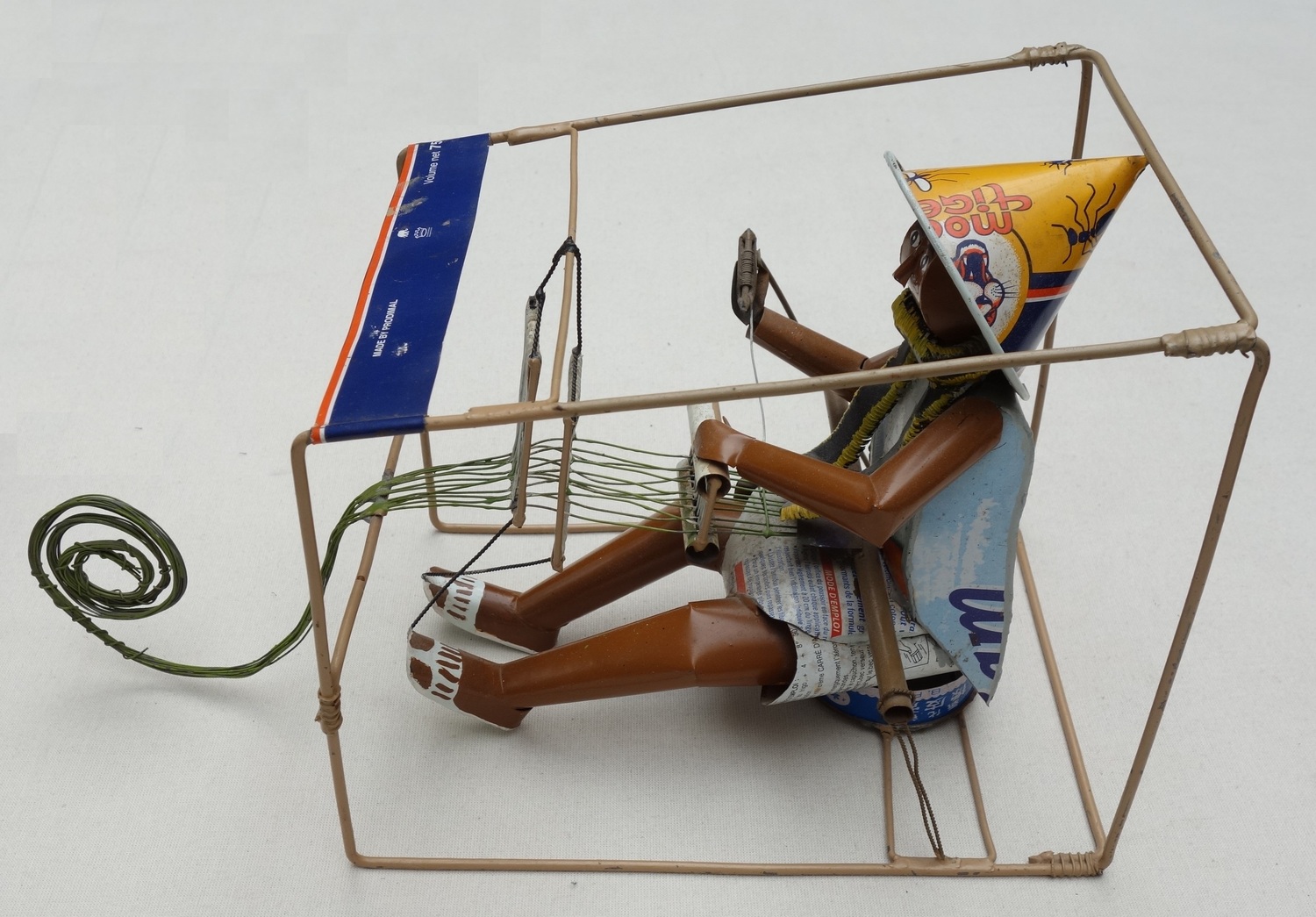
 Tin model of a frame loom from Mali, used for the traditional narrow-width bands of cloth (TRC 2023.1212).
(6th August 2023) We recently visited Prof Rogier Bedaux, a long time friend, supporter and indeed an original Board member of the TRC. The reason for the trip was simple, volume 3 of the Bloomsbury World Encyclopedia of Embroidery, which is about Sub-saharan African embroidery, is dedicated to him! This is a small way of thanking him for all his help over the years.
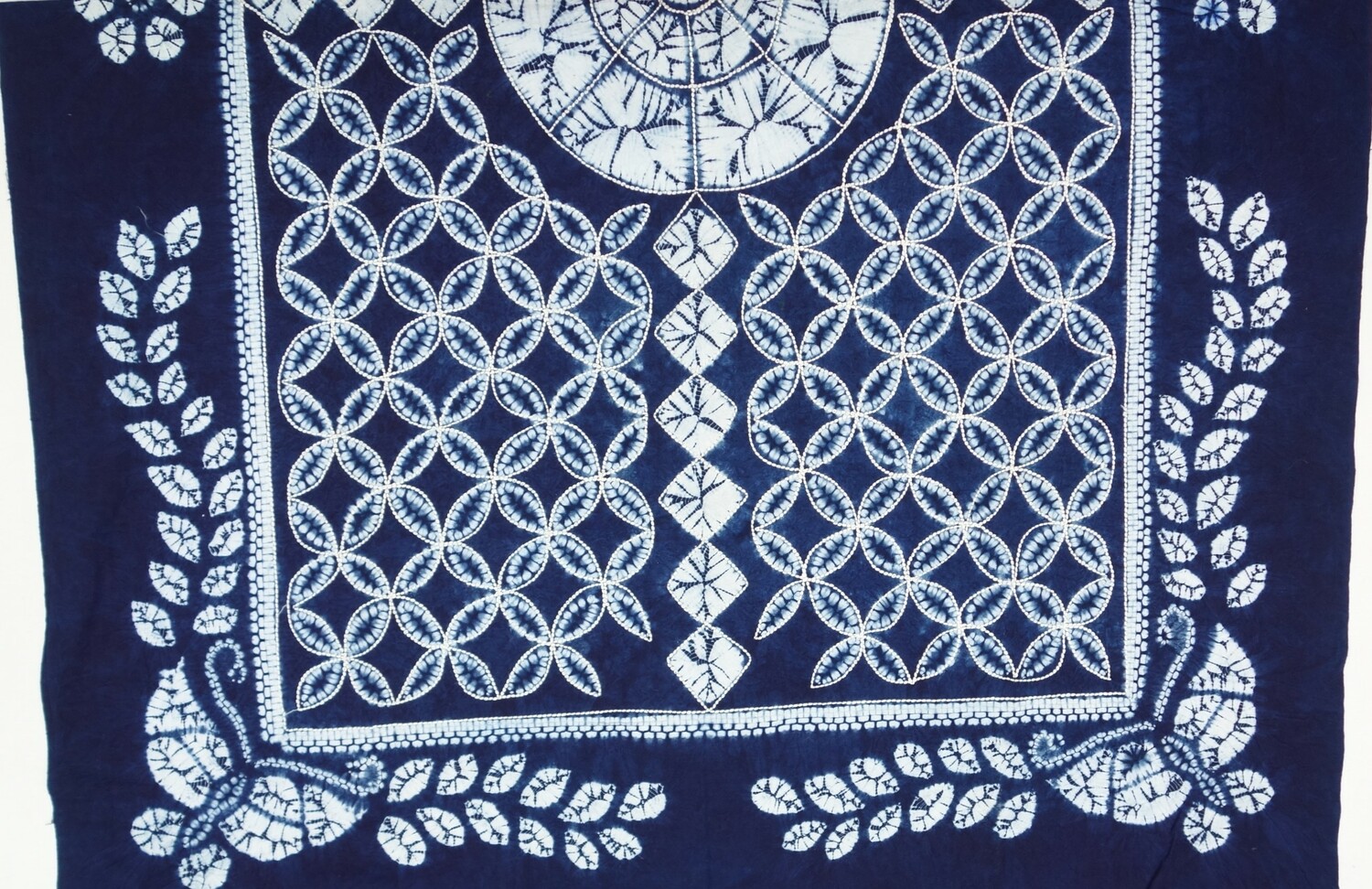 Factory woven (tabby weave) cloth, hand resist dyed (tie-dyed), machine embroidered. Mali, late 20th century (TRC 2023.1196).Rogier used to be curator for Africa in the National Museum of Ethnology, Leiden (now known as the Wereldmuseum Leiden) and has long been interested in textiles and was responsible, for example, for the initial excavations and publication of the Tellem textiles from Mali, which are some of the oldest, provenanced textiles in West Africa.
We surprised him with the dedication, but he surprised us by an unexpected donation of a group of textiles mainly from Mali, as well as a box of books. The textiles are currently being added to the TRC Collection database and Rogier is providing extra details and references.
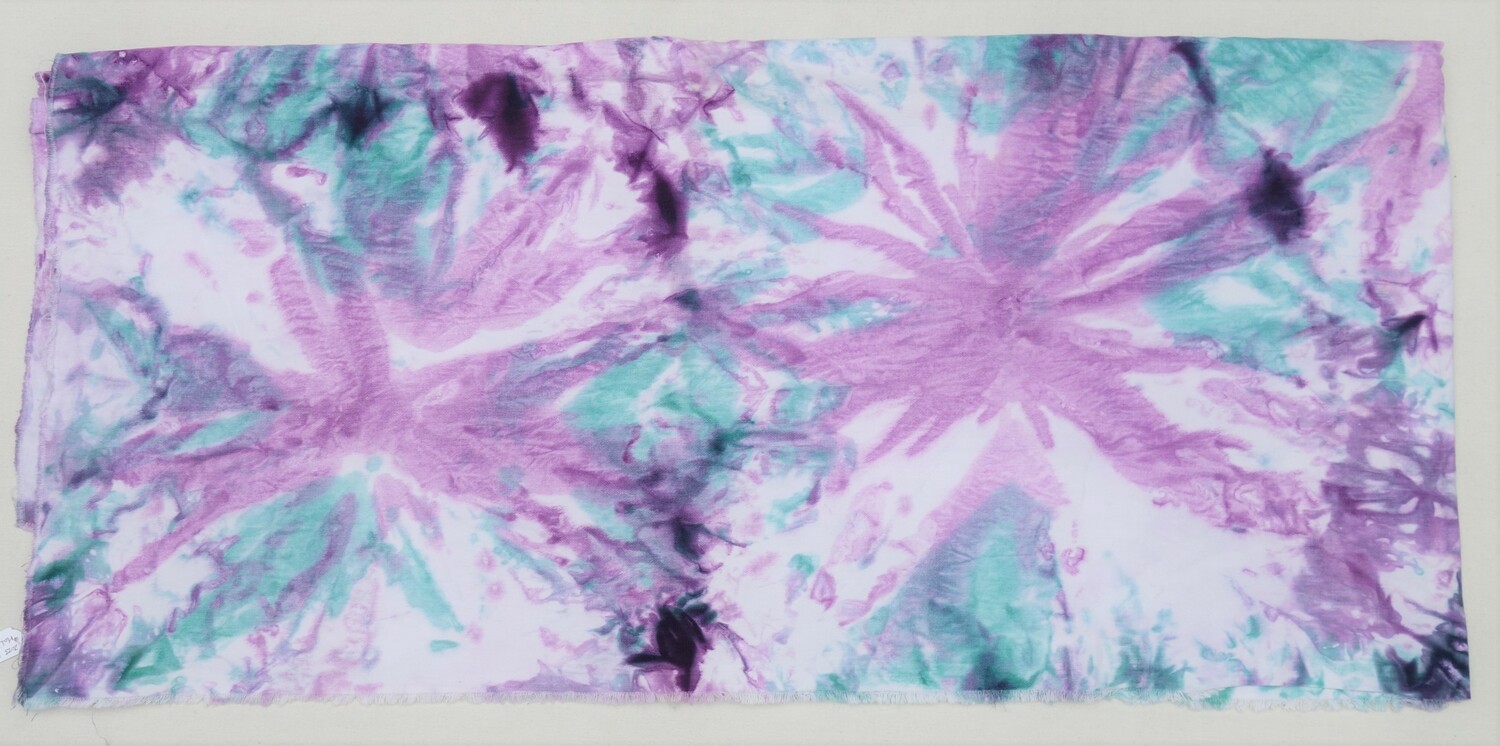 Factory woven (twill weave) cloth, hand resist dyed (tie-dyed). Mali, late 20th century (TRC 2023.1198).The items include woven cloth, resist dyed forms (tie-dye; TRC 2023.1197 and TRC 2023.1198) and block printed (TRC 2023.1206), two embroideries, one hand (TRC 2023.1209) and one machine form (TRC 2023.1196), as well as six bazins of various colours.
Bazin is a form of polished damask cloth that is often woven in Austria and Germany and exported to West Africa. Some of the bazins in the donation are decorated with rows of small, direct printed motifs made from carved, wood and calabash skin blocks that are about 8 x 8 cm in size (such as TRC 2023.1201 to TRC 2023.1204). Bazin is very popular for clothing in West Africa and recently we had some examples of this type of cloth on display in the TRC’s exhibition about textile trade links between Asia, Africa and Europe.
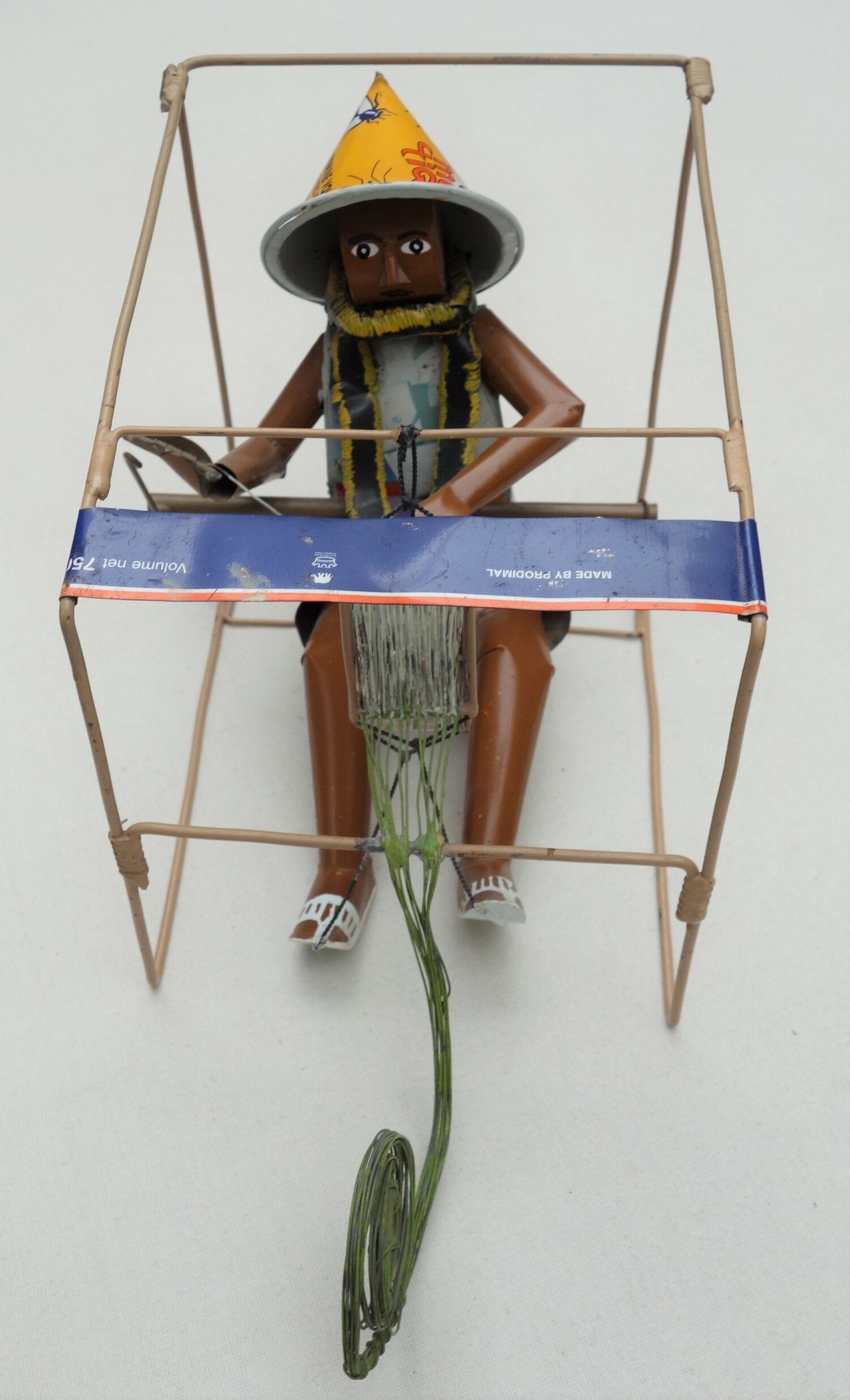 Another photograph of the model of a man working at a frame loom made from old pieces of tin cans and metal strips. Mali, 2004 (TRC 2023.1212).Among the Mali items given by Rogier was a small model (TRC 2023.1212) of a weaver at work, on a loom which is made out of old tin and aluminium cans, especially insecticides. The weaver is working at a horizontal frame loom with two heddles worked with feet treadles. The warp threads are wrapped into a large coil.
The width of cloth being produced is narrow and reflects the forms often produced using traditional West African looms of this type. Among the Mali textiles in the donation, for examples, there were hand woven textiles made up of numerous bands that ranged from 4.5 cm ( TRC 2023.1205) to 12 cm (TRC 2023.1206) in width.
This type of narrow bands has been used for a wide range of textile types, literally from elite, kente cloth from Ghana, to dammur cloth from Sudan that was associated with 19th and early 20th century sub-Saharan trade in textiles, as well as the use of this type of cloth for clothing worn by locally enslaved people.
We asked for further details about the model and its history, and this is what Rogier wrote (originally in Dutch):
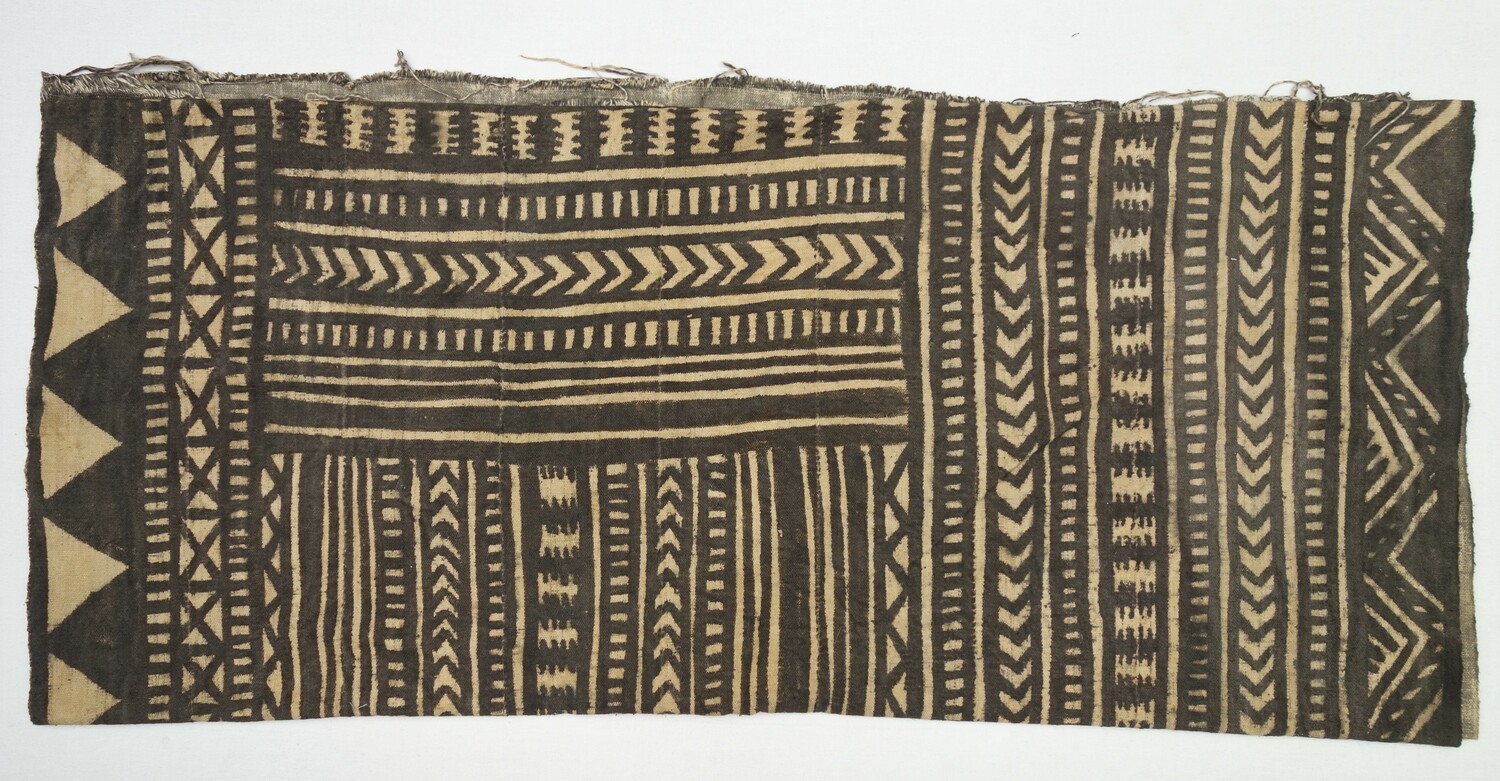 Hand spun and woven (tabby weave) cloth, block printed. Mali, late 20th century. This type of cloth is woven on a horizontal frame loom similar to tin model loom (TRC 2023.1206).
"I bought the loom (TRC 2023.1212) made from old tin cans from Ladji Badiaga on the market of Bamako in 2004. He has made many tin objects over the years, including various Malian football players, Dogon dancers with different masks, cars, Dogon masks, toys, etc. He made them mainly for tourists. There were several manual labourers working in the market, but he was the best.
Everywhere in Africa, waste is used to make new usable things. But children's toys are also made from it such as tin cars, even dolls and bracelets from old plastic sandals, etc. They are often made by children themselves. People such as Badiaga work a bit more professionally. For example, they solder tin plate together, use iron scissors, hammer and pliers and the resulting objects are also painted with paint. In 2004, Badiaga also had a number of students working. Everything can happened at the market in a small workshop!"
Gillian Vogelsang-Eastwood, 6 August 2023