

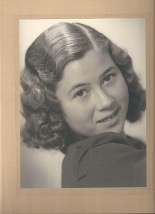
 Marianne Rutten (1924-2021), photographed in c. 1942. We have recently had a surprise donation by Jeantine van de Ven, Leiden, who popped in with several bags and boxes of textiles and other objects that belonged to her mother, Marianne Rutten (1924-2021). Among the items was a small cardboard box (TRC 2023.2567) that has led to various thoughts and reflections!
More specifically, it is a memory box that reflects life for one young woman in 1944 and 1945. The contents of the box were assembled by Marianne, who was born and brought up in Tilburg in Noord-Brabant, which lies in the south of the Netherlands and was one of the first Dutch cities to be liberated from the Nazi Germans in 1944.
It would appear that when the Prinses Irene Brigade (the Netherlands), the 15th Scottish Infantry Division and other troops arrived in Tilburg in October 1944 there were 13 days of serious fighting, but once the Germans had been forced out there were some large, public parties and the Scottish infantry provided pipe band music.
 Photograph of soldiers of the Army Catering Corps, Tilburg, 1944/1945.
It also became accepted for the soldiers to give their dance partners a memento such as a cap badge, the rank pips from the shoulder and the regimental/country patch from the upper sleeves of a uniform tunic.
And yes, in the memory box there are examples of all of these. Some of the badges were given directly to Marianne, others were collected from friends. There are also two squares of dark blue cloth with red and white crossed lines (such as TRC 2023.2567.08). Were these from a military kilt?
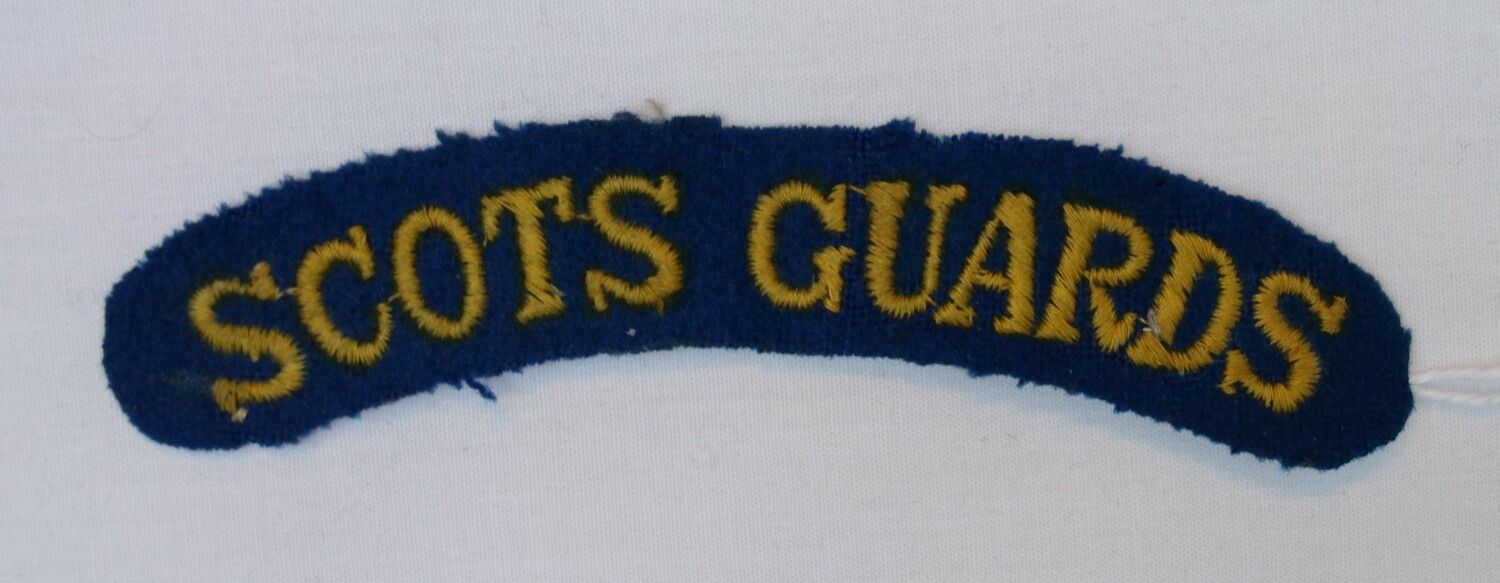 Uniform badge of the Scots Guards, c. 1944 (TRC 2023.2567.04).
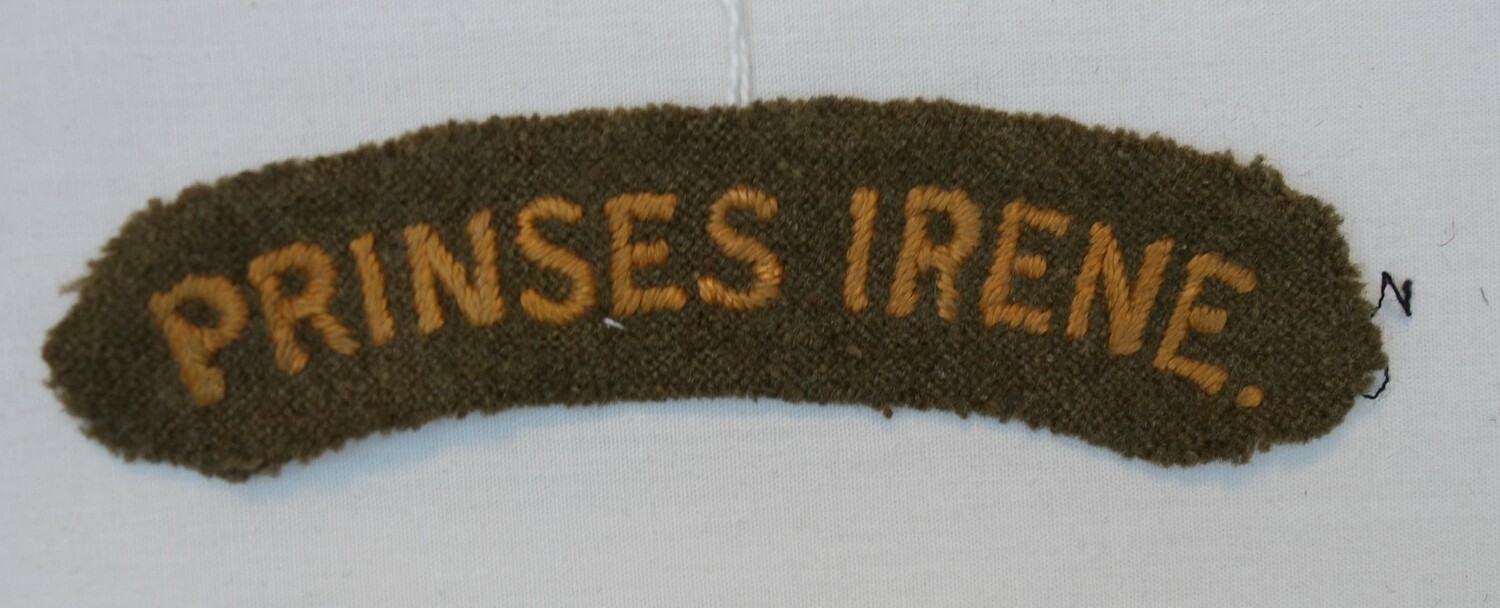 Uniform of the Prinses Irene Brigade, c. 1944 (TRC 2023.2567.02).
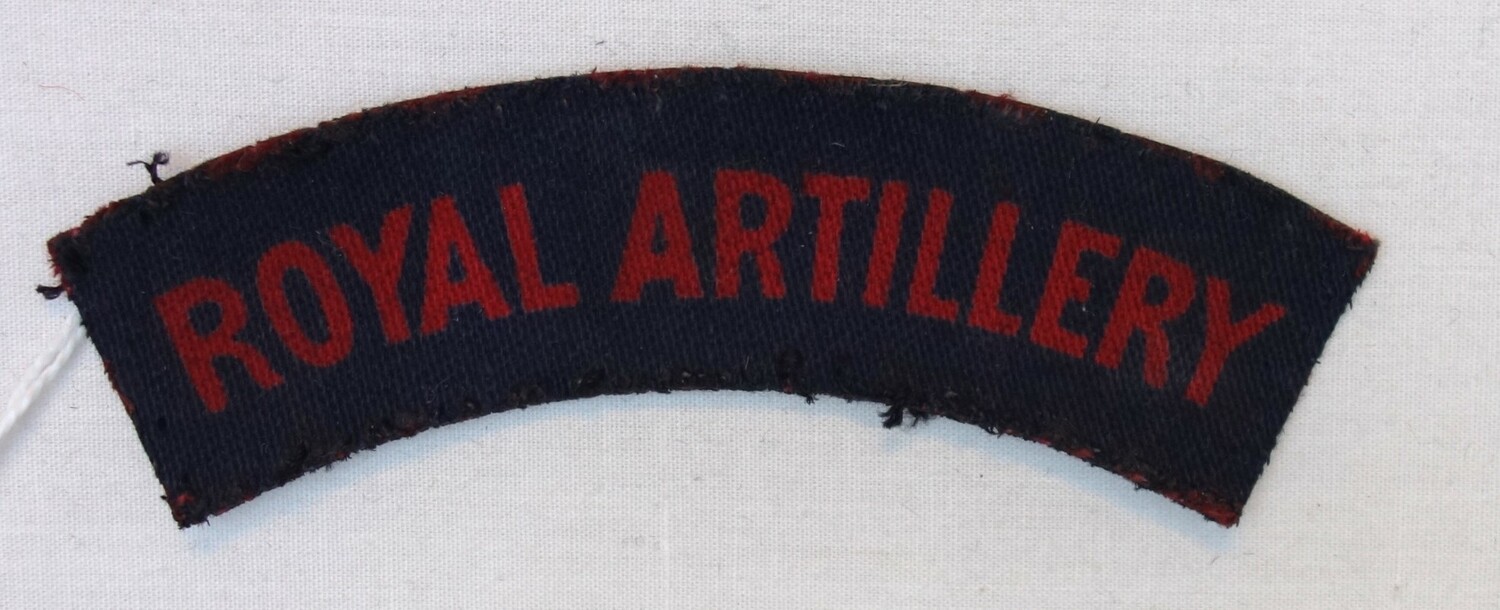 Uniform badge of the (British) Royal Artillery, c. 1944 (TRC 2023.2567).
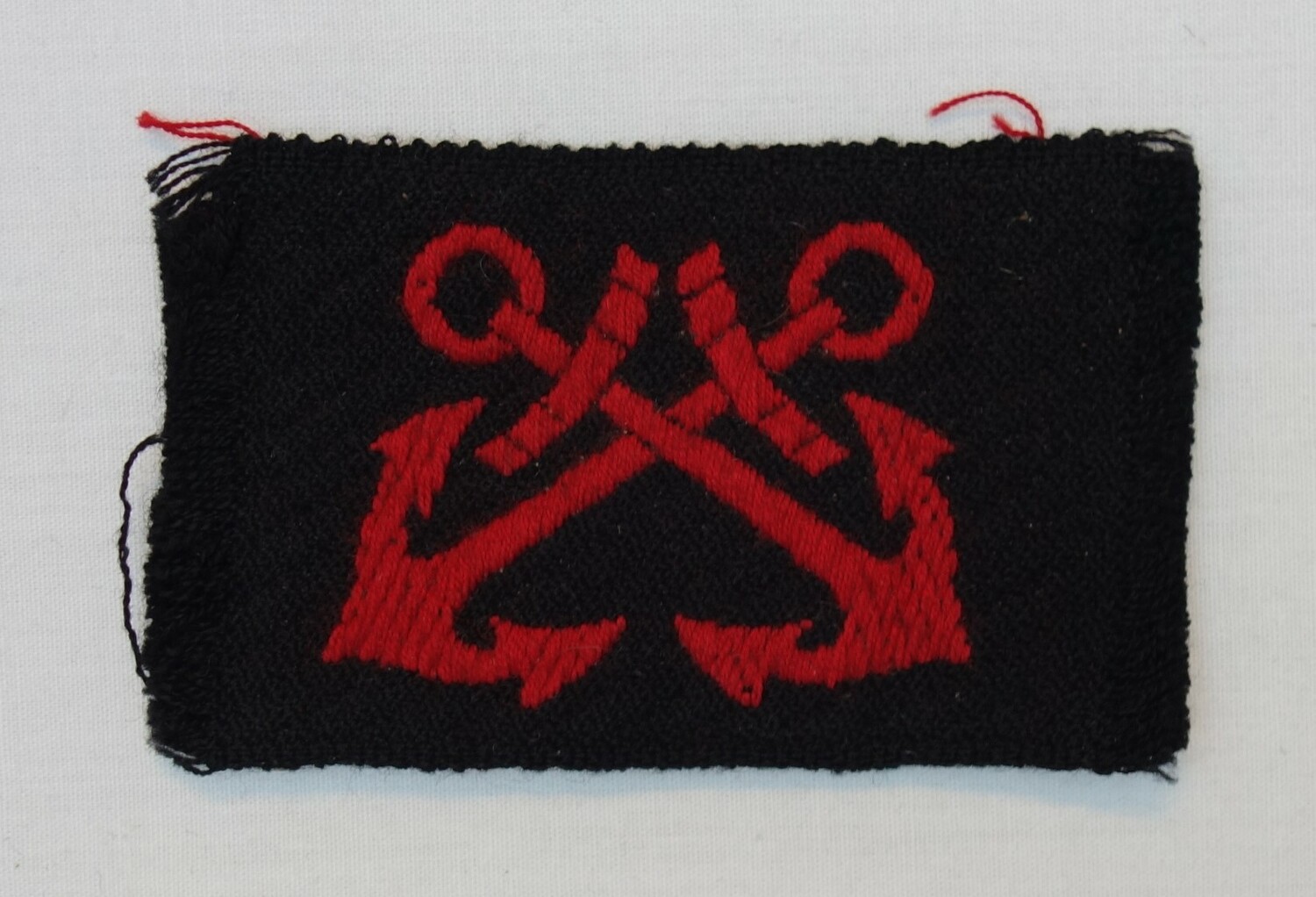 Uniform badge of the (French) Commando Tempête, c. 1944 (TRC 2023.2567.17).
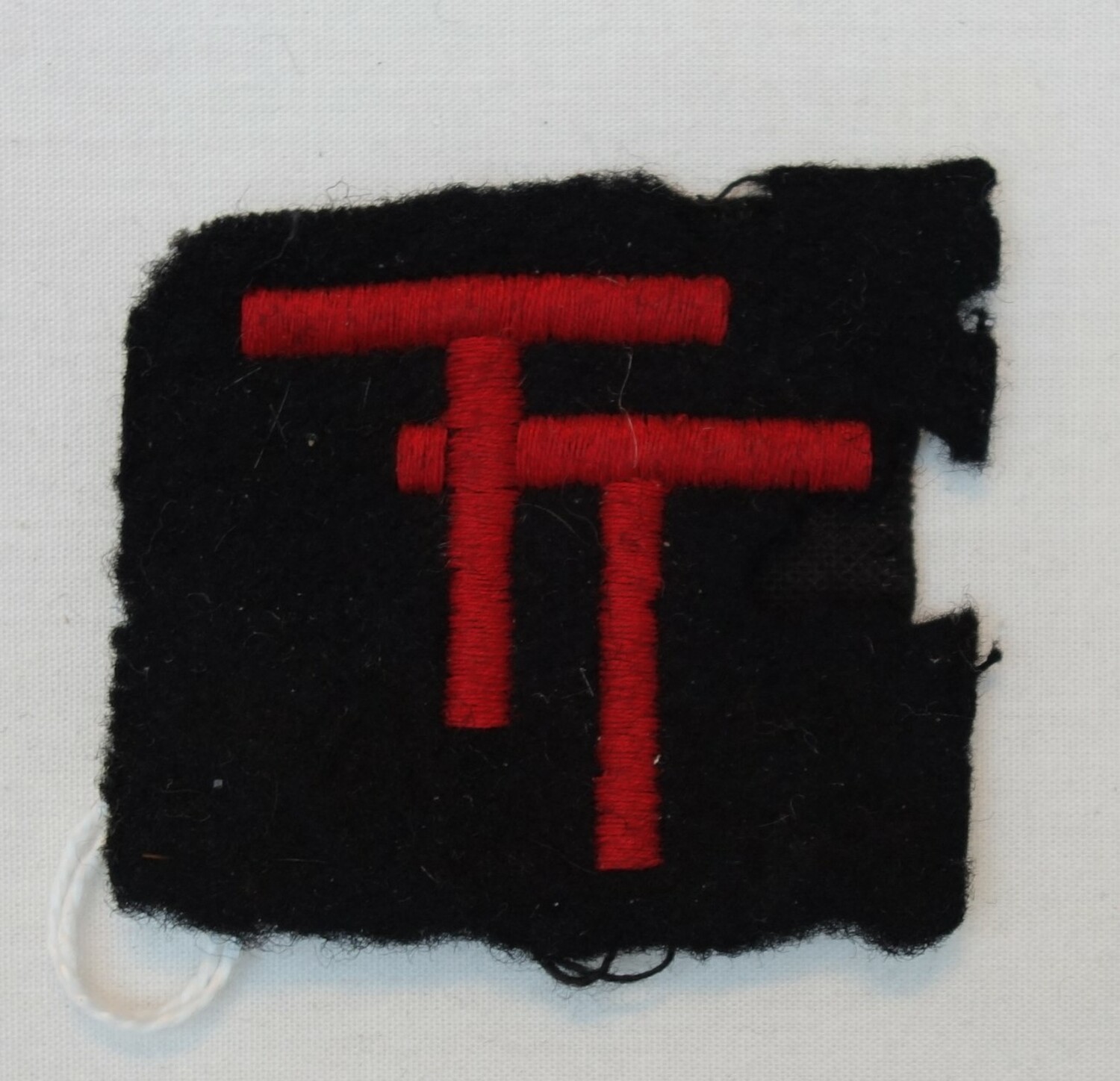 Uniform badge of the (British) Tyne and Tees regiment, c. 1944 (TRC 2023.2567.11).The regiments and groups represented in the memory box are the A.C.C. (Army Catering Corp, established in 1941; British, TRC 2023.2567.01), the Scots Guards (Scotland, TRC 2023.2567.04), the Royal Artillery (British, TRC 2023.2567.06), the Tyne-Tees Regiment (England, TRC 2023.2567.11), the Oxford and Buckinghamshire Light Infantry (English, TRC 2023.2567.13), the 12th Corps (British), the Commando Tempête (France, TRC 2023.2567.17), the Prinses Irene Brigade (the Netherlands, TRC 2023.2567.02) and the Oorlogsvrijwilligers (the Netherlands, TRC 2023.2567.24).
There are several badges we have so far been unable to identify, one may be for an Essex or a Middlesex regiment (TRC 2023.2567.10). There is also one with a standing lion in a diamond (no sword; TRC 2023.2567.16) and one with an M with two bars in red (TRC 2023.2567.05).
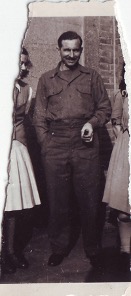 Sergeant William Rose of the Army Catering Corps; Marianne Rutten was standing to the left, and a sister of Marianne to the right.Who were all of these (young) men? What happened to them and their regiments during the war and afterwards? Did they ever think about the Dutch girls they once danced with in Tilburg? Well, several of their names have been preserved by the Rutten family.
One was Sergeant William E. Rose of the Army Catering Corps. The parents of Marianne had a butcher's shop, so they quickly came in contact with the ACC. Apparently soldiers from the Corps regularly came to the Rutten family home.
There is a family story about Sergeant Rose and a photograph that used to show him with Marianne and one of her sisters. Apparently, he paid special attention to Marianne (who was the eldest of five sisters and four brothers); the other sister may have felt jealous and tore Marianne’s image from the photograph, so Marianne tore her sister out of the photograph leaving only William Rose!
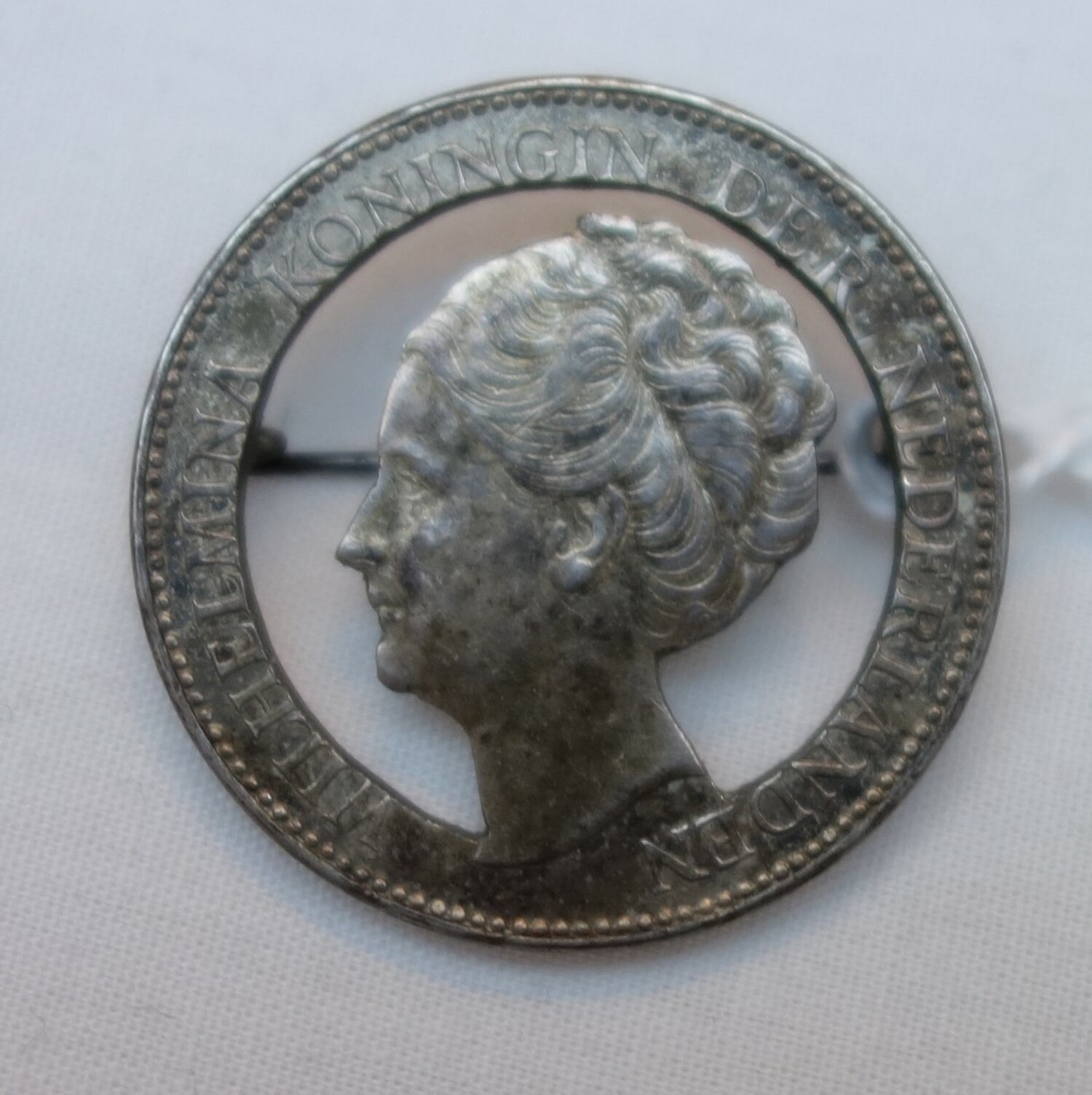 Coin brooch, with the head of Queen Wilhelmina, the Netherlands, c. 1944 (TRC 2023.2568).In addition to the items mentioned above, there were other objects from this period of Tilburg’s history, namely some orange coloured daisies (TRC 2023.2567.35a-b). These flowers are called margriet, in Dutch, and they represent Princess Margriet (born in 1943, a granddaughter of Queen Wilhelmina; reign: 1890-1948) and the Dutch resistance.
There are also several items made from Dutch silver coins from the 1930s, which were a forbidden form of currency during the German occupation (1940-1945) and reflected a form of patriotism and resistance.
One of the coins had been made into a pierced brooch (TRC 2023.2568) with the background removed. There is a note with the coin that this was made by Ad (Adrianus) Geurts, who lived “naast de watertoren” (‘next to the water tower’) in Tilburg. He also made another brooch that was in the box and that depicts a galleon on the high seas (TRC 2023.2569). A little detail: the same Ad Geurts was a friend of Jeantine's father (and later also of her mother).
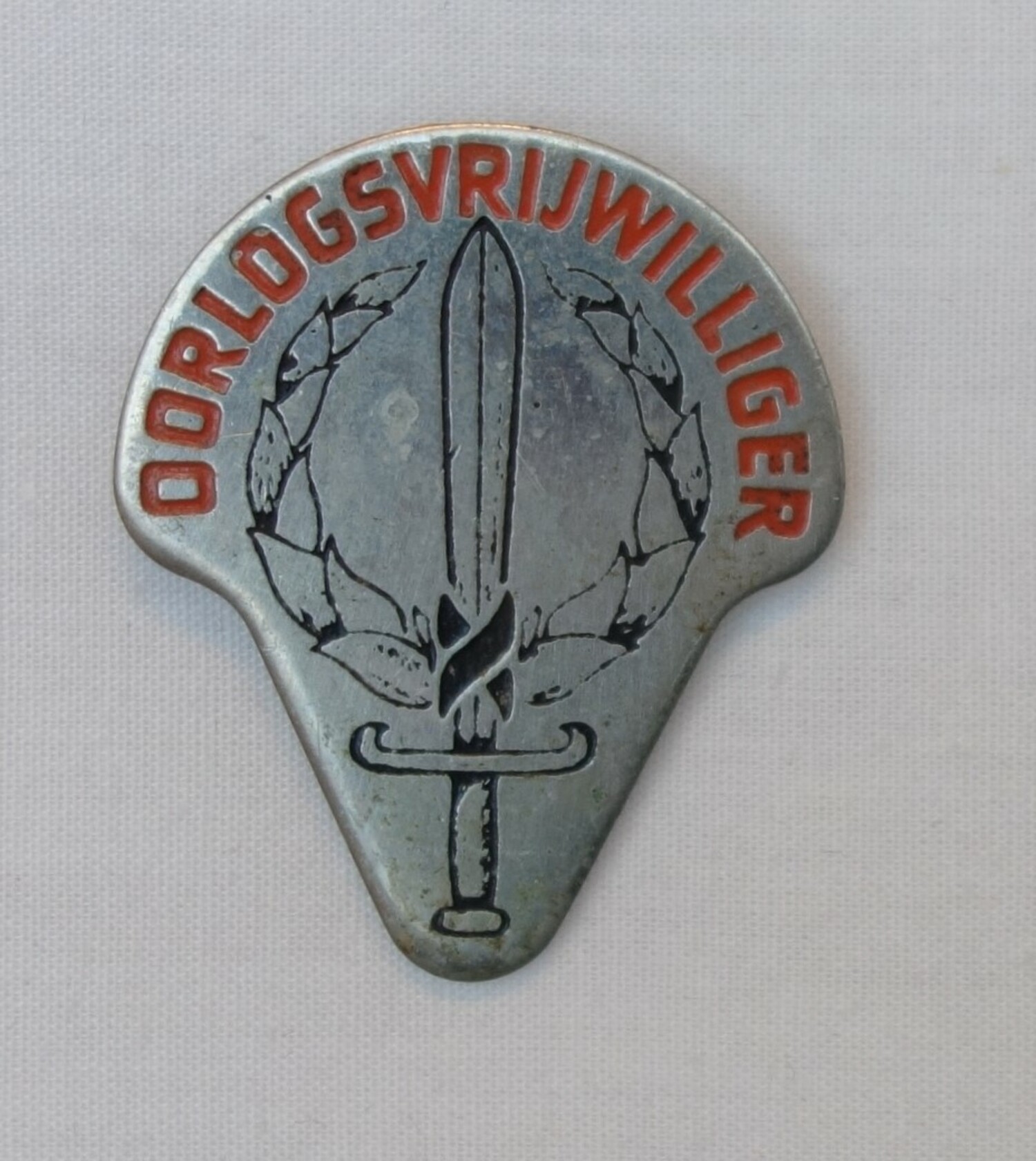 'Oorlogsvrijwilliger' ("war volunteer") badge, the Netherlands, c. 1944 (TRC 2023.2567.24).Another set of coins was used as pendants or possibly as a pair of earrings (TRC 2023.2567.34a-b). They were made from the thick, perspex glass from an aircraft and then someone had inserted small silver coins that date to the 1930s. Again as a symbol of Dutch patriotism and resistance.
There is also a homemade bar that was wrapped with red, dark blue and pale yellow wool (TRC 2023.2567.28). The colours of the Dutch flag are red, white and blue, perhaps the original maker had no white wool left!
Perhaps the reader may also be interested in an online exhibition developed by the TRC: Textile Tales from the Second World War (Leiden, 2020).
Gillian Vogelsang-Eastwood, with many thanks to Jeantine van de Ven, 1 December 2023