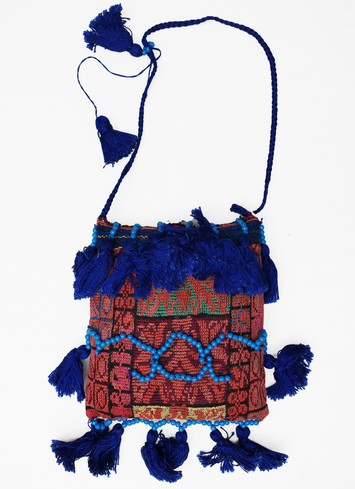
 Fig. 1. Padded container for a glass kohl bottle. Palestine, early/mid 20th century (TRC 2005.0086).The announcement in December 2025 that kohl is now included in the UNESCO Representative List of the Intangible Cultural Heritage of Humanity sent me immediately to the TRC’s on-line catalogue in order to learn more. What exactly is kohl and what role does it play in dress and identity?
The UNESCO description states that “Arabic Kohl is both a craft and a social practice that is integral to the lifestyle of Bedouin and nomadic tribes, as well as rural, marshland, and fishing communities in the Arab region.... In addition to being a symbol of community identity and a key part of daily beauty routines, kohl is used as a physical and spiritual healing remedy."
The UNESCO text continues: "[Kohl] promotes dialogue and fosters meaningful exchanges between nations and communities of women. Kohl-rimmed eyes also serve as a strong form of female expression, particularly in societies where only eyes are visible due to face coverings."
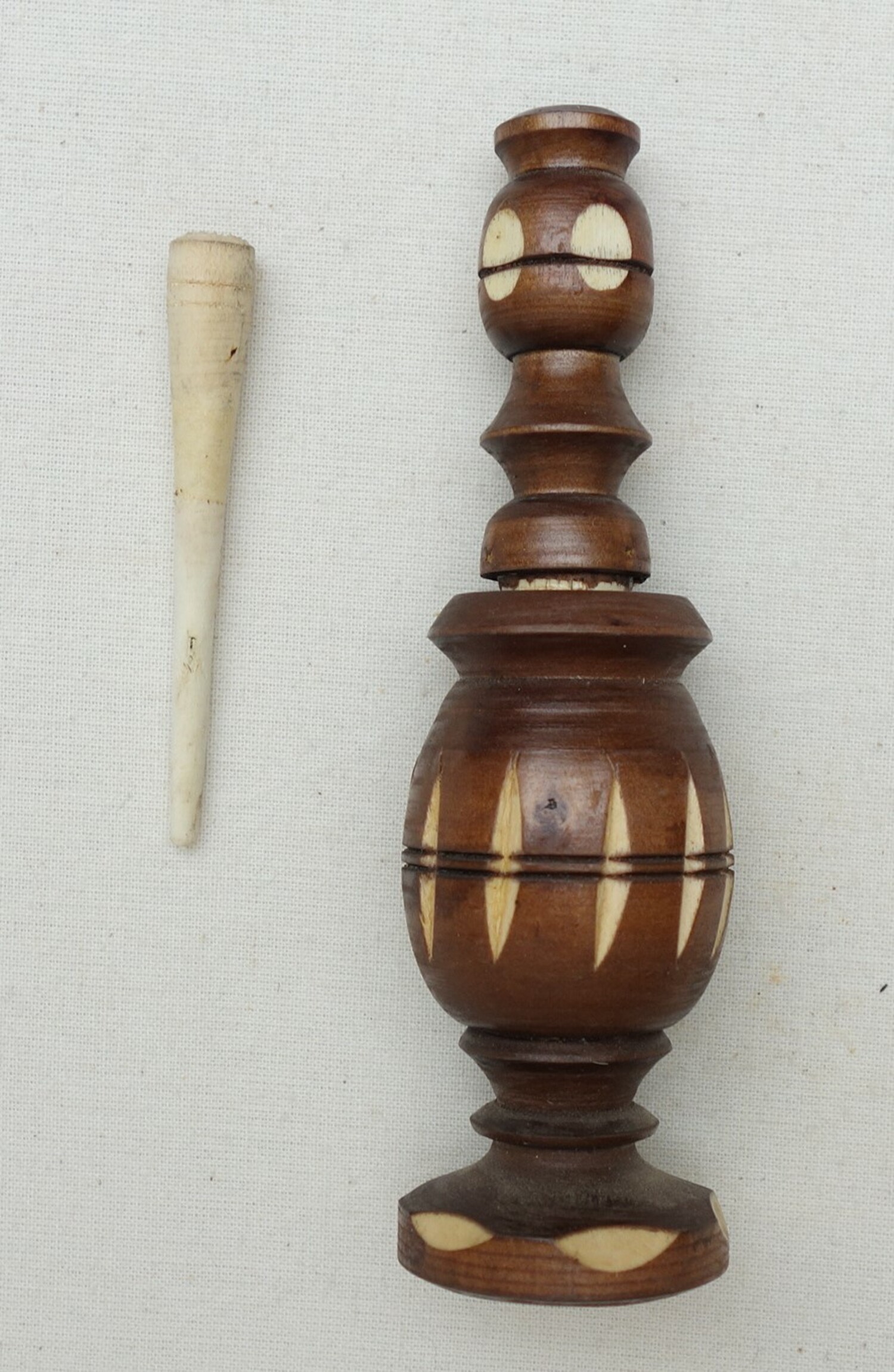 Fig. 2. Kohl container made of white wood that is stained dark brown, with a carved design of elongated ovals. Early 21st century. Meknes, Morocco (TRC 2001.0231a b).Kohl is a finely ground black powder used to line the eyes (it is also now available in liquid form, compare TRC 2005.0106 a-c) (Fig. 6). Kohl is used by men, women and children not only in the Arab region, but also in parts of Africa and South Asia, where it is called kajal, surma or sormeh.
It has many purposes: as a decoration to enhance beauty; to signify the transition to adulthood; to protect the eyes from the glare of the sun, and to prevent eye diseases; and, especially for children, to protect against the evil eye. Crusaders may have brought the custom of lining the eyes back to Europe during the Middle Ages.
At its simplest, the powder is mixed with saliva and water (or perhaps orange blossom or rosewater for a fancier occasion), and then applied to the eye lids with an applicator (frequently a small polished stick, called merwad, although small brushes or kohl pencils are also used today).
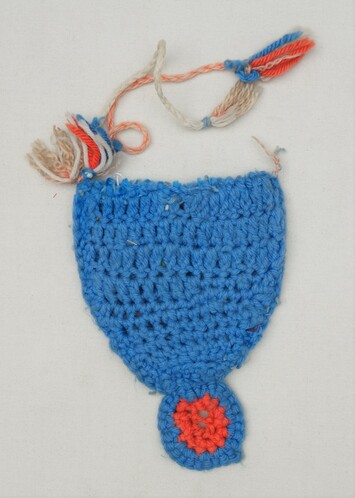 Fig. 3. Blue oval kohl bag with a roundel in blue and red, as well as tassels in various colours. Bought in southern Jordan between 1995-1997 (TRC 2023.1029).While now commercially produced and sold, kohl is also still made in traditional ways by women inside the home. Family recipes may be closely guarded secrets, and handed down from generation to generation.
This UNESCO-made video, from 2020, features the elderly artisan Tamam Farhan Abu Issa, of Deir al Balah, in Gaza, making kohl at home by burning cotton to make soot.
Kohl can be made from burnt charcoal, or from soot from a lamp or cooking pot. In Afghanistan, stibnite rock is ground and used, while date seeds were preferred in the Emirates. In Lebanon there’s an even more exotic recipe using cedar honey and the gall bladder from a hyena.
The use of antimony and galena (lead glance) for kohl can be found in the archaeological record. Traces of kohl in kohl containers, with applicators dated to the Bronze Age, have been found in Nubia and Egypt (for a lovely example of a Nubian travertine kohl container with a painted blue faience lid, see here).
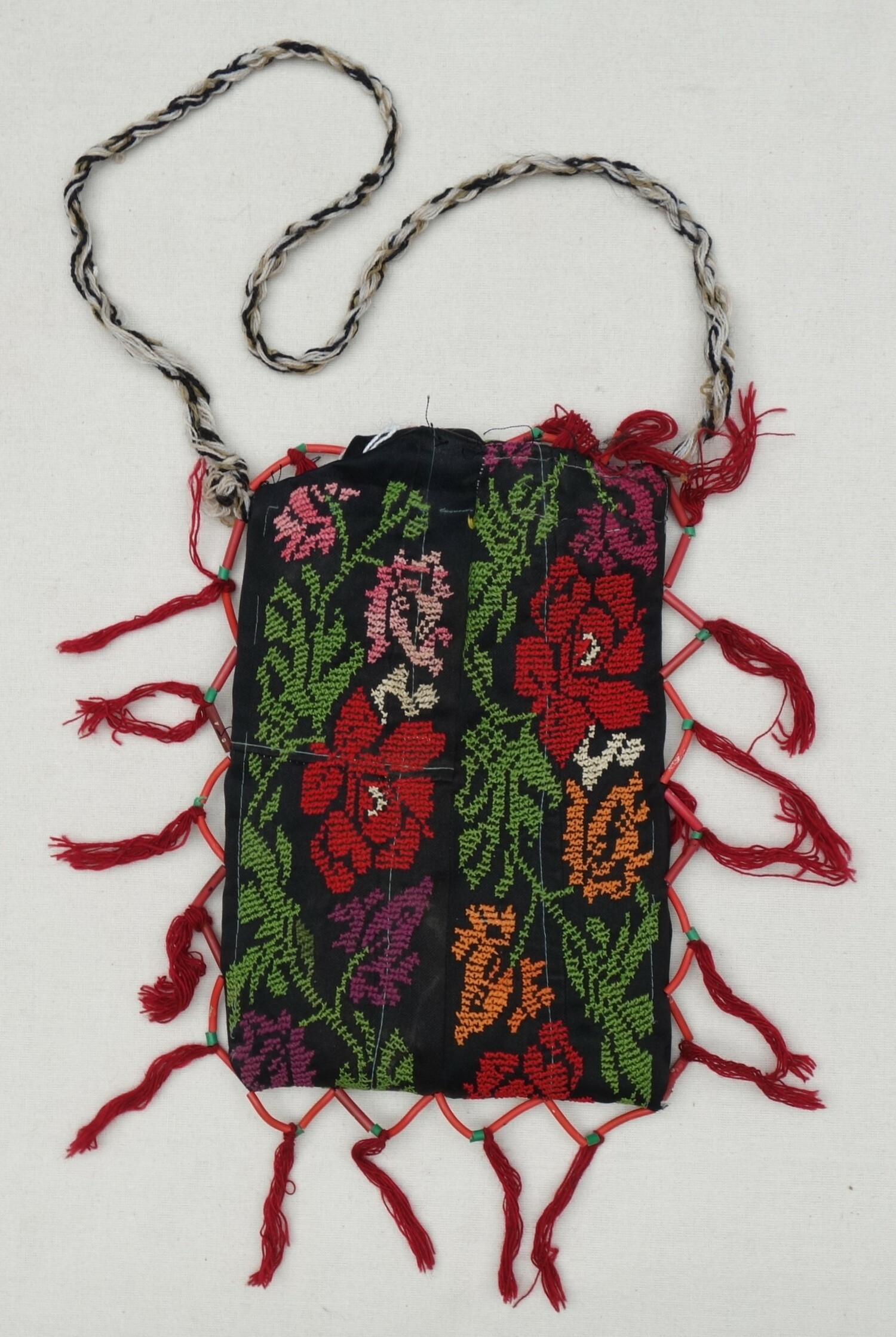 Fig. 4. Kohl bag made from strips of black cloth with embroidered, stylised flowers. Jordan, 1990s (TRC 2023.1032).Egyptians of all classes were known to use kohl since at least c. 3100 BC. Black galena powder was commonly used to paint the upper eye lids, while ground green malachite was used for the lower eyes.
The Pharaoh Hatshepsut (ruled c. 1479 to1458 BC) is recorded adding frankincense to her kohl (this is also the first recorded use of frankincense). Elite Egyptians had kohl containers (called makhala in Arabic) and applicators made from materials such as glass, ivory or bronze; kohl applicators made of copper were imported from Sri Lanka, along with cinnamon bark to mix with galena.
The TRC has a small collection of more humble objects used to carry kohl, dating from the early 20th century. TRC 2001.0231 a-b (Fig.2) from Morocco’s Essaouira region, is a lovely little container made of white wood that has been stained dark brown and decorated with elongated ovals.
 Fig. 5. Dish used to hold wasmeh (kohl) for the eyes. Iran, early 20th century (TRC 2002.0088).The plug, which I suspect could also be an applicator, is of turned wood. TRC 2002.0088 (Fig. 5) is a small (8.0 cm diameter) brass bowl from Iran used to hold wasmeh (kohl). Small metal tubes to hold kohl have been found in western Iran that date from 800 to 500 BCE.
There are also nine charming objects, bought from Bedouin women in Jordan, in the TRC collection. These are small bags designed to hold a bottle of kohl and an applicator. TRC 2023.1029 (Fig. 3) is a small hand crocheted bag with a roundel and blue and red tassels, made of blue acrylic wool.
TRC 2005.0086 (Fig. 1) s a small padded carrier for a glass kohl bottle. Bought in a souk in Amman in 1983, it’s made from a piece of a traditional embroidered Beersheba dress or head covering. The embroidery design suggests it was stitched in the 1940s. It has been decorated with more recent dark blue DMC cotton thread tassels and small blue beads.
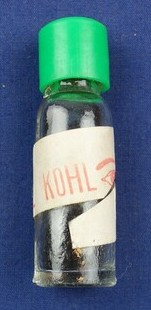 Fig. 6. Container for liquid kohl, acquired in Riyadh, Saudi Arabia, in 1989 (TRC 2005.0106c).The embroidered kohl bags of TRC 2023.1032 (Fig. 4) and TRC 2023.1033 may also be reused from women’s clothing. I like to imagine the embroidery has been saved from a worn-out dress, perhaps as a memento of a beloved grandmother or friend. What stories these small pieces of cloth must have!
To learn more about the significance of kohl, both in daily life and in ritual, see this blog by Dutch author and researcher Dr. Sigrid van Roode.
To learn more about the history of kohl, see this short item by Zahra Hankor, author of Eyeliner: A Cultural History (2023, Harvill Secker, UK).
By Shelley Anderson, TRC volunteer, 10 January 2026