• F2
  • F1
  • F3
  • F4

At the end of February 2022 the Textile Research Centre in Leiden was contacted by Karin Scheper and Anouk Mansfeld of the University Libraries Leiden (UB), about the proposed donation of a large collection of personal letters, documents, publications, photo albums, as well as furniture, statuettes, textiles and garments. The department Bijzondere Collecties of the UB was seriously thinking about accepting many of the items, but not the textiles and garments. Was the TRC interested?

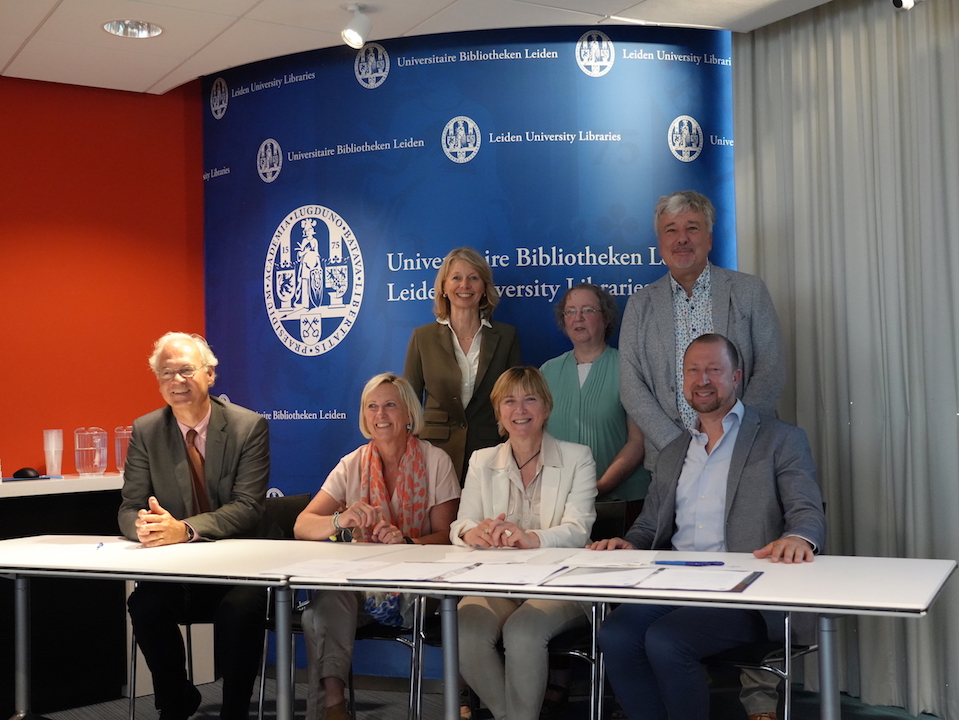
Official hand-over by the Ottow family of documents and textiles to the University Libraries and the TRC: Sitting behind the table: Prof. Annetje Ottow (Chair, Leiden University Board, second from the left), and her husband (to the far left), sister (right), and brother (far right). Standing behind them, from left to right: Dr Alette Stas-Bax (Chair Leids Universiteitsfonds), Dr Gillian Vogelsang-Eastwood (Director Textile Research Centre), and Dr Kurt De Belder (Director Leiden University Libraries). Photograph by Guus Janssen, Leiden University Libraries.Official hand-over by the Ottow family of documents and textiles to the University Libraries and the TRC: Sitting behind the table: Prof. Annetje Ottow (Chair, Leiden University Board, second from the left), and her husband (to the far left), sister (right), and brother (far right). Standing behind them, from left to right: Dr Alette Stas-Bax (Chair Leids Universiteitsfonds), Dr Gillian Vogelsang-Eastwood (Director Textile Research Centre), and Dr Kurt De Belder (Director Leiden University Libraries). Photograph by Guus Janssen, Leiden University Libraries.

I often comment  that the TRC Collection is diverse, but life at the TRC this week has been equally so! We have been working, for example, very hard on the Arizona collection (some 900 objects, mainly from southeastern Europe) and on Friday we added the last item to the catalogue. All being well, everything will have been photographed by the end of the coming week.

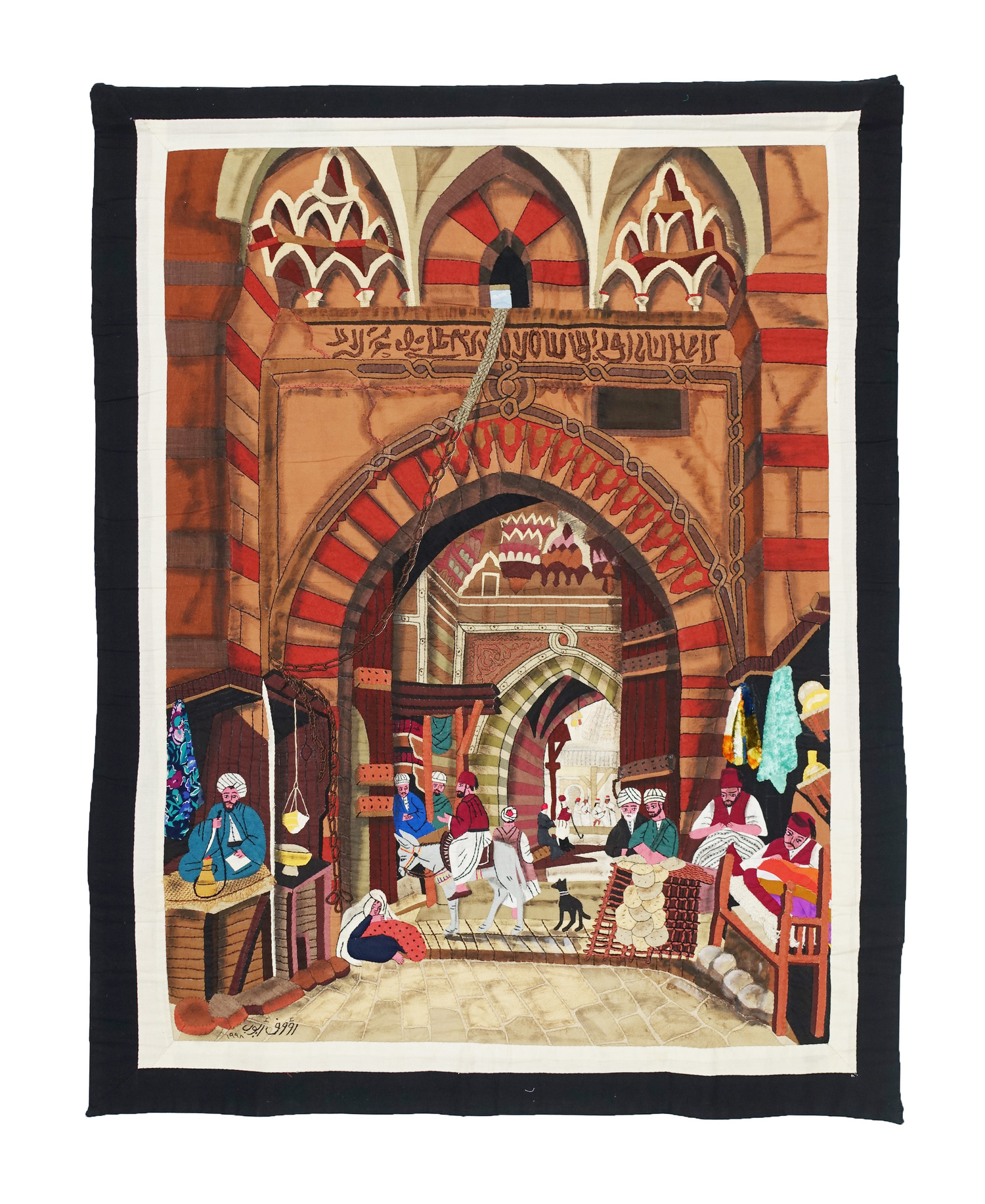
Appliqué panel from Egypt, c. 2000. Part of the so-called Arizona collection, recently acquired by the TRC (TRC 2022.1805). The scene appears to be inspired by a print by David Robert (1796-1864) called the 'Bazaar of the Silk Mercers' (c. 1846).Appliqué panel from Egypt, c. 2000. Part of the so-called Arizona collection, recently acquired by the TRC (TRC 2022.1805). The scene appears to be inspired by a print by David Robert (1796-1864) called the 'Bazaar of the Silk Mercers' (c. 1846).

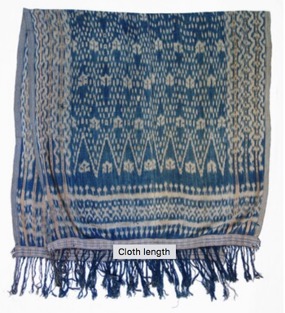
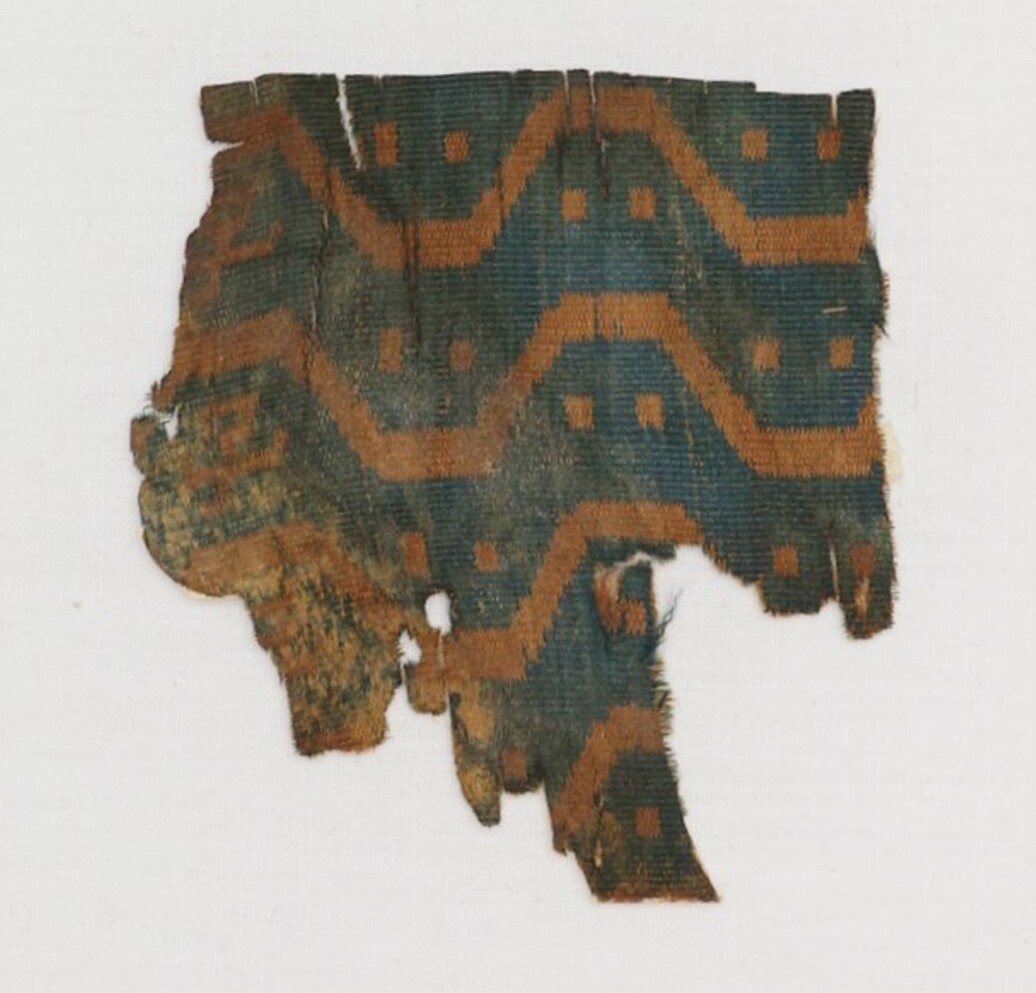
The sheer range of items of three large donations, including the Arizona gift, which have come in since March is amazing. They range from Indonesian ikats (more about these below), Central Asian embroideries, Egyptian appliqués,  American First Nation items, to molas from Panama, not to forget all the textiles and garments from Central and southeastern Europe.

On June 18th the Textile Research Centre gave a workshop on pharaoh Tutankhamun’s clothing, as part of the Tutankhamun month organised by Huis van Horus, a society for Egyptology in the Netherlands and Flanders.
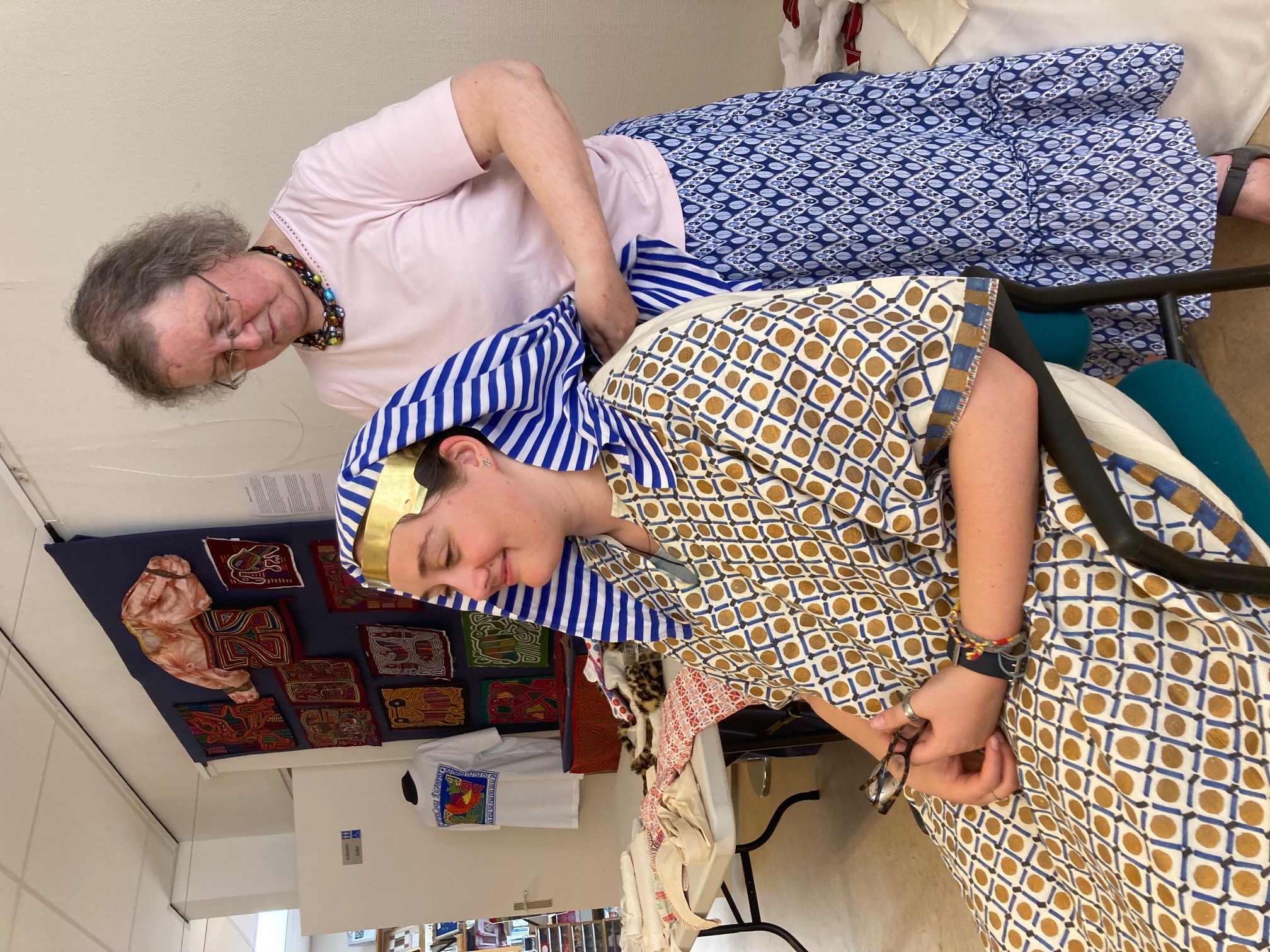
Gillian Vogelsang helping a participant to wear a (replica) nemes headdress. Photograph by Gerton Hermers.Gillian Vogelsang helping a participant to wear a (replica) nemes headdress. Photograph by Gerton Hermers.When Howard Carter discovered Tutankhamun’s tomb in 1922, he didn’t just find coffins and gold, but also hundreds of textiles. Dr. Gillian Vogelsang-Eastwood has done extensive research on the actual garments now housed at the Grand Egyptian Museum (GEM) in Cairo, and producing replicas of several of them to display their dazzling colours and designs and also to test how they would have been worn and used.

We were given a hands-on demonstration of a number of (replica) royal garments, starting with his Majesty’s underwear. A large linen triangle was tied around the waist of one of the workshop participants and then tucked in at the front, demonstrating that the king’s hips were probably quite wide.

A linen skirt was wrapped around the waist and fastened with a sash with a colourful, woven feather pattern. The pictures we see so often in museums and books were starting to come alive before our eyes.

Next, we were shown a tunic covered in an elaborate pattern of blue bead netting and golden buttons. While the replica version only had a painted pattern, the original must have been very heavy with all the faience and gold appliqués. Trying the tunic out on another one of the participants, we understood why only the front of the garment was decorated: it is quite impossible to sit down on a layer of beads and buttons. Alternatively, if the king is sitting down, the back of his tunic can’t be seen anyway, so there was apparently no need to decorate it.

We are pleased to announce that in conjunction with graphic illustrator, Martin Hense (Rotterdam) and Bloomsbury Publishing, London, and hopefully with many volunteers from all over the world, the TRC Leiden is building a new Portal for Embroidery Stitches. In doing so we hope to complement the entries on stitches in the TRC Needles, both as regards the stitches themselves and additional information.

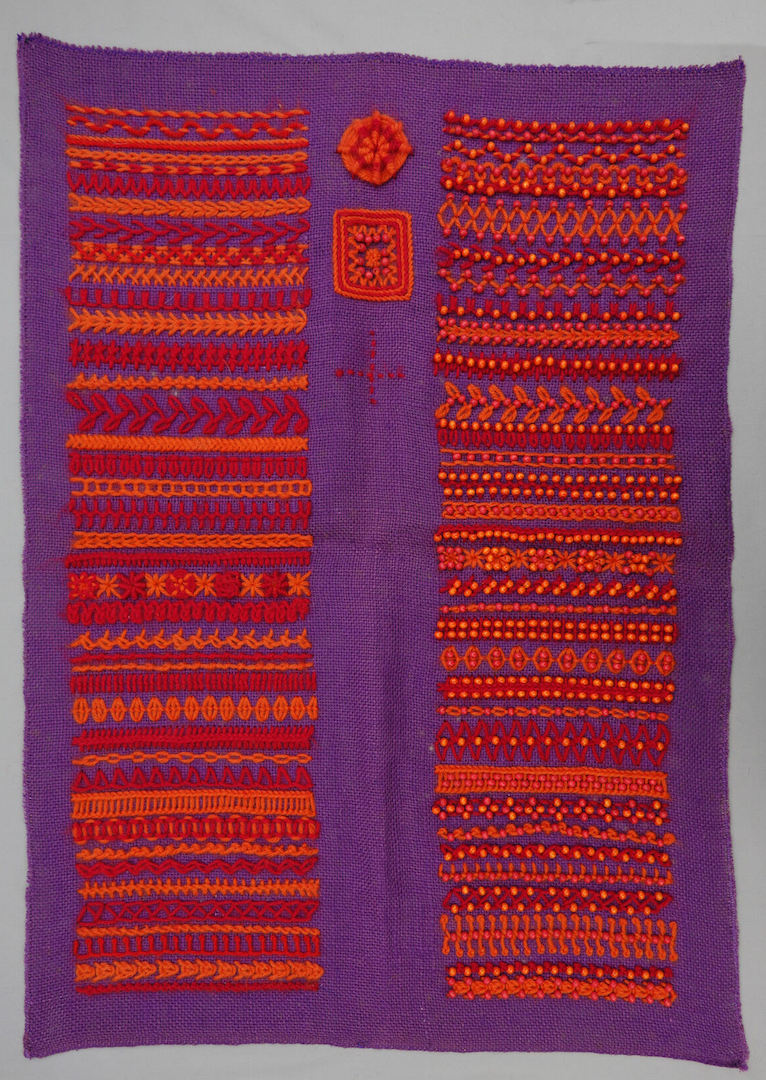
Sampler with a variety of stitches, embroidered by Grethe la Croix in the Netherlands, 1960s (TRC 2017.0216). To the left are different rows of stitches, and to the right the same stitches, but with added beads.Sampler with a variety of stitches, embroidered by Grethe la Croix in the Netherlands, 1960s (TRC 2017.0216). To the left are different rows of stitches, and to the right the same stitches, but with added beads.

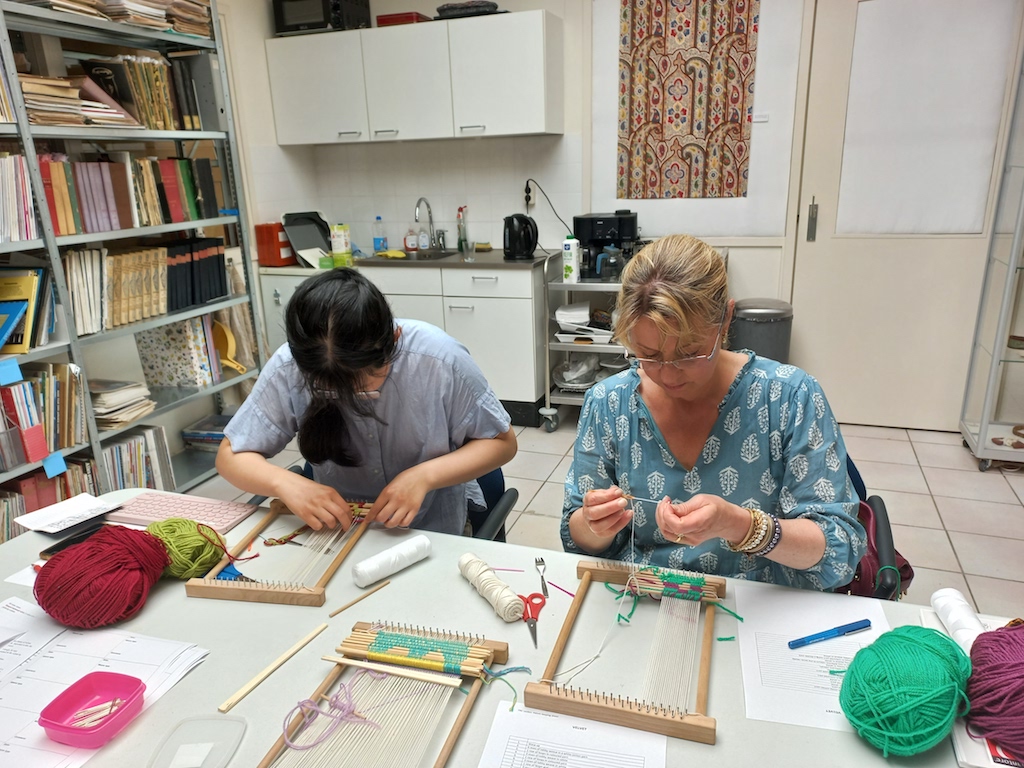
Where else in Europe can you go from bobbin lace making, velvet identification, to hand knitted lace, card weaving and Tutankhamun’s Wardrobe in just over a week? Those are a few of the subjects that have been or will be taught or discussed at the TRC within a week, with groups of various sizes, all of whom have especially come to Leiden and the TRC.

Two participants of the TRC velvet identification study-day, on 11 June 2022Two participants of the TRC velvet identification study-day, on 11 June 2022

I am an MA student in Heritage and Memory Studies at Amsterdam University, and I started my internship at the Textile Research Centre a little over a month ago. Over the course of a month, I am discovering more and more about how the TRC preserves textile heritage through various means and about its approach to spreading knowledge through education. Being a student intern at the TRC, I had the privilege to assist and sit-in on their highly praised Intensive Textile Course from 23 to 27 May 2022.

The class studying the different kinds of fiber using the microscope. May 2022. Photograph by author.The class studying the different kinds of fiber using the microscope. May 2022. Photograph by author.

After five days of learning, touching and experimenting, I left Leiden feeling, to be frank, exhausted but also incredibly accomplished, fulfilled and inspired. Not only was I able to gain a comprehensive introduction into textile technology, I also had a chance to see TRC’s philosophy in heritage preservation put into action. In the following, I would like to share with you some of my favourite parts of the course and my main takeaways.

First and foremost, what I like about this course is the accessibility of its content despite being fairly technical. When tackling the subject of textile technology, one can find it quite intimidating as the topic could seem too big to handle and too technical to deconstruct.

Silk cloth fragment with traces of woven Chinese characters (TRC 2000.0009).Silk cloth fragment with traces of woven Chinese characters (TRC 2000.0009).Dr Monica Klasing Chen is assistant-professor in Chinese art history at Heidelberg University, Germany. She participated in the April edition of the TRC Intensive Textile course, and wrote a blog about her experiences, further to an earlier blog published on 15 May.

+++

The TRC Intensive Textile Course was not only rewarding for the many skills we learned, but also because Dr Vogelsang selected materials and objects that catered to the specific interests of the participants.

As a sinologist, I was ecstatic to see a textile with Chinese characters woven during the 2nd century (see illustration) next to an exquisite 19th century velvet produced for the European market (see illustration). When the course took place, the TRC had coincidentally set up a display case with several lotus shoes (see illustration) and the tools for making them, also featured in their online exhibit. This was especially interesting to me, because my great-grandmother had bound feet. 

Search in the TRC website

Contact

Boerhaavelaan 6
2334 EN Leiden.
Tel. +31 (0)6 28830428  
office@trcleiden.org 

facebook 2015 logo detail 

instagram vernieuwt uiterlijk en logo


Bank account number

NL39 INGB 0002 9823 59, in the name of the Stichting Textile Research Centre.

TRC closed until 4 May 2026

The TRC is closed to the public until Monday, 4 May 2026, due to our move to the Boerhaavelaan. The TRC remains in contact via the web, telephone and email. For direct contact and personal visits, please contact the TRC at office@trcleiden.org, or by mobile, 06-28830428.

Donations

The TRC is dependent on project support and individual donations. All of our work is being carried out by volunteers. To support the TRC activities, we therefore welcome your financial assistance: donations can be transferred to bank account number (IBAN) NL39 INGB 000 298 2359, in the name of the Stichting Textile Research Centre. BIC code is: INGBNL2A.

 You can also, very simply, if you have an iDEAL app, use the iDEAL button and fill in the amount of support you want to donate: 


Since the TRC is officially recognised as a non-profit making cultural institution (ANBI), donations are tax deductible for 125% for individuals, and 150% for commercial companies. For more information, click here