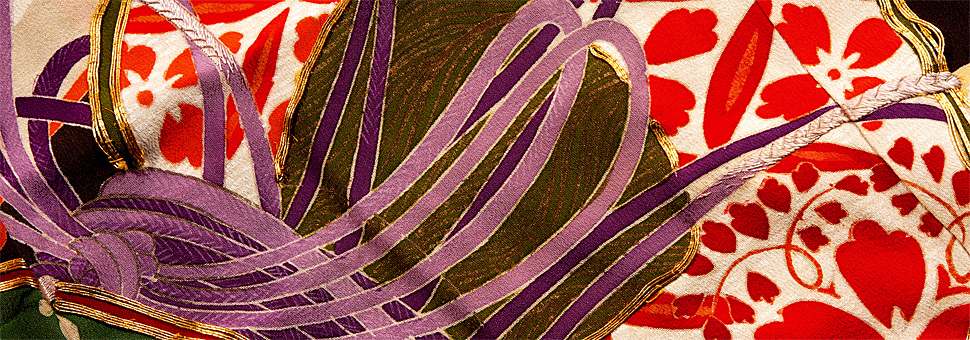
(by Augusta de Gunzbourg, TRC curator and education manager, 24 September 2026). The TRC was invited recently to attend "Atlas Bayrami", the 7th International Traditional Textile Festival, held in Margilan in the Fergana Valley, in the east of Uzbekistan. I attended the festival as TRC's representative. The festival celebrates the country's textile traditions, and in particular the traditional silk ikats of this region. This extraordinary invitation was a chance to represent the TRC at an international conference and to better understand a textile history that is still very much alive in the valley and across the country.
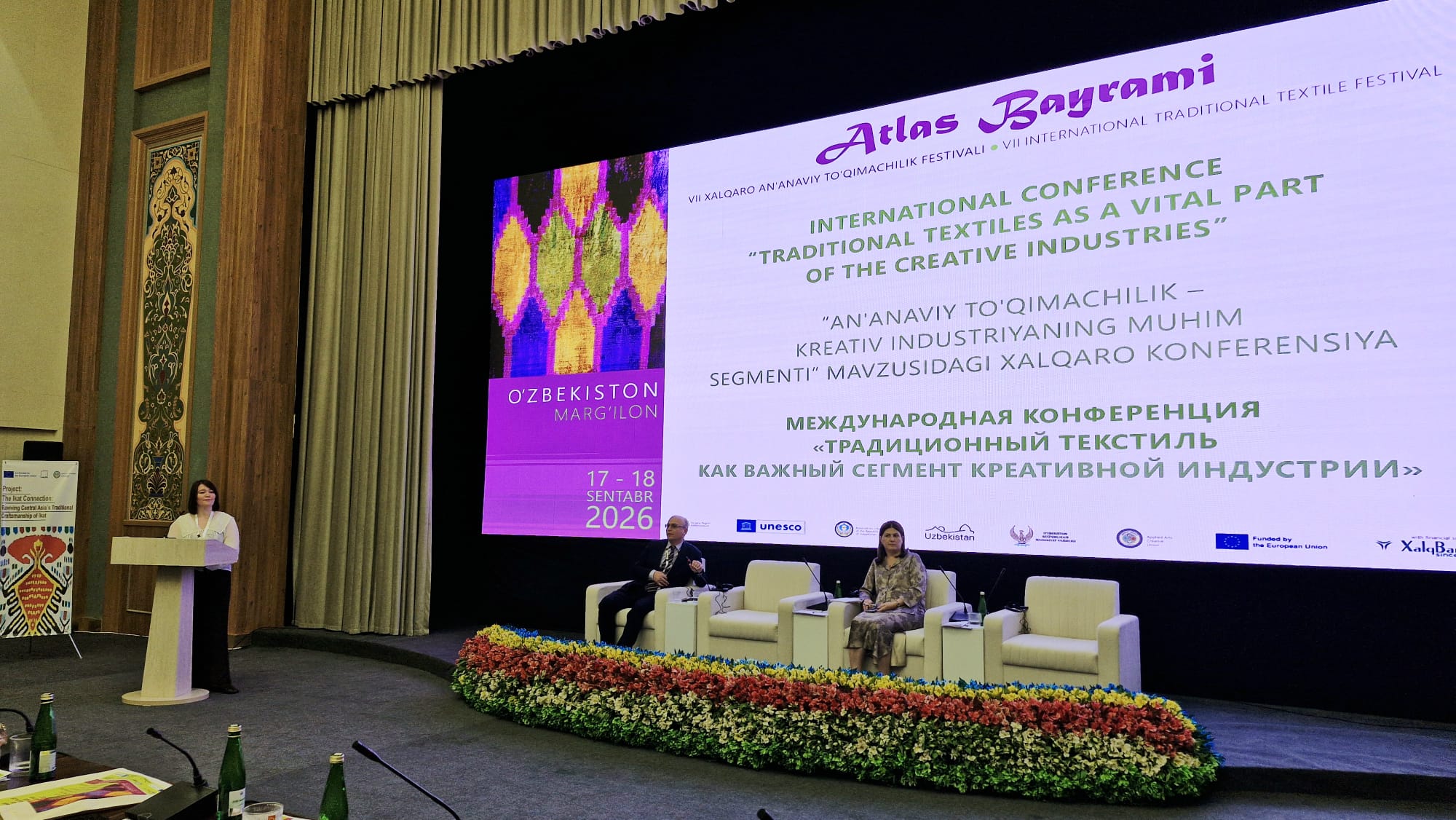 The author speaking during the conference.
Uzbekistan is known for many crafts, such as ceramics, carpet making and embroidery, but Margilan shines with its tradition of ikat making. A conference in which I participated during the festival explored textile traditions, and also how textile heritage and craftsmanship could be better preserved, both locally and internationally. The event was backed by many local institutions as well as the European Union and UNESCO.
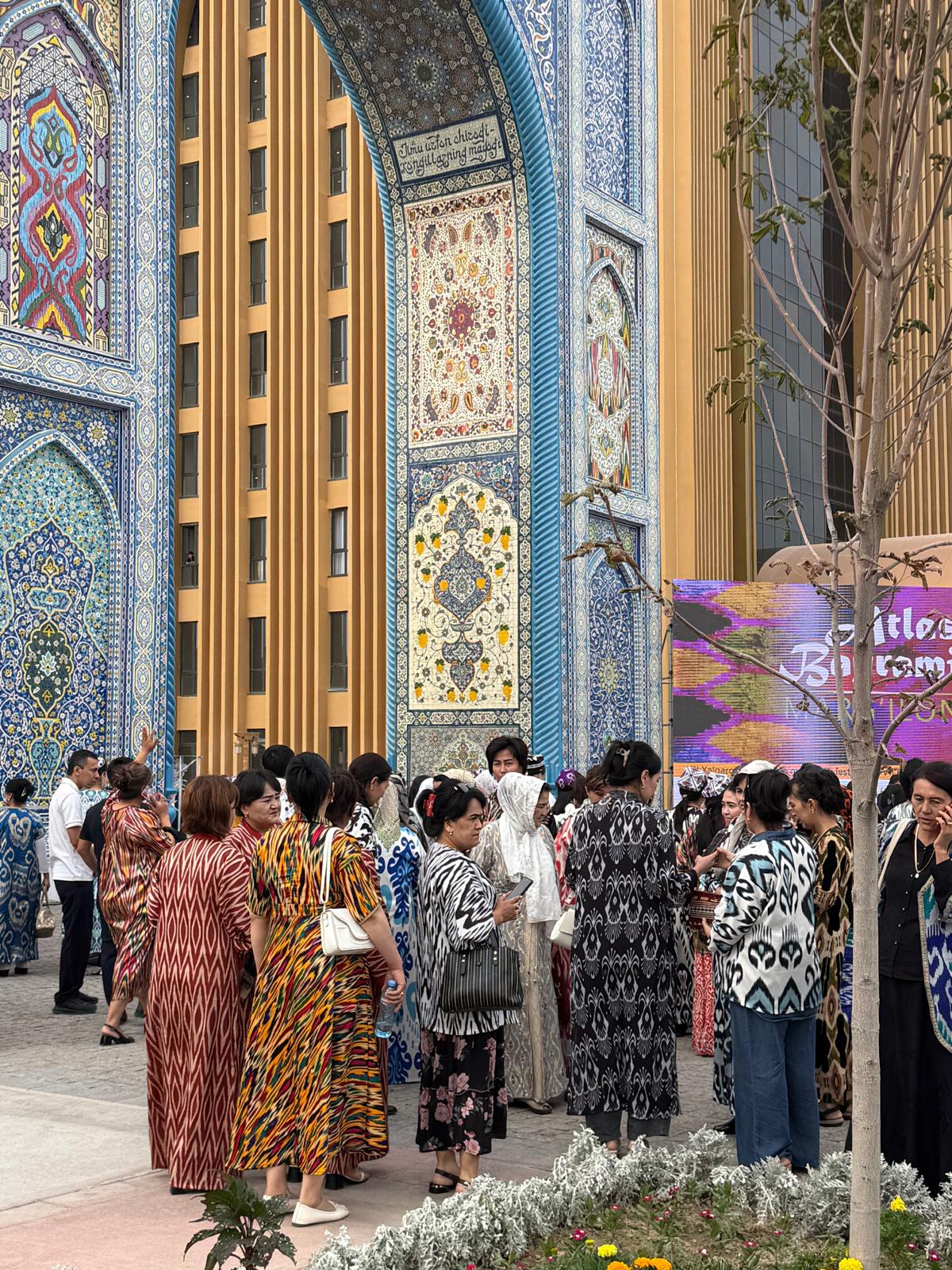 Site of the festival with participants in traditional clothing. Photograph by author.After 24 hours of travel, six of them by train to the rather remote Fergana Valley, our group of international visitors working in culture and textile heritage took part in conferences, textile fairs and all sorts of textile-related events. We also visited many workshops that carry on the long tradition of ikat making, or atlas as it is called locally.
Standing in those workshops, it was hard not to feel the weight of this textile-making tradition. The city of Margilan has been known for its silk since around the 10th century, when it was an important stop on the Silk Road. Local craftsmen are said to have learned silk-making from China and refined it until Margilan silks became prized goods along the route. Ikat has been made here for centuries: cocoons boiled and made into silk threads that are bound and resist-dyed before they are woven to create the distinctive blurred patterns of the cloth.
Some of the master-makers come from generations of craftspeople, and many of the old techniques are still in use, including dyes made from plants and flowers (pomegranate skins, walnut husks or acacia flowers), although chemical dyes are also used. We were told that natural dyes have been gradually reintroduced over the past 15 or 20 years, after chemical dyes had taken over the field. Some artisans, for example, sought help from master dyers in countries such as Iran, where the tradition had survived, to revive the old know-how of these dye plants.
 Unspooling of the silk threads into strands. Photograph by author.
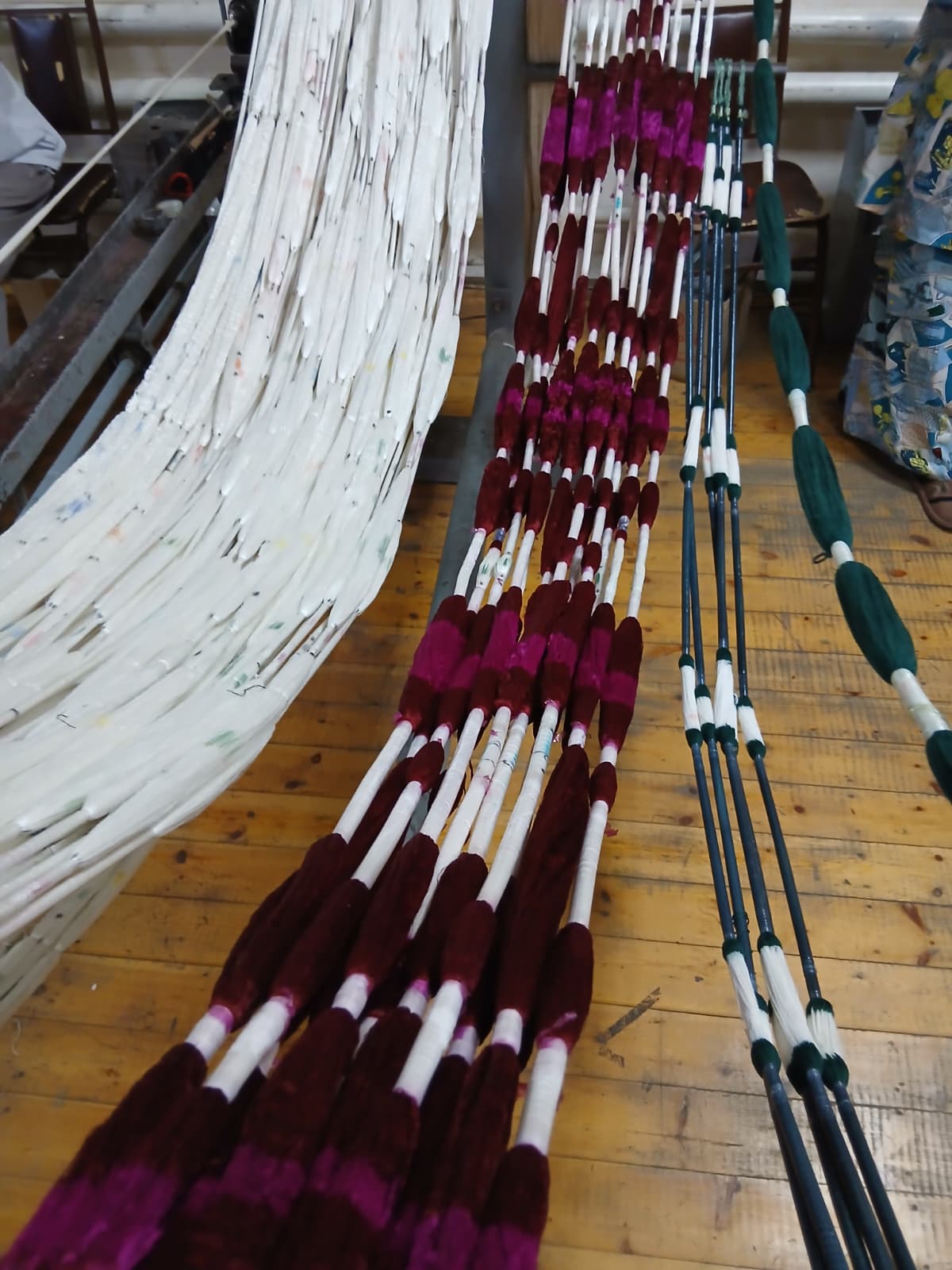 Threads bound and dyed. Photograph by author.
We also learned to distinguish atlas, pure silk ikat, from adras, a silk-cotton blend. The most prized pieces are still woven by hand on traditional looms, but more industrially produced versions are also on sale at tourist sites. Interestingly, a special form of ikat velvet is also part of the local tradition, with its threads bound, dyed and woven using the same tools, vats and looms as atlas and adras.
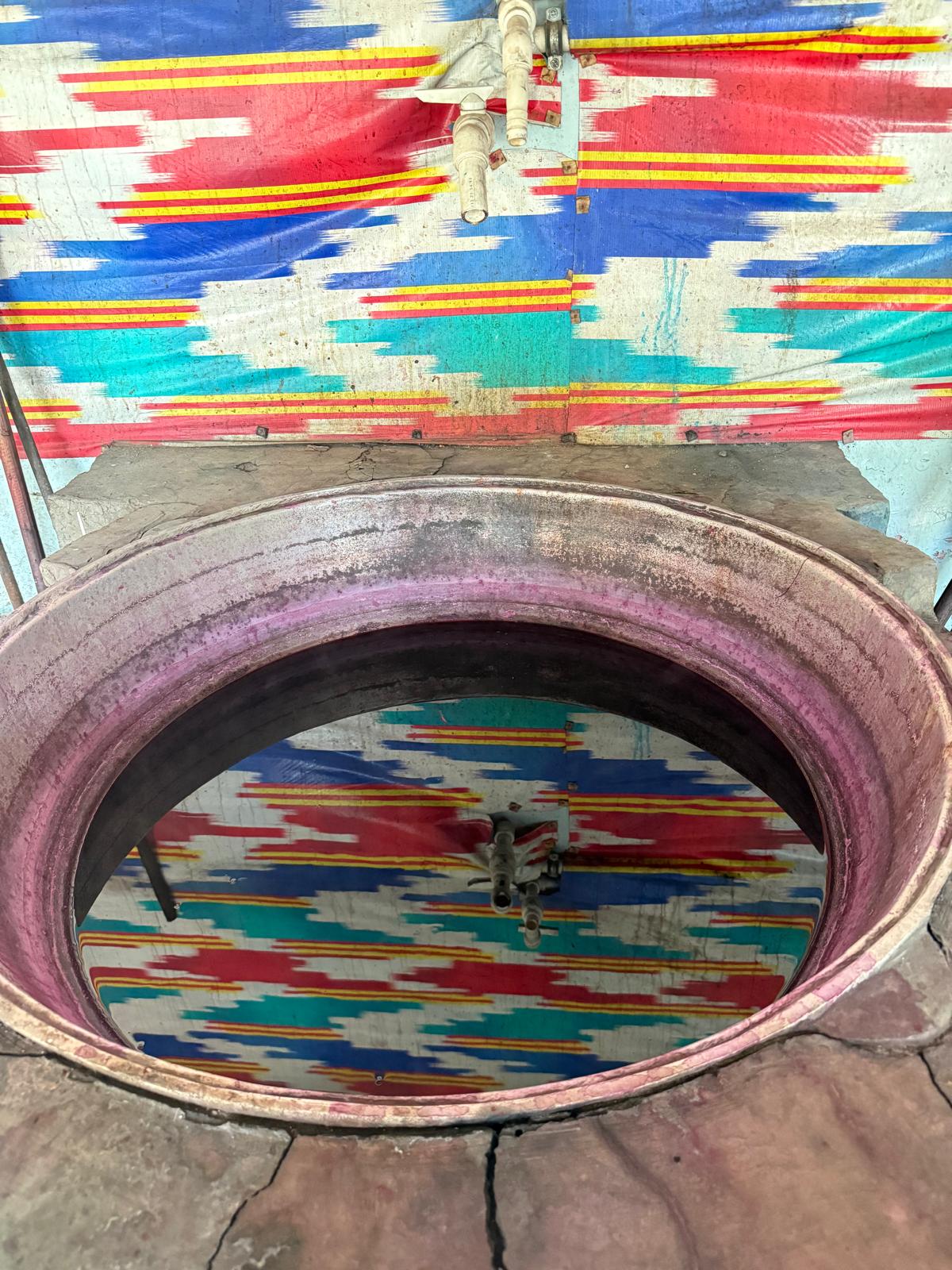 Dying vat with cochineal. Photograph by author.
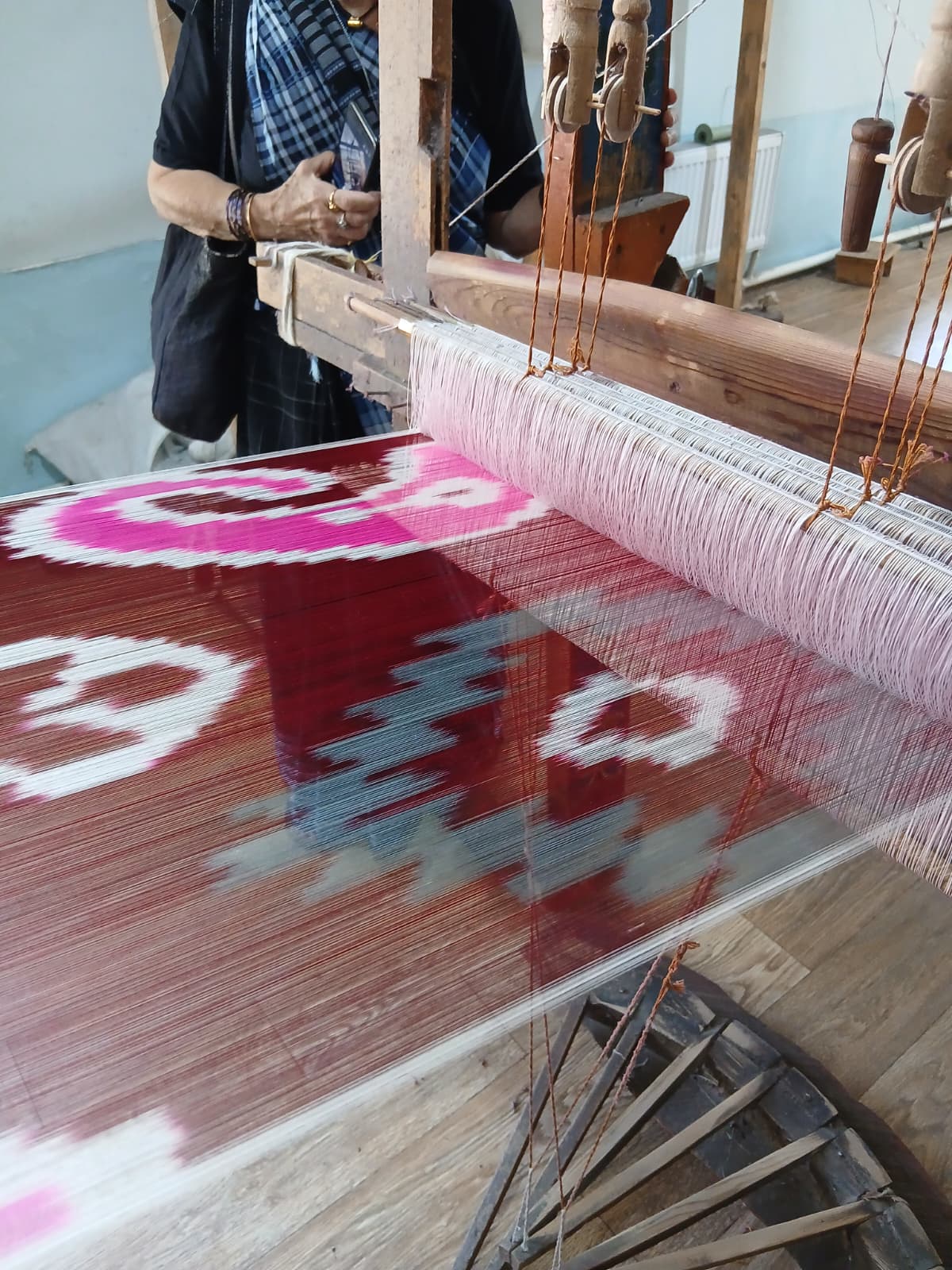 Loom for the production of atlas. Photograph by author.
This velvet is known locally as bakhmal. After the threads have been dyed, extra threads are woven over metal rods to form a raised pile, which is then cut with a sharp blade. Bakhmal can be made of silk or of a silk-cotton blend. The result is a rich, textured cloth with patterns sometimes similar to those of atlas, although a little less blurred. Velvet ikat was long reserved for the elite, prized for its rarity and the skill it required. Today it is still made by hand, alongside cheaper machine-made versions, and is used for all sorts of objects, such as decorative hanging panels and cushions.
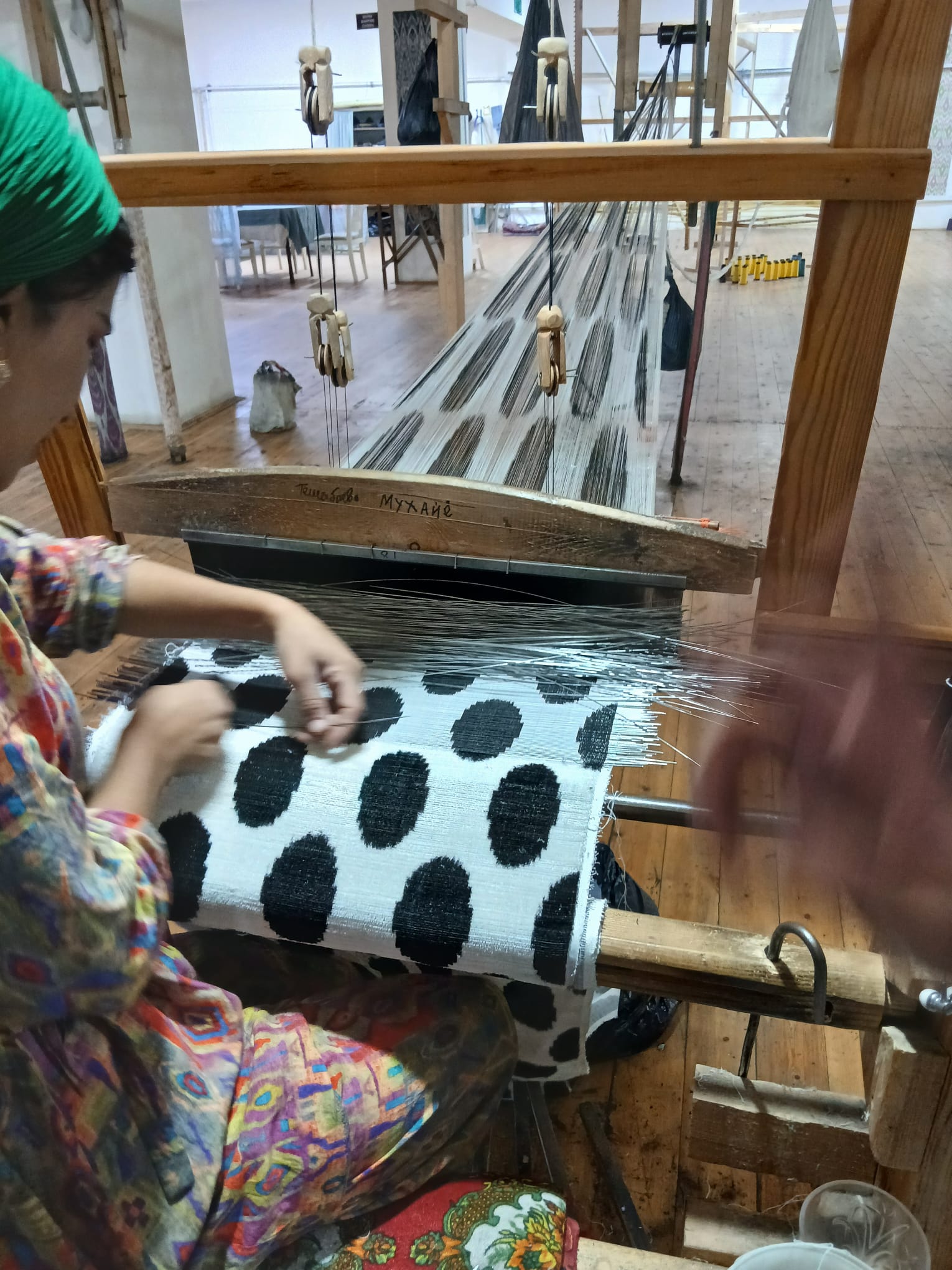 Bakhmal being woven with the use of metal rods, then cut. Photograph by author.
We were able to follow the whole process of making atlas, adras and bakhmal: reeling the silk from the cocoons, binding and dyeing the threads, weaving, and finally selling the finished fabrics. Although these textiles are a big part of the local tourist trade, atlas and bakhmal are still very much part of local life. We saw them in many people's festive dress, from high-end silk versions to simple printed fabrics imitating the colourful woven originals.