

We have just had a very busy and interesting few days at the TRC! We hosted a group from Britain who were in the Netherlands to visit the Kunstmuseum, The Hague, the Lakenhal in Leiden as well as the Leidse Deken, where the weaving of blankets in Leiden is being re-introduced, and they also came to the TRC, twice!
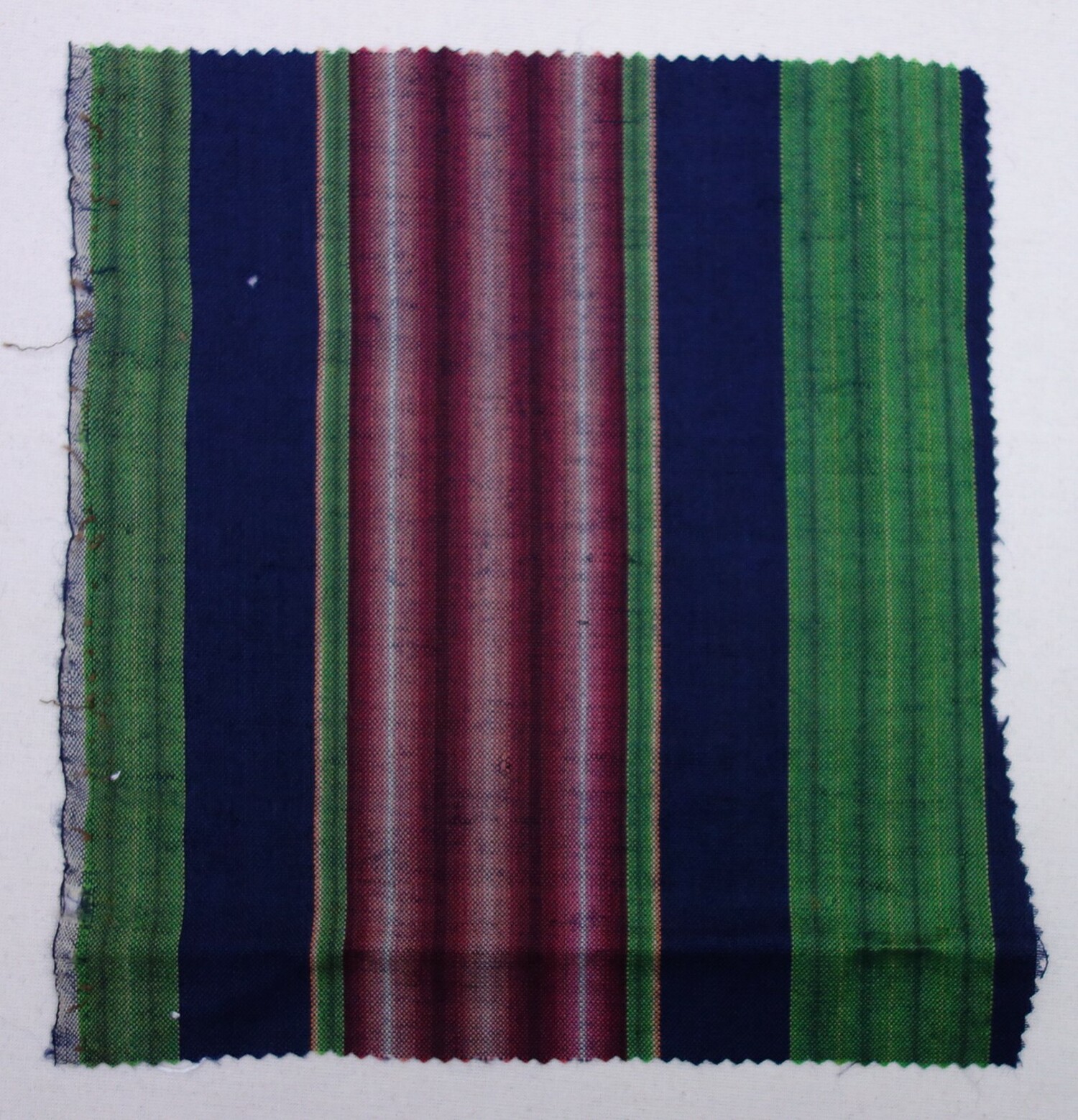 Woven sample of striped camletee from the Norwich area, England, 18th century. Camletee was a worsted cloth exported in large quantities to the Netherlands (TRC 2021.3328).
The British group included Mary Schoeser (textile historian and author), Michael and An Nix (textile historian and author), Meg Andrews (antique textile and costume dealer), Pat Frost (Christie's Auction Costume and Textile department consultant), Bridget Long (university lecturer and former Quilters Guild director), Keren Protheroe (Liberty's archivist), Anna Buruma - curator at the Central St Martins Museum & Study Collection, and Frank Gardiner (former film costumier and textile historian), all of whom are joined together by a deep knowledge and love of textiles and dress in all their many forms.
 Woman's indoor or morning cape with hand painted chintz design. India and the Ndtherlands, c 1745 (TRC 2014.0064).
The visit to the TRC started at 10.30 on Thursday 30th June with the group having an introduction to the TRC, a chance to see the storage areas (and yes comments were made about our need for more space), and to see the Asia- African-Europe textiles and trade exhibition (this was the last week of the display). The stories behind the kangas, Vlisco and bazin textiles were found to be particularly interesting.
We were asked in advance if it was possible to get out a range of textiles and garments from the TRC Collection for examination. The requested items included 18th century chintz garments, an Empire dress that was recently given to the TRC, as well as two Dutch patchwork skirts (feestrokken) that date to 1948. We also had a ‘picnic’ lunch during which personal work and experience, textiles in general and the future of the TRC were animately discussed.
 Dr Michael Nix, Norwich, talking about Norwich textiles and their historical links with Leiden and the Netherlands. Photograph by Maria Linkogle.The afternoon saw one of our guests, Dr Michael Nix, giving a public talk about the trade and personal links between Norwich in East Anglia, England, and the Netherlands, especially Leiden. These links date back to the sixteenth century and included spinners, weavers as well as polishers (calanderers) who travelled back and forth between the two countries.
It was fascinating to see the depth of the trading links, even down to a change in the types of boats (wherries) used in Norfolk that moved from square sails to angled-shaped sails typical of the Netherlands. The production of say and bay (saai and baai, worsted textiles), and how families could be traced for two or more generations in Norwich through their Dutch/Flemish names were also discussed.
The TRC Gallery was full for the lecture and those who attended included weavers, historian, curators, etc. And as can be imagined the range of questions during and after the talk indicated people’s fascination with this significant, but forgotten aspect of British/Dutch/Flemish textile history. I became curious how the Dutch word stof and the English word stuff relate to each other!
Following the lecture people also had the chance of seeing a mini-exhibition in our main workroom about 18th century Norwich textiles based on items from the TRC’s (small) collection. The exhibition will shortly be put on-line.
 Discussing the Van Gerwen collection at the TRC, Friday 30 June 2023. Photograph by Gillian Vogelsang.Friday saw some of our British friends come back to the TRC to look at the Van Gerwen collection of over 100 velvets and silks that were given to the TRC in 2011. This donation was made after the closure of the Van Gerwen Museum of Medieval Religious Art, Valkenswaard, in 2008.
Most of these textiles date from the 16th to 18th century, although the majority of the silks are 18th century in date. There are silk examples from France, Italy and Spain, and possibly some from the Habsburg Empire (basically Austria and Germany). Some of the designs and colour combinations are well-known, others were new to the participants of this event.
The group went through the whole of the van Gerwen collection and the conclusion was reached that this collection needs to be more publicly known, which would require serious research, including technical analyses (such as fibre DNA, dye, metal thread, weave and loom forms, and finishes), and the study of design and development, as well as looking for evidence of the potential uses of some of these textiles based on seams, hems, wear, etc. In other words an in-depth look at pre-industrial silk weaving in Europe. A theme that would be suitable for a PhD subject!
Gillian Vogelsang-Eastwood, 3 July 2023