
Beyond The Chador Regional Dress From Iran
4. Raw fibres
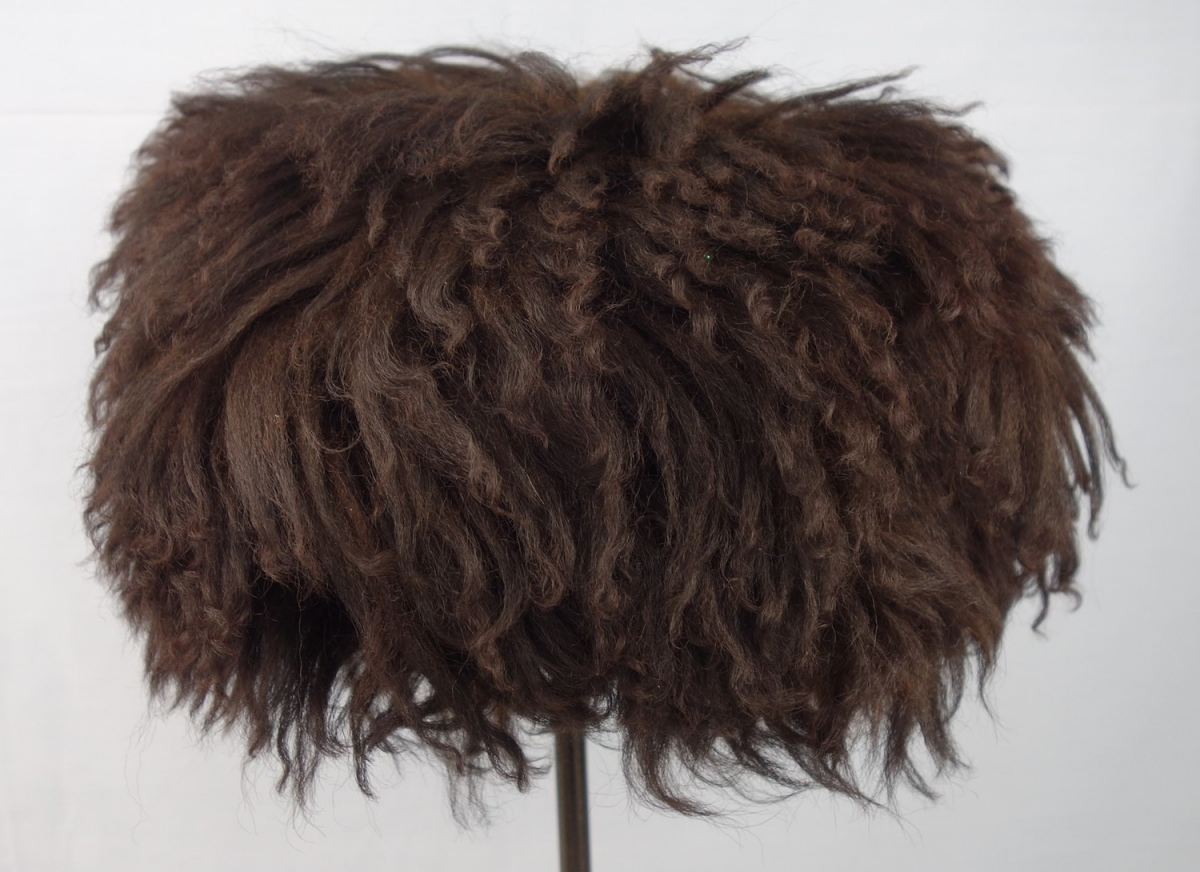
Central Asia is home to a range of raw materials that are used for the production of textiles for personal, domestic and public use. Traditionally the main fibre types are cotton, as well as various animal fibres, such as camel hair, silk, sheep’s wool and goat hair.
Cotton
The cotton plant is a member of the Gossypium genus (mallow family). Cotton consists of the soft, fluffy fibres that grow in a protective case (called a boll) surrounding the seeds of the cotton plant. There are four main types of cotton, of which Gossypium arboretum is native to Central Asia. Cotton has been grown in this part of the world, and in India and Pakistan, for thousands of years. By the medieval period the production of cotton was widespread. But it was in the twentieth century that the mega-industrial scale of cotton production in former Soviet Cental Asia and neighbouring Afghanistan took place and with it the devastating environmental damage due to the intensive use of water. The huge Aral Sea, for example, has just about vanished due to intensive cotton farming of cotton in the region and the drying up of the Amu Darya river.
Camel hair
Both the one-humped (dromedary) and the two-humped camel were used for their hair, that was applied to make various forms of cloth for garments, especially coats, and soft furnishing. The dromedary is more common in the Middle East and Iran, while the two-humped variety was more prevalent in the colder and more mountainous lands of Central Asia. The Bactrian camel (Camelus bactrianus) is in fact named after the ancient province of Bactria in what is now northern Afghanistan. The ruins of its ancient capital, now known as Balkh, still rise from the plains west of the Afghan city of Mazar-i Sharif. For thousands of years the Bactrian camel has been an important pack animal, especially along the so-called Silk Road that used to connect China with the Persian world and onto Europe.
 Uzbek woman's ikat dress made of silk, early twentieth century. TRC 2007.1125. For further information, click on the illustration.Silk and rayon
For hundreds of years, silk has been produced, spun, dyed and woven in Central Asia, and in particular in what is now Uzbekistan. The most widespread form of silk moth used is from the Bombyx sp., which lives on mulberry bushes. Until comparatively recently it was the most prestigious of the textile fibres. Then in the late 1890’s rayon or artificial silk (based on cellulose) was invented in France. By the mid-20th century rayon was widely used in many parts of the world. Rayon and more recently synthetic yarns (usually based on oil) have come onto the open market and have taken the place of ‘real’ silk. By the beginning of the 21st century most of the ikat textiles produced in Central Asia were of rayon or a synthetic fibre.
Wool and goat hair
Many different types of sheep and goat are kept in Central Asia, some of which are used for meat production, while others are more important for their wool and hair. These products are used for a wide range of goods, including clothing (notably coats and shoulder cloths and blankets), soft furnishings, tents (including the typical, circular yurts), tent furnishings, animal trappings, as well as specific items such as carpets (pile and flat-weave forms).
3. The peoples of Central Asia
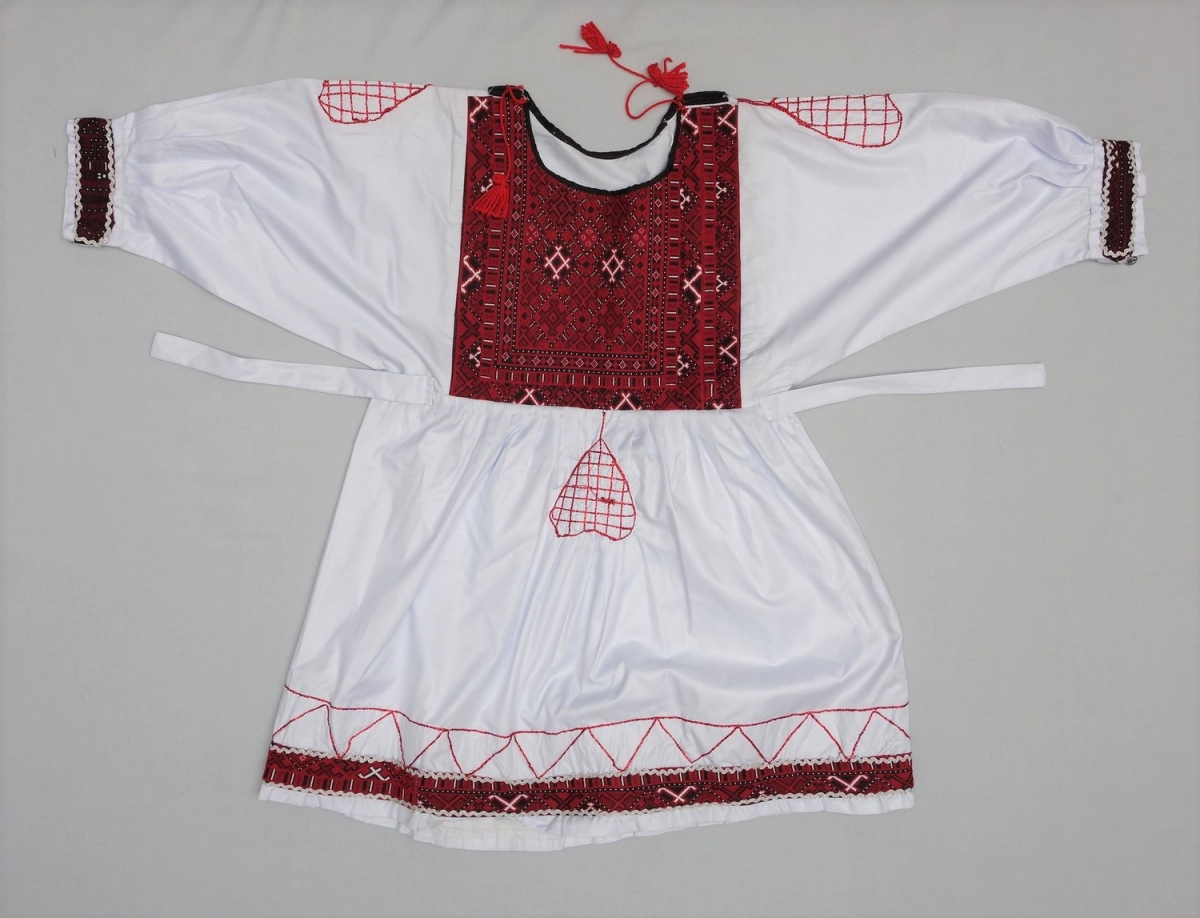
The lands of Central Asia are nowadays inhabited by a wide array of groups, many of whom with their own particular history, language and dress. Roughly speaking, the Central Asians can be divided, mainly on the basis of their language, into those with a more Iranian background, and those with a more pronounced Turkic or Turkic/Mongolian origin.
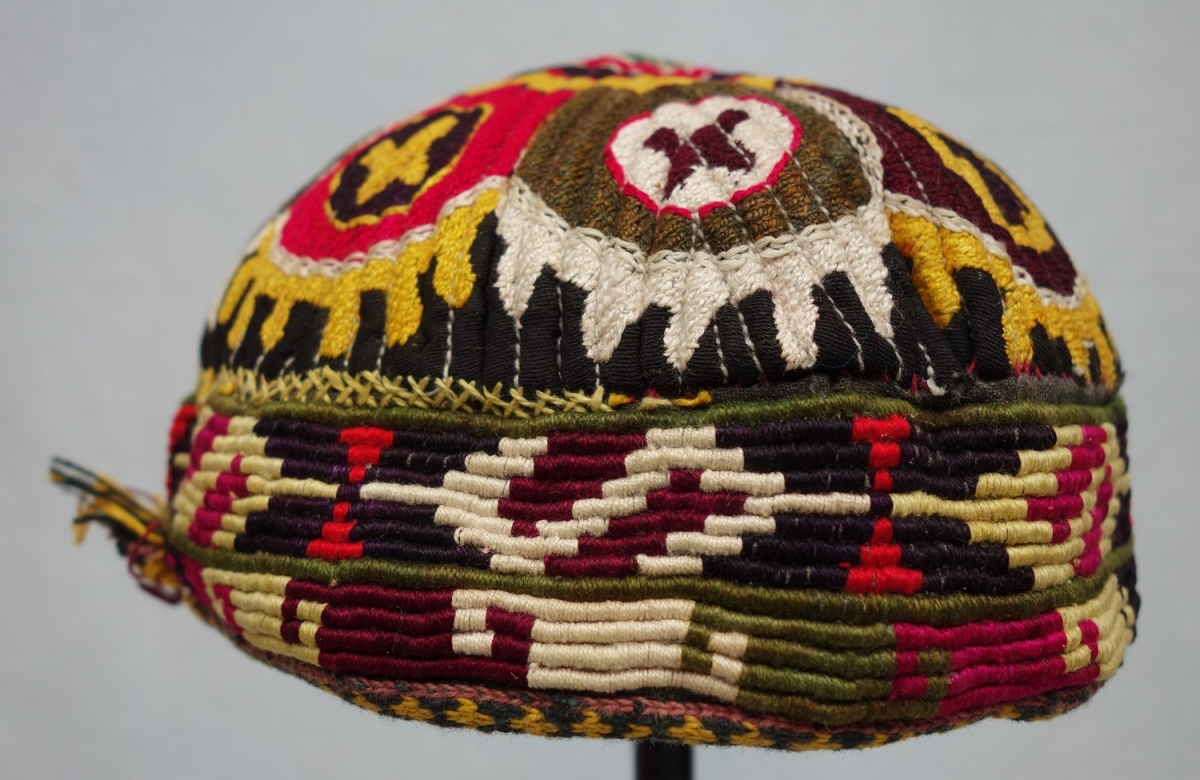
Those with an Iranian-speaking background had lived in Central Asia for millennia when from the first millennium Turkic group arrived. They came from much further north and east. Some of the Turkic peoples migrated towards the west, towards a land subsequently was called after them, namely Turkey. Others settled in what is now Iran and the lands east of the Caspian Sea. Their descendants are the Turkmen, who now mainly are found in modern Turkmenistan and settled there in the early second millennium. Relative newcomers in large parts of Central Asia are the equally Turkic Uzbeks, who in the late 15th and early 16th centuries moved south from what is Kazakhstan and occupied large parts of what is now Uzbekistan. They also moved further south into northern Afghanistan. Other immigrants are the Turkic Kyrgyz, who centuries ago came to live in the mountainous Central Asian borderlands with what is now China.
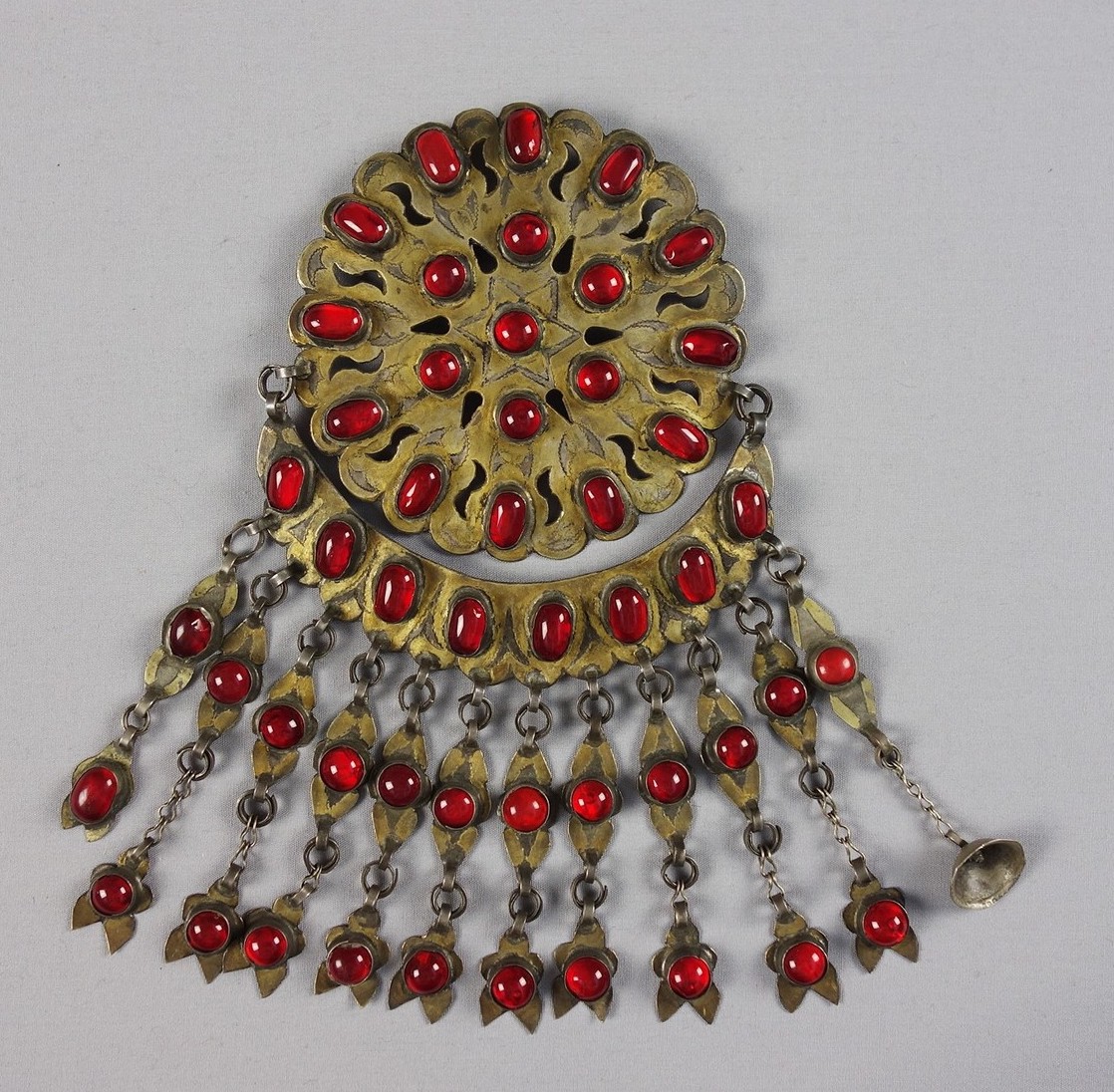 Turkmen woman's broach, mid-nineteenth century. Silver with garnet coloured glass insets. TRC 1999.0316. For further information, clock on the illustration.The original, Iranian speaking population of Central Asia are traditionally called Tajiks, and they were allocated their own country by the Soviet rulers in the 1920s, but they can also be found in neighbouring lands. In Afghanistan, the Tajiks represent a large part of the population, mainly in the north of the country, but also in the urban centres in the south. Their language is called Dari, which is basically a form of Persian, which is one of the many Iranian languages. Dari is, next to Pashto, the main language of Afghanistan. Pashto is another Iranian language, which is spoken by the Pashtuns, who form the larger, and dominant part of the population of the country, and who traditionally are named Afghans, hence the name of the country.
Iranian and Turkic groups constitute the dominant ethnicities in Central Asia, but there are also other groups, such as the Hazaras in Afghanistan. They claim descent from the armies of the Mongolian conqueror, Genghiz Khan, in the early 13th century. Their language, which is now Dari or Persian, still contains many Mongolian words.
2. The 'Stans' of Central Asia
The term ‘Stans’ is a modern appellation that is often used, perhaps somewhat derogatory, for Central Asia. It covers most of the mountains and deserts between the Caspian Sea to the west and the borders with China to the east. They include five modern states that were (re)created in the late 20th century after the fall of the Soviet Union in 1991. These are Kazakhstan, Kyrgyzstan, Tajikistan, Turkmenistan and Uzbekistan. It also includes the modern Islamic republic of Afghanistan. All six of these lands are named after their dominant ethic population, with the suffix ‘stan’, which means ‘land’. Afghan-i-stan thus means ‘land of the Afghans’.
 Group of people at the Registan of Samarkand, between 1905 and 1915. Digitally enhanced photograph, Library of Congress.The former Soviet states were occupied by the Tsarist Russian Empire in the 18th and particularly in the 19th century. Before that time, they had been divided into independent realms, such as that of Khiva, Bokhara and Khojend. These lands were incorporated into the Soviet Empire following the Russian Revolution of 1917. New borders were being drawn, massive changes were being imposed, large groups of other ethnicities were imported (notably from Korea), and local culture, including religion and dress codes, were transformed. With the demise of the Soviet Union in 1991, the former Soviet states of Central Asia declared their independence, although often under the same leaders that had controlled the states while still under the Soviet umbrella.
 The Stans of Central Asia.Afghanistan has always been different. It was never incorporated into the Russian Empire. It was in fact never colonised at all. It was founded as an independent kingdom in the mid-18th century. In the 19th century it was transformed into a buffer state between the Tsarist Central Asian lands to the north, and British India to the southeast. In this way, Afghanistan has always retained its independence, although it has been affected by civil war and foreign intervention especially since 1978, when it was brought into the influence of the Soviet Union, and after 1989 when it became the scene of a bitter civil war that continues to the present day.
1. Introduction
Appliqué is a textile technique whereby one or more textiles are sewn onto a ground material, usually of cloth, in a decorative manner. The earliest surviving examples of Egyptian appliqués can be dated to over three thousand years ago and come from the tomb of the famous Egyptian pharaoh, Tutankhamun (died c. 1322 BC). Given the quality of the work found in the tomb, it is likely that this technique is much older, but alas, nothing has survived.
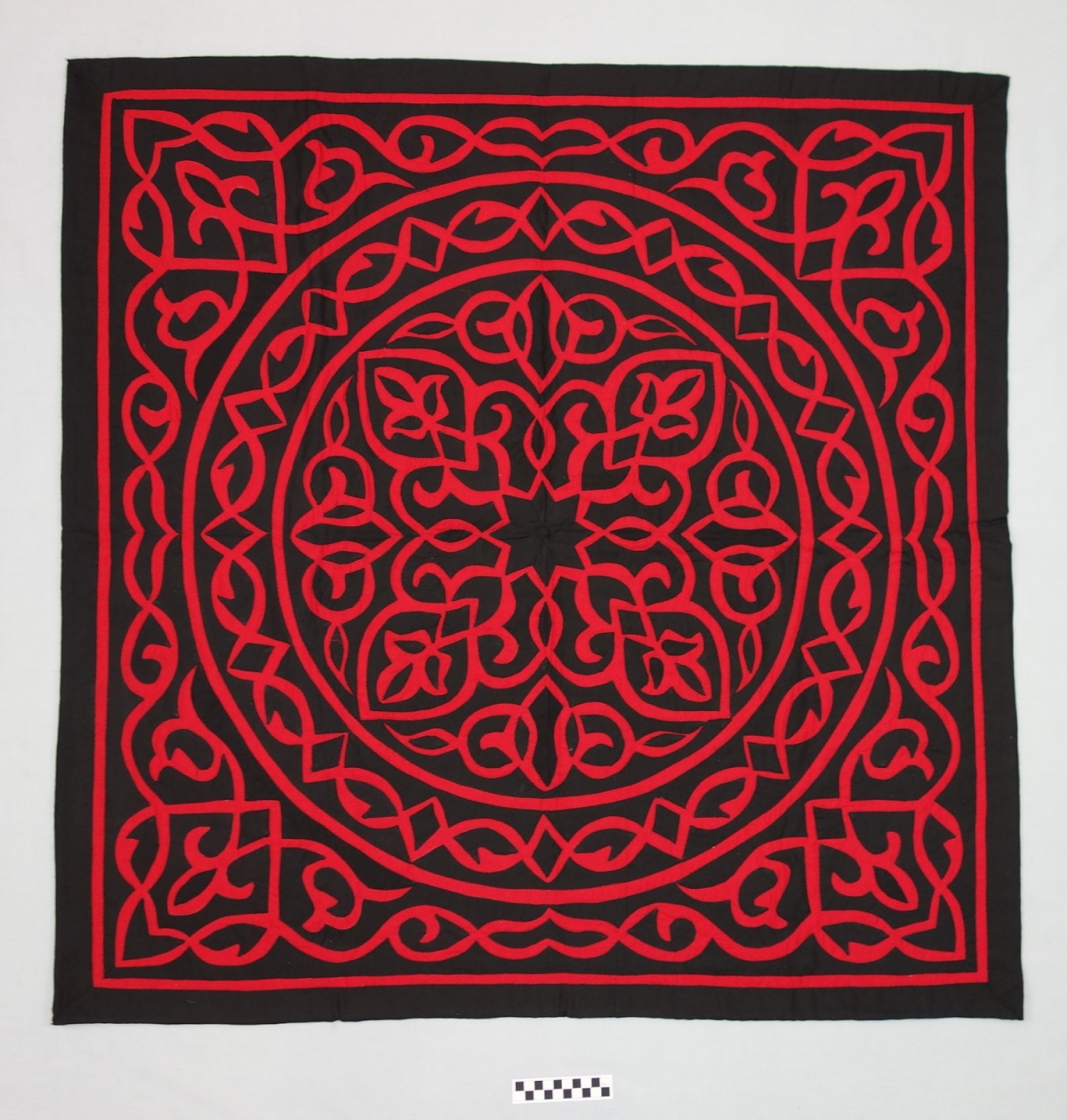
Traditionally, this technique in Egypt is mainly used for the production of large decorative items such as awnings, flags, tents (suradeq) and tent panels, paired curtains for doorways, as well as wall hangings. Similarly, very large wall hangings were made in the Maghreb, especially Morocco, as wall hangings (called hiti), as well as in Palestine.
During the twentieth century the uses for Egyptian appliqués included wall hangings, cushion covers, table runners, and so forth. By the early 21st century these items are popular with the national and international tourist markets. The latter not only includes Westerners, but also buyers from other parts of the Arab world, as well as tourists from Asia, notably China, India, Japan and Korea.
9. Photographs of all objects
The collection of the Textile Research Centre includes a large number of appliqués from the Street of the Tentmakers in Cairo, most of them being produced in the late twentieth and early twenty-first centuries. The photographs below provide access to the TRC online catalogue. Just click on the illustration.
8. Current designs
At the beginning of the twenty-first century, various types of patterns were being used to decorate appliqué panels. The main forms are geometric or Islamic, calligraphic, and Pharaonic, as well as folklore and daily life.
Geometric or Islamic: Traditional geometric designs are used for locally used tents and so forth. These are regarded by many as the traditional form and are the style most commonly copied on printed designs. It is likely that the designs for the geometric appliqués derived from the marble inlay patterns to be found on the walls and floors of Cairo’s medieval mosques.
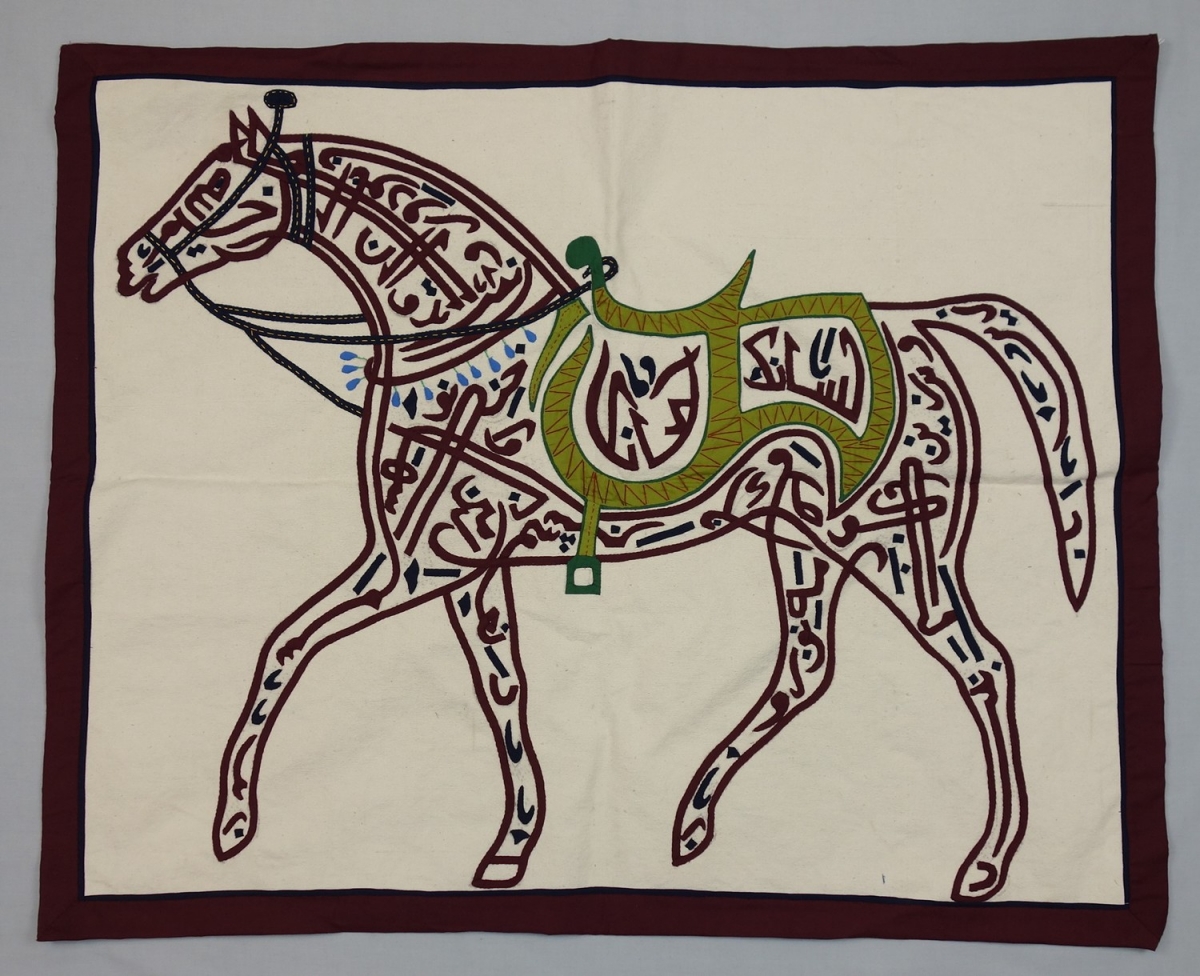
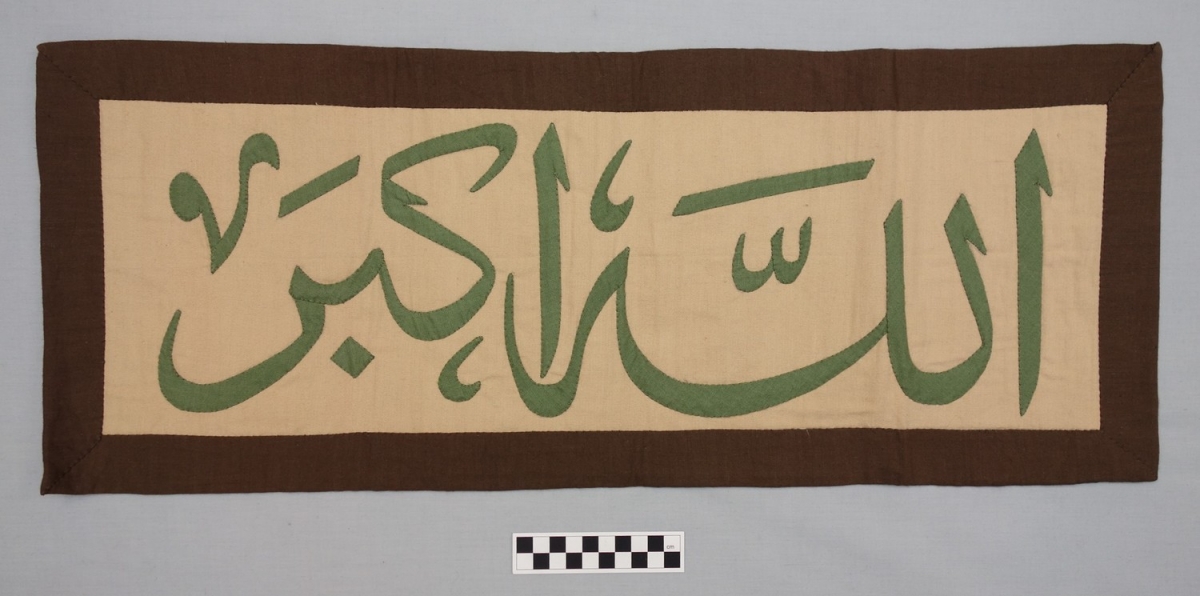
 Appliqué panel from the Street of the Tentmakers, Cairo, Egypt (TRC 2014.0818), showing a text written in the shape of a bird. For more information, click on the illustration.Calligraphic: A few of the more skilled craftsmen make appliqués based on traditional Islamic texts, especially those from the Koran. It is likely that these large panels are made for wall hangings decorating mosques or public buildings, as well as flags and banners. Some of these texts are in an Arabic form (often copying tile designs), others are based on Ottoman Turkish patterns.
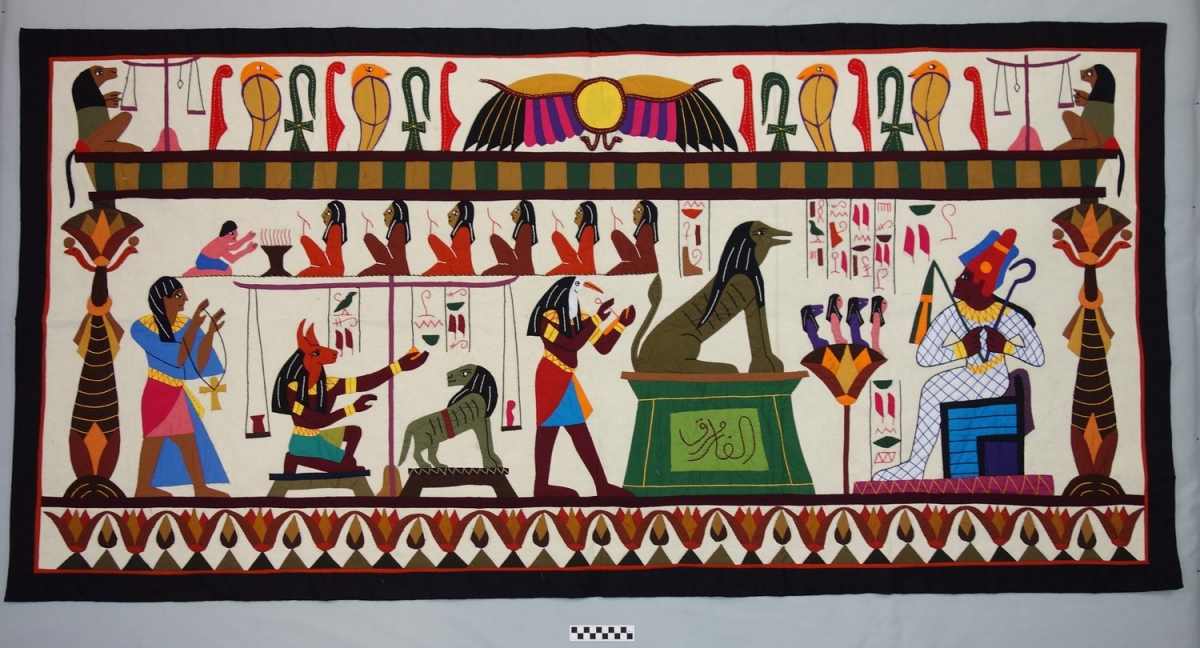
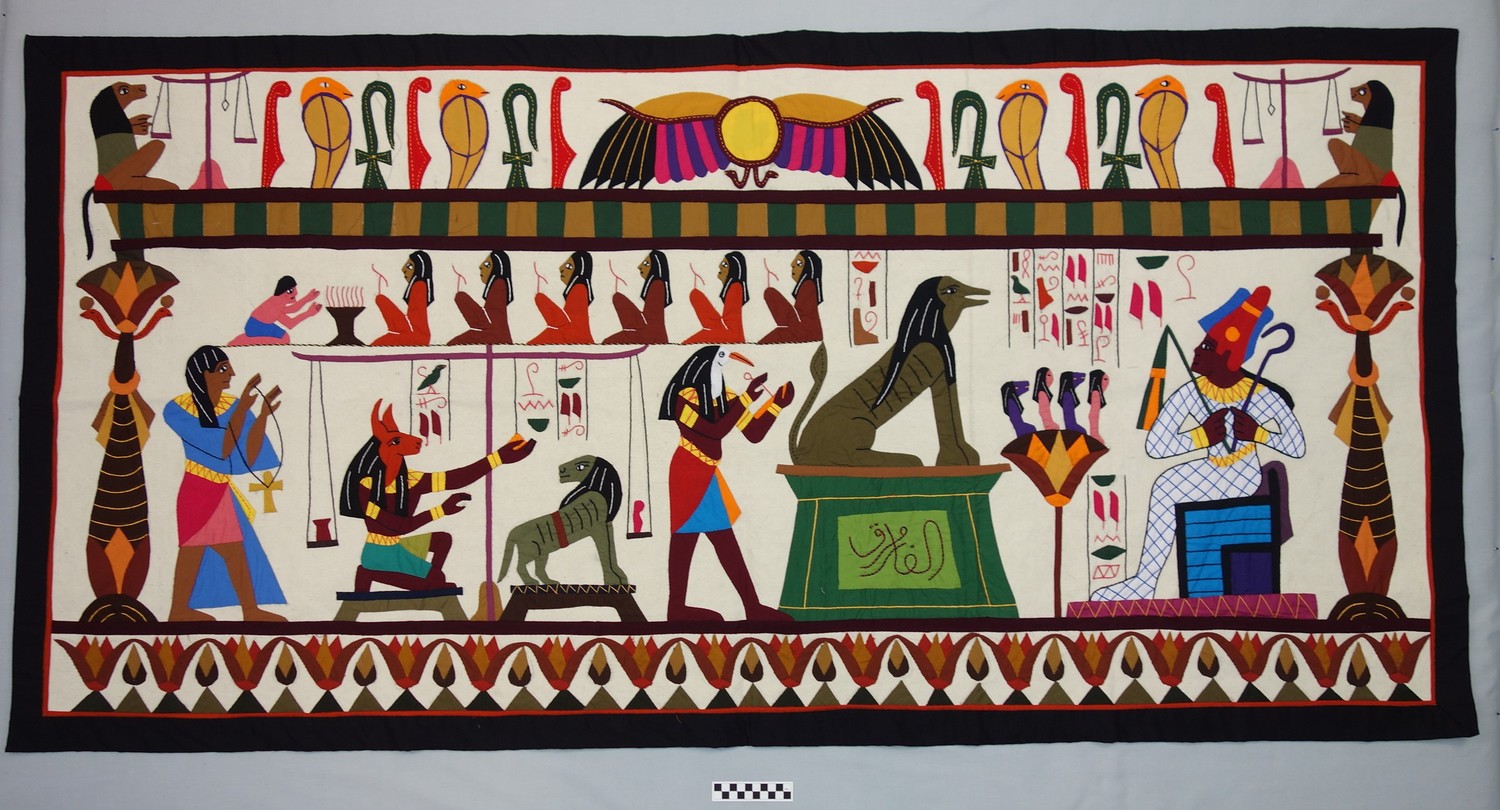 Appliqué panel from the Street of the Tentmakers, Cairo, Egypt (TRC 2014.1065). For more information, click on the illustration.Pharaonic: It would appear that since the late nineteenth century pictorial appliqués were made in the Street. These generally include scenes from ancient Egyptian tomb and temple reliefs, modified versions of ancient hieroglyphs or portrait busts, such as that of Nefertiti, the original of which is now in the Egyptian Museum, Berlin. In addition, some craftsmen make designs depicting scenes of daily life in ancient Egypt, notably farmers, hunters and animals. The production of this style of design is closely related to the opening of the Suez Canal in 1869, which linked the Mediterranean and the Red Sea, and the development of mass tourism (mostly from Europe and North America), in the late nineteenth century. Early twentieth century postcards bear scenes from various suqs in Cairo, including men and boys at work producing appliqués.
At the end of the twentieth century, finely worked panels with fishes, birds with sometimes over a hundred birds on one panel and butterflies have become more widely available. These panels were originally influenced by Pharaonic tomb paintings, but have gradually become more ‘independent’ forms.
Another style that was added to the Street repertoire at the end of the twentieth century was that of the lotus. This is a geometric pattern based on stylised lotus flowers. Due to the intricate nature of the design, these panels tend to be worked in a much finer cotton material than the geometric panels intended for use for tents or as wall hangings.
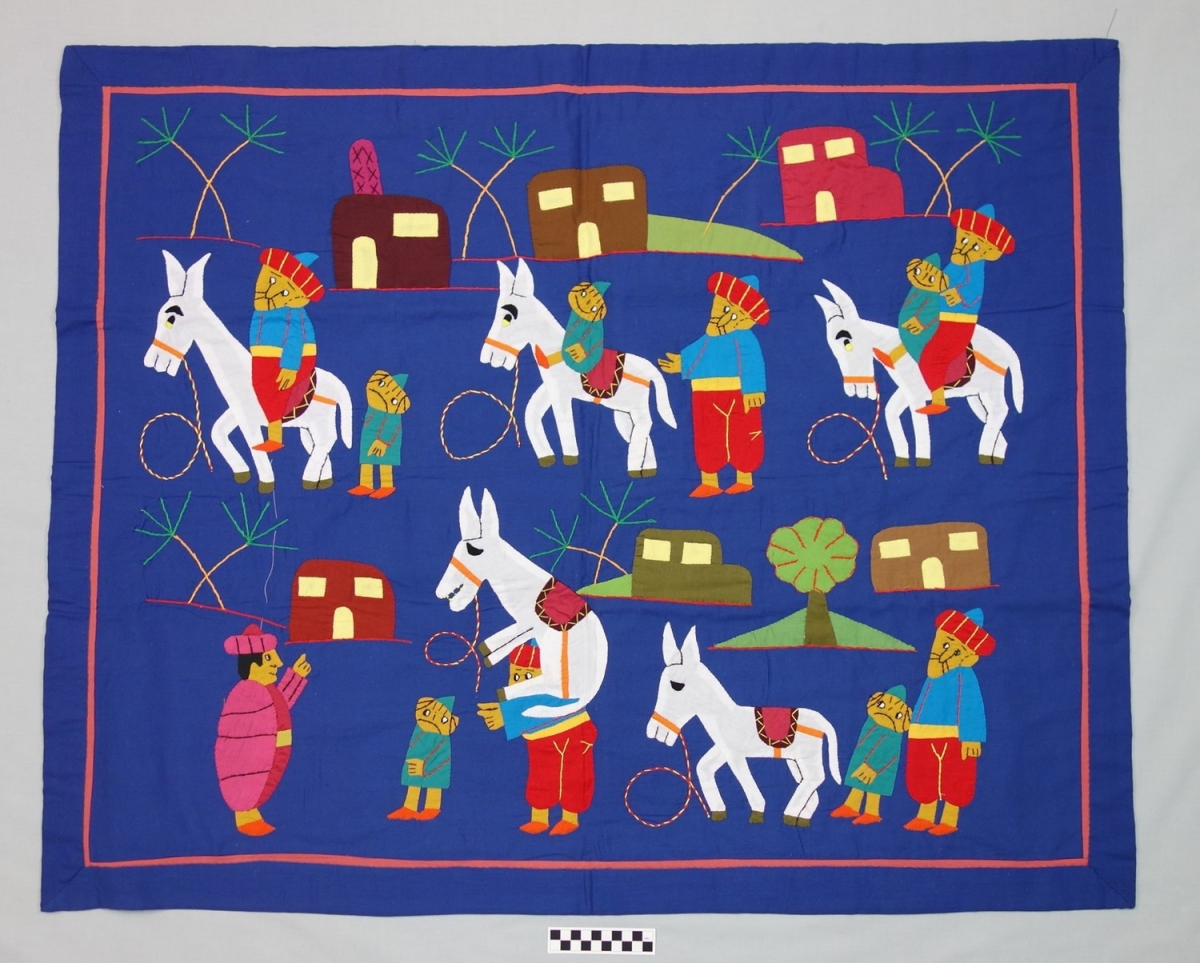
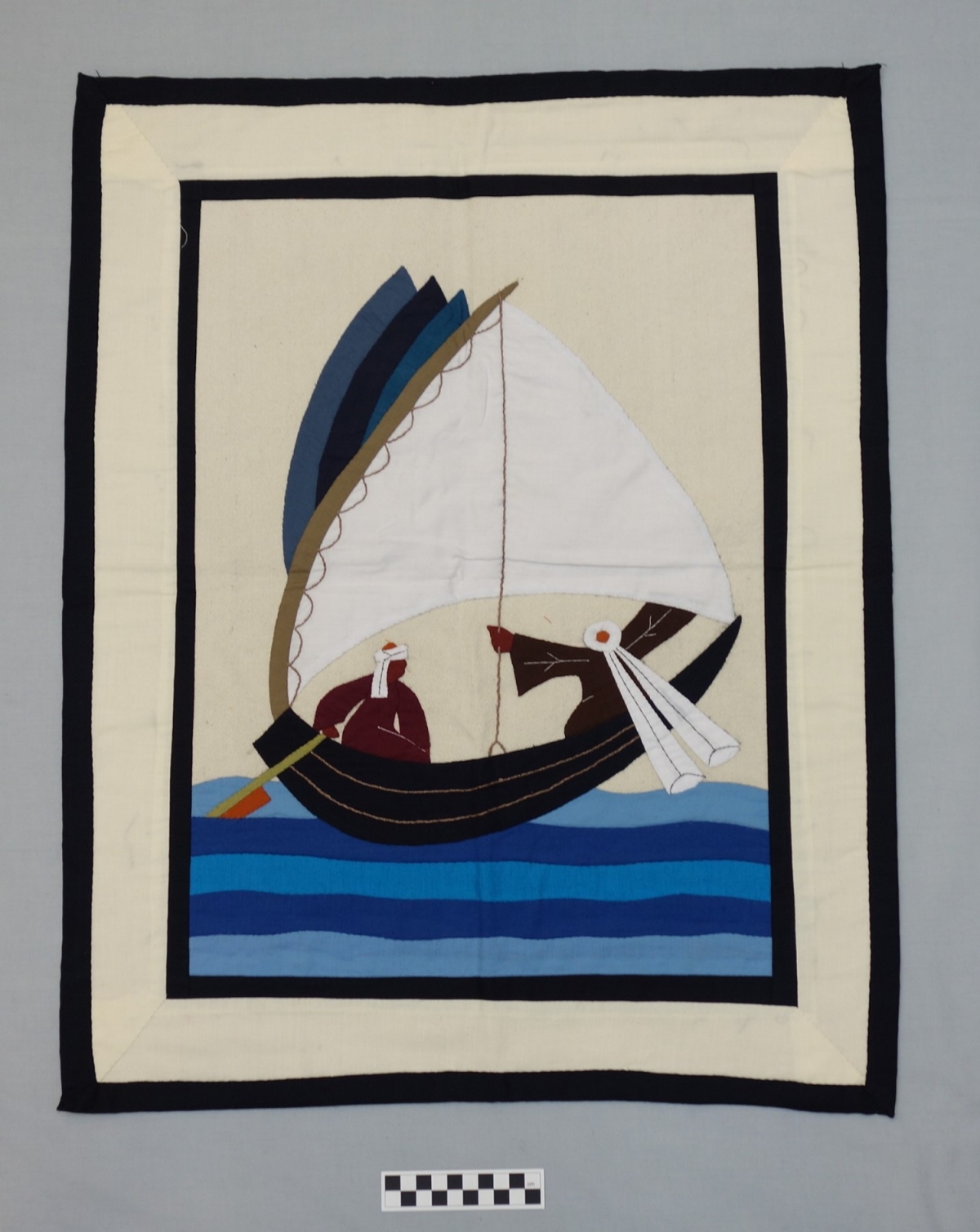
 Appliqué panel from the Street of the Tentmakers, Cairo, Egypt, showing one of the popular stories about Goha (TRC 2013.0315). For more information, click on the illustration.Egyptian folklore and daily life: Some craftsmen make designs depicting daily life in ‘modern’ Egypt, notably with agricultural scenes, street scenes, village life, animals or ships on the Nile. This style of design has become fashionable, since the work of the Wissa Wassef school in the 1950s and 1960s popularised flat weave (tapestry) floor and wall coverings depicting scenes of daily life.
The Ramses Wissa Wassef Art Center was set up in 1951 in Cairo by Ramses Wissa Wassef (1911-1974), an architect. He set up the school with the aim of teaching children design, art and tapestry making as a means for them to express their creativity and when older, to earn a living. The Wissa Wassef school was a great success and since then there have been many copies of this style and approach to design and art, including embroidery.
In addition, by the end of the twentieth century, subjects such as Goha (a fool with a unique form of wisdom, who appears in various forms of Egyptian folk literature since the eighth century; see illustration), Nubian musicians playing various instruments, as well as whirling dervishes, have also become themes on appliqué panels.
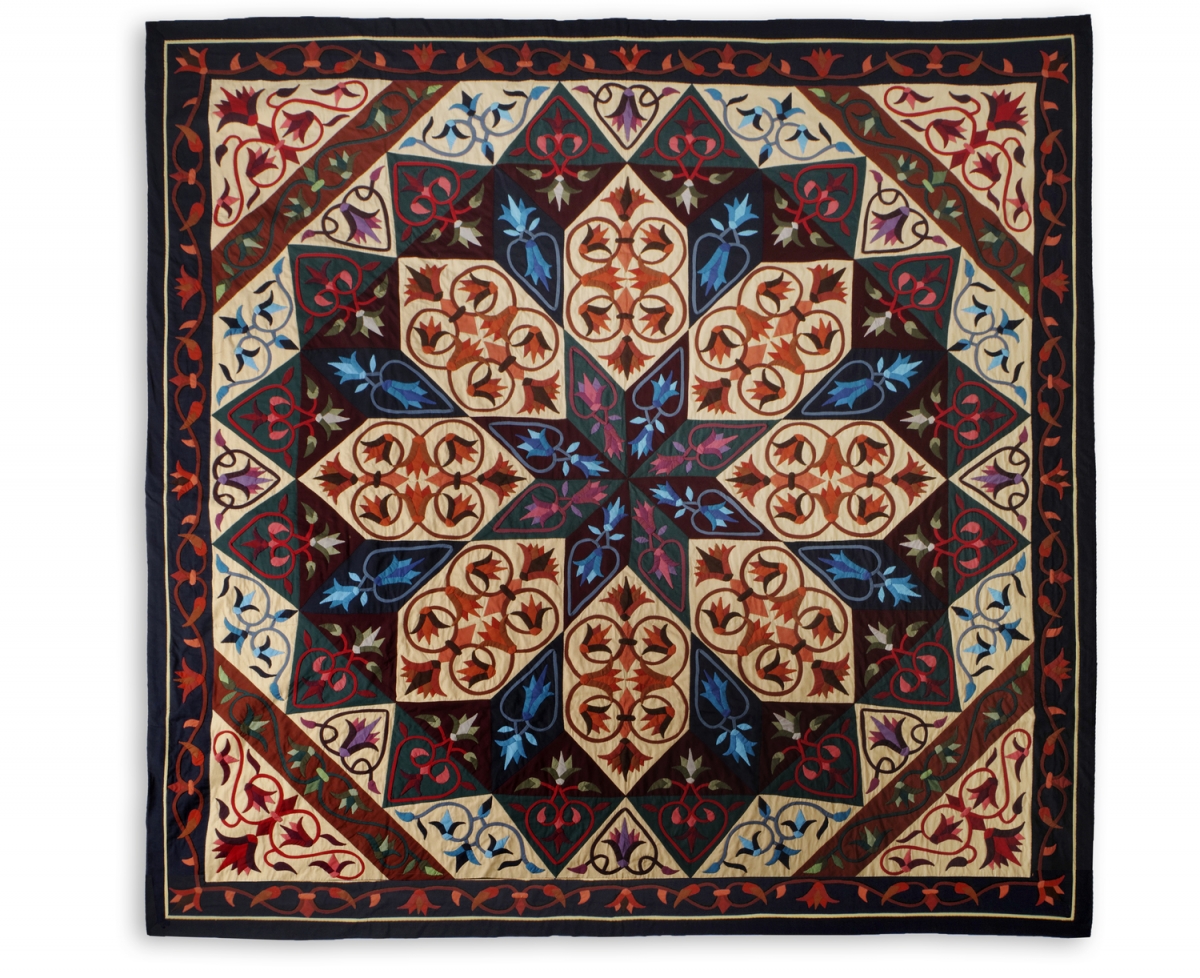
7. Appliqué patterns and colours
During the twentieth century the style and colours used for the appliqué panels have changed considerably. An early twentieth century description of the Street of the Tentmakers and the two styles of appliqué panels then being produced was given by the English Orientalist, Douglas Sladen, in his book, Oriental Cairo (1911). This book was a tourist guide to the history, life, shops, buildings and so forth in Cairo. The first style he noted was the use of calligraphic designs, with texts taken from the Koran. The second was for the tourist market and featured Pharaonic scenes (Sladen 1911:81-82):
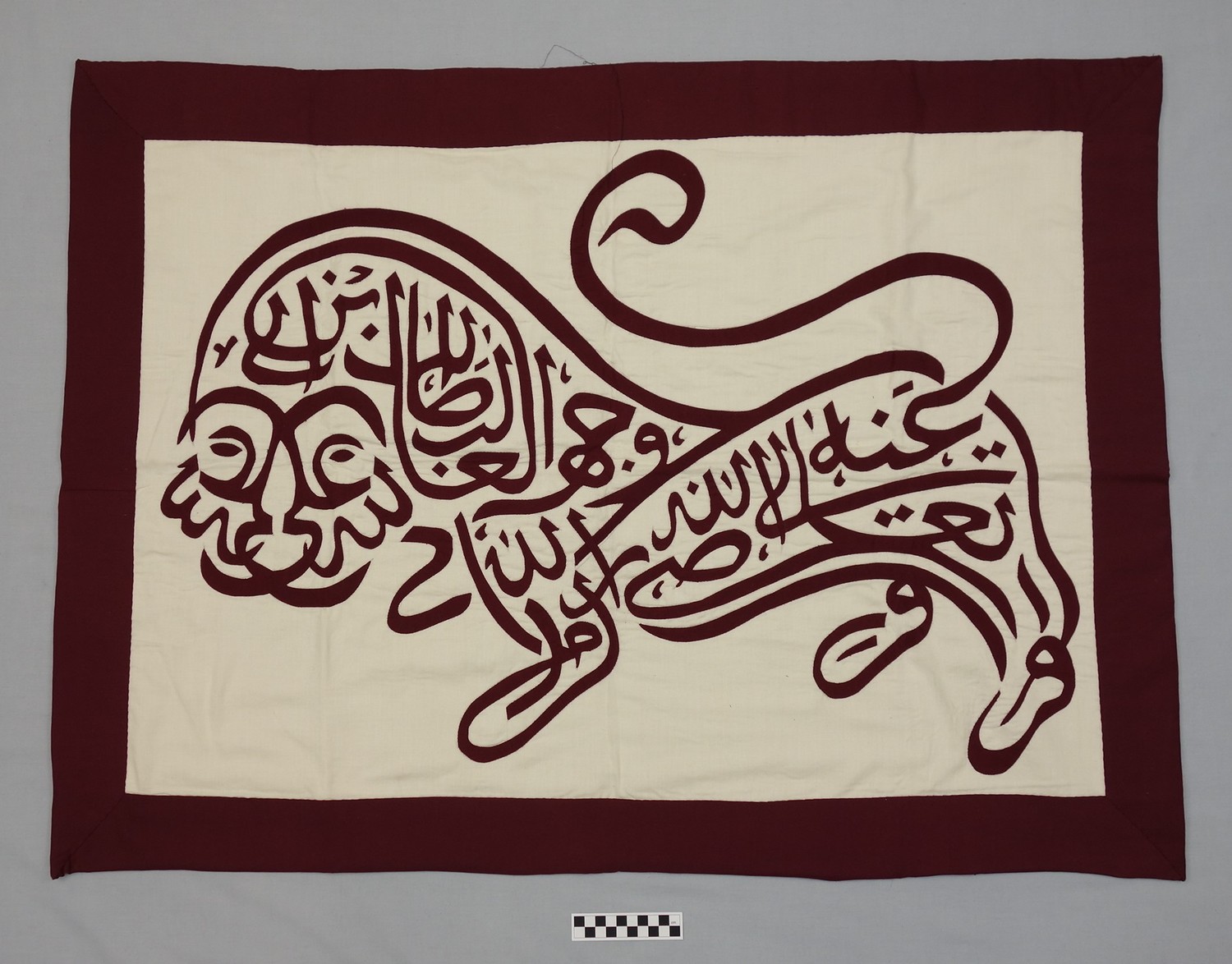 Appliqué panel from the Street of the Tentmakers, Cairo, Egypt (TRC TRC 2013.0615), with a calligraphic design taken from the Koran. For more information, click on the illustration.
One of his happy hunting-grounds is the Tentmakers' Bazar, which might have been designed for tourists. Its shops, in a sort of arcade which has a College behind it, are larger and opener, and there is enough colour here for the whole of Cairo. Most of its shops have their owners hard at work embroidering till a victim passes; the floors are covered with embroidery in the making, the walls with canvases appliquéd with texts from the Koran and caricatures of the tomb-paintings of the Pharaohs. If you want colour you buy texts; red, white, and blue blended are the quietest tints used for texts; they may have yellow added, and a violent violet and a gaseous green are also very popular. The colours of some of the new texts intended for purchase by tourists are crude enough for a factory-girl's summer hat. But the faded texts which have done duty for mosque or marriage for many years are exquisite. Their colouring was probably flowerlike in its beauty when they were fresh; they have faded into tints like nature's own.
 Appliqué panel from the Street of the Tentmakers, Cairo, Egypt (TRC 2014.0882), showing a scene taken from Pharaonic depictions. For more information, click on the illustration.The parodies of the pictures of the Pharaohs are soberer in their colouring; the black of hair and the Venetian red of naked bodies play such a large part in these compositions. They are odiously vulgar, because their faces and attitudes are caricatured to make the tourist like them as much as Mr. Lance Thackeray's satirical postcards of Germans on donkeys and spinsters on camels. They are always in shocking taste and bear hardly any resemblance to their originals. The tourists buy them as greedily as they buy the smoked sky-blue and scarlet statuettes of European exhibitions.
In the mid- to latter half of the twentieth century, the main colours were red, green, yellow and blue, as these were described as being ‘happy’ colours. By the end of the twentieth century a wider range of colours was incorporated into the designs, in order to suit modern tastes, both at home and abroad. There was also a much wider range of designs available. Since the 1990s, for example, the designs have gone up-market and feature finer and more elaborate handwork.
6. Preparing and making a design
Until the latter half of the twentieth century, the appliqué was made exclusively by men (khayamij; ‘maker of tents’) and boy apprentices, but at the end of the century a number of groups (NGOs and commercial groups) started to encourage women and girls to take up the craft.
The girls are taught by master craftsmen who do not object to women carrying out this profession. As a general rule, women’s work tends to include a different range of colours from that of the men (with an emphasis on bright yellows and reds) and is always carried out at home and not in public. It attracts lower payment than is the case for men, even though the final products are equally intricate. One of the stall holders noted (2014) that at present he had 10-15 women working for him, and between 20 and 30 men, depending upon the orders that had come in.
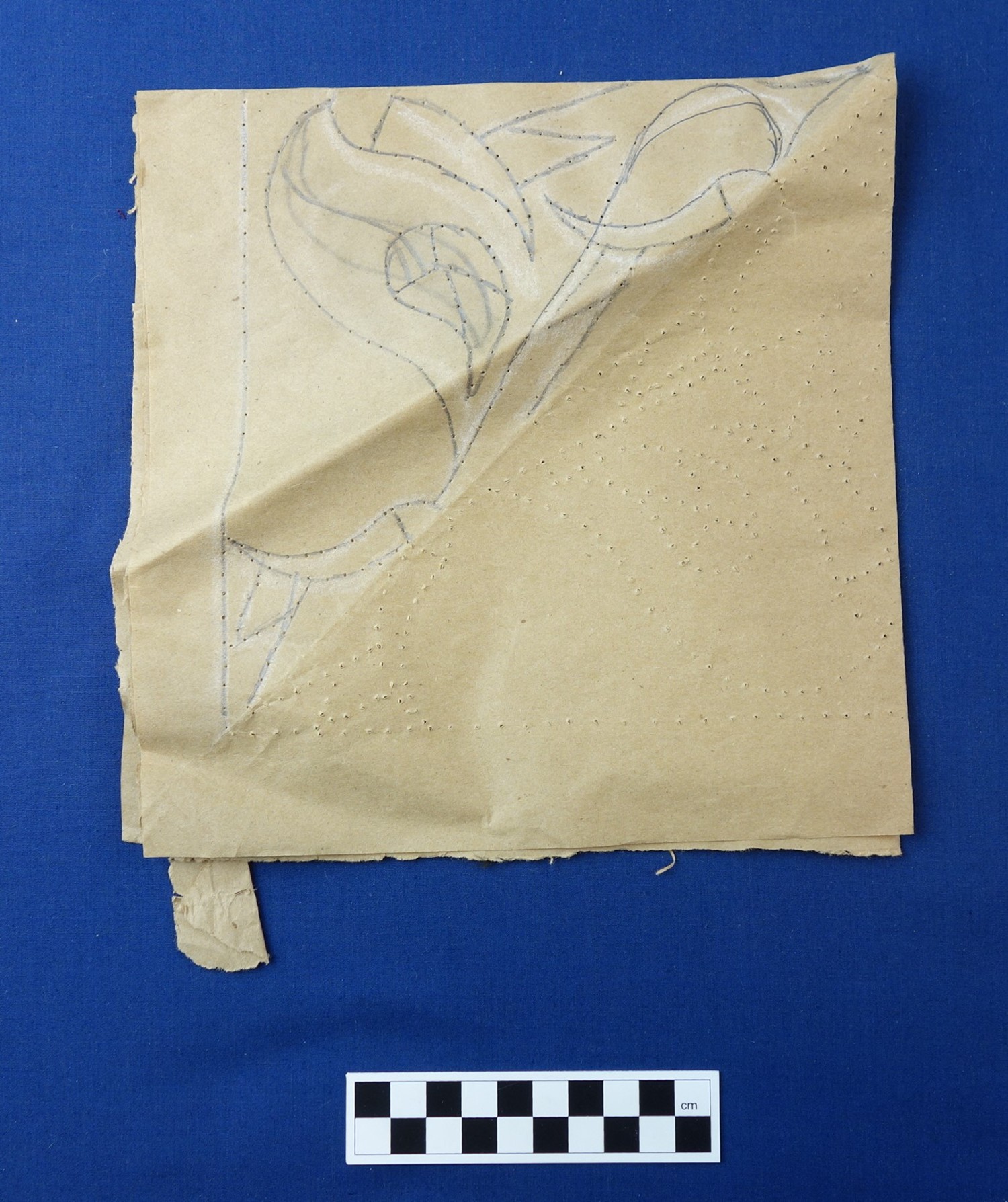 Pounced pattern for an appliqué panel, Cairo, Egypt, 2014 (TRC 2013.0446b). For more information, click on the illustration.The designs used to make a panel or tent are first drawn on paper or card by experienced craftsmen. The designs are then either hand copied or traced using pencil, pen or wax crayon of some kind directly onto the ground cloth.
If the designs are very complicated, they are worked out on a large piece of paper to achieve geometrical accuracy; an element of the design is first drawn onto the paper, which is then folded several times depending on the complexity of the design. As a generalisation the older patterns were based on a 6-fold repeat, while by the end of the twentieth century, designs were often based on an 8-fold form. The design is then traced onto the ground material. This is often carried out using a prick and pounce technique, whereby holes are pricked into the paper following the drawn outline of the design and then talcum powder or chalk is rubbed through the holes leaving the dotted outline on the ground material.
Some workmen use paper or card templates to cut out the pattern elements in the required colours. The process is repeated for all the pieces of coloured cloth needed to make the final design. More experienced workmen cut out pieces of coloured cloth in the approximate shape of the required design element.
As the work progresses, the cloth is trimmed and the edges of the cloth tucked under, until it fits exactly the design on the ground cloth. Elements of the designs created were, and are, sometimes highlighted with the use of stem stitch, which is used to create fine lines. One small panel, if properly made, can take many hours to make. The larger panels may take several weeks of intensive work.
Some of the cheaper examples of appliqué panels are made out of two layers of cloth: the ground material and the applied pattern pieces. More expensive examples are often made from three layers with a lining cloth, the ground material and the applied pieces.
5. Street of the Tentmakers
By the twenty-first century the production of tent appliqués can still be found in a small number of Egyptian cities and towns, but the most famous is the Shari’ Khayamiyya (or Suq Al-Khayamiyya). The Shari’ Khayamiyya is situated near the Bab al-Zuwayla, one of the city gates that was erected in AD 1092. The name Khayamiyya comes from the Arabic word khayma, which means ‘tent.’
The Street was established in the mid-17th century by Ridwan Bey al-Faqari (he died in 1656). His work included the organisation of the Egyptian pilgrim caravans going on the annual Hajj to Mecca in what is now Saudi Arabia. The preparations for the pilgrimage included the collection of items transported to Mecca, and just before the departure of the actual caravan there was a procession of the pilgrims themselves. Part of this procession passed very close to the Street of the Tentmakers. The thousands of pilgrims and their guards meant that each year it was necessary to assemble together vast quantities of supplies for the feeding and housing of those involved.
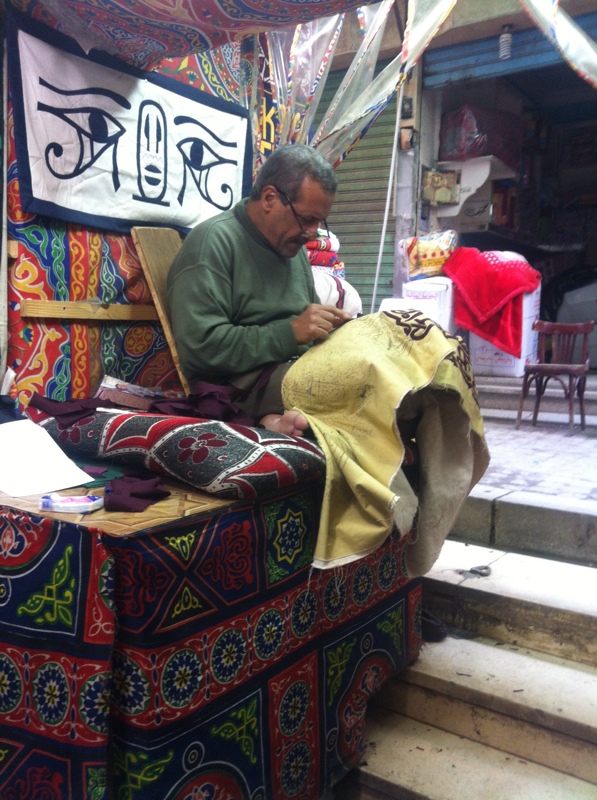 Man working on an appliqué panel, Street of the Tentmakers, Cairo, Egypt. Photograph: Gillian Vogelsang-Eastwood, December 2014.The Street was part of a large complex that was created to cater for the pilgrims’ religious and secular needs. The complex included a mosque, offices, a palace for Ridwan, as well as a school and bath house. Among the objects needed for the pilgrimage were tents, tent ropes, banners and flags, as well as leather items such as water bags, leather saddles, even leather shoes and sandals. All of these items were made in the Street and surrounding district. From the seventeenth to the mid-twentieth centuries the Street was also famous for the production of appliqué panels traditionally used to make and decorate mainly urban (as opposed to nomadic) tents.
Nowadays, these tents, or more accurately pavilions, are used for family and official gatherings, rather than for living accommodation. Often the outside of the tent is plain and made of an off-white cotton, but on the inside the tents are lined with intricate geometric patterns in many colours. Sometimes, on very special occasions, panels are used to decorate both the inside of the tent and its outside.
These large appliqué panels used to be made in great ‘tent lofts’ above the suq leading to the Bab al-Zuwayla, on terraces or in the local mosque. By the end of the twentieth century, however, few of these huge panels were being made, as most of the festive tents and pavilions used in Cairo are decorated with printed, rather than hand sewn, designs
4. Medieval appliqués
Various examples of 'real' appliqué as well as inlay appliqué (inlay patchwork) survive from the medieval era in Egypt, namely from the Fatimid (969-1171) and Mamluk (1250-1517) periods. Surviving examples of medieval appliqué include banners that are made of linen with appliqué work and needle weaving. These often have designs of circles enclosing diamond shapes applied to the background cloth and small z-shapes and central diamonds. Other popular medieval motifs include chalices and swords. These forms were often made using applied woollen cloth in various colours. Sometimes the ground material was linen, on other occasions it was made of wool.
One of the main uses of khayamiyya panels was for making large, decorative tents that were used at weddings, feasts, as well as by people going on hajj. There are various medieval descriptions of decorative tents and tent panels, which refer to appliqué as well as embroidered forms. In particular, there are references to manufacturers of decorative tents by the Egyptian writer al-Maqrizi, who was born in Cairo in AD 1365. The following description comes from Maqrizi’s so-called Book of Treasures, and it gives a description of ‘The Store of Tentmakers’ in Cairo. Maqrizi was using an earlier unnamed source for part of his study, which suggests that the production of tents and tent panels had been carried out for some time (Maqrizi, Khitat, I, 418ff; quoted by Serjeant 1972:159-160):
……Among the articles brought forth from the treasuries of al-Kasr, was a countless number of packages containing tents (khaima), large tents (midrib), tents with two poles (faza), flat-roofed tents (musattah), military tents (djarkawat), fortress tents, and castle tents, tents with one side only, pavilions and marquees (fustat) manufactured of Dabiki and velvet stuffs, Khusrawani stuffs, royal brocade (dibadj), Armenian stuff, cloth from Bahnasa and Karduwan (in Persia), and the best kind of Halabi (stuff manufactured at Aleppo [Syria]), … of various colors and kinds, as well as of sundus brocade and tamim (gold brocaded stuff) embroidered with designs of elephants, wild beasts, horses, peacocks, birds and other kinds of wild animals, and human beings ….. of all manner of striking and wonderful forms and shapes.