Beyond The Chador Regional Dress From Iran

Published in Berlin Work Charts

2. Berlin wool

Berlin wool is a type of wool derived from Merino sheep in Saxony, Germany. In the nineteenth century, the wool was sent to the city of Gotha to be combed (worsted), spun and then taken to Berlin where it was dyed and sold. The wool was softer and separated more easily into strands than types of wool from England and the Netherlands, which were widely used at the time.

This meant that Berlin wool was easier to work with, especially for crewel embroidery and the form of embroidery that soon become known as Berlin wool work. The wool also easily absorbed the new aniline dyes, which were developed from the mideighteenth century onwards, and soon the wool was available in a previously unavailable variety of bright colours and shades. Although the popularity of Berlin wool work declined by the 1880's, the production of Berlin wool only ended in the 1930's.

Making artificial flowers in Berlin wool was another fashionable pursuit in mid-nineteenth century Europe and North America. The shape of the petals and leaves was made of bent wire or canvas mesh and then worked in Berlin wool in the plant’s natural colours. Individual flowers and leaves were used to decorate table mats and similar items. Sprays of flowers were often put into ornamental vases.

Published in Berlin Work Charts

7. Gallery of Berlin work charts

The image gallery below contains all the Berlin work charts housed in the TRC collection. The illustrations are linked directly to the collection's online catalogue.


Published in Berlin Work Charts

6. The uses of Berlin work

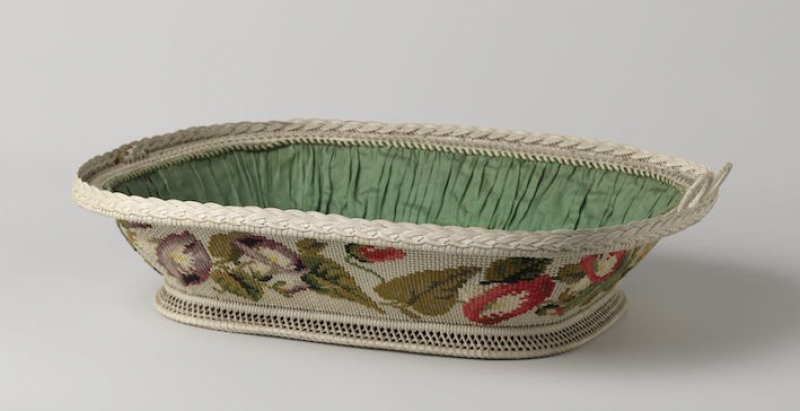
Berlin charts were used for embroidery that would cover a wide range of objects, including soft furnishings (chair seats and backs), cushions, curtains, footstools, fire-screens, ‘paintings’, as well as items of clothing and accessories such as bags, belts, book covers, caps, purses, slippers, tobacco pouches (and nappy baskets, see the illustration), just about anything that could be covered.

Berlin work design for a slipper. Published by Sijthoff, Leiden, The Netherlands (1860s - 1870s; TRC 2018.1596). For more information, click on the illustration.Berlin work design for a slipper. Published by Sijthoff, Leiden, The Netherlands (1860s - 1870s; TRC 2018.1596). For more information, click on the illustration.

RijksmuseumNappy basket decorated with Berlin wool work, mid-19th century (Rijksmuseum Amsterdam). For more information, click on the illustration for the Rijksmuseum online catalogue.


Published in Berlin Work Charts

5. Berlin work charts

At first, most of the charts were made in Berlin by various firms, including Herz und Wegener and P. Trübe. Later, charts were also printed outside of Berlin. Copies of these charts and original designs were soon produced throughout northern Europe as well as northern America. The Dutch company of A. W. Sijthoff, Leiden, for example, worked with the German company of Emil Ebner & Co., in Stuttgart. The early charts were produced using engraved copper plates and then the designs were hand painted with a thin paint.

Title page of first issue of 'De Gracieuse', 1862, published by A.W. Sijthoff, Leiden, The Netherlands.Title page of first issue of 'De Gracieuse', 1862, published by A.W. Sijthoff, Leiden, The Netherlands.


The firm of A.W. Sijthoff was founded in 1851 by Albertus Willem Sijthoff (1829-1913), from Leiden, The Netherlands. The firm still continous its publishing activities under the name of Luitingh-Sijthoff. In 1852 the firm moved to new premises along what is now called the Doezastraat, in the centre of Leiden. The  current building, still bearing the name of Sijthoff, is now used as a cultural centre.. 

 
2018.1590A corner design in Berlin work, hand-painted, from 'De Gracieuse. Geïllustreerde Aglaja' (c. 1860’s; TRC 2018.1590). For more information, click on the illustration.

De Gracieuse. Magazijn voor Neerland's Vrouwen was a Dutch fashion and handwork magazine first published in 1862 by A.W. Sijthoff in Leiden. In 1865, the magazine merged with another journal, called Aglaja. Maandboekje voor Dames Handwerken, and continued under the name of De Gracieuse. Geïllustreerde Aglaja, which between 1866 and 1936 appeared twice a month and was filled with black and white fashion images, paper patterns for clothing and examples for handwork.


Published in Berlin Work Charts

4. Berlin work patterns

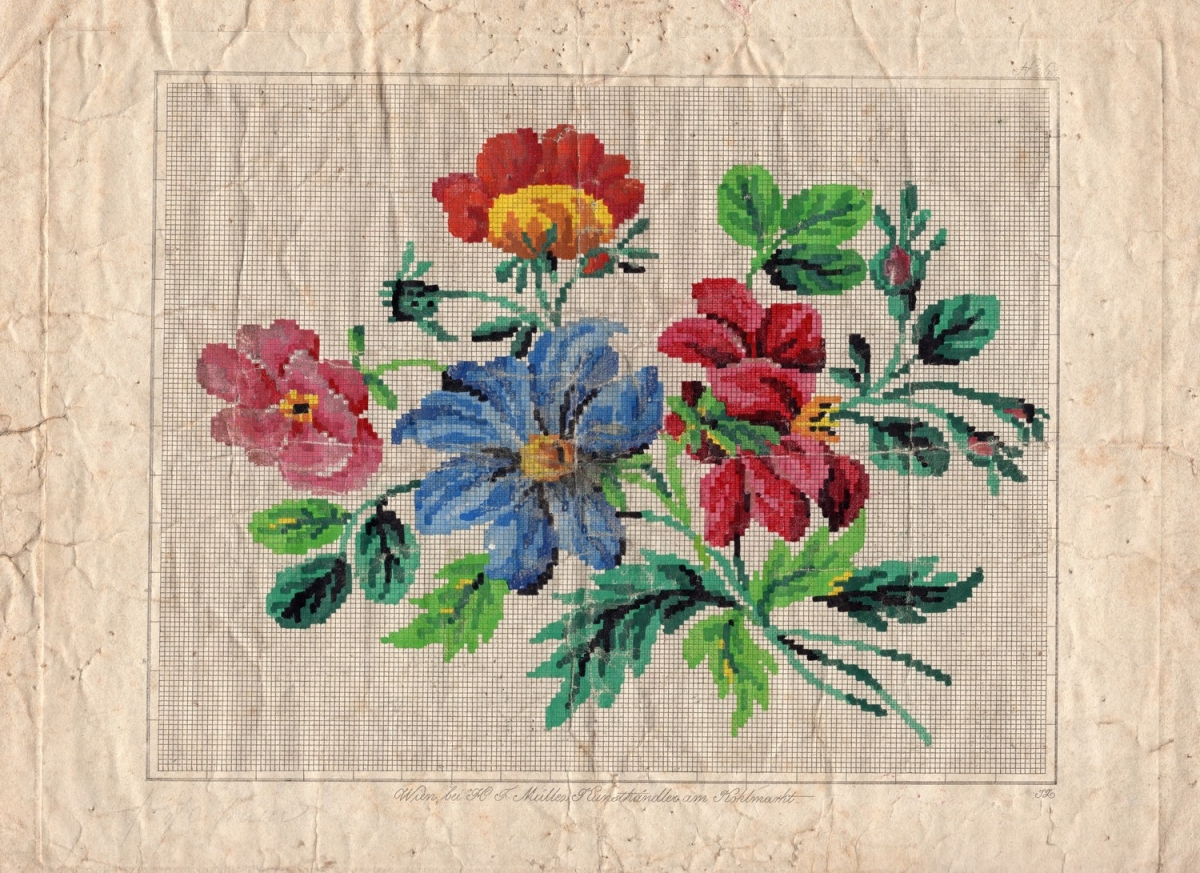
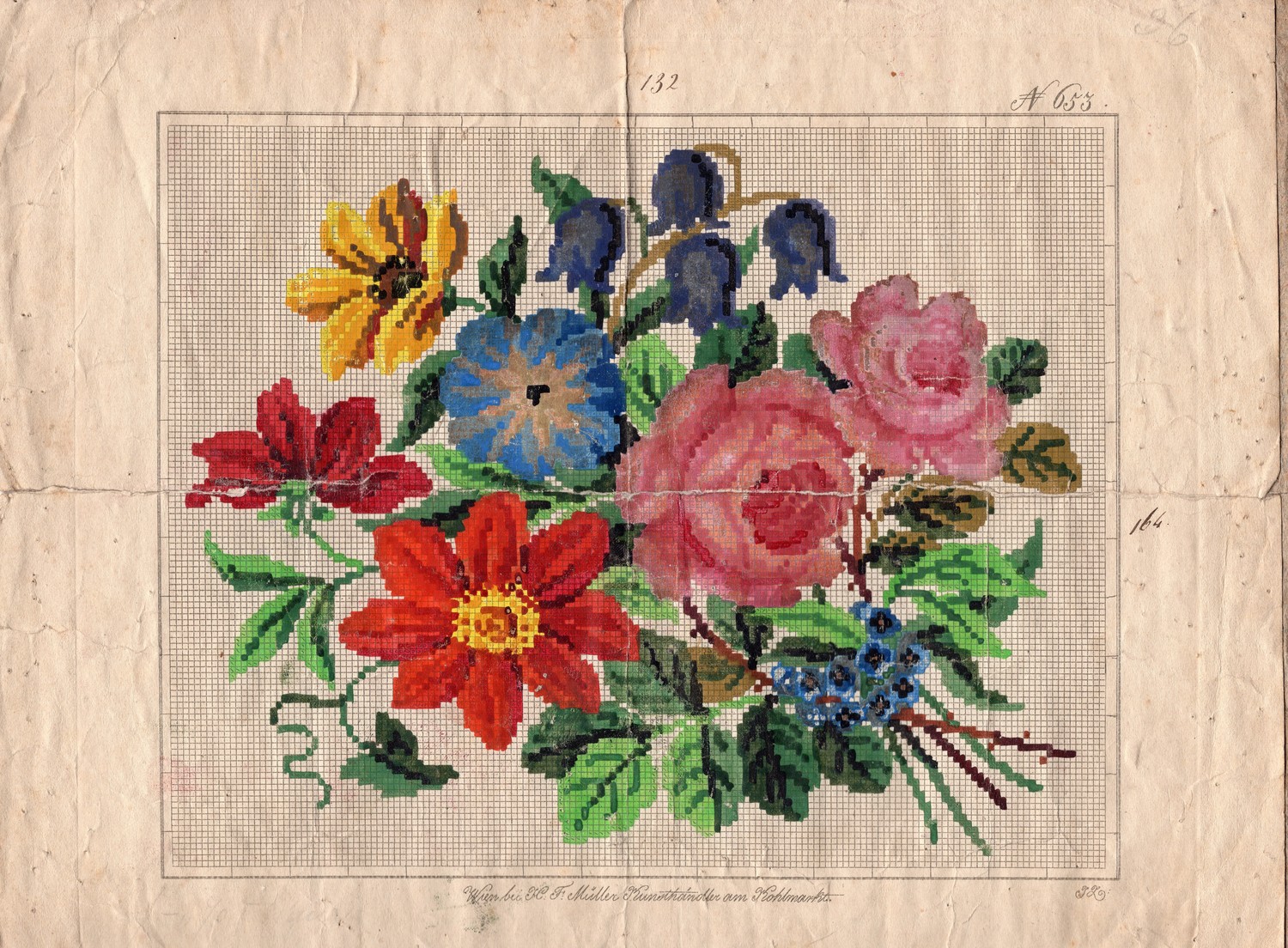
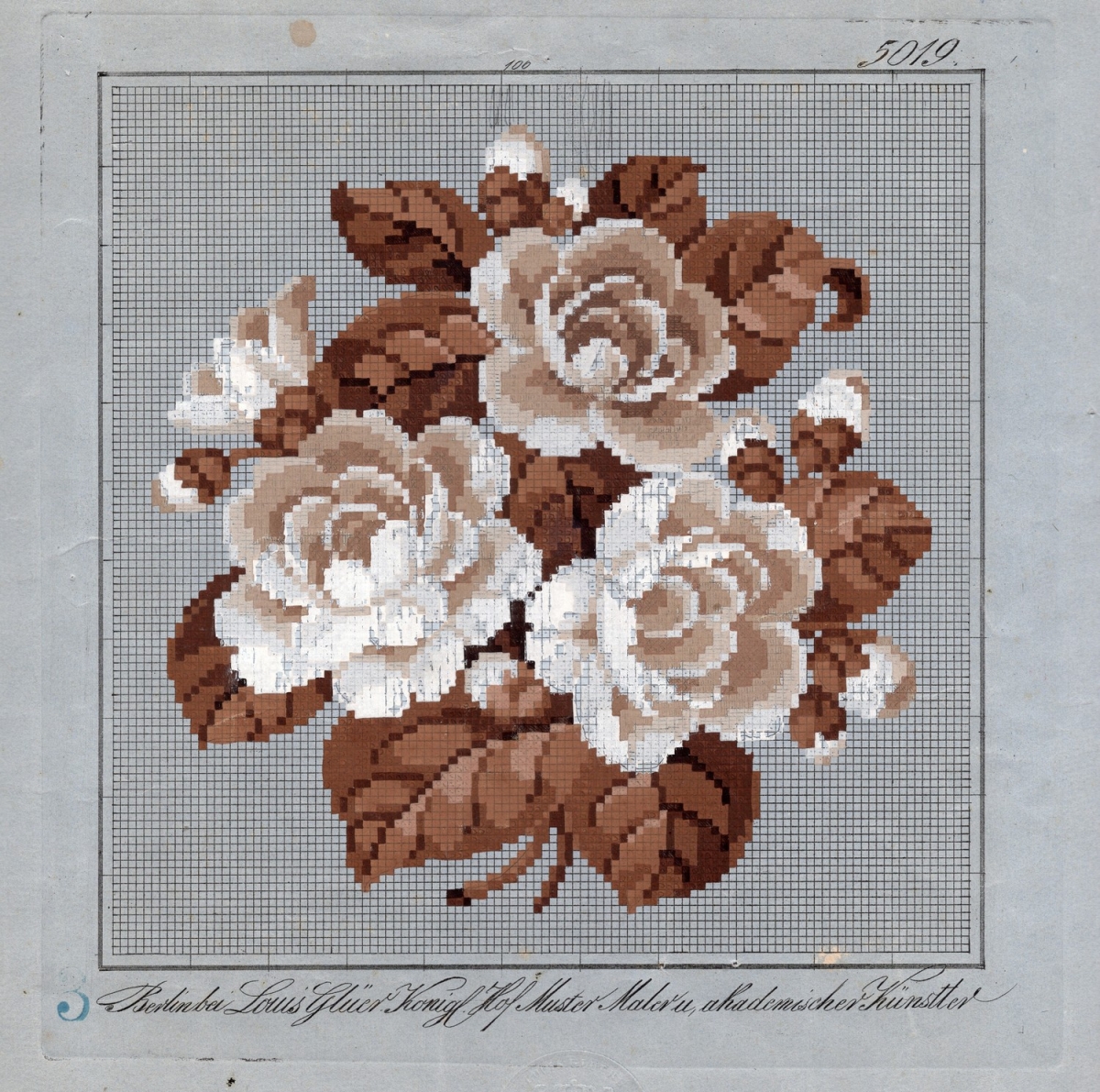
Berlin work charts were first produced and published in the early nineteenth century in Berlin (Germany), hence their name. The first patterns were printed in black and white on grid paper with lines and dots indicating the desired colours. These charts were then hand coloured using a thick paint of the appropriate hues. Later designs were machine printed in colour. Most of the designs in the TRC collection are floral, with bunches of flowers, sprigs and wreaths. The flowers include roses of various colours (white, red, purple). The flowers include ilies, primulas, bluebells, violets, columbines and others.
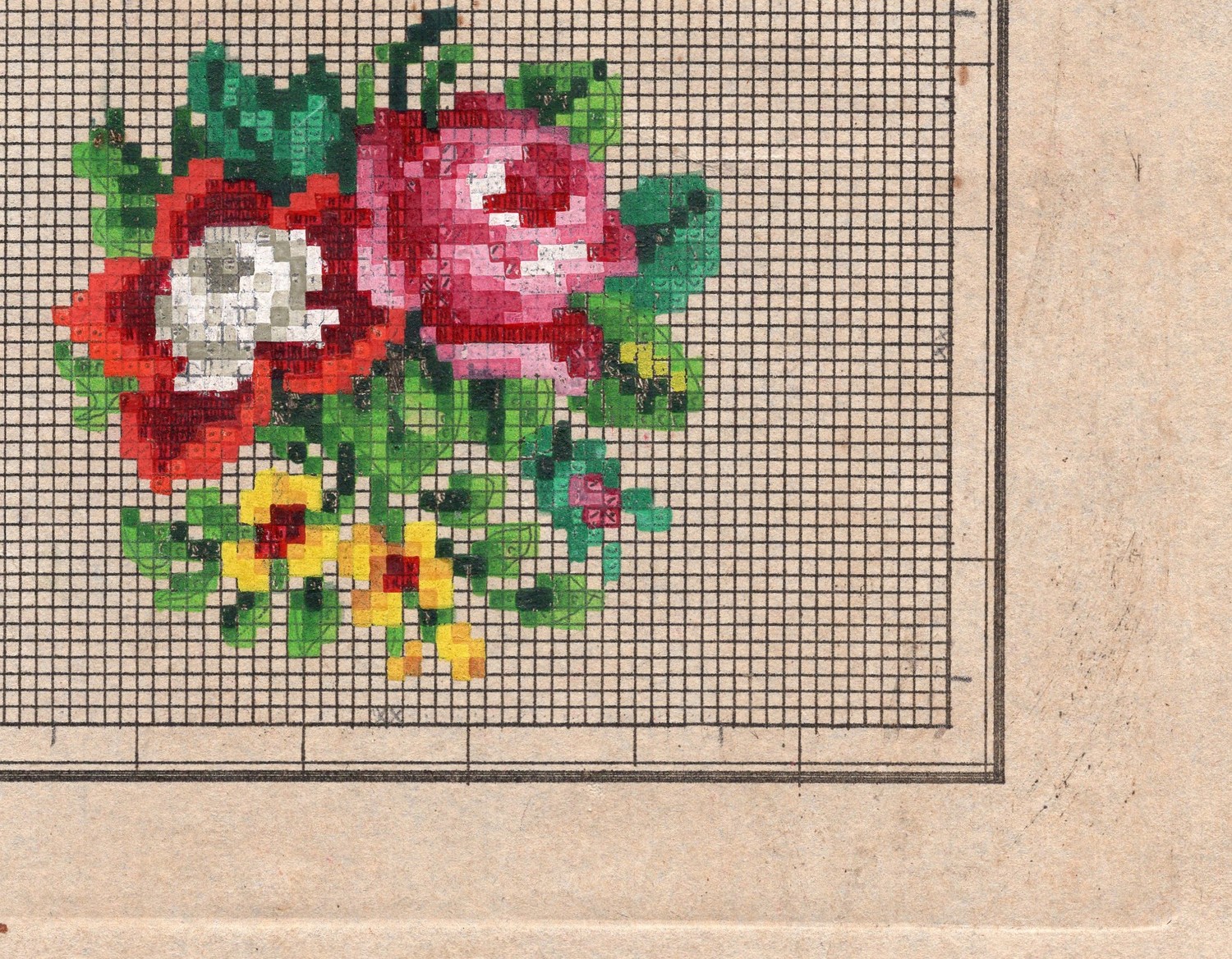
2018.1560Berlin work chart, with a bunch of flowers, including roses, Germany 1840s - 1850s (TRC 2018.1560). For more information, click on the illustration.It may be added that in the nineteenth century considerable attention was paid to the symbolism of flowers, such as a white violet denoting innocence, while a purple violet could symbolise thoughts of love. Yellow roses referred to joy; white roses to innocence and purity; pink roses to happiness, etc.

The illustration to the left shows part of a Berlin work chart with a floral motif. The chart is hand-painted, but the paint has been partially rubbed off, thereby showing the V, X, /, etc. codes for the use of various colours. 

The TRC collection also includes examples with geometric designs. Some of these are very Classical in outline, others relate to the Gothic revival of the nineteenth century. There is also one particular chart in the Collection (TRC 2018.1581, see below), from Berlin in c. 1880, that is directly related to Oriental carpet designs. It includes stylised pomegranates, carnations, and what appear to be tulips, all worked on a black ground.

Berlin work chart with a design based on carpet motifs (Berlin, c. 1880; TRC 2018.1581).Berlin work chart with a design based on carpet motifs (Berlin, c. 1880; TRC 2018.1581). For more information, click on the illustration.


Published in Berlin Work Charts

3. Berlin work colours and aniline

Berlin work was traditionally executed in many colours, to produce intricate, almost 3D effects. Berlin wool work was stimulated by the discovery and development of aniline dyes from the 1830s, which meant that a much wider range of bright colours could be produced and used for embroidery.

Aniline is an organic compound that is derived from coal and oil. The history of aniline is complicated, as it was identified by various scientists and given a variety of different names, all within a relatively short period of time. Aniline was first isolated from indigo by Otto Unverdorben, who called it Crystallin, in 1826. Not long afterwards, in 1834, Friedlieb Runge isolated a substance from coal tar that he called kyanol or cyanol. The substance turned a bright blue colour when treated with chloride of lime. Runge’s discovery was followed in 1840 by Carl Julius Fritzsche (1808-1871), who treated indigo with caustic potash and obtained an oil that he called aniline. It was later recognised that all of these substances were the same and they became known under the general heading, aniline.

2018.1565Berlin work chart, from the 1840s - 1850s, with a design of a bouquet of flowers, including roses, violets, bluebells and columbines (TRC 2018.1565). For more information, click on the illustration.

The most important discovery in the early history of aniline took place in 1856 when the British scientist, Sir William Henry Perkin (1838-1907), identified in coal-tar benzene a related product that he called mauveine, which produced purple. Perkin then went on to identify a process to consistently produce the first synthetic dyes. Shortly afterwards the French scientist, Antoine Béchamp, developed a new method of producing a range of aniline dyes on an industrial scale. These dyes literally changed the nature of colour production (techniques, economics, social structures) within the textile industry throughout the world. In particular, production of aniline dyes led to the creation of a massive dye industry in Germany under the name of BASF (Badische Anilin- und Soda-Fabrik), which supplied aniline dyes to many countries around the world.

Published in Berlin Work Charts

1. Introduction to Berlin work

Berlin work is a style of embroidery that is normally associated with the use of woollen yarn (tapestry yarn) on canvas. It was made in the West (notably Northern Europe and North America). from the mid-nineteenth century. It was usually worked in a single stitch, notably cross stitch or tent stitch, but it was not restricted to wool work. The same pattern charts were used to create knitted, as well as beaded designs.

The advent of this style of embroidery and the charts that were made to help with the embroidery, also saw developments in a wide range of canvases, materials such as aida, and related techniques such as tramming. The influence of Berlin wool work and indeed many designs can still be found at the beginning of the twenty-first century in commercial canvas embroidery kits.


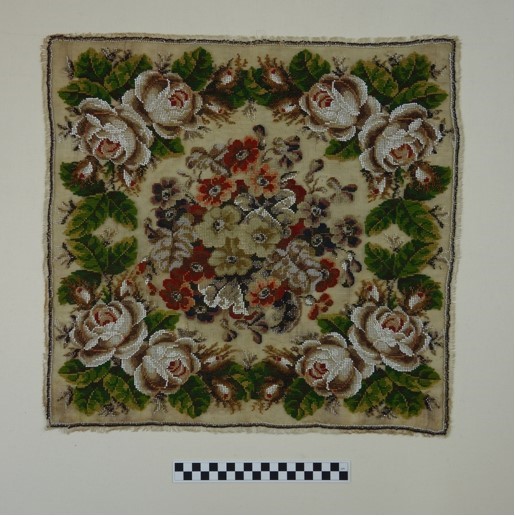
Berlin work panel using applied glass bead and hand embroidery with woollen threads (1860’s; TRC 2008.0433).Berlin work panel using applied glass bead and hand embroidery with woollen threads (1860’s; TRC 2008.0433). For more information, c;lick on the illustration.
 

Published in Chinese lotus shoes

11. Gallery of lotus shoes in the TRC collection

The image gallery below contains photographs and brief descriptions of all the lotus shoes currently in the TRC collection. The gallery also gives direct access to the online catalogue of the TRC collection. 


Published in Chinese lotus shoes

0. Cover page

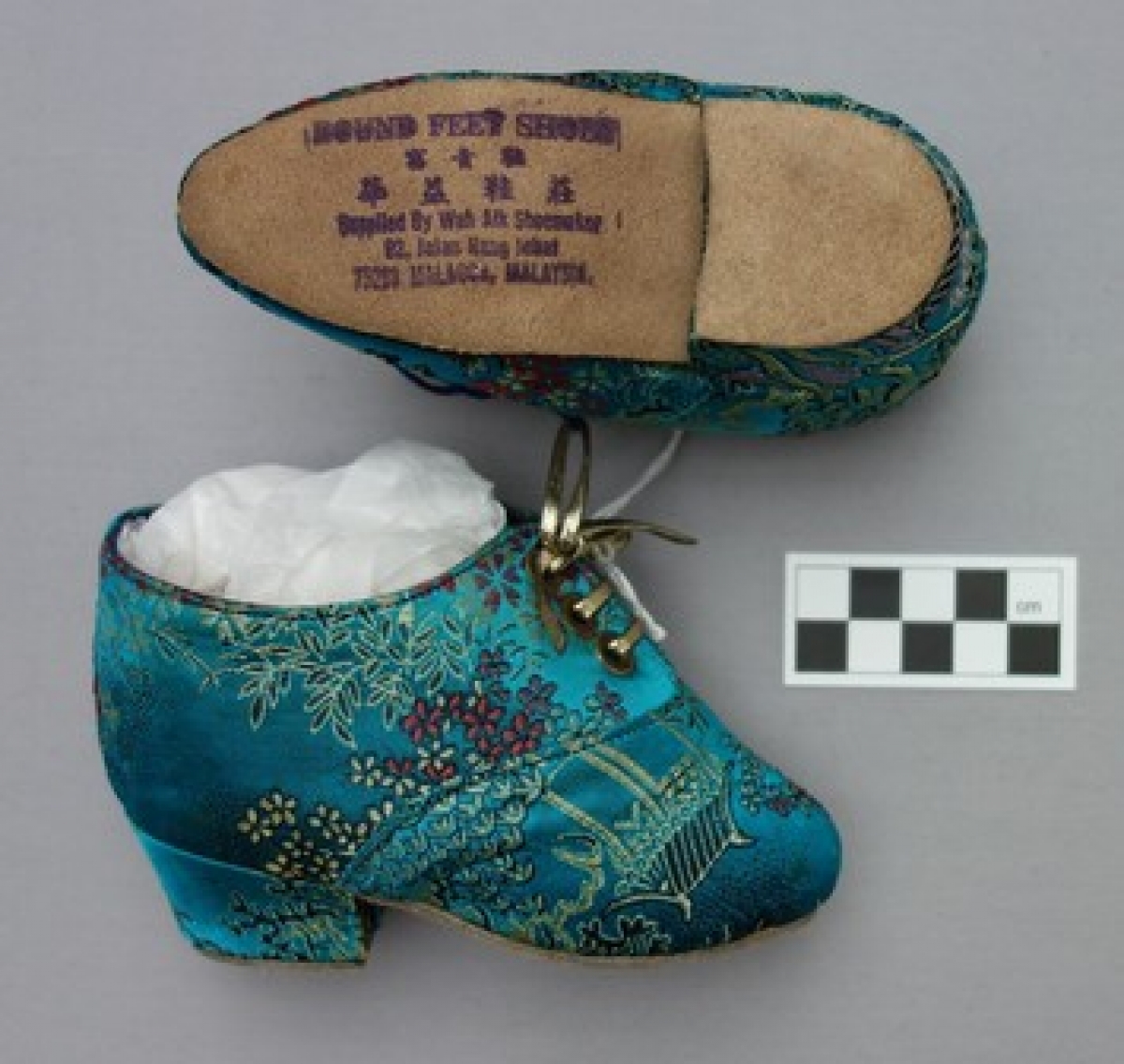
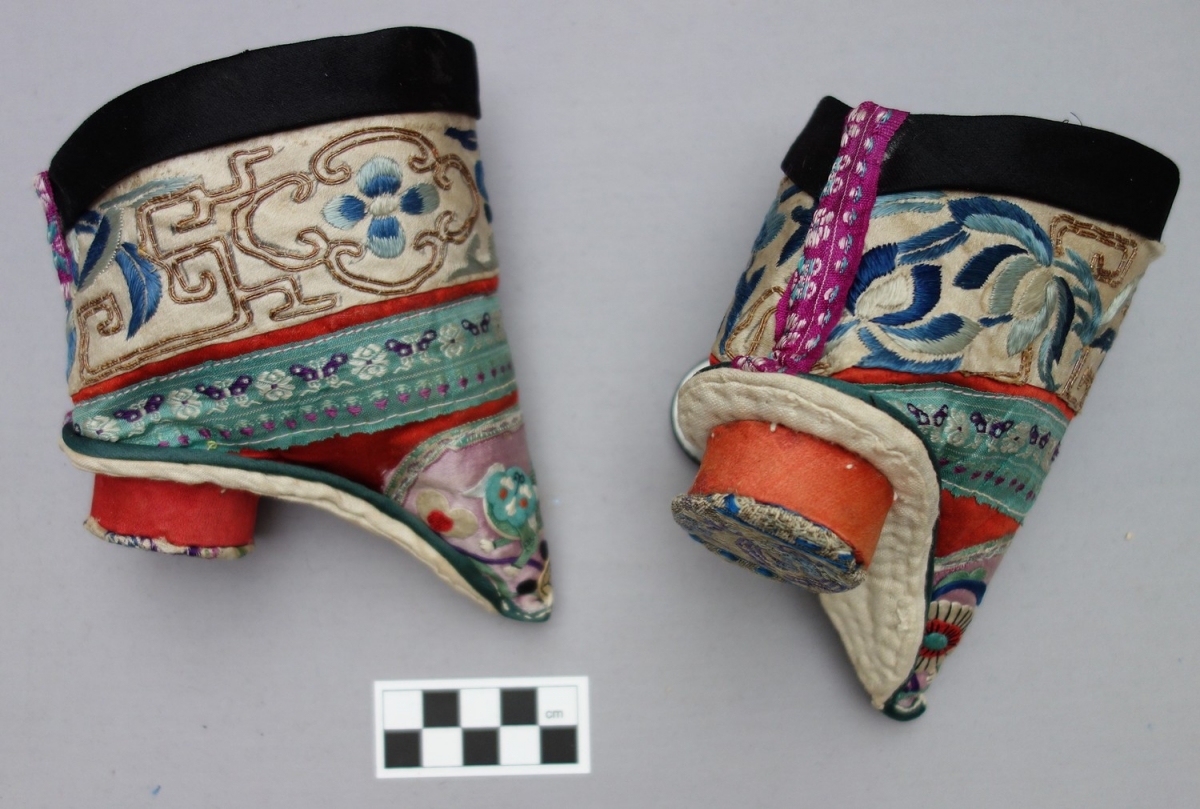
Lotus shoes worn by Chinese women with bound feet represent an intriguing, beautiful and yet at the same time a hideous and deforming aspect of many women’s lives for nearly 1000 years. The examples now in the TRC Collection formed part of an exhibition about the history of footwear, which was staged at the TRC Leiden in 2012.

These tiny shoes (sometimes as small as 6 cm) and related items form part of a larger study concerning dress and identity and how people (both men and women) use their bodies to stress their gender,, marital, social, economic and indeed political status. Lotus shoes encompass all of these subjects and many more.

The following titles provide a good introduction to the fascinating subject of lotus shoes and foot binding. You will find references to other publications in the titles below.

  • Beverley Jackson (1997). Splendid Slippers: A Thousand Years of an Erotic Tradition, Berkeley: Ten Speed Press.
  • Susanna Goho-Quek (2004). Kecantikan : Bengkung Kaki: The Allure of the Bound Foot, Kuala Lumpur: Department of Museum and Antiquities.
  • Dorothy Ko (2001). Every Step a Luts: Shoes for Bound Feet, Berkeley, Los Angeles, London: University of California Press, The Bata Shoe Museum.
  • Glenn Roberts and Valerie Steele (1997). "The three-inch golden lotus: A collection of Chinese bound foot shoes", Arts of Asia, 27, no. 2, pp. 69-85.
  • Ping Wang (2000). Aching for Beauty: Footbinding in China, Minneapolis: University of Minnesota Press.
  • Linda Wrigglesworth (1996). The Sway of the Golden Lotus: An Exhibition of Manchu and Bound Feet Shoes worn by Chinese Children and Women in Imperial China. Qing Dynasty 1644-1911, London: Linda Wrigglesworth, Ltd.

For this online exhibition:

  • Author: Gillian Vogelsang-Eastwood
  • Web-design: Joost Koopman
  • Exhibition design: Willem Vogelsang
  • Publisher: TRC Leiden.
  • Year of publication: 2018
  • Copyright: All illustrations of objects housed in the TRC collection can be used free of charge, but please add to the caption: "Courtesy Textile Research Centre, Leiden" and the pertinent accession number of the object.
Published in Chinese lotus shoes

10. The end of foot binding

From the latter half of the 19th century onwards there were more and more movements to ban foot binding. Chinese groups included the Natural Feet Society and the Anti-Foot Binding Society. At first they had little effect, but gradually pressure came from more directions. At the same time various Christian missionary groups, for example, started to actively work against foot binding. One of the most well-known was the Heavenly Foot Society established by the Rev. John MacGowan in the southern port of Amony. Yet, and ironically, a number of Christian institutes practiced foot binding (albeit with reluctance), notably in orphanages. The practice was carried out in order to ensure that girls would attract husbands. Some mosques in international cities such as Singapore also protested against foot binding on the grounds that it went against Koranic texts that forbid the mutilation of the human body.

By the end of the 19th century more and more groups, of all nationalities and ethnic backgrounds, were active in fighting against foot binding, but this led to various unexpected consequences. In particular, many bound women were abandoned by their husbands who wished to be perceived as modern. Some men, especially young students, for example, would only marry women with a modern education and natural (tianzu) feet. Women with bound feet started to feel ashamed of their appearance and at times were publicly ridiculed. In a relatively short time foot binding had gone from a deeply established and time honoured tradition to one against which public hostility was increasing.

At the same time more and more bound women started to unbind or ‘let out’ (fangzu) their feet. In some cases this process was as painful as the original binding process. Few fangzu women ever walked in a ’normal’ manner again. As the 20th century progressed more and more women had natural feet (tianzu). When the Communist government came to power in 1949 they were vehemently anti-foot binding regarding it as being archaic and preventing women from taking a more active role in the economic life of the country. The government had inspectors who went around the country recording who was bound and who was being unbound, and to prevent any further binding.

The ladies of Liu Yi

In the southern Chinese province of Yunnan lies the village of Liu Yi. In the 1980s it was discovered that there were five to six hundred women with bound feet, most of whom were between 70 and 90 in age. They soon became a tourist attraction with people coming from around the world to see them. What these women proved is that having bound feet did not automatically mean that you were constantly in pain and unable to walk, dance or work. Some of their most well-known achievements included their active dance troupe and to beat an unbound team at croquet! But their presence also means that only when they have all died will the tradition of foot binding and all its consequence have truly ceased.