
Beyond The Chador Regional Dress From Iran
3. Dutch people outside the Netherlands
In 1942 Queen Wilhelmina chose the daisy flower (the margriet, in Dutch) as a symbol for all those who had fallen in the resistance against Nazi Germany. She herself wore a daisy brooch. When Princess Juliana and Prince Bernhard had a daughter in Canada in January 1943, they named her Margriet.
The Dutch merchant navy acted as godfather for the new born princess and from that moment on, sailing merchant navy employees wore cufflinks and badges with a daisy combined with an anchor (compare TRC 2020.3473).
In addition, the 'Foundation for War Victims from among the Dutch Merchant Fleet and their Surviving Relatives' was renamed the Prinses Margriet Fonds. Prince Bernhard designed a silver daisy pin for this fund, and the proceeds of the sale of these pins went to the Fund. The pins were available in non-occupied countries and were worn by almost every Dutchman or woman as a symbol of their patriotism. Only few of the official daisy pins found their way to the Netherlands, but many Dutch people produced their own daisy jewellery, which they wore as a sign of silent defiance.
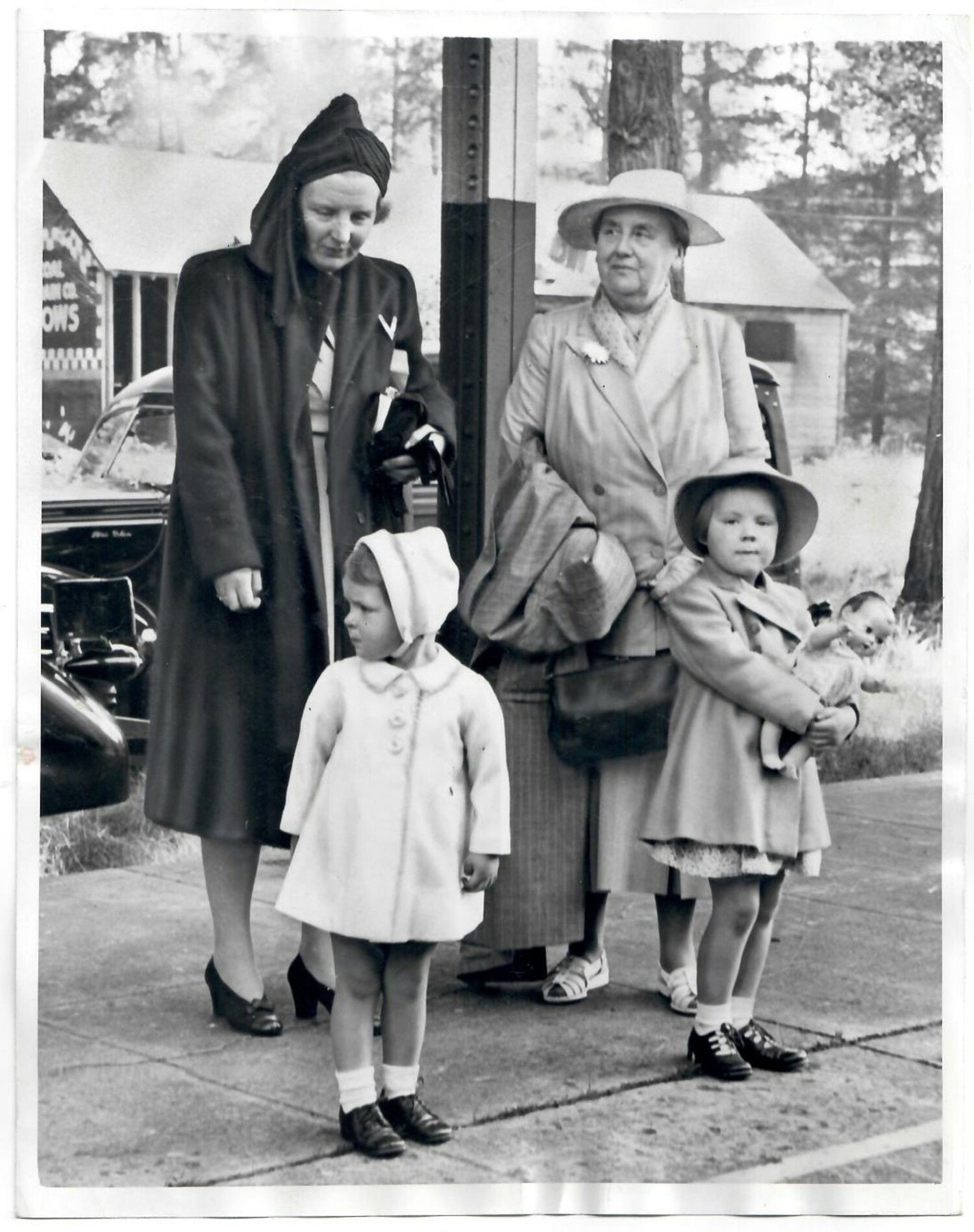 Photograph of Queen Wilhelmina, Princess Juliana, Princess Beatrix and Princess Irene in Stockbridge, Mass, USA. The Queen is wearing a margriet (daisy) brooch, while Princess Juliana has a V-brooch, 24 June 1942 (TRC 2020.3190). For more information, click on the illustration.Prinses Irene Brigade
In May 1940 some 1,200 Dutch soldiers arrived in Great Britain from the occupied Netherlands. They, and many others who followed, became known informally as the "Dutch Legion". In August 1941 they were included in the new Prinses Irene Brigade (P.I.B.), named after one of the daughters of crown princess, Juliana. During the war, the P.I.B included soldiers from many countries, but the core remained Dutch.
In August 1944 they landed in northern France, and they were among the first military units to move into the south of the Netherlands in September 1944. On 8 May 1945, to mark the official surrender of the German forces, many of them drove from Arnhem via Alphen aan den Rijn and Leiden to The Hague.
Dutch East Indies
The Dutch East Indies, now known as Indonesia, constituted a colony of the Netherlands since the 17th century. After the occupation of the Netherlands by Nazi Germany, the Dutch were no longer capable of defending their colony against Japan, which was an ally of Germany and was striving to establish a greater Asian empire. In March 1942, Japanese troops occupied the Dutch East Indies.
Dutch families were split up: the men (often Dutch government officials or members of the armed forces) were sent to prisoner of war camps where they were driven into forced labour (including Burma), while the women and children were placed in internment camps, commonly known as Jappenkampen.
4. The Dutch textile production
During the war, the availability of textiles, clothing and shoes in The Netherlands declined sharply. Textile production fell because cotton and wool - the most important raw materials of the Dutch textile industry - could no longer be imported. Moreover, the purchase and sale of raw materials and textile goods were prohibited. Companies were only granted an exemption from this prohibition if they (also) accepted German orders. Much of the Dutch production was moved to Germany.
To save textiles, strict rules were imposed on clothing and textile manufacturers, which meant that, for example, no "unnecessary" pockets, hoods and pleats were added to clothing. Consumers were also prohibited from throwing away leather, shoe soles and rags; these were reused in industry. From 1943 the production of textiles had dwindled to almost zero. Textile companies switched to offering repair services. One of these that was widely used was the ready-while-you-wait stocking repairman.
Natural fibres and substitutes
Due to an ever decreasing supply of cotton and wool and soon after the German invasion of the country, the industry started to make more and more clothing and textiles from substitute fibres, of which rayon, made from cellulose and wood pulp, was the most important. This form of artificial silk, the use of which had started long before the war, and at first was of good quality, soon could often simply be pulled apart when wet. This was because when the wood pulp ran out, the artificial material started to be made from straw and paper.
Good rainwear was therefore more important than ever, just like the - often homemade - leggings that prevented artificial silk stockings from melting in the rain.
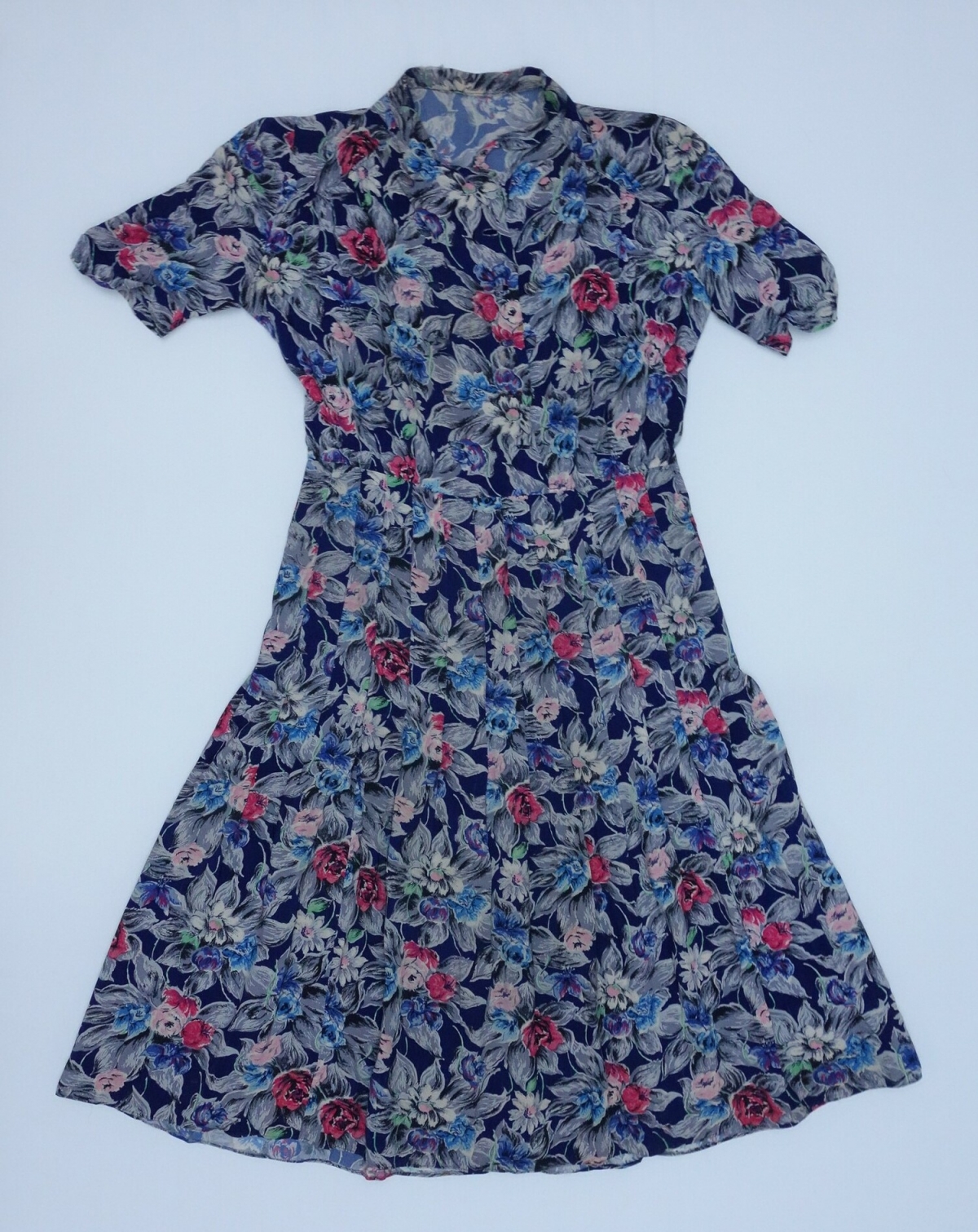
Because of the drawbacks of artificial silk, pre-war quality of textiles was the magic word in advertisements: fabrics that were produced before the war clearly lasted much longer than fabrics made during the occupation. Artificial silk was freely available at the start of the war, but soon it was also being rationed. However, fewer points had to be handed in for artificial silk. As a result, despite the poor quality, more than eighty percent of the dresses and blouses sold during the war were made of artificial silk. Imprimé, printed artificial silk, was especially popular.
2. National Socialism
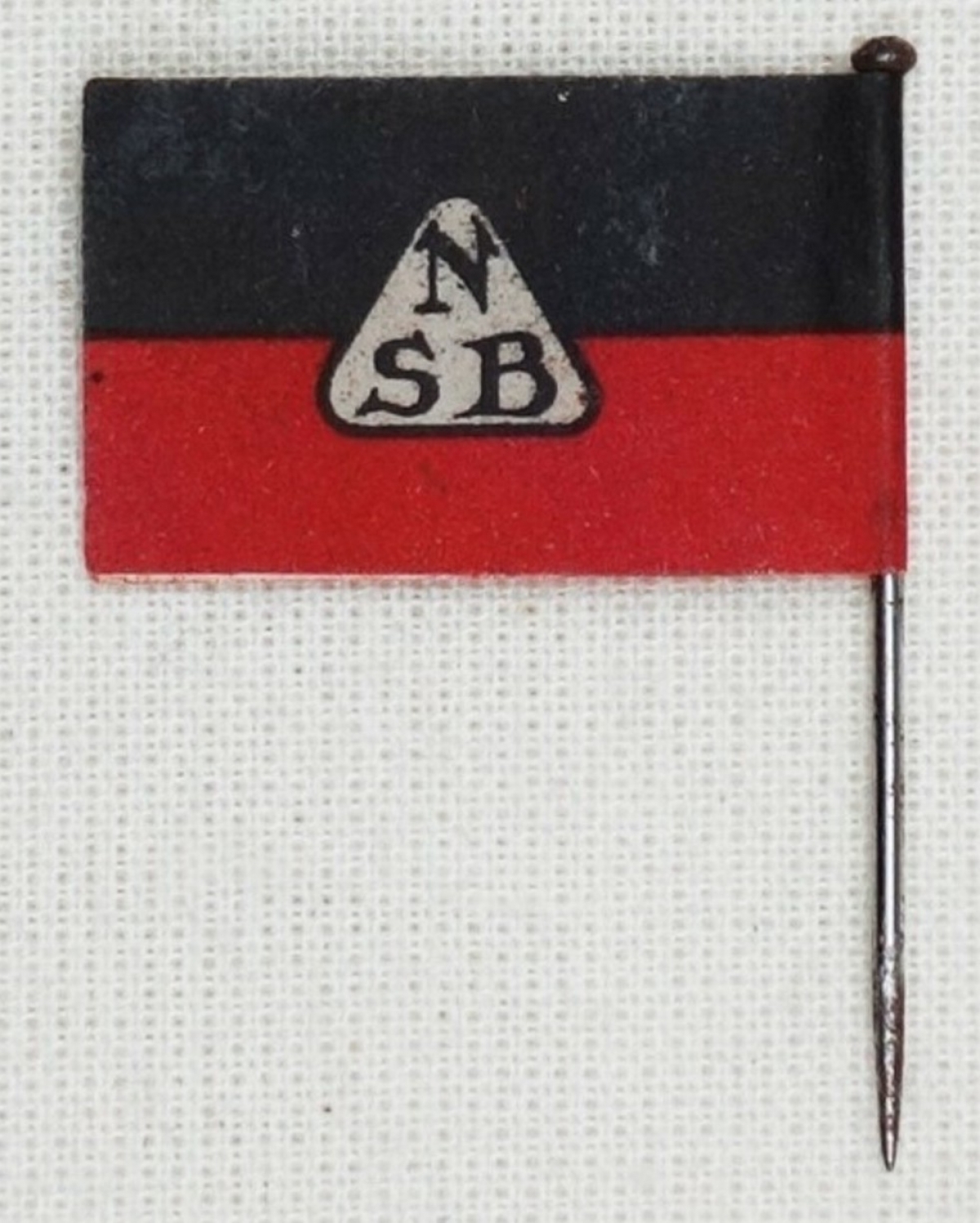
The National Socialist Movement (NSB), the Dutch political party that sympathised with Nazi Germany, worked together with the occupying forces during the Second World War. During the German occupation of the Netherlands it was the only permitted party in the country.
NSB members wore badges with the NSB logo, or with the so-called Prinsenvlag. This was the orange-white-blue flag that became popular during the Eighty Years' War between 1568 and 1648 which established the Netherlands as an independent country. According to the NSB this was the real Dutch flag, instead of the official red-white-blue. Or they wore the Wolfsangel (an old heraldic symbol, which the National Socialists interpreted as an ancient Germanic rune sign). The National Socialists in the Netherlands expressed many of their ideas through their clothing and other outward symbols, such as flags and emblems.
The Weerbaarheidsafdeling (WA, 'defence section') was the black uniformed strong arm of the NSB. They normally wore insignia and images of the Wolfsangel and the Dutch heraldic lion on their uniform. The latter is remarkable since the Dutch lion was also used as a symbol of the Dutch resistance against the German occupying forces.
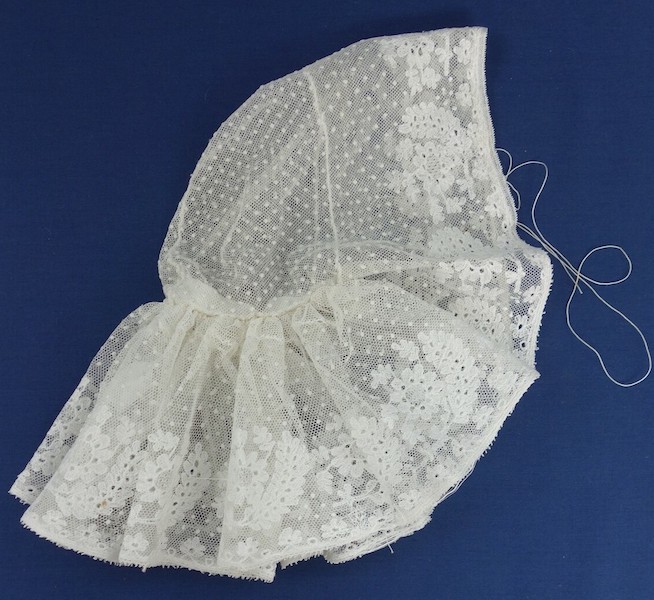 Lace cap worn by Frisian women from the north of the Netherlands; according to the National Socialist Movement, Frisian regional dress was of 'proper' Germanic origin and therefore acceptable (TRC 2016.0756). For more information, click on the illustration.Folk costume
Regional dress was embraced by the National Socialists and consistently referred to as Volksdracht ('folk costume'). This idea fitted seamlessly into their blood and soil theory: the regional costume, according to the National Socialists, was an expression of the soul of the people, and thus linked to their blood line. It was also linked to their particular location, because each region has its own range of clothing.
The Dutch folk costume was said to have many elements that went back to clothing from the Bronze Age, the alleged cultural heyday of the Germanic nations. The Germanic ancestry was therefore preserved, so theu believed, in folk costume. Because the people expressed their character and ‘soul’ with their costume, clothing was therefore an expression of their race. The Dutch costume emphasised the ‘proper’ pedigree and appearance of the "North folk": the hoods and ear irons emphasised, for example, the long oval shape of the typical Germanic head.
According to the National Socialists, this was particularly the case with the Frisian and Saxon costumes; Frisians (in the north) and Saxons (in the east of the country) were regarded as typically Germanic peoples. Their clothes were considered sober and beautiful and were said to reflect an inner sense of propriety. The costumes worn by people in the west, along the North Sea coast and in Zeeland, were also acceptable. The National Socialists explained this by stating that the people of these regions descended from the Frisians.
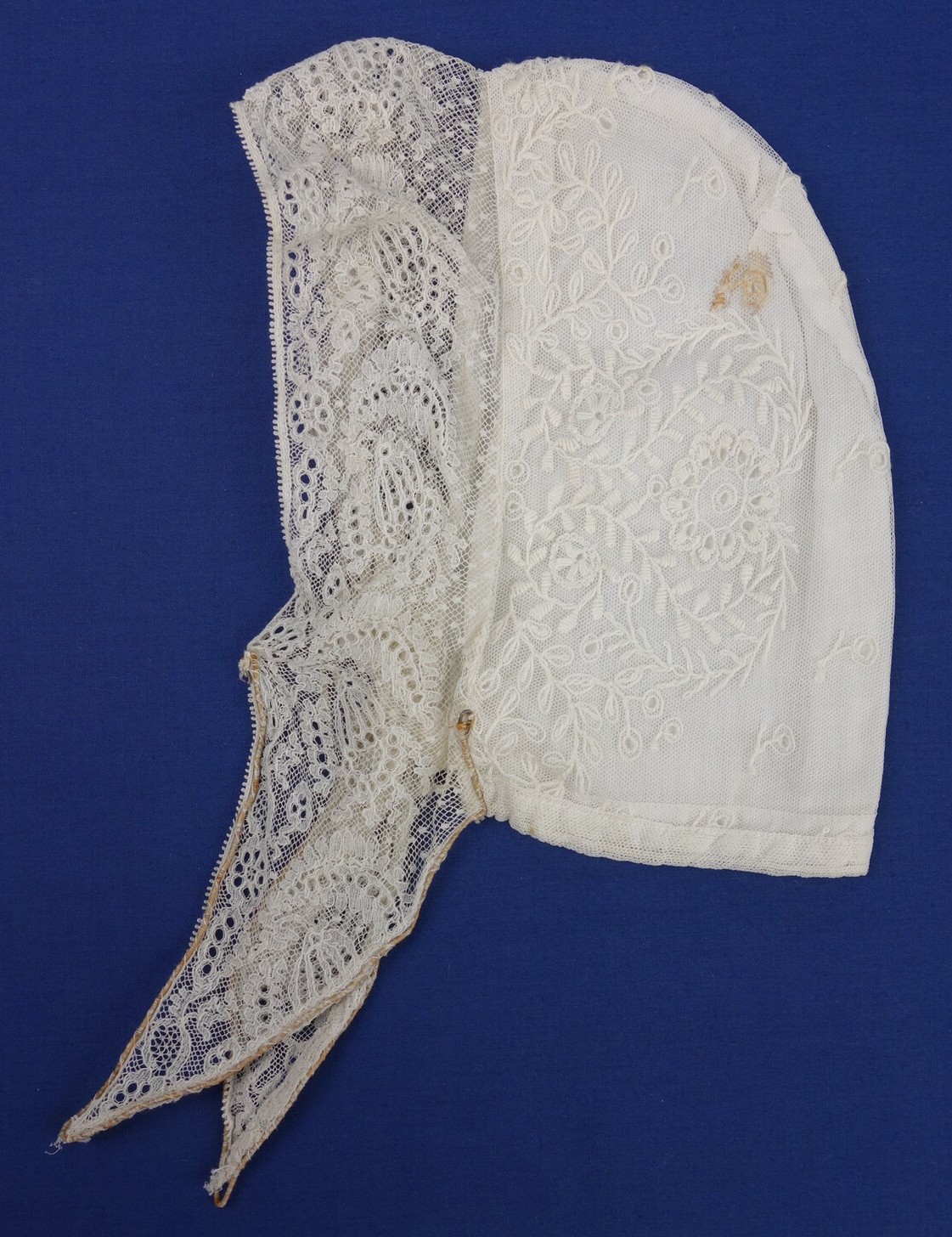 A lace cap worn by women from Volendam. The National Socialists regarded the costume of Volendam as being 'non-Germanic' (TRC 2006.0112c). For more information, click on the illustration.However, they found the Zuiderzee costumes (including that worn by people in Volendam) to be unacceptable and ugly. These outfits were said to make the body look large and the garments were regarded as being too complicated and colourful. The caps made the head look small. Since the costume was regarded as an expression of race, the wearers of these "ugly" costumes could not, according to the National Socialists, be descendants of Germanic tribes. To explain this, they invented the old ‘people’ of the Flevons, who were not related to the German tribes, and who were the ancestors of the people living along the Zuiderzee (nowadays the IJsselmeer).
The Brabant costumes, worn by people in the south of the country, were also considered ugly. The explanation that the National Socialists provided for this phenomenon was that the Brabant dress, from the south of the country, had been influenced by the French.
It was disappointing to the National Socialists that much of the folk costume had already disappeared. According to them, this was due to mass production of textiles and clothing. The Jews, accrding to the NSB, played their part in the disappearance of the Volksdracht: most traditional dresses had short sleeves, and girls no longer wanted to wear them because they would then be harassed by Jews.
The political connotation attached to regional dress in the Netherlands affected the appreciation of local dress after the war. For many people in the Netherlands, regional dress was tainted as being 'fascist'.
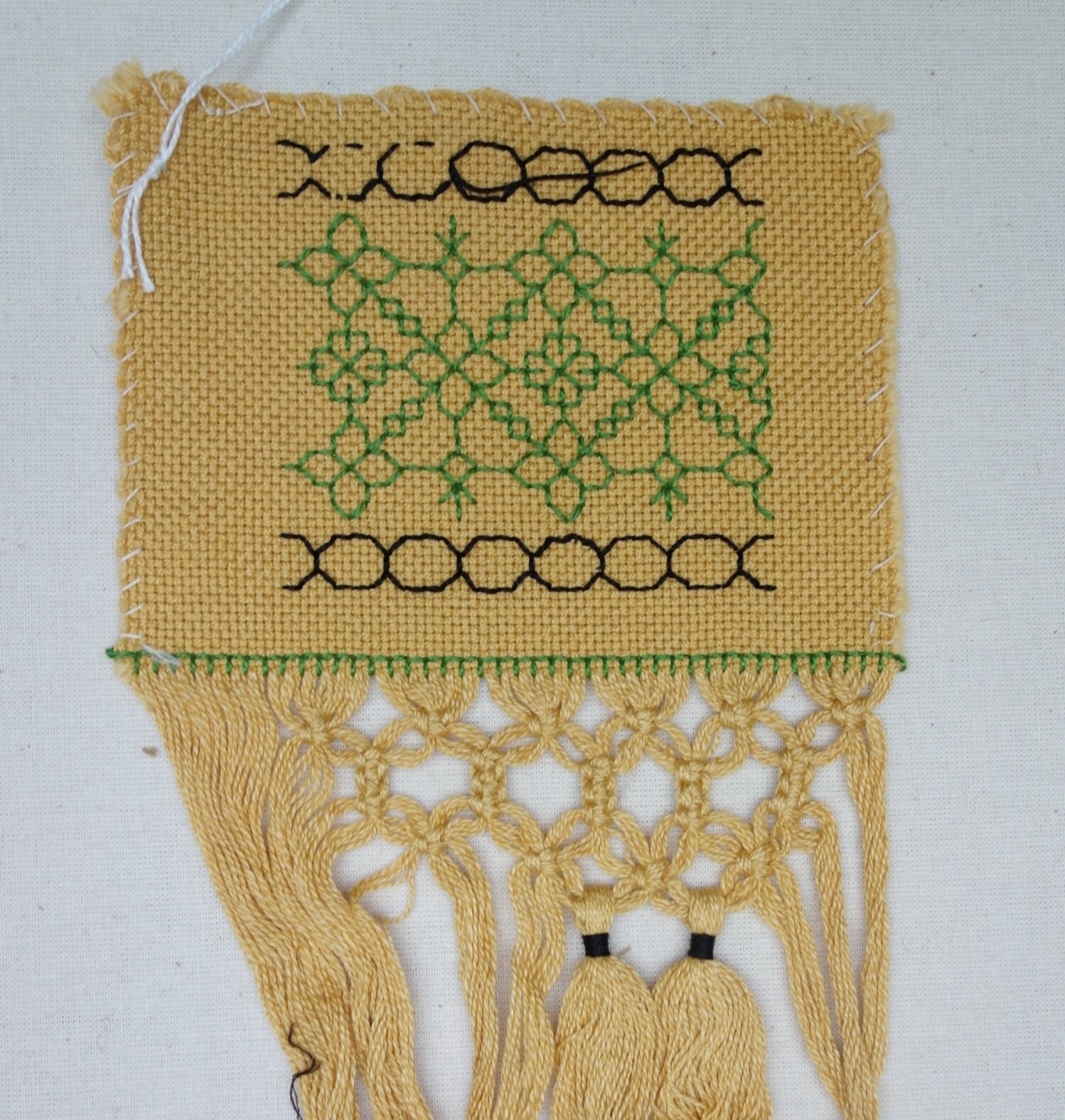
 Cover of the booklet Merklappen. Oud en Nieuw, by Ms H. Bottema (1942; TRC Library). For the contents, click on the illustration.In addition to folk costume, some motifs for embroidery and other forms of decoration were also regarded as an expression of the national character. Germanic (especially the tree of life) and Christian motifs were appreciated and preferred above the "tasteless" decorations on "modern" handicraft work. The TRC library houses a booklet that was published in 1942 entitled Merklappen. Oud en Nieuw ('Samplers. Old and New'). It contains a series of embroidery charts, mainly taken from eighteenth and nineteenth century Dutch sources. For a TRC blog on this brochure, and a PdF file of all charts, see Merklappen Oud en Nieuw (1942). See also another blog, A remarkable sampler booklet from Nazi occupied Holland, by Gillian Vogelsang (8 September 2020).
Winter relief
The National Socialists were committed to some form of charity. Their Dutch aid organisation was called Winterhulp, because there would be no poverty under National Socialism, only during the winter would charity in the form of food and clothing be needed. Winterhulp's sources derived from taxes, lotteries and street collections.
The collections were not very popular. Many people suspected that the money went directly to Germany or the NSB. To make the collections more popular, badges were issued. In exchange for a donation you received a badge. Matchboxes were also distributed during collections.
 Stamp issued by the Dutch postal service in 1944 on the orders of the German occupying forces. The stamps were sold with a surcharge for the National Socialist Winterhulp (TRC 2020.3710b). For more information, click on the illustrationDuring a national collection on 14-15 November 1941, terracotta badges were distributed with images of well-known Dutch buildings. The production of the badges was awarded to a Dutch company, namely N.V. Brouwer's Aardewerk in Leiderdorp (the owners of which had strong NSB sympathies). They made 1½ million badges and temporarily hired 55 extra employees. The TRC houses a large collection of these badges, most of them damaged. They were discovered when the site of the former pottery works of the N.V. Brouwer's Aardewerk was prepared for development.
The badges depict well-known monuments in the Netherlands, such as the Westerkerk in Amsterdam, or the Martinitoren in Groningen, again glorifying Dutch history and culture (as long as it was linked to Germanic roots). The same phenomenon, as discussed above, occurred with National Socialist interest in Dutch regional dress and the use of the orange-white-blue flag (the Prinsenvlag).
In 1944, the Dutch postal services issued a series of stamps, whereby a surcharge was paid for each stamp in favour of Winterhulp.
The National Socialists also issued match folders with Dutch and French texts; they were distributed in the Netherlands and Belgium. One of these folders is housed in the TRC collection (TRC 2020.3718).
Those who wanted to qualify for direct support from Winterhulp were first checked for their background, after which they usually received coupons for shoes or clothing. A ration booklet recorded which particular assistance someone had received.
1. World War II in The Netherlands
In 1933 Adolf Hitler became Chancellor of Germany. He soon abolished democracy, pursued a policy of racial and religious discrimination, and launched an extensive programme of rearmament.
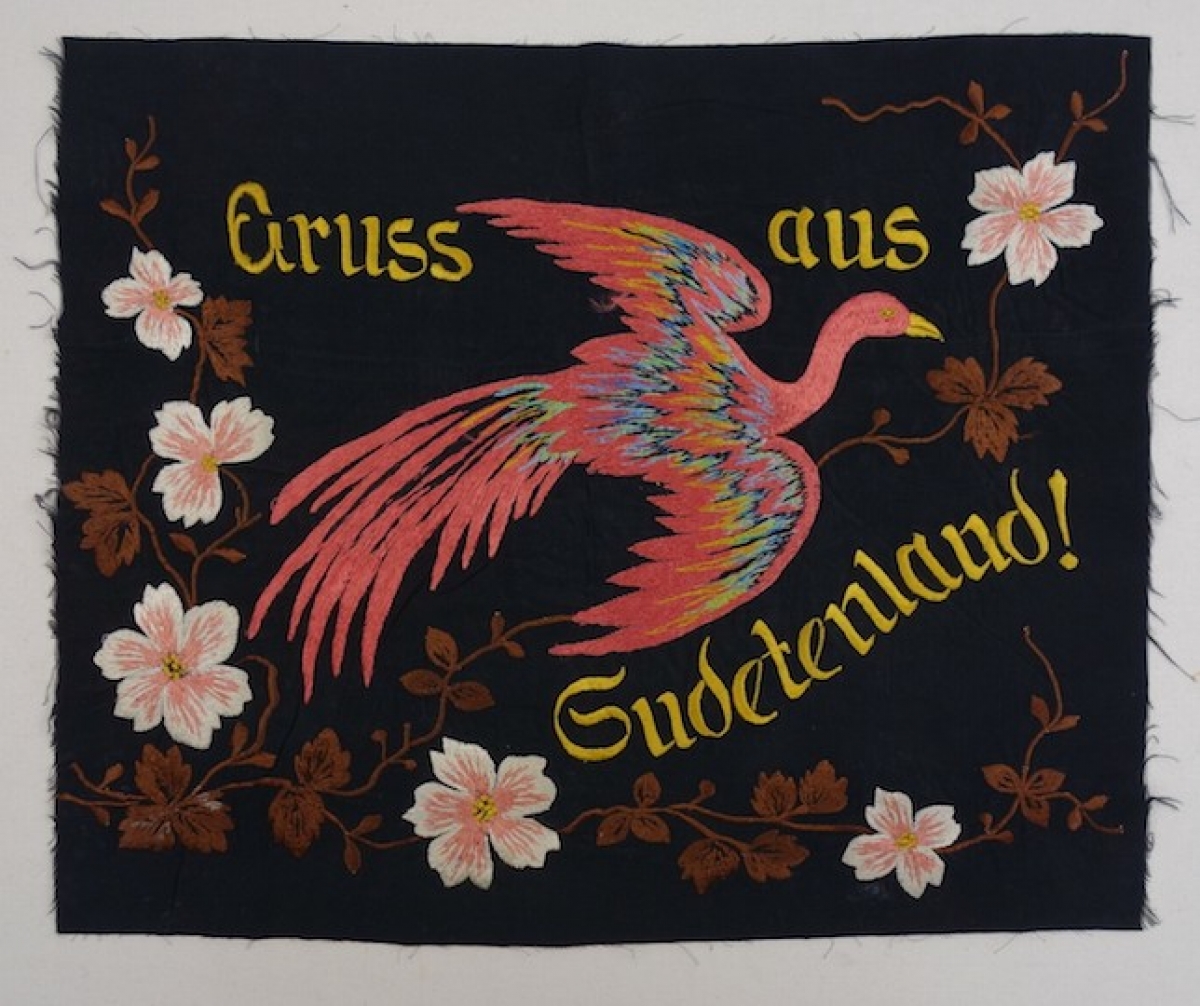
In March 1938, Germany annexed Austria and subsequently claimed Sudetenland, which was part of what was then Czechoslovakia and an area with a dominant German population. At a conference in Munich, in September of the same year, Germany was granted the possession of Sudetenland in exchange for guarantees of peace. In October German forces crossed the Czechoslovakian border.
Despite promises made in Munich, Germany invaded Poland in September 1939, ushering in World War II. At the beginning of the Second World War, the Netherlands was officially a neutral state, nevertheless the country was invaded by Nazi Germany on 10 May 1940. After the bombing of Rotterdam on 14 May, the Dutch troops surrendered to the Germans on 15 May.
 Simple, round wooden brooch from the Netherlands, dated 1940 or slightly later, with a depiction of a grave, a helmet, two Dutch flags and a text (TRC 2019.2292). The brooch commemorates those who were killed when the Germans invaded the Netherlands in May 1940. For more information, click on illustration.The Dutch government and the royal family fled to London. Queen Wilhelmina (reign: 1890-1948) subsequently remained in the UK, while her daughter, Princess Juliana, was sent to Canada with her children.
The first year of German occupation in the Netherlands was fairly calm, at least for the majority of the population. From June 1941, however, the regime became increasingly restrictive: oppression intensified, deportation of the Jewish community commenced, and German control over all aspects of life increased.
By 1941, silver coins with the depiction of Queen Wilhelmina were being replaced by zinc coins with a different obverse side. The silver was melted and used in the German war industry.
In the second half of 1944, American, British, Canadian and Polish troops liberated much of the south of the Netherlands. The west and north of the country were still occupied during the winter of 1944 (the "Honger Winter"). This part of the country was liberated after the surrender of the German troops on 5 May 1945.
16. A final word
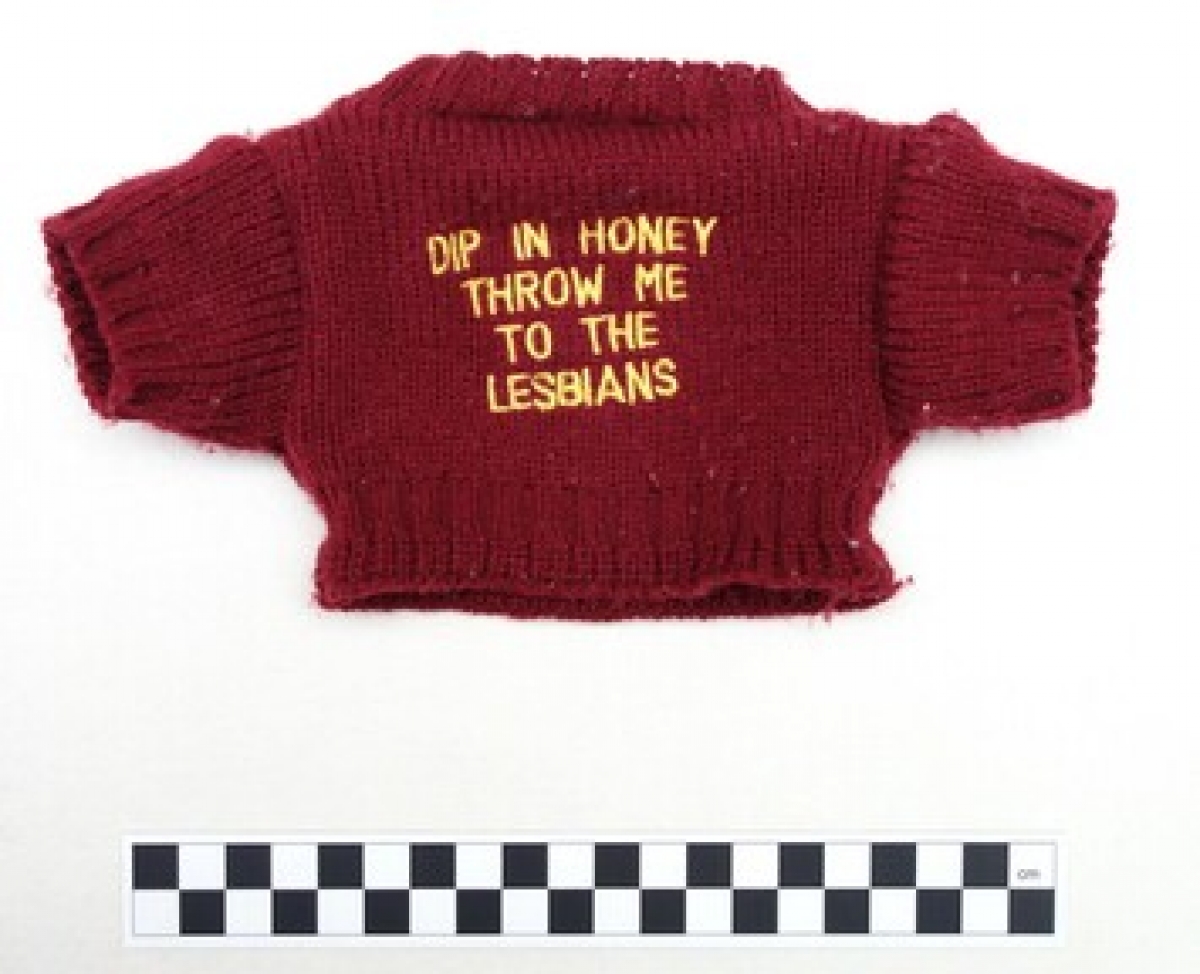
The rebellion at the Stonewall Inn in 1969 kick started an international move for LGBTQ+ equality. 50 years after Stonewall the struggle for LGBTQ+ equality continues. The year 2019 saw many milestones. Despite official bans, police arrests and tear gas, Pride marches were held in Istanbul and Moscow. Bosnia’s capital, Sarajevo, saw its first Pride march. Taiwan, Ecuador and Austria legalized same-sex marriage, while Angola decriminalized homosexuality. A law allowing a third sex option on official documents took effect in Germany. And while Kenyan authorities banned the lesbian film “Rafiki” (“Friends” in Swahili) inside its own country, lead actress Samantha Mugatsia went on to win the best actress award of Africa’s largest film festival.
LGBTQ+ communities have always used dress as a way to negotiate in hostile environments. The use of dress as a means of both individual expression and group identity, of resistance and celebration, also continues. In the words of “Rafiki” director Wanuri Kahiu, after hearing of the best actress award, “The oldest African film festival acknowledged a queer character... So proud! Queerness cannot be silenced!"
15. Drag queens and dragtivists
Wearing the dress of a different gender, called ‘drag’, has long been a form of entertainment. Drag has been associated with LGBTQ+ communities for an equally long time. “Drag is playing with gender. It can be a satire on gender, it can be a mocking,” says the Amsterdam-based Richard Keldoulis. “When I’m in drag I let myself show my feminine side.” For the last fifteen years he has been performing as drag queen Jennifer Hopelezz. He notes that, while most drag is done by gay men, there are heterosexual male drag queens, and “drag kings (lesbians), lady queens (heterosexual women), and I know at least one trans woman who does drag king—which breaks every boundary.”
Wearing a different gender’s clothes “still surprises and shocks people,” he says. “You literally take on another identity. You begin to wonder why is this me or not me? Some people know me only as Jennifer, others only as Richard. When you’re dressed as non-gender conforming, they react totally differently. People grab you and show you off, which doesn’t happen when I’m not in drag. ” Reactions to his wearing drag range from enjoyment (mostly, he notes, from women and children) to anger or disgust (usually from men).
“That’s the power of drag, because it does bring up all these emotions. You start thinking about how you unconsciously treat genders differently. Gender is something you never think about,” he says, yet it affects all we do and are, the way we look, talk, sit and walk, even the way we move our hands. “Everything goes through a gender filter. I catch myself with my nephews and nieces, saying how pretty you look or how strong you are. We are so strict in what a girl can do and what a boy can do. Drag definitely makes you extremely aware about gender.”
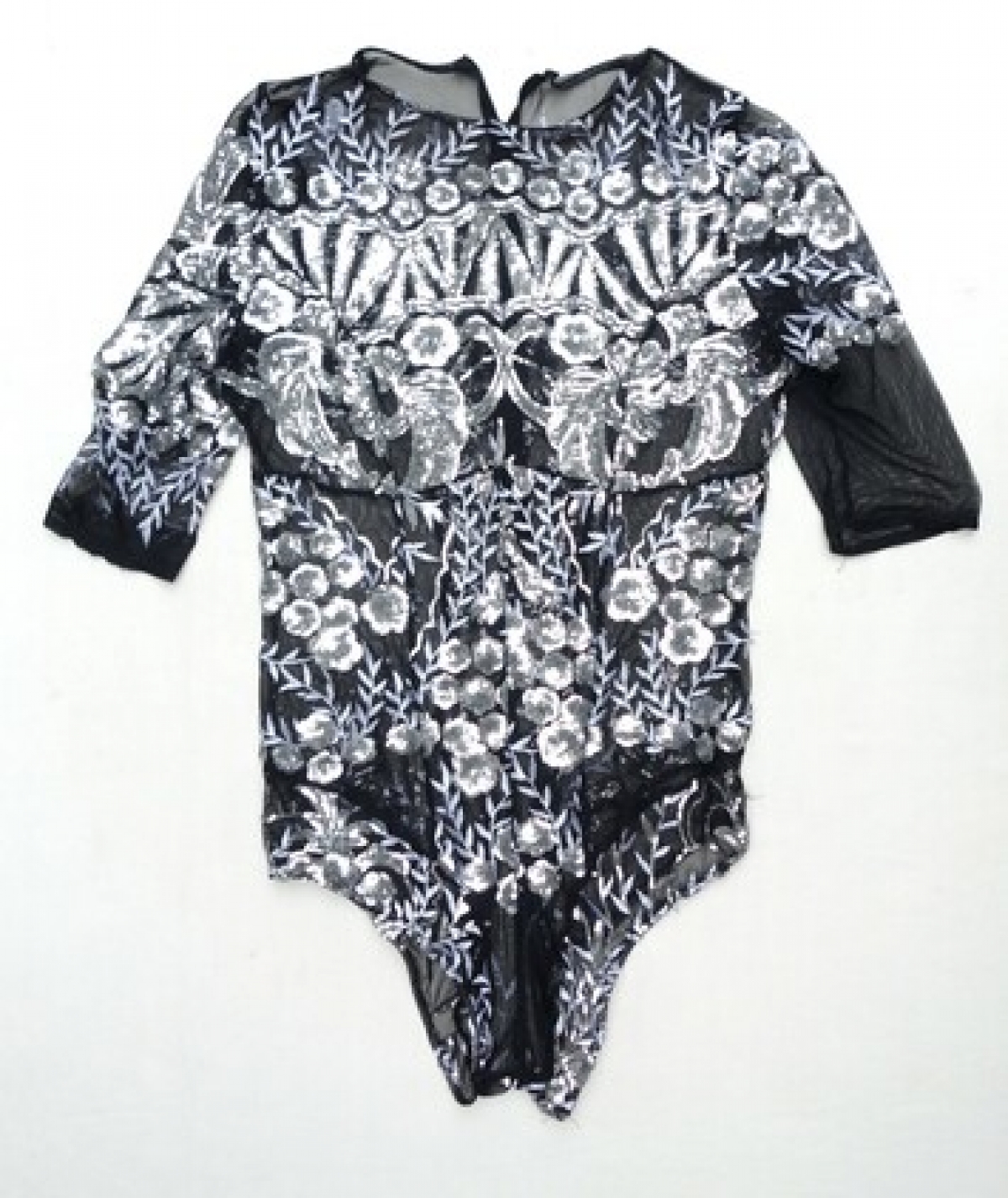
 Early 21st century costume that was made for drag queen Jennifer Hopelezz, Church Club, Amsterdam. TRC Collection (TRC 2019.1622). For more information, click on the illustration.While some people listen to his message less when he wears drag, “you get a lot of attention in drag” Keldoulis says. He uses this attention to fight for the rights of LGBTQ+ people and against the AIDS epidemic. “I didn’t want to be doing lip synch. I see myself as more of a drag activist, a dragtivist, than a performer, celebrating what we’ve achieved but still fighting all the inequalities. There is a history of activism in drag,” he says, noting that the 1969 Stonewall riots were led by butch women, drag queens and transgender people of colour.
Remembering Stonewall was part of Amsterdam Pride’s 2019 celebration, Keldoulis said, noting the theme was “Remember the Past, Create the Future.” “We do have a lot to celebrate,” he said. “We’ve come a long way in the past few years, in terms of marriage equality and more. There’s been huge progress. But these things come and go in waves. I expect that there will always be a fight and a backlash.”
He is well aware of the discrimination LGBTQ+ people face. In 2018, going home after giving a speech at Gay Pride in Amsterdam, a taxi driver refused to let him in his cab. “Three other queens and two men in leather were also refused rides. For me drag is something I can take on and off but if you’re transgender or wearing fetish clothes, there’s a lot of discrimination.”
Jennifer Hopelezz’s costumes come from second hand shops, and off the rack, but are also custom made for her. The black teddy body suit in the TRC collection, with applied silver covered sequins in a motif of stylized flowers (TRC 2019.1621; see illustration on top), was designed for Hopelezz by Spanish drag queen Lola Veneno (aka Sergio Pedrero Santos), while the turquoise net garment (TRC 2019.1622; see illustration above), with hand applied leaves and sequins, was made by Keldoulis’s husband, Elard Diekman.
14. Bet van Beeren
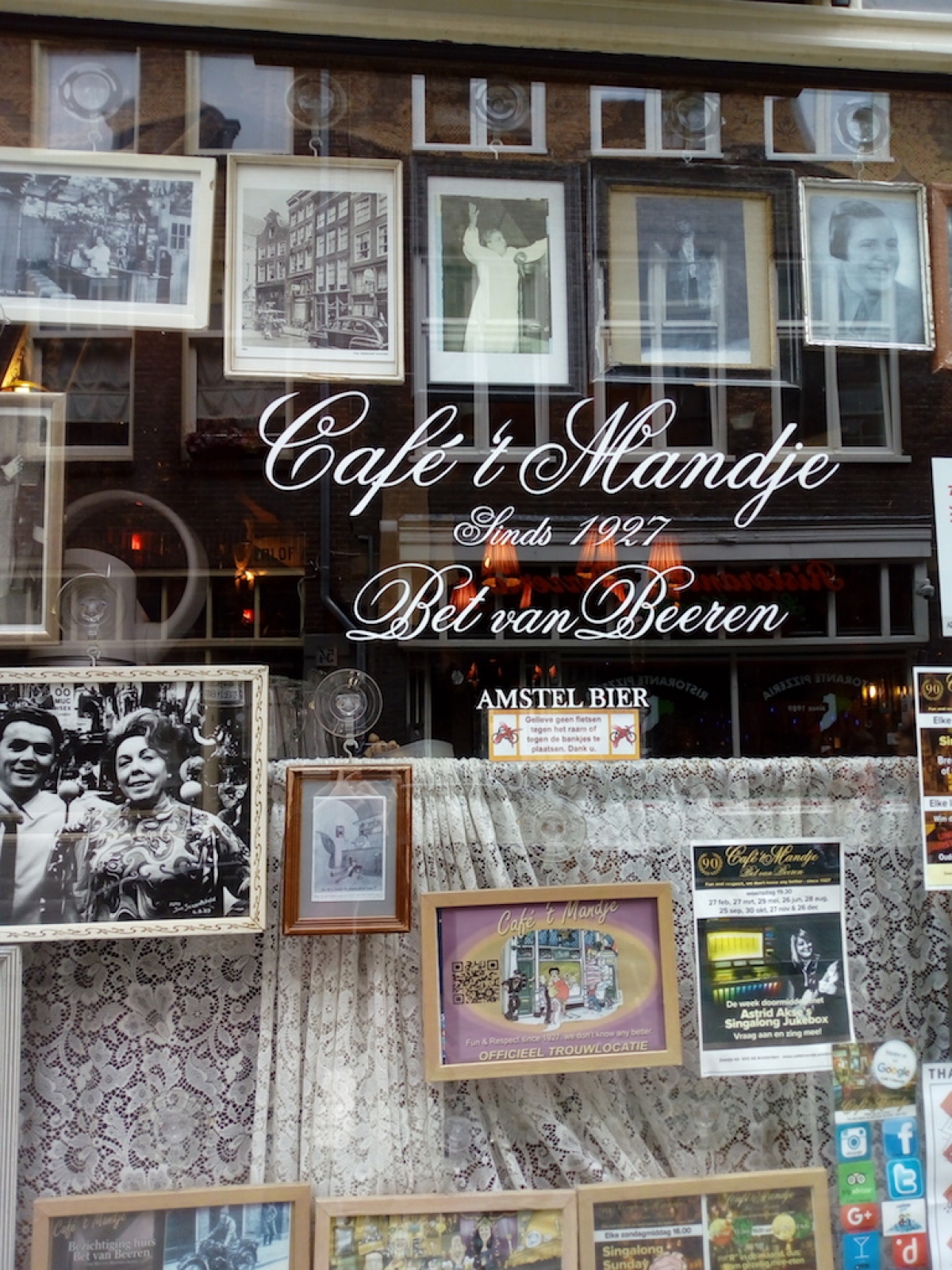
The city of Amsterdam (NL) still honours an open lesbian woman who frequently wore trousers, ties, leather jackets and sailor suits. Bet van Beeren (1902 – 1967) was a well-loved owner of the gay bar ‘t Mandje in Amsterdam’s Zeedijk area. The bar was a popular gathering place for the neighbourhood, sailors, artists and LGBTQ+ people.
Though kissing was forbidden, once a year, on Koninginnedag (the Dutch national holiday celebrating the monarch’s birthday), the bar’s custom-made pool table was dismantled and same-sex dancing was allowed in the bar. Bet had a habit of cutting the ties off of male customers’ necks and hanging them from the bar’s ceiling as mementoes.
Bet’s influence lingers on in the Dutch language. In order to warn LGBTQ+ customers that the vice police were on the premises, Bet would switch on a porcelain lamp that stood on the bar. This was a signal to stop all same-sex displays of affection. The lamp was in the shape of an owl (uil in Dutch), which gave rise to the Dutch slang word for a heterosexual.
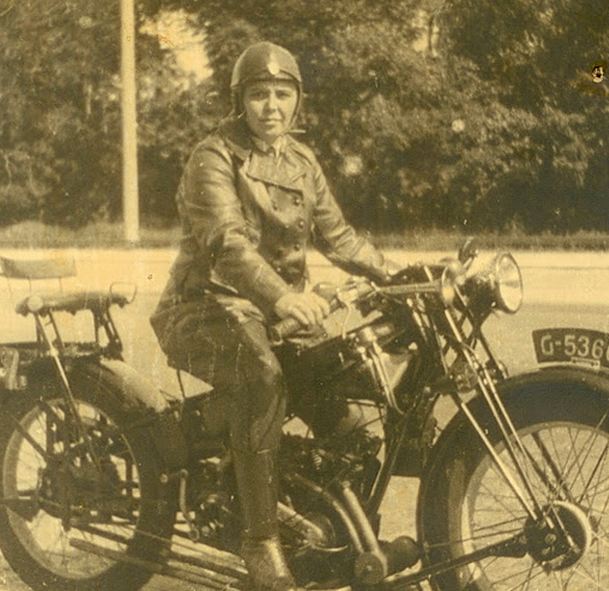 Bet van Beeren (1902-1967) in motorcycle clothes.
After Bet’s death, her younger sister Greet kept the bar open until 1982. In 1998 the Amsterdam Museum built a replica display of the iconic bar as part of its permanent collection. In 2017 the city of Amsterdam named a bridge near the bar after Bet. In 2008 Café ‘t Mandje was lovingly restored and reopened by Bet and Greet’s niece, Diana van Laar.
In an email (23 March 2019) to the TRC, van Laar wrote: “From a textile research point of view, it may be interesting to mention that I took everything down for the renovation, washed them all and put everything back in its proper place, everything having been mapped by 300 pictures taken of the ceiling alone. And an interesting detail: silk ties survived the washing, whereas for example Trevira and other artificial fabrics crumbled at a mere touch.” (Information from the Café ‘t Mandje website).
13. Purses and pant suits
The enforcement of both official and unofficial rules about gender appropriate clothing varies within cultures and over time. The vagaries of fashion play a role. While it might have been shocking in the West for a woman to appear in public in trousers before the 20th century, trousers are now acceptable clothing for women and girls. The acceptance of unisex clothing for children; ear rings and purses for men; or pant suits for women, changes with fashion and social trends.
People who have a choice, and who identify as LGBTQ+ and/or non-binary, gender nonconforming or gender fluid, may wear ‘male’ or ‘female’ clothing, or a mix, based on individual inclination. Dress is a very personal means of self-expression, a way of affirming one’s identity and of presenting this more authentic identity to others.
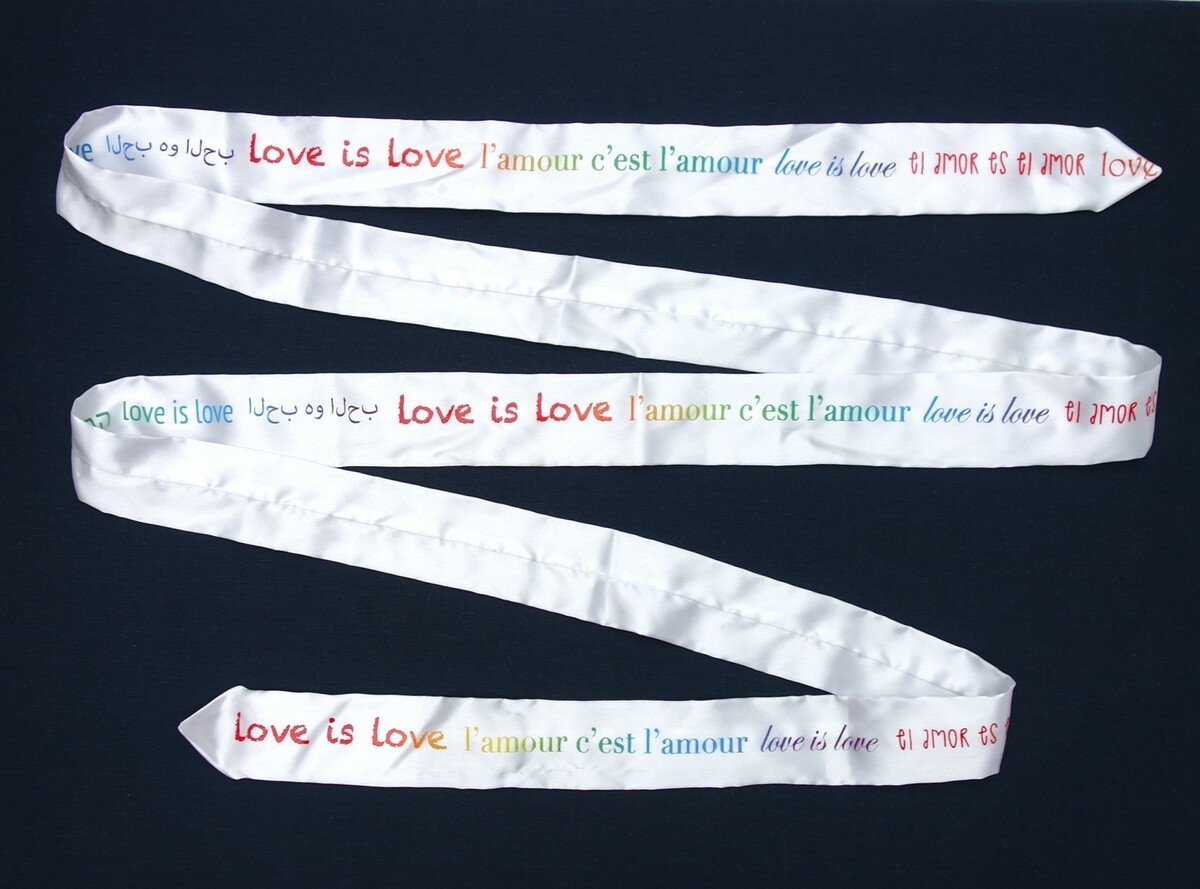
 Redesigned ties for LGBTQ and gender nonconforming people by Ty Amo. TRC Collection (TRC 2019.2004-2007). For more information, click on the illustration.
The fashion industry is responding to this. New businesses may try to attract and create a safe space for LGBTQ+ and gender nonconforming customers. Ty-Amo, for example, is an American tie company that prides itself on its gender inclusive products. Ty-Amo is redesigning the traditional male tie as a result. Their ties, by designer Alex Summers and Larissa Rubin, may be longer than the standard neckties and can be used as ties, head wraps, scarves or belts. Their publicity explicitly challenges gender expectations: “Ty-Amo is breaking through outdated stereotypes—in society and in our closets” (The TRC gratefully acknowledges the gift of seven ties, displayed in this exhibition, from Ty-Amo. For more on Ty-Amo click here; or consult their website).
New make-up and skin-care companies, such as 3INA and Cult of Treehouse, market their products as gender neutral. Laboratory Perfumes’ ‘Amber’ scent is marketed to both men and women. The skin care line of Non Gender Specific has “absolutely no gender boundaries” and is a brand “for all humans”, said founder Andrew Glass in an interview with Business Insider (click here).
Older businesses are also responding. The bespoke suiting company, Bindle & Keep, in New York City, started creating custom clothing for the LGBTQ+ community after receiving a letter. In 2012 style blogger Rae Tutera (creator of ‘The Handsome Butch’ blog) wrote to ask the company why they weren’t creating suits for women and the LGBTQ+ community. She also asked them to stop calling their clothes ‘men’s suits’. Tutera was hired by the company as a community liaison person, and the company has since made thousands of suits for LGBTQ+ and gender nonconforming people (click here).
Trends like these make it easy to assume that gender nonconformance is a twenty-first century phenomena. This is not the case. There are many historical examples of women and men who rejected socially accepted gender expectations, as the following example shows.
12. “Festive and comfortable”
In April 2016 Shelley Anderson married her wife after having living together for thirty years. “We met at a nonviolence training for peace activists. I heard a wonderful laugh and spotted her from across the room. Then I noticed that she was wearing a bracelet with a small pink triangle. I immediately went up to her and said, “I like your bracelet.” That got her attention. She looked at me and asked, “Do you know what it means?” “Of course,” I said. We started dating soon afterwards. I won’t wear a pink triangle, because its history is appalling, but am I glad she was wearing one that day.”
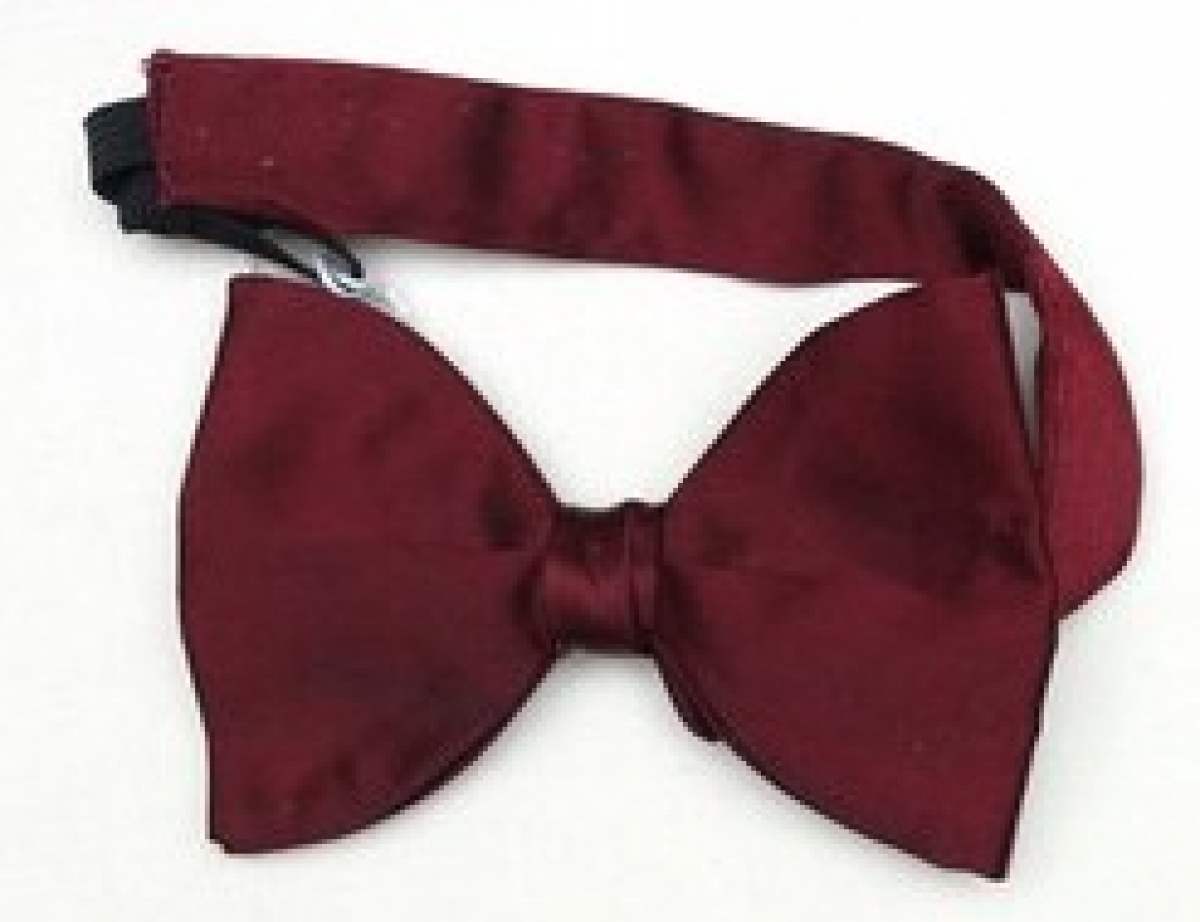
For her wedding Anderson wore black jeans, a red coat, a dark vest with pink shirt and cuff links, and a burgundy coloured bow tie (TRC 2019.1614). “I’ve always felt more comfortable in shirts and trousers, which some people call men’s clothing. My feeling is, I’m a woman, so whatever I wear is automatically women’s clothing. When I was younger and had very short hair, people sometimes mistook me for a boy, until they saw I also wore earrings. Earrings meant I was a girl to them.”
 Shelley Anderson in ear rings and bow tie at her wedding, 2016.Wearing a bow tie and vest to her wedding “felt mildly transgressive, which was enjoyable,” she said. “I wore a bow tie because I felt good wearing it and I loved the colour. I’ve always wanted to wear ties, but they’re complicated to knot. Bow ties are more festive and much easier to wear. Wearing a bow tie was also an homage to all the nameless people who fought for LGBTQ+ rights, often at great personal risk. The only reason my wife and I can marry is because of their fight. Our love is illegal in most countries of the world, which is unjust. Stonewall shows how ordinary people, no matter how marginalized or hated they may be, can fight and win against injustice.”
11. “My own mother didn’t recognize me”
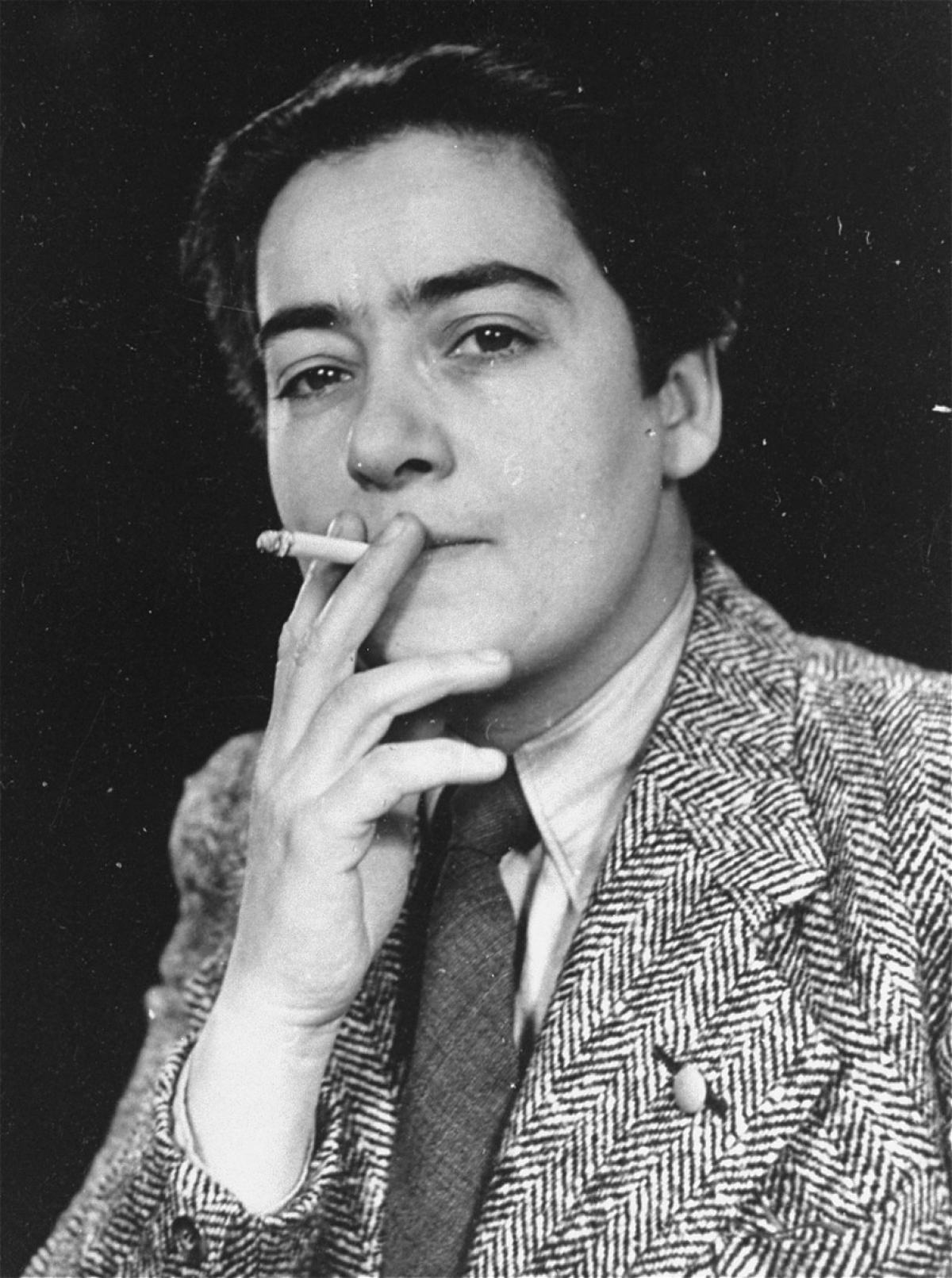
Historically, cross-dressing has served many purposes. Disguise was certainly one purpose. During World War II, the Amsterdam-born lesbian Frieda Belinfante (1904-1994) joined the CKC gay resistance group against the German occupation. At one point she evaded arrest by disguising herself as a man for three months. The disguise was so good, she later said, that her own mother passed her on the street without recognizing her (for Frieda Belinfante, see here).
Recognition was another reason. By wearing a ‘feminine’ colour such as pink or purple, or feminine clothing, a boy or man could signal to others that he was part of the gay community, or simply rebelling against restrictive male dress.
Physical safety and comfort were other reasons. Both lesbian and heterosexual women wore (and still wear) male clothing in order to protect themselves from sexual violence, especially while travelling; to access different and better-paying jobs that are not open to women; or to be able to simply move more freely around their community.
Today, in Iran, women sometimes disguise themselves as men in order to enter football stadiums to watch their favourite teams play (click here). Tragically, in September 2019, the Iranian woman Sahar Khodayari committed suicide while facing trial after she entered a stadium disguised as a man (click here).
There are historical accounts of lesbians disguising themselves in male clothing in order to marry or live openly with their female lover (See The Tradition of Female Cross-Dressing in Early Modern Europe, by Rudolf M Dekker and Lotte C van de Pol, 1997, London: Palgrave Macmillan).