
Beyond The Chador Regional Dress From Iran
4. Some technical details
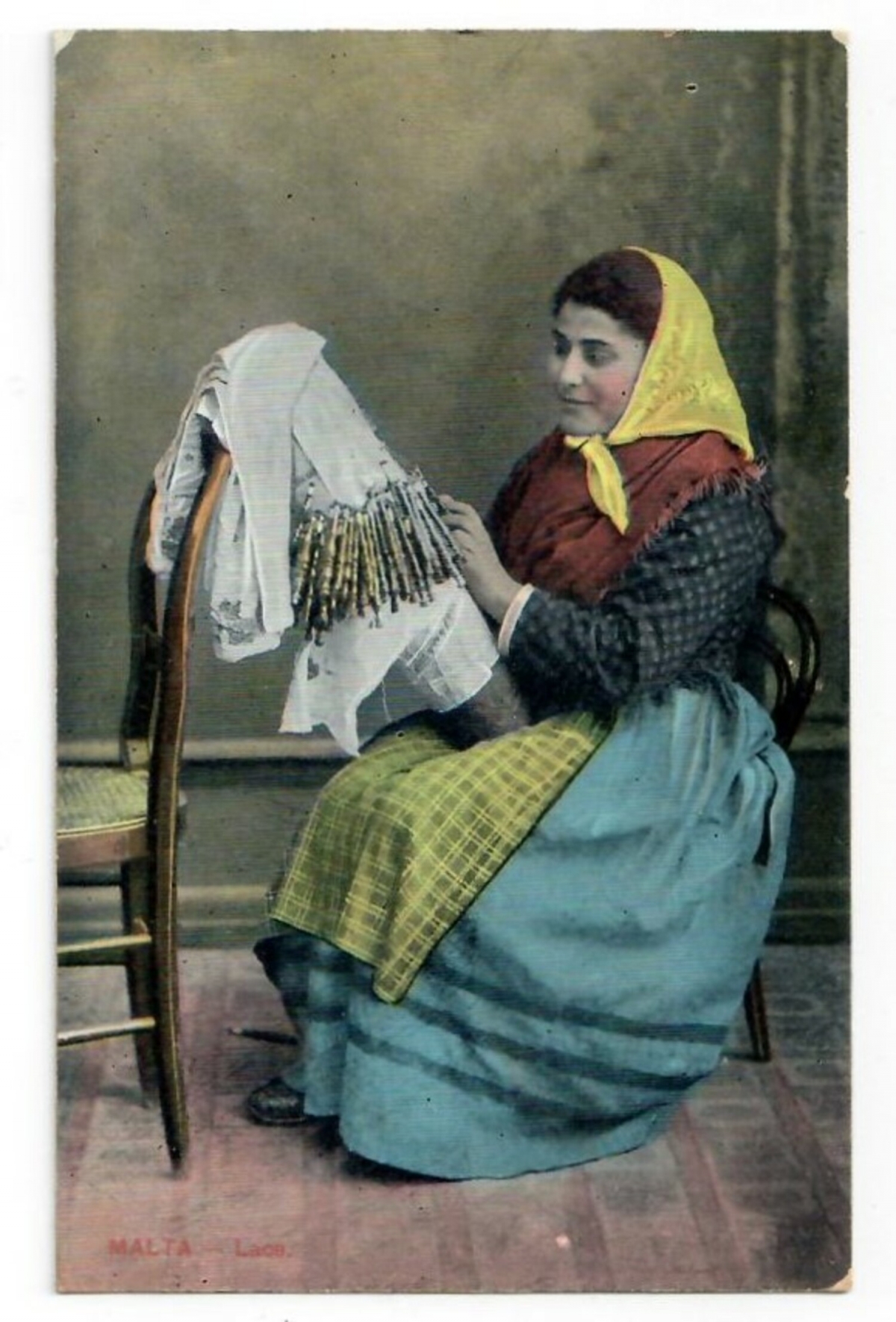
Maltese lace is normally worked on a long, narrow pillow (trajbu) that is placed almost vertically. It is about 60 cm long, and made of dry straw wrapped up in hessian cloth. This bundle is subequently covered in cotton, newspaper and flour paste. After having been dried in the sun, it is covered with brown paper. The bobbins (combini) used are normally very long, thin forms of wood with no beaded spangle at the lower end. They are normally made of the wood from a fruit tree.
A feature of Maltese lace is the use of soft, thick silk yarns. In the past, much of the silk used for the lace came from Sicily in southern Italy, but there was also a small silk industry on Malta itself that included farmers, spinners, dyers and weavers.
Silk products from Malta, including Maltese lace, found a ready market among the clergy of the Catholic Church on the island, as well as among the Maltese aristocracy, tourists, and others.
0. Cover page
Maltese lace, locally known with the umbrella term of Bizzilla 'ta Malta, is associated with the Mediterranian archipelago of Malta, and especially with the island of Gozo. It is a form of bobbin lace of relatively recent, mid-19th century date, although local lace production itself dates back for several centuries. Maltese lace is usually made from ecru coloured silk yarn ('blonde'), but sometimes a black version occurs (for example, TRC 2019.2805). There are also examples made from linen.
The TRC Leiden has recently been given several pieces of Maltese lace (TRC 2020.4880 and TRC 2020.4881). The donation complements previous acquisitons of the same type. Because of this gift, and the recent publication of Azzopardi's monumental book (2020) on the subject, we would like to draw attention to this form of bobbin lace in this small online exhibition.
Sources of information:
- Anon (1851). Official Catalogue of the Great Exhibition of the Works of Industry of All Nations, London: Spicer Brothers.
- Azzopardi, Consiglia (2007). ‘Lacemaking in Malta’, The Gozo Observer, no.16, June 2007, pp. 27-18. Available here.
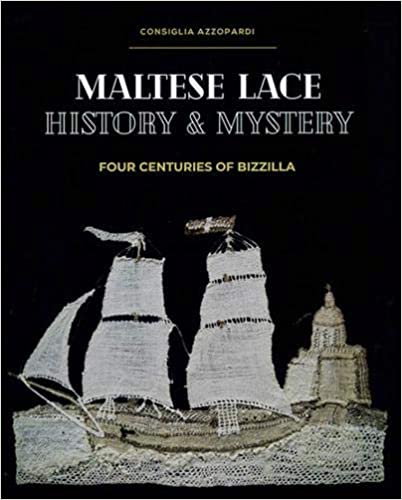
- idem (2020). Maltese Lace History & Mystery, Four Centuries of Bizzilla.. Malta: Kite group.
- Earnshaw, Pat (1982, 1984). A Dictionary of Lace, Aylesbury: Shire Publications Ltd.
- Levey, Santina (1983). Lace. A History. Maney Publishing.
- Maltatina, 'Bringing Maltese lace making back to life', 2 July 2019 (click here)
- Special portal for information on Maltese lace, see www.malteselace.eu
For this online exhibition:
- Author: Gillian Vogelsang-Eastwood
- Web-design: Joost Koopman
- Exhibition design: Willem Vogelsang
- Publisher: TRC Leiden.
- Year of publication: 2020
- Copyright: All illustrations of objects housed in the TRC collection can be used free of charge, but please add to the caption: "Courtesy Textile Research Centre, Leiden" and the pertinent accession number of the object.
3. Brief history of Maltese (bobbin) lace
Although needle laces have been made on the islands of Malta and Gozo since at least the 16th century, bobbin lace was only introduced to the island in the first half of the 19th century. It is associated with Lady Hamilton Chichester (Lady Harriet Anne Butler, died 1860), who in the 1830's introduced lace makers from Genoa (Earnshawl 1982:107).
She was the wife of George Hamilton Chichester, 3rd Marquess of Donegall (1797-1883), a prominent member of the Anglo/Irish aristocracy. Lady Hamilton Chichester worked with Sarah Austin (1793-1867), who was a prolific translator from German to English and mother of the famous explorer and Middle Eastern specialist, Lady Duff-Gordon.
Sarah Austin visited Malta with her husband, the English legal theorist, John Austin (1780-1859) in 1836. Their aim was to help local women with new sources of income, namely silk lace that was becoming more and more popular with fashionable ladies as part of their crinoline dress ensembles.
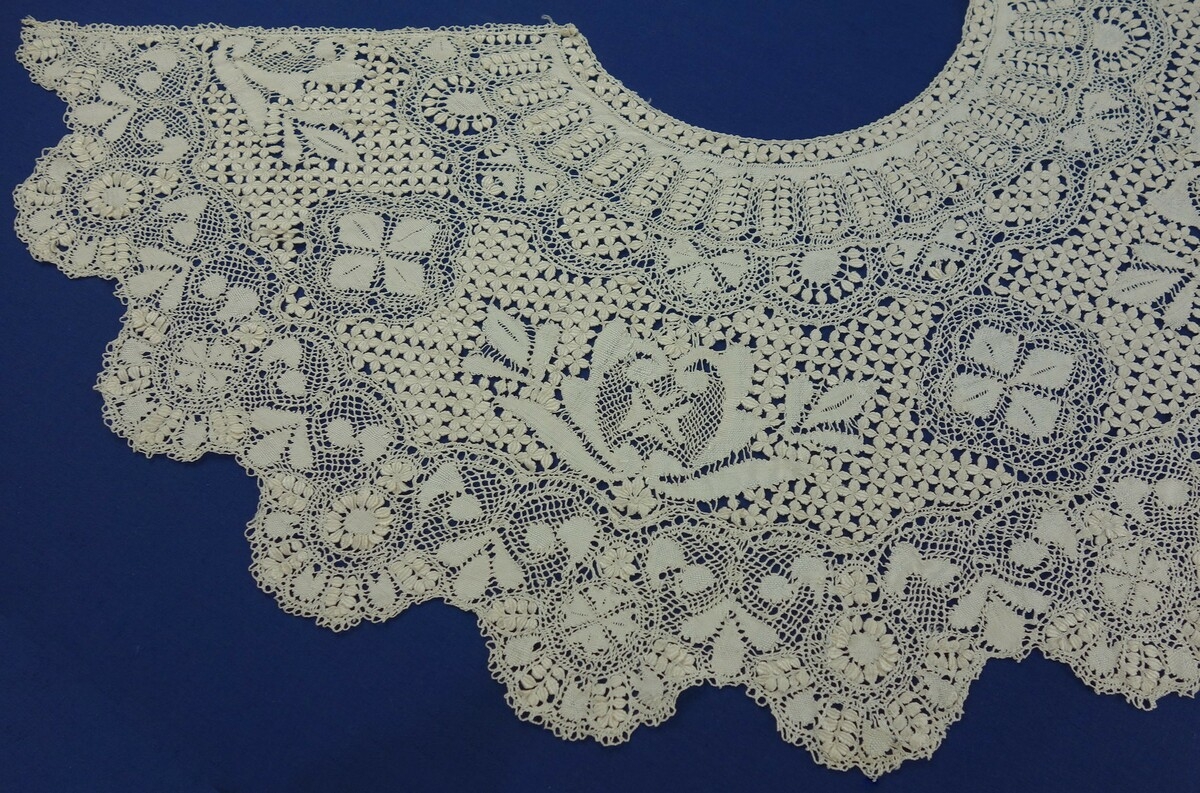
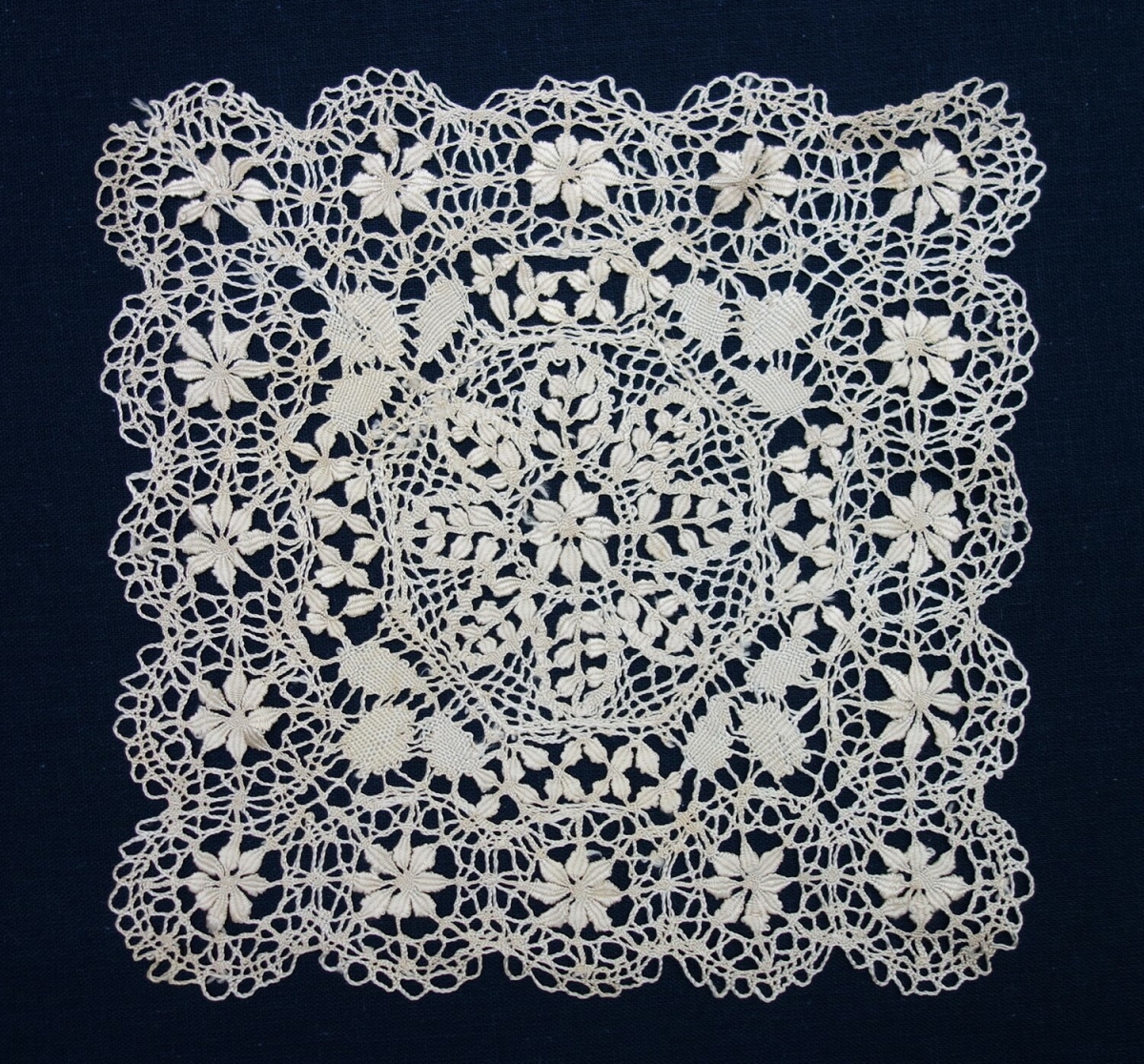
 Close-up of a part of a Maltese lace collar showing the characteristic Maltese cross and small leaves (early 20th century; TRC 2007.0645). For more information, click on the illustration.Original Maltese lace is characterised by the plaited strands or braids, the small, plump leaves, sometimes known as ‘wheat ears’ or ‘oats’ as well as the Maltese cross, which has four, equal length arms. Furthermore it generally shows a geometric overall design. Apart from the Maltese cross, all these characteriscs are shared with original Genoese lace.
The cross was apparently added in the 1830’s by Lady Hamilton Chichester because Genoese lace was very similar, but by adding the Maltese cross it became quickly identified with the island by locals as well as the tourists who were buying this type of lace (Earnshaw 1982:108).
 Early 20th century postcard with women producing bobbin lace on slanting lace pillow. Gozo, Malta (TRC 20217.1419).The use of a thick, soft silk made it relatively easy to produce items of lace as well as making them less expensive than the finer silks that were often used for lace making.
One of the first times this type of lace was exhibited was in the Great Exhibition in London, in 1851. In the Malta section to the catalogue to the Great Exhibition, for example, there were references to lace collars, black lace collars as well as knitted laces (1851:165).
Queen Victoria seems to have been a great admirer of Maltese lace, and she is said to have submitted a sample of lace to the Exhibition of Industries, in London in 1881. Her statue in Republic Square in Valletta, the Maltese capital, shows a shawl being displayed over her lap, and the garment may represent a sample of Maltese lace. It is also alleged that samples of Maltese lace were sent to China to be copied; this story may reflect a modern reality. Whether or not she preferred Maltese lace made of silk or of linen remains a moot point; since the late 19th century, linen was widely used for the lace, although linen lace was mostly used for larger pieces, such as table cloths and curtains.
 Cross of the Order of St John (Maltese cross).Maltese lace continues to be made to the present day, although not on the same scale as in the 19th century, and, to some, of much inferior quality, although deep into the 20th century lacemakers were a common sight when visiting Golzo.
In 1996 a lacemaking programme was set up at the University of Malta - Gozo Centre to promote the production and quality of Maltese lace, and in 2000 the Malta Lace Guild was established. It publishes a newsletter with infomation of developments of Malta lace production, on Malta and abroad. There is also a Koperattiva Ghawdxija tal-Bizzilla u Artigjanat, which is a cooperative producing handmade Maltaese lace. Finally we want to mention the social enterprise called HAJJA, which uses Maltese lace making as a healing tool to improve people's health.
 Lace collar in ecru silk and with its characteristic Maltese crosses and wheat ear patterns (early 20th century; TRC 2007.0645). For more information, click on the illustration.
Bedfordshire lace
Maltese bobbin lace was very popular from the mid-19th century onwards and was copied in Britain, for example, with the newly ‘invented’ Beds Maltese (Bedfordshire Maltese) lace form, a style of bobbin lace that was somewhat disapproved of at the time by lace traditionalists (Earnshaw 1982:108). It soon went out of fashion, partly because of the costs of its production.
Another derivation, so it seems, is Hainault lace, which resembles Bedfordshire lace and which was developed in the late 19th and early 20th centuries in southern Belgium.
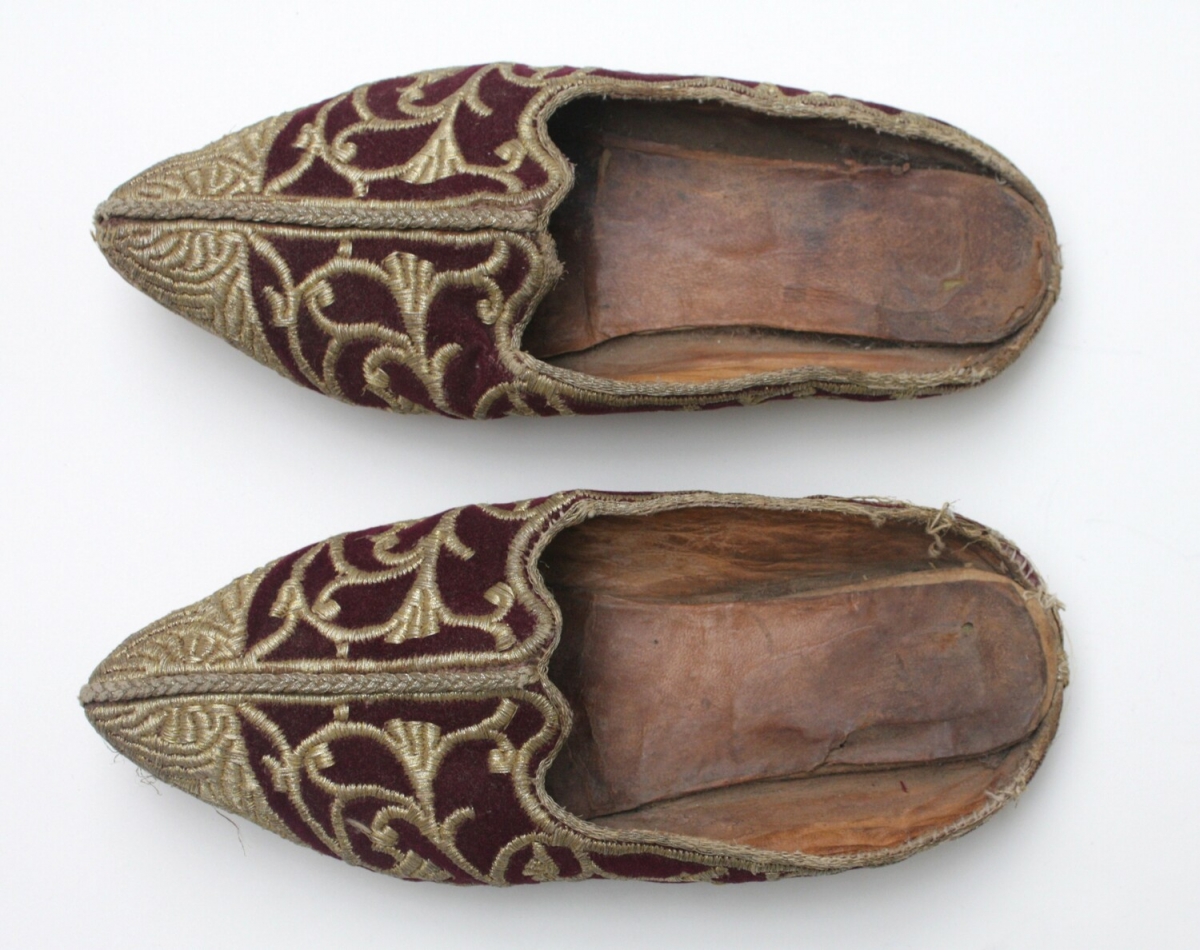
0. Cover page
This online exhibition is based on a TRC Gallery Exhibition with the title VELVET!, presented at the Textile Research Centre, Leiden, The Netherlands, from 22nd January until 28th June 2019. There are ten separate sections, followed by a gallery of objects housed in the TRC Gallery. Each of these will give access to the TRC online catalogue for more information. Enjoy.
For this online exhibition:
- Author: Gillian Vogelsang-Eastwood
- Web-design: Joost Koopman
- Exhibition design: Willem Vogelsang
- Publisher: TRC Leiden.
- Year of publication: 2019
- Copyright: All illustrations of objects housed in the TRC collection can be used free of charge, but please add to the caption: "Courtesy Textile Research Centre, Leiden" and the pertinent accession number of the object.
0. Cover page
Lace is a decorative openwork fabric, gradually built up by the interworking of free threads. The threads are forming holes and solid parts that are essential for the design and deliberately made by special movements like cross and twist.
The first mentioning of lace can be found in the fifteenth century and its popularity expanded in the sixteenth century. There are two main types of handmade lace, namely needle lace and bobbin lace. Needle lace is made with a single thread and one needle, while bobbin lace is made by manipulating multiple threads, wound on bobbins.
Machine made laces emerged during the Industrial Revolution, from the end of eighteenth century. The first machine made laces consisted of a machine produced net, made out of one continuous thread, where the pattern was applied by hand. A further development was the production of patterned laces, sometime around 1840, which could imitate handmade pieces per excellence.
The imitations of handmade laces flooded the market and it can be very difficult to distinguish machine made pieces from their handmade models. This display presents seven examples, each juxtaposing two similar laces from the TRC collection. One is handmade and the other one is machine made.
The exhibition tries to explain the small, but significant differences in the technique of the handmade lace and its machine made imitations. This display categorises the provided examples based on filling, gimp, ground, edge and sides of the lace.
For this online exhibition:
- Author: Lisa Dilitz and Olga Ieromina.
- Web-design: Joost Koopman
- Exhibition design: Lisa Dilitz, Olga Ieromina and Willem Vogelsang
- Publisher: TRC Leiden.
- Year of publication: 2019
- Copyright: All illustrations of objects housed in the TRC collection can be used free of charge, but please add to the caption: "Courtesy Textile Research Centre, Leiden" and the pertinent accession number of the object.
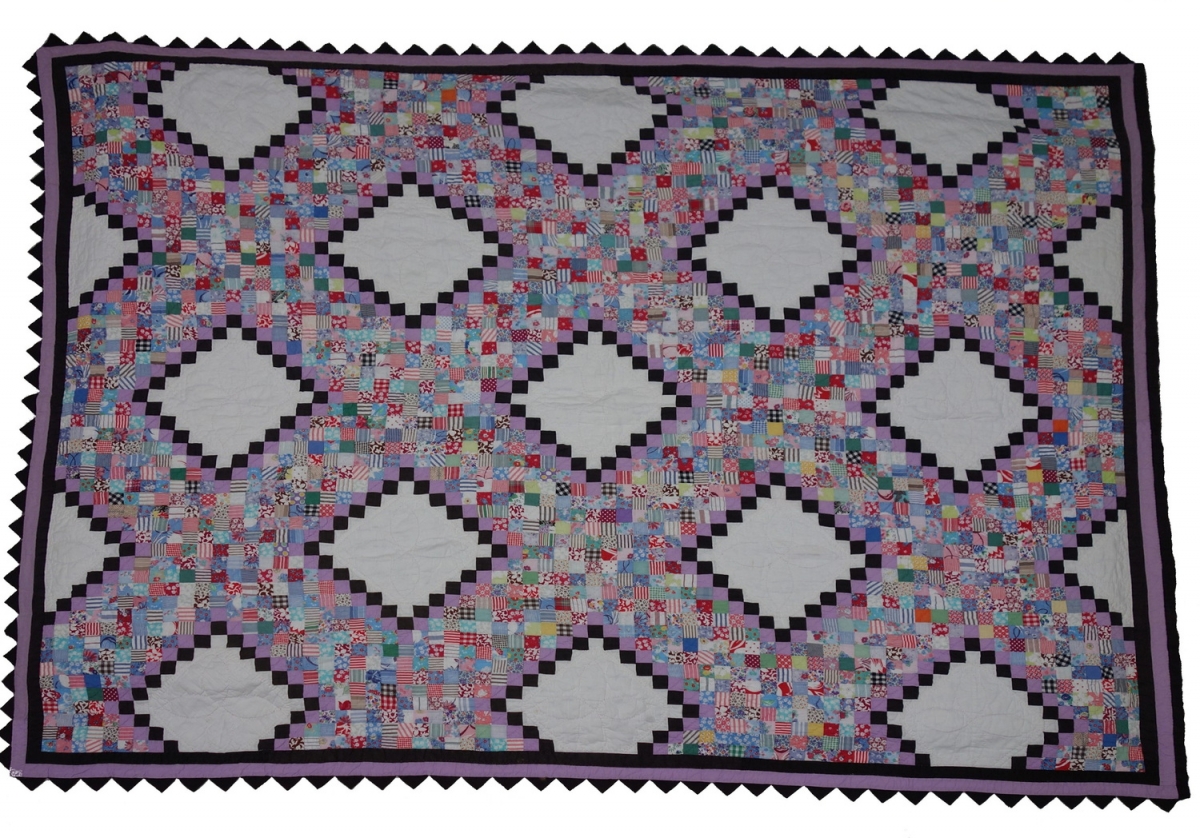
0. Cover page
"For a few sacks more.... How feedsacks clothed and warmed Americans during the Depression, and later."
This was the name of an exhibition set up and hosted by the Textile Research Centre, Leiden, The Netherlands, between January and July 2018. The idea for the exhibition came as a result of a donation to the TRC in 2017 of 35 feedsacks made of printed cotton cloth. These and items collected since then reflect a story of resilience, female ingenuity, thriftiness, sustainability, art and design, national awareness, as well as economic and commercial insight for nearly fifty years, from the 1920’s to the 1960’s. It is an amazing story, and one that is now barely known outside of the USA.
The decorative versions of the feedsacks became very popular and were used for a wide range of items, including men, women and children’s clothing and household items, such as bedding (sheets, pillowcases, quilts), curtains, tablecloths, and clothes pin bags. In fact, they were used for just about anything. The exhibition includes examples of actual feedsacks, as well as clothing, toys, curtains and bags, made from them. In addition, there are numerous bed quilts made from feed sack materials, which reflect the creative use of the sacks and cloth scraps.
The exhibition was made possible thanks to the generosity of the Small Grant Program of the USA Embassy, The Hague.
The actual exhibition is available for loan by other museums and institutions. Click here for more details about the package.
Further reading:
Jones, Lu Ann and Sunae Park (1993). “From feed bags to fashion” Textile History, vol. 24, no. 1, pp. 91-104.
Nixon, Gloria (2015). Rag Darlings: Dolls from the Feedsack Era, Kansas City: Kansas City Star Quilts.
McCray, Linzee Kull (2016). Feed Sacks: The Colourful History of a Frugal Fabric, Calgary: Uppercase Publishing Inc.
Walton, Frank L. (1945). Thread of Victory, New York: Fairchild Publishing Co.
For this online exhibition:
- Author: Gillian Vogelsang-Eastwood
- Web-design: Joost Koopman
- Exhibition design: Willem Vogelsang
- Publisher: TRC Leiden.
- Year of publication: 2018
- Copyright: All illustrations of objects housed in the TRC collection can be used free of charge, but please add to the caption: "Courtesy Textile Research Centre, Leiden" and the pertinent accession number of the object.
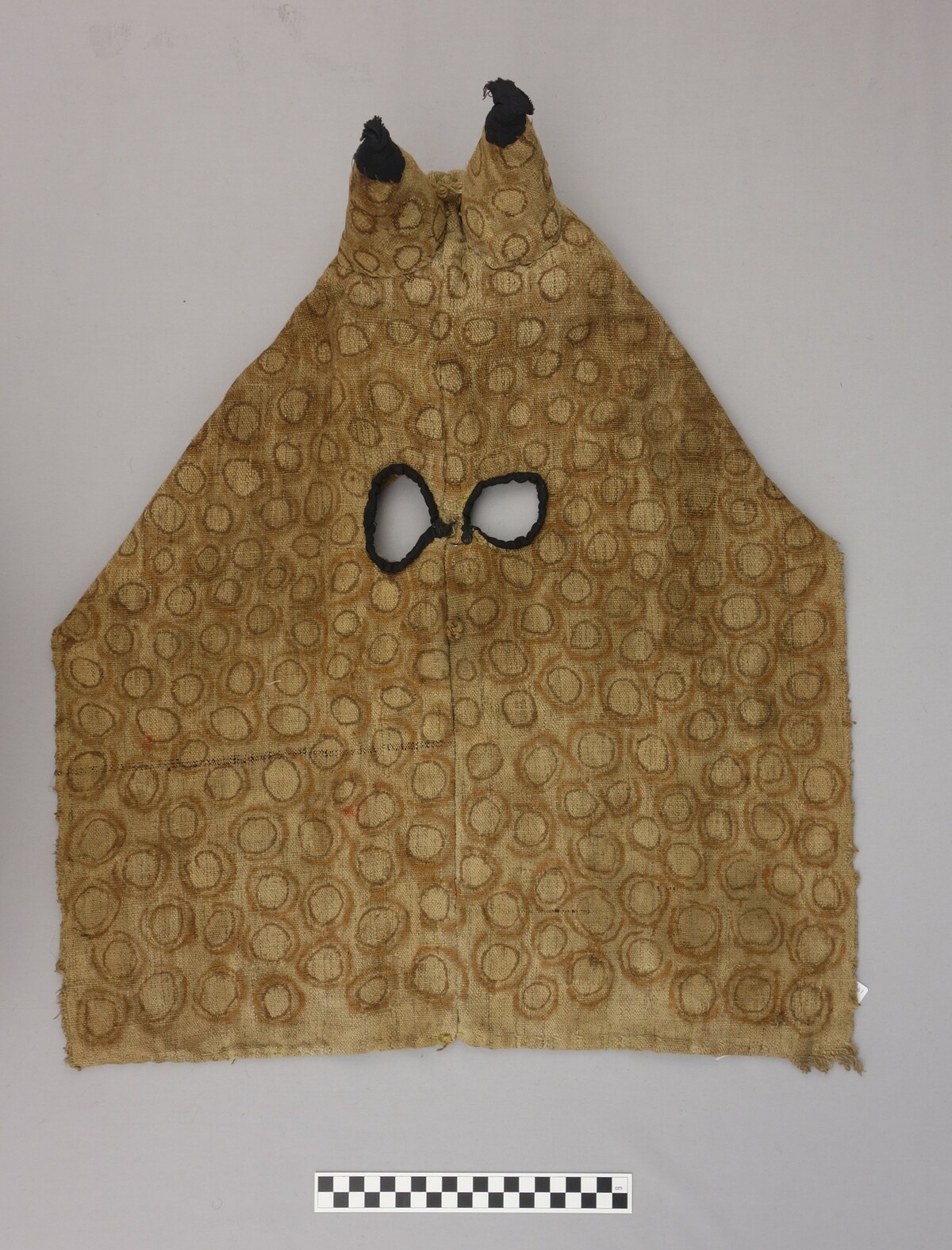
0. Cover page
The present online exhibition is based on a 'real' display that is on show at the Textile Research Centre from 12th September until 22nd December 2017. It was organised as part of the 2017 Asia Year celebrations in Leiden, and the official opening of the Asia Library of Leiden University on 14th September. The exhibition shows a fascinating and colourful display of textiles, dress and jewellery from Central Asia: these are the so-called ‘Stans’ (‘Land of…’), namely Afghanistan, Kazakhstan, Kyrgyzstan, Tajikistan, Turkmenistan and Uzbekistan.
The exhibition includes traditional textiles, garments and accessories for men, women and children, from all parts of this vast and relatively unknown part of the world. The objects on display include ikats, velvets and embroideries from the ‘Stans’ in general. But there are also more specific items, such as Afghan chapans (the type of coat made famous by ex-President Hamid Karzai, and which he wore during his visit to Leiden in 2008), buzkashi apparel (used in the "goat-grabbing" game of Central Asia) , as well as hunting hoods and cloths, used to 'hide' the hunter from his prey. From Uzbekistan there will be examples of the famous suzani embroideries and ikat dresses and coats. All of these objects are talken from the extensive TRC collection, which currently (September 2017) holds more than 17000 items.
An important element of the exhibition is a beautiful collection of ethnic jewellery from among the Turkmen of Afghanistan, on special loan from May and Rolando Schinasi, who lived and worked in Afghanistan for many years prior to the start of the civil war in 1978.
The exhibition has been sponsored by the Leiden University Central Asia Initiative.
The actual exhibition is available for loan by other museums and institutions. Click here for more information about the package.
For this online exhibition:
- Author: Gillian Vogelsang-Eastwood
- Web-design: Joost Koopman
- Exhibition design: Willlem Vogelsang
- Publisher: TRC Leiden.
- Year of publication: 2017
- Copyright: All illustrations of objects housed in the TRC collection can be used free of charge, but please add to the caption: "Courtesy Textile Research Centre, Leiden" and the pertinent accession number of the object.
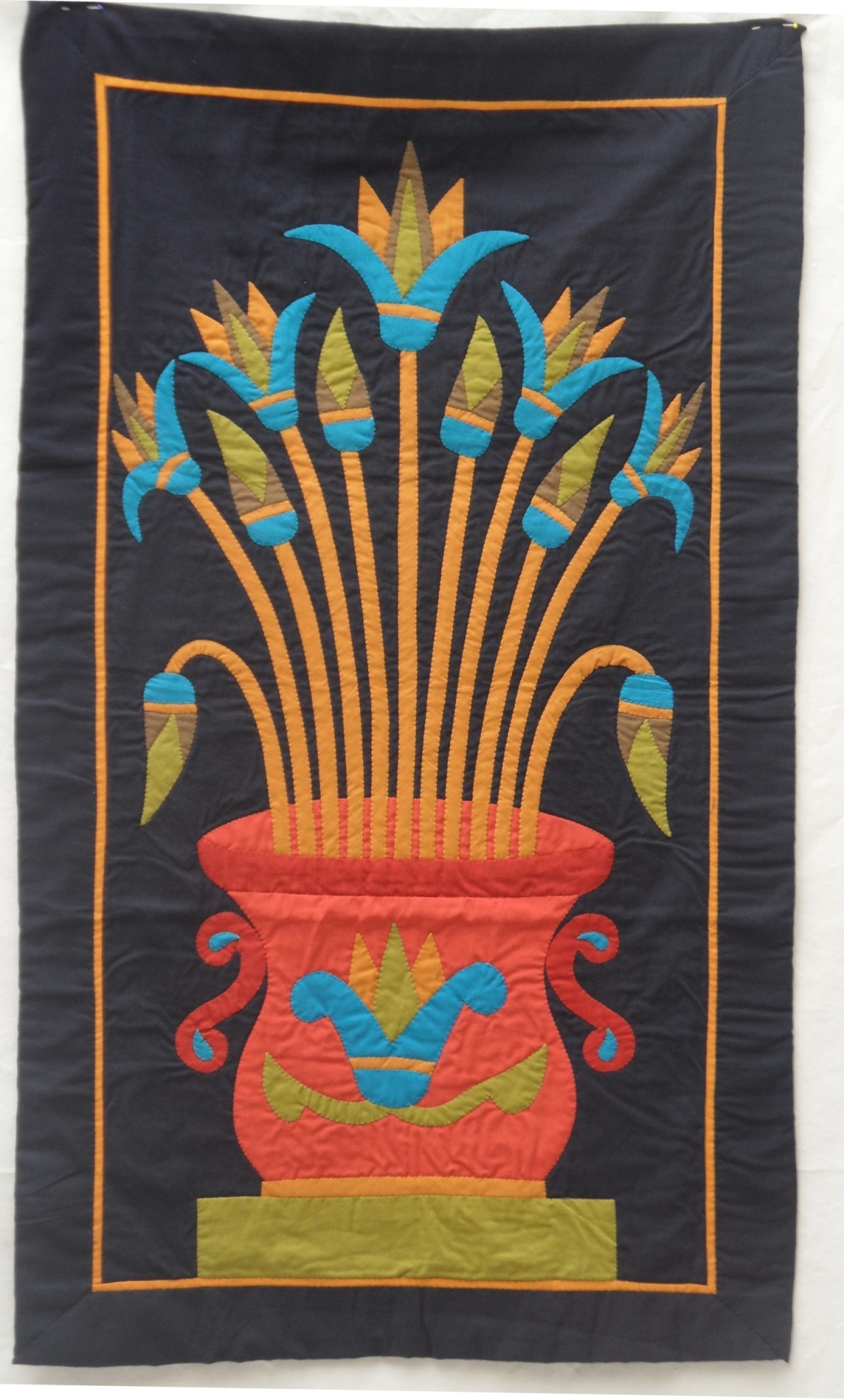
0. Cover page
One of the joys of walking around the bazaars of ancient Cairo is a visit to the Street of the Tentmakers. It is a seventeenth century complex of buildings, with a long street with shops filled with appliqué panels of the most amazing range of colours and designs. The appliqués from the Street are part of a tradition that goes back to at least the time of the ancient Egyptian pharaoh, Tutankhamun, who died in 1323 BC.
This online TRC exhibition builds on a 'real' display organised in 2015 at the TRC in Leiden. It includes historical and technical information as well as showing a very wide range of panels with traditional geometric designs, intricate Arabic calligraphy, ancient Egyptian tomb scenes, modern lotus designs, as well as birds, fishes, landscapes and folk stories. In fact, all aspects of traditional Egyptian life.
The exhibition at the TRC, and this online outcome, have been made possible with the help of the appliqué makers from the Street of the Tentmakers, Cairo, and the director and staff of the Netherlands-Flemish Institute, Cairo, Egypt.
All the appliqués housed in the TRC collection are shown in the 'chapter' Photographs of All Objects, see below, and the illustrations in this chapter refer directly to the TRC digital catalogue.
A short film about the 'real' exhibition can be downloaded here.
For further information, see the relevant entry in TRC Needles.
For this online exhibition:
- Author: Gillian Vogelsang-Eastwood
- Web-design: Joost Koopman
- Exhibition design: Willem Vogelsang
- Publisher: TRC, Leiden.
- Year of publication: 2018
- Copyright: All illustrations of objects housed in the TRC collection can be used free of charge, but please add to the caption: "Courtesy Textile Research Centre, Leiden" and the pertinent accession number of the object.
0. Cover page
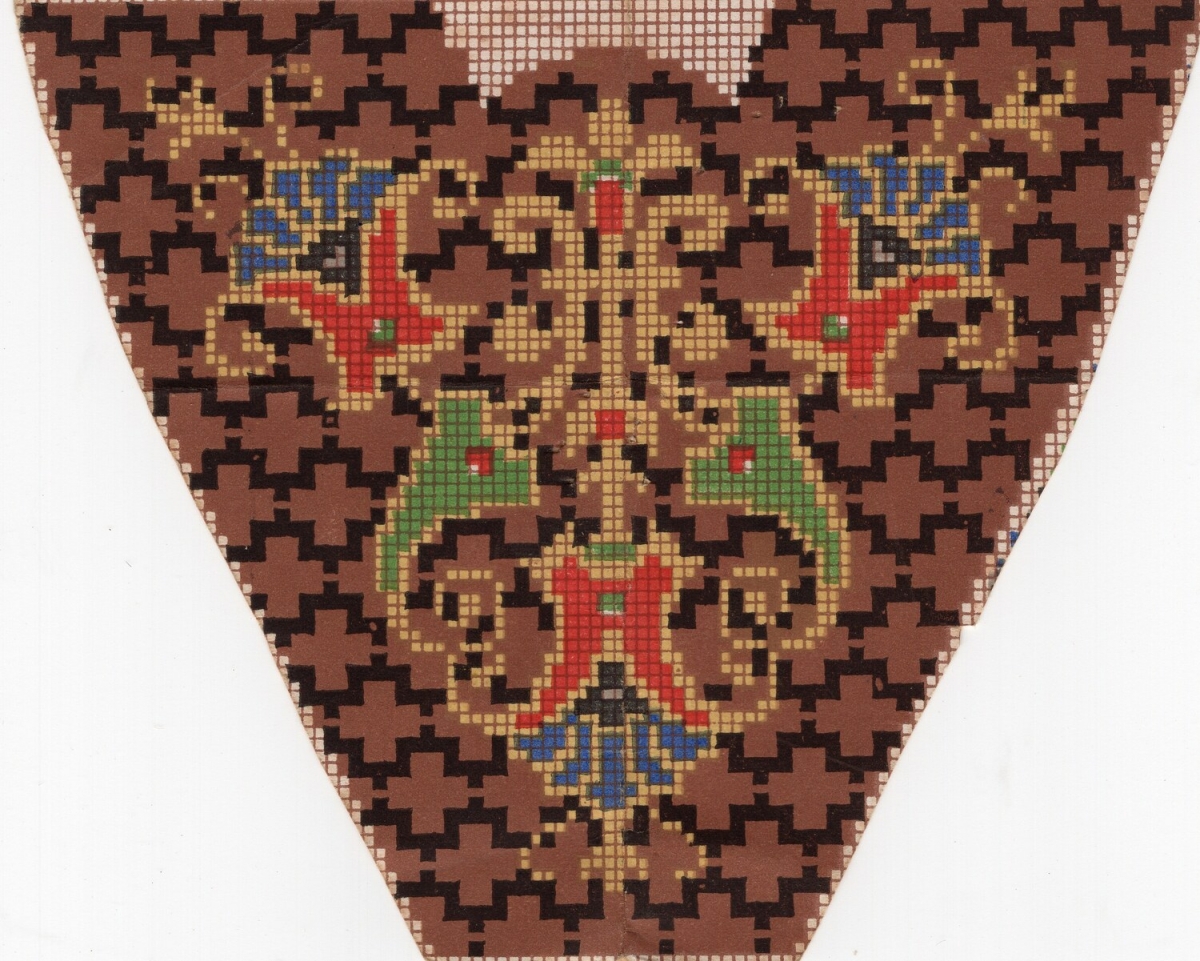
In April 2018, the TRC was given a collection of fifty original Berlin work charts. The donor was a long-time friend and supporter of the TRC, Mrs. Mariet ter Kuile-Portheine. She acquired these charts in the 1980’s. Most of them date to the mid-nineteenth century. The colours on all of these charts have been applied by hand. Some of them were produced by the Leiden-based firm of A.W. Sijthoff, which was founded in 1851 and still continues to the present day as the publishing firm of Luitingh-Sijthoff. The charts donated by Mrs. Mariet ter Kuile-Portheine form the basis for this online exhibition.
References:
Pat Berman, 'Berlin Work', published in Needle Pointers, Febr./March 1990, and revised in October 2000. Digitally available here (retrieved 8th June 2016).
See also the entry on an embroidered picture 'Girld holding a cat', now in the Victoria and Albert Museum and dated to c. 1840, and to a nappy basket with Berlin wool work decoration.
For Berlin wook work, see also the relevant entry in TRC Needles.
For this online exhibition:
- Author: Gillian Vogelsang-Eastwood
- Web-design: Joost Koopman
- Exhibition design: Willem Vogelsang
- Publisher: TRC Leiden.
- Year of publication: 2018
- Copyright: All illustrations of objects housed in the TRC collection can be used free of charge, but please add to the caption: "Courtesy Textile Research Centre, Leiden" and the pertinent accession number of the object.
0. Cover page
When thinking of the Middle East, images of bearded men and veiled women tend to come to mind. But this neighbour of Europe is far more diverse than we often think. In the past few years, media coverage of the Arab Spring and the dramatic war in Syria and Iraq, have placed groups such as the Copts and the Kurds in the limelight, but there are many more ethnic and religious communities that are often ill-defined by national borders.
This online exhibition is based on a gallery display presented at the Textile Research Centre, Leiden, The Netherlands, from 3rd April to 28th June 2017. With the subtitle 'Dress and Diversity in the Middle East', it showcased the rich dress traditions of some of the groups living in the Middle East, highlighting the intricate history of this region. It included the Copts, Bedouin, Palestinians, Druze, Orthodox Jews, Samaritans, Kurds and the Zoroastrians.
The exhibition formed part of the Fitting In / Standing Out research project of the Vrije Universiteit Amsterdam, which was funded by the Netherlands Organization for Scientific Research (NWO).
This digital exhibition is based on a gallery display presented at the Textile Research Centre, Leiden, The Netherlands, from 3rd April to 28th June 2017. With the subtitle: Dress and Diversity in the Middle East, it formed part of the Fitting In / Standing Out research project of the Vrije Universiteit Amsterdam, which was funded by the Netherlands Organization for Scientific Research (NWO).
We would like to thank the following people for their help in creating the exhibition and booklet: Mrs. Nimet Bozat, Mrs. Hilal Çiftçi,Ms. Marieke Roozeboom, Dr. Ibrahim Saweros, Mr. Benyamin Tsedaka (AB Institute of Samaritan Studies, Israel), as well as the staff and colleagues at NVIC, Egypt (especially Tilly Mulder), the Federatie Koerden in Nederland (Fedkom), Mor Polycarpus Augin Aydin and Father Saliba Antonios of the Syriac Orthodox Church in The Netherlands and all the volunteers of the TRC Leiden.
For this online exhibition:
- Authors: Tineke Rooijakkers, Gillian Vogelsang-Eastwood, Willem Vogelsang and Bas ter Haar Romeny, with contributions by Judith Kindinger, Levi Klempner and Alexandra Pleşa.
- Web-design: Joost Koopman
- Exhibition design: Willem Vogelsang
- Publisher: TRC Leiden.
- Year of publication: 2018
- Copyright: All illustrations of objects housed in the TRC collection can be used free of charge, but please add to the caption: "Courtesy Textile Research Centre, Leiden" and the pertinent accession number of the object.