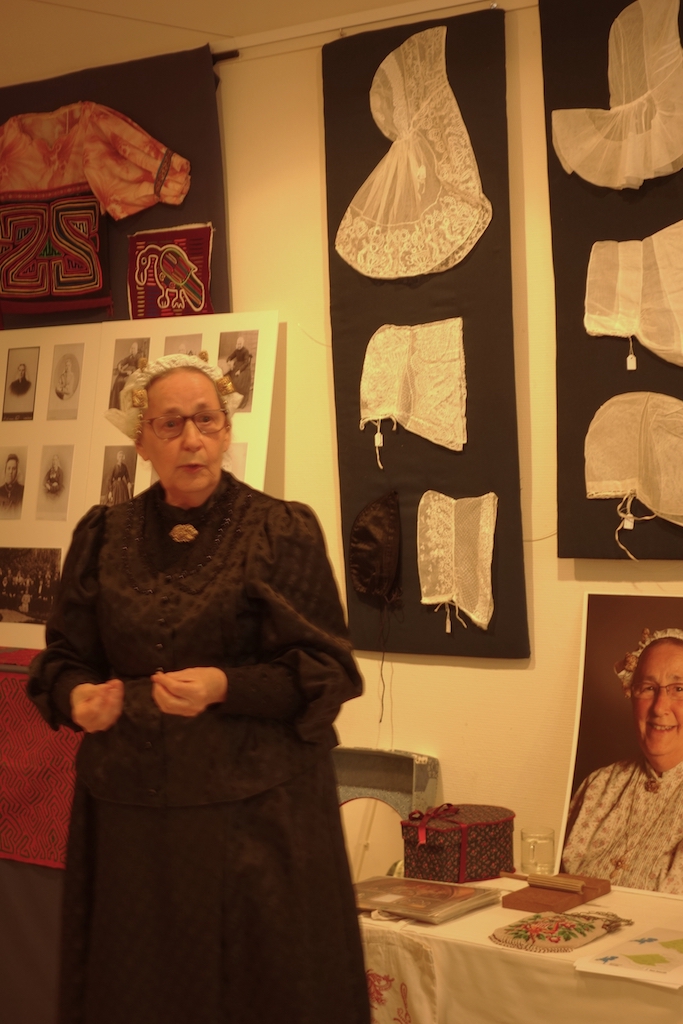
I am extremely grateful and excited to have taken part in the TRC’s “Textile Intensive Course” last week, from February 21st - 25th. After five full days of looking at and learning about textiles I can say I learned an incredible amount in a short period of time. My biggest takeaway is that the world of textiles is far larger, more complicated, more nuanced, and more interesting than you could ever imagine.
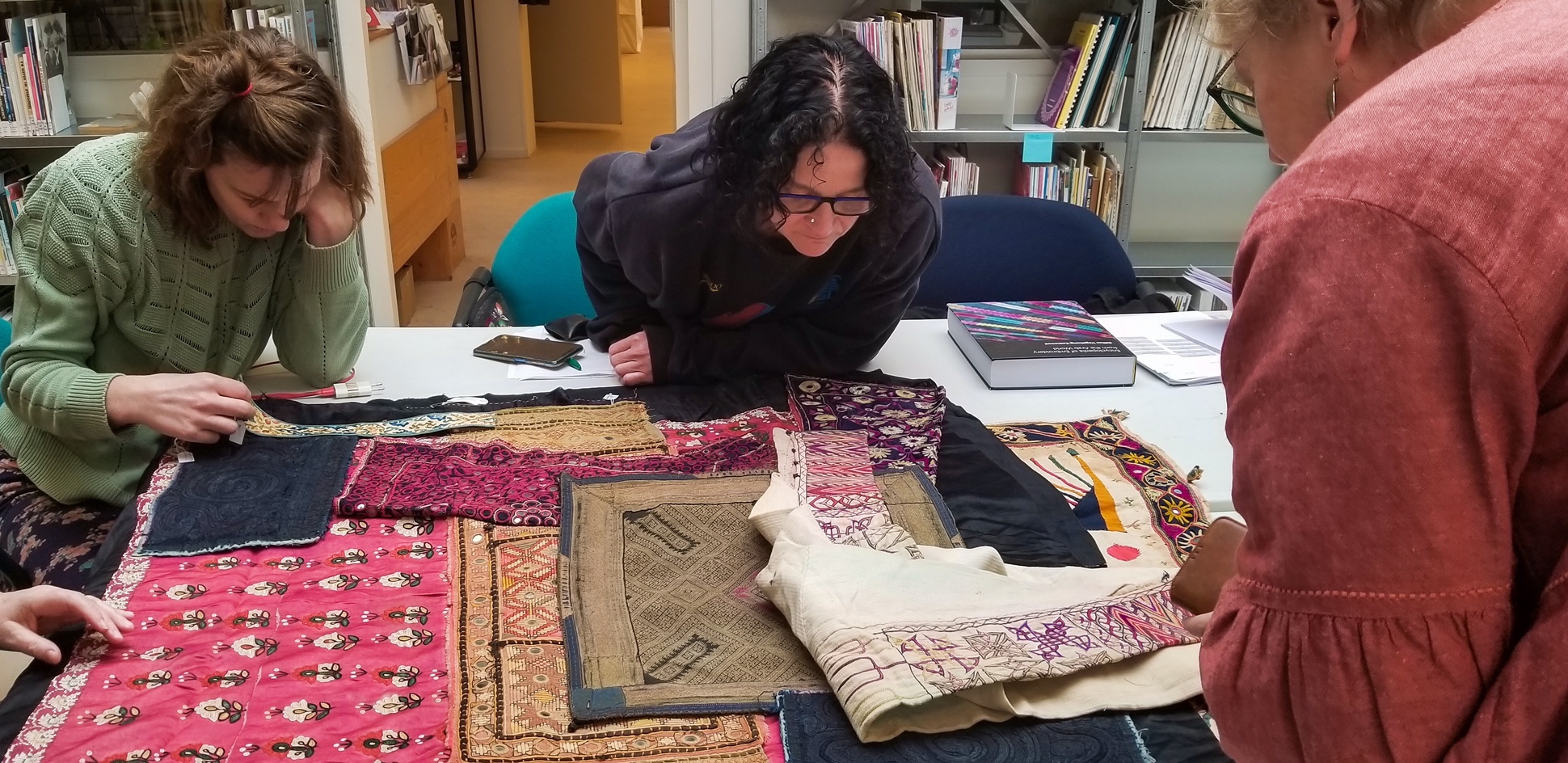 Participants of the February 2022 edition of the TRC Intensive Textile Course. Photograph by author.
Five others and I followed along with Dr. Gillian Vogelsang-Eastwood through every step of the production process of various textiles. First we looked at fibers, starting with the very basics of cotton, flax, wool, and silk. From there we expanded into a large world of fibers where we broke them down into categories to understand their origin, purpose, and qualities. Did you know it is possible to make a silky white fiber out of milk protein? I didn't before this course! Nor did I realize how many different types of sheep wool there are, or what the process for harvesting spider silk looks like. The best part was getting to sort through the bins of fibers Gillian had in order to start our sample book we eventually got to take home.



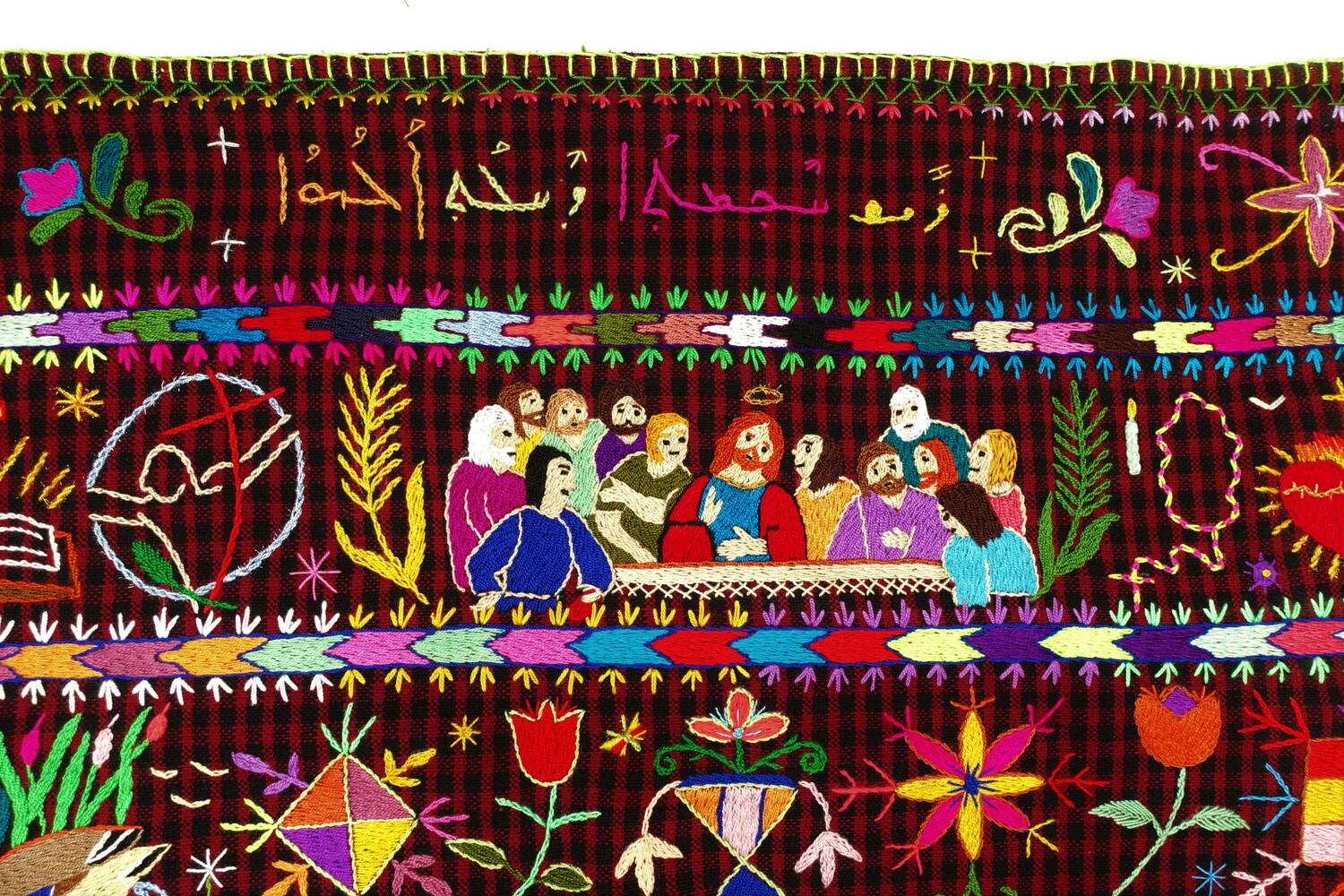 Detail of charuga, northern Iraq, 2021/2022. The Syriac text is embroidered at the top (TRC 2022.0914d).