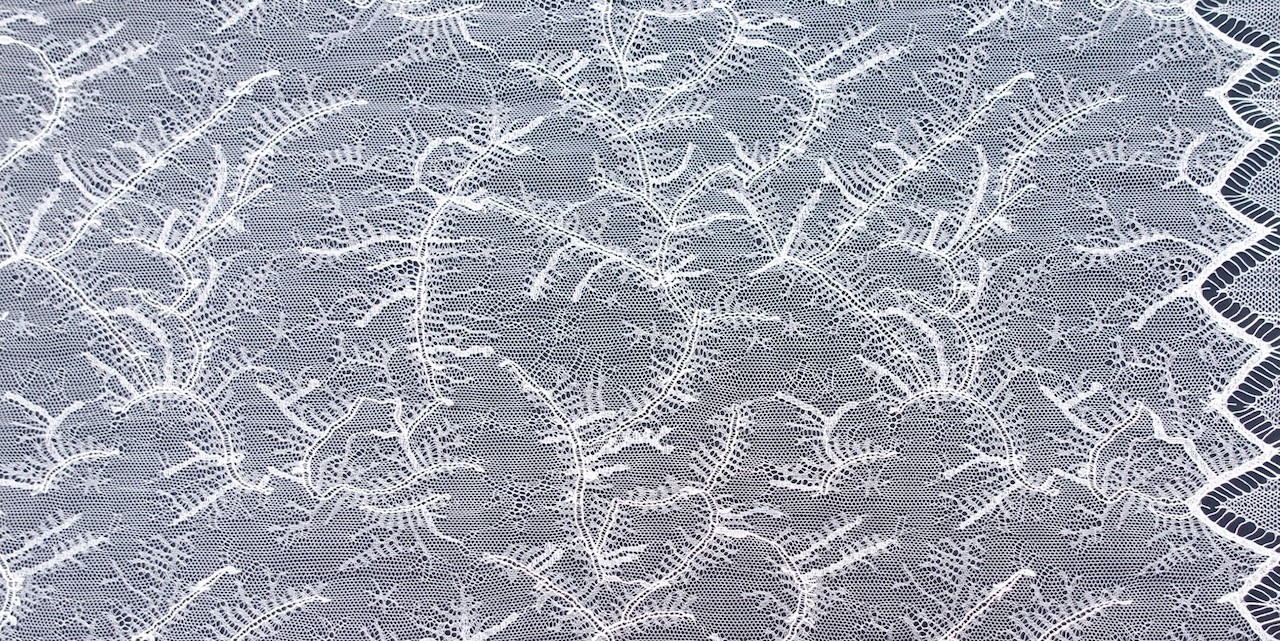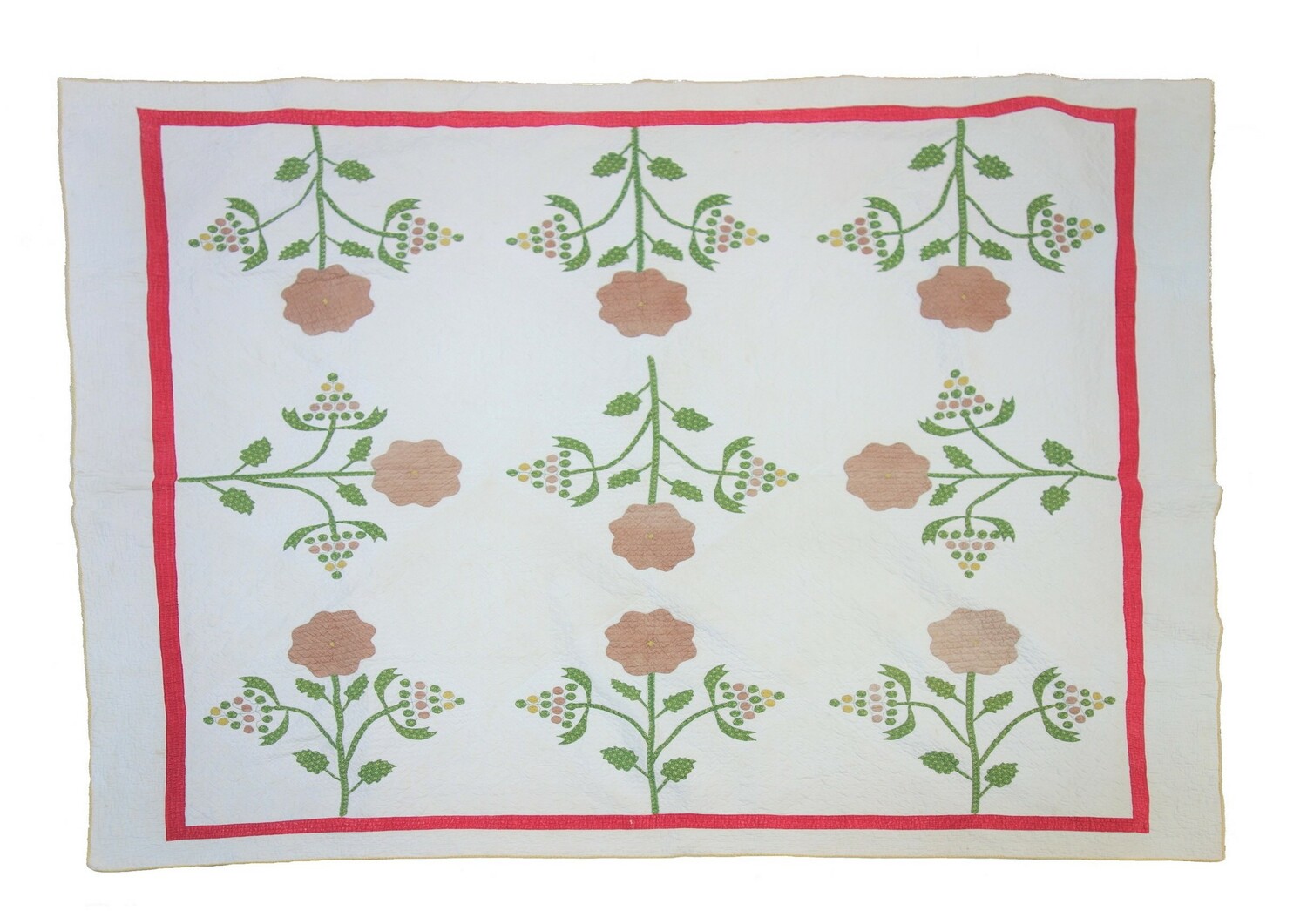
• F1
  • F4
  • F3
  • F2

by Erica Prus, Central St Martins, University of the Arts, London

After studying a fashion BA for three years (I’m now in my final year), I would have expected to have a firm understanding of textiles by now: how they’re made, the infinite technologies behind their creation and the complex histories behind each woven and non-woven cloth. I decided to take the Intensive Textile Course (November 2021) taught by Gillian Vogelsang-Eastwood at the Textile Research Centre (TRC) in Leiden and found out that my assumptions were completely wrong.

A medieval cotton textile produced in India for the Egyptian market. Qusair al-Qadim, Red Sea coast, Egypt, 14th century (TRC 2020.0239).A medieval cotton textile produced in India for the Egyptian market. Qusair al-Qadim, Red Sea coast, Egypt, 14th century (TRC 2020.0239).I’ve been interested in archaeology and material culture for as long as I can remember. As a child, I would spend weekends in my father’s archive in London, where he collected and stored vernacular objects from different times and places. It was like magic to my child self and that feeling of awe when I’m in an archive environment and able to connect quietly with tangible historical objects has never left me. I’m not sure when, but sometime during my degree in fashion I decided I wanted to turn this curiosity into something more defining, somehow combining it with my degree and my interest in textiles, which led me to the TRC.

The Intensive Textiles Course was five days long and each day we focused on the compositional technologies that make up textiles. The concept of the course was to learn a skill each day in order to not actually make but conceptually create a full garment to wear on the Saturday after the course had finished, which was a clever way of deconstructing the complex processes that it takes to create any textile. We were not actually producing garments but rather intimately studying what makes them, whilst constantly testing and questioning the function of textiles, and seeing them not only as parts of garments, but rather as a whole universe of woven anthropologies.

In May 2020 the TRC Leiden was contacted by the well-known New York publishing firm of Assouline, about a planned book on the various crafts of Saudi Arabia.

The book was being organised by the Ministry of Culture of Saudi Arabia and was intended as a present for visiting heads-of-state to the 15th meeting of the Group of Twenty (G20), 21-22 November 2020 (that was only one year ago, but it seems so much longer).

“Crafts of the Kingdom: Culture & Creativity in Saudi Arabia”, published by Assouline in New York (2020) on the occasion of the (online) G20-meeting in Saudi Arabia, in November 2020. The textile on the front of the cover is from the TRC Collection (TRC 2005.0127).“Crafts of the Kingdom: Culture & Creativity in Saudi Arabia”, published by Assouline in New York (2020) on the occasion of the (online) G20-meeting in Saudi Arabia, in November 2020. The textile on the front of the cover is from the TRC Collection (TRC 2005.0127).

Article in the Dutch women's magazine Libelle of 14 October 1948, with instructions for bobbin lace making (TRC 2021.0780).Article in the Dutch women's magazine Libelle of 14 October 1948, with instructions for bobbin lace making (TRC 2021.0780).A month ago we published a blog about 'Lace in Leiden'. I would now like to give an update.

At the end of October, the TRC welcomed a group of lace makers from the OIDFA (Organisation Internationale de la Dentelle au Fuseau et à l'Aiguille) at the TRC for a group visit, study day and introduction to the TRC, to what we are doing and how we can work together (see blog).

During the group discussion at the end of the day, the idea was floated of making a lace centre here in Leiden as part of the TRC's plans to build up a teaching collection for a wide variety of textile skills. This led to the concept of ‘Lace in Leiden’ – with the term lace being used in the widest sense of the word, namely various forms of embroidered laces on cloth, net and tulle, of bobbin lace, knitted and knotted lace, crochet, tatted and hairpin lace.

Thanks to Gon Hamburg, a lace teacher and member of OIDFA, bobbin lace lessons are currently being given at the TRC and many more lessons are scheduled for next year.

Article in the Dutch women's magazine Libelle about re-purposing a blanket, 1946.Article in the Dutch women's magazine Libelle about re-purposing a blanket, 1946.“A lovely jacket to wear indoors – as we can’t yet afford the luxury of turning up the heating other than when strictly necessary - but also nice to wear on the tennis court”. This is what the Dutch women’s magazine Libelle wrote in 1946 about the sewing pattern for a sport's jacket made from a leftover woollen blanket.

I recently came across this article in the TRC magazine collection. It struck me because it could easily have been a recent article about upcycling textiles. It is, however, an example of how magazines contributed to helping households to repurpose other textiles into garments in the aftermath of the Second World War.

Libelle is a - still running - Dutch women’s magazine. At the time sewing was a common subject in women’s lifestyle journals. They would feature sewing patterns, either included in the issue itself or as advertorials for patterns that could be ordered by mail.

During and after the Second World War textiles were scarce in the Netherlands, as it was in many other counties. This caused the government to implement a coupon system. Households were allowed to purchase a number of garments based on the size of the family. This meant everyone had to be as mindful as possible about buying and looking after their garments. The exhibition ‘Textile Tales from the Second World War’ contains many examples of re-purposed textiles.

Partially used sheet of textile rationing coupons for women, the Netherlands, 1946 (TRC 2020.3670).Partially used sheet of textile rationing coupons for women, the Netherlands, 1946 (TRC 2020.3670).

In the article Van oude deken tot sportjasje ('From old blanket to sports jacket'), Libelle provides a pattern and description for a simple sports jacket. The novelty of the jacket lies in the fact that the stripes of the blanket can be used as accents on the front and back panel of the bodice.

The sewing description is very short compared to contemporary sewing patterns. This is often the case in older sewing patterns: most readers had at least a basic understanding of sewing. For example: the writer provided guidelines about what stitches to use, but did not explain at what point the sleeves should be inserted or how the top of the sleeve is gathered (based on the picture of the finished garment the sleeve seems to be gathered).

Back of the sport's jacket, made from a blanket, Libelle 1946.Back of the sport's jacket, made from a blanket, Libelle 1946.Although it used to be common in the Netherlands to make clothing for yourself and your family, the interest in sewing has long been declining. The low price of clothing in stores is likely one of the reasons for this. In recent years, however, sewing seems to regain popularity. There is a large and expanding community of people making, mending and repurposing their own clothing. Their motives include doing it for hobby, to make something unique and to become more conscious and environmental-friendly.

On social media many people are sharing their self-made garments for which they re-use textiles, such as blankets, to make unique pieces of clothing. Whereas after the Second World War scarcity of textiles was the main motive to make and repair clothing, nowadays the abundance of textiles becomes a new reason to do so.

Joshua Verkerk, TRC volunteer, 26 November 2021

Last week the TRC Leiden launched a campaign to raise funds to bring two collections to Leiden. One of the collections is currently in Arizona, while the other is in Paris and together they include about 2000 textiles and garments. These mainly come from Central Europe and neighbouring countries, as well as many items from other parts of the world, including Japan, India, Africa and the Americas.

A selection of garments from Central Europe, now still in Paris, that have been donated to the TRC.A selection of garments from Central Europe, now still in Paris, that have been donated to the TRC.

For five full working days, an international team of participants with a particular interest and need for a deeper understanding of textiles, were gathered around Dr Vogelsang-Eastwood at the Textile Research Centre in Leiden, the Netherlands. The world-renowned expert in the analysis and history of all kinds of textiles meticulously introduced us to the characteristics of global textiles and textile making.

Finishing the course with a very special textile from the TRC collection (TRC 2014.0938): A 9-m long 'pronkrol' (long sampler) from the Netherlands, made in 1909 by Cato de Keijzer, aged 15.Finishing the course with a very special textile from the TRC collection (TRC 2014.0938): A 9-m long 'pronkrol' (long sampler) from the Netherlands, made in 1909 by Cato de Keijzer, aged 15.

Some months ago Gillian Vogelsang wrote about a donation of textiles collected by Joop and May Hobijn-Roth. Part of that donation was an interesting collection of embroidered bands and patches (for instance, TRC 2021.2233-2250).

Factory embroidered band, the Netherlands, 1920s-1930s (TRC 2021.2238).Factory embroidered band, the Netherlands, 1920s-1930s (TRC 2021.2238).

The last ten days have been very diverse and yet at the same time characteristic for the work and activities associated with the TRC Leiden.

The participants of the November 2021 TRC Intensive Textile Course, at the end of the five days! The second woman from the left is wearing a hand-woven Estonian skirt.The participants of the November 2021 TRC Intensive Textile Course, at the end of the five days! The second woman from the left is wearing a hand-woven Estonian skirt.

On Wednesday (10th November) I took part in an online conference about Textile Tokens that was organised by Polly Leonard of the journal Selvedge (London). A variety of talks on very different subjects were given, including one by Prof. John Styles about textile tokens that came with babies and young children associated with the Foundling Hospital, London in the 18th century. Willem and I visited the former Hospital some years ago; a fascinating, and at the same time very sad place.

Zoek in TRC website

Contact

Boerhaavelaan 6
2334 EN Leiden.
Tel. +31 (0)6 28830428  
office@trcleiden.org

facebook 2015 logo detail


instagram vernieuwt uiterlijk en logo


Bankrekening

NL39 INGB 0002 9823 59, t.a.v. Stichting Textile Research Centre.

Openingstijden

Het TRC is gesloten tot maandag 4 mei vanwege de verhuizing naar de Boerhaavelaan. We blijven bereikbaar via email (office@trcleiden.org) of telefoon: 06-28830428.

Financiële giften

Het TRC is afhankelijk van project-financiering en privé-donaties. Al ons werk wordt verricht door vrijwilligers. Ter ondersteuning van de vele activiteiten van het TRC vragen wij U daarom om financiële steun:

Giften kunt U overmaken op bankrekeningnummer (IBAN) NL39 INGB 000 298 2359, t.n.v. Stichting Textile Research Centre. BIC code is: INGBNL2A

U kunt ook, heel simpel, indien u een iDEAL app heeft, de iDEAL-knop hieronder gebruiken en door een bepaald bedrag in te vullen: 


Omdat het TRC officieel is erkend als een Algemeen Nut Beogende Instelling (ANBI), en daarbij ook nog als een Culturele Instelling, zijn particuliere giften voor 125% aftrekbaar van de belasting, en voor bedrijven zelfs voor 150%. Voor meer informatie, klik hier