• F1
  • F2
  • F4
  • F3

Het TRC heeft onlangs twee indrukwekkende en fascinerende collecties van Midden- en Zuidoost-Europese textilia, kleding en sieraden aangeboden gekregen, evenals stoffen uit andere delen van de wereld, waaronder Afghanistan, Centraal-Azië, Georgië, Japan, Palestina, Syrië en Amerika. De laatste omvat een groep prachtige Midden-Amerikaanse blouses (mola's), om nog maar te zwijgen van 36 traditionele Amerikaanse quilts!

Een klein deel van de verzameling van Midden- en Zuidoost-Europese kleding, aangeboden aan het TRC, nu nog in Parijs.Een klein deel van de verzameling van Midden- en Zuidoost-Europese kleding, aangeboden aan het TRC, nu nog in Parijs.

There was an international press conference this morning in Leiden to present the official programme of Leiden: European City of Science 2022. The press conference was organised to present and discuss this prestigious event and what it will involve for Leiden.

The main theme of Leiden: City of Science 2022 is Curiosity, with the idea that people will attend the many planned events from a feeling of interest and the desire to learn more. Many different groups and institutes are involved, ranging from Leiden University, scientific and technical institutes and companies, the many Leiden-based museums, as well as a range of cultural and social groups, And of course, the TRC is part of the programme!

There are many sub-themes. Every day, for all 365 days of 2022. Each day a different topic will be explored within the wider world of science, society, art, culture and artisanship. Some of these topics are obvious – atmosphere, stone, virus, drones, even beer. Others are less so, such as quiz, rendez-vous, and co-operation, but all the more stimulating for being not so obvious.

Detail of an early 20th century baptismal gown from Friesland, the Netherlands, with shadow work embroidery in herringbone stitch along the collar (TRC 2019.0028).Detail of an early 20th century baptismal gown from Friesland, the Netherlands, with shadow work embroidery in herringbone stitch along the collar (TRC 2019.0028).Shadow work is a form of needlework that is worked on the reverse side of the ground cloth and leaves a 'shadow' on the obverse, 'top' side. In order to obtain the best effect a sheer (transparent or semi-transparent) material is needed for the ground, such as chiffon or a fine batiste cotton.

There are three basic forms of this type of needlework, namely (A) embroidered, (B) appliqué and (C) padded shadow work. In addition, there are combined forms, such as shadow work embroidery with appliqué.

Woman's carpet coat, 1970s, Western (TRC 2019.2858).Woman's carpet coat, 1970s, Western (TRC 2019.2858).A little while ago I took part in an informal discussion here in the Netherlands about how different cultures over the centuries have been involved in the mending, repairing, re-using and re-cycling of garments (more recently known as up-cycling). This is a subject that is growing in popularity with the increasing attention being paid to sustainability in all its many forms and the growing awareness of the disastrous environmental impact of the so-called fast-fashion, mainly produced in China. The London based journal, Selvedge, for example, has recently had a complete edition (vol. 102) dedicated to the concept of mending.

During the discussion, someone mentioned a carpet coat that she had worn in the 1970s. The coat had been made by the donor’s mother from a carpet they had at home and no longer used. The coat is long gone, but still fondly remembered. And some time ago we happened to put an example of a Dutch carpet coat online (TRC 2019.2858). Like the coat in the discussion, this addition to the TRC collection dates to the 1970s and was home made.

On Saturday we were the venue for a meeting of OIDFA (Organisation Internationale de la Dentelle au Fuseau et à l'Aiguille) the Netherlands, an international lace making group. People came from various parts of the Netherlands, including Groningen, Schagen, Amsterdam and indeed the Leiden region.

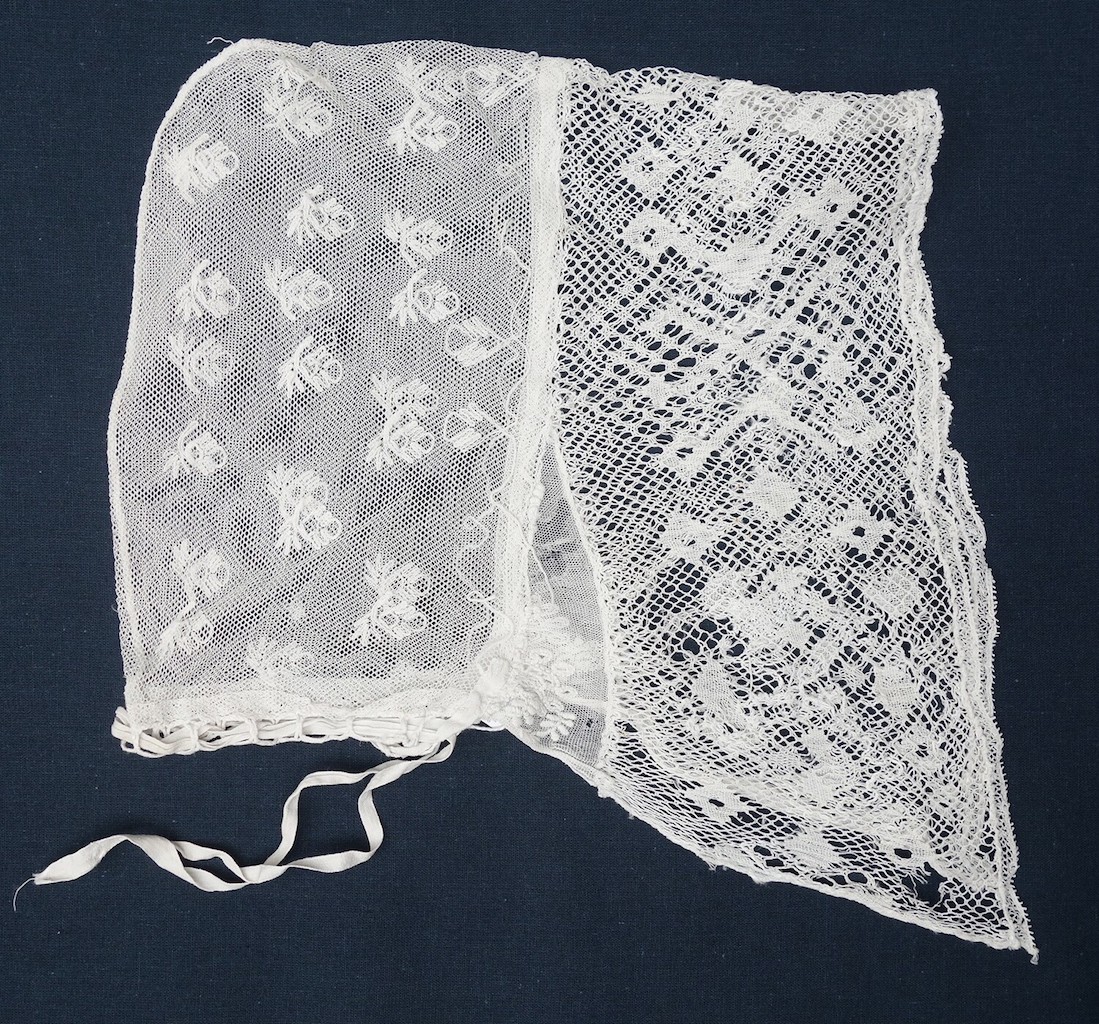
Early 20th century example of linen bobbin lace (TRC 2021.2961).Early 20th century example of linen bobbin lace (TRC 2021.2961).

Three generations of quilters at the TRC display of quilts in Rijswijk, the Netherlands, October 2021.Three generations of quilters at the TRC display of quilts in Rijswijk, the Netherlands, October 2021.Last weekend, the TRC had the opportunity to display some of its collection of feedsack quilts at the Patchwork & Quiltdays, which is held every year at De Broodfabriek in Rijswijk, close to The Hague – normally in April, but this year, as with many other events, it had to be rescheduled to October.

On Thursday evening we arrived, along with other exhibitors and quilt shops to set up our wall of seven quilts and a table of original feedsacks, along with a dress to show examples of other things that were made in the 1930s from such sacks. The TRC has published an online exhibition about these feedsacks and their quilts, but it was great to show the real thing!

The exhibitions were at the back of the hall and on Friday, at opening time, we already had one or two visitors who had rushed past the shops in order not to miss our quilts – we knew then we would be in for a busy time…

The quilts generated a lot of interest – many people had not heard of the feedsack phenomenon in 1930s America and were amazed at the stories and ingenuity involved. One lady recounted how she lived in a baker’s shop in the Netherlands during the war and also had items of clothing made from floursacks, but wished they could have been printed with pretty designs like those on display.

Collar and neck opening of a recently acquired men's jacket from Indonesia, late 20th century (TRC 2021.2940).Collar and neck opening of a recently acquired men's jacket from Indonesia, late 20th century (TRC 2021.2940).I have been asked about a typical day or week at the TRC. I am no longer sure I can give a relatively coherent reply! What I do know is that things just happen and often, what I expected to be a quiet day, changed quickly via an email, phone call or personal visit into yet another exciting experience. 

Over the next few days we are organising workshops on bobbin lace making and Palestinian embroidery – as part of TRC’s active policy of developing a varied programme of workshops and courses on a range of artisan textile skills.

On Saturday we are the venue for the annual meeting of OIDFA (Organisation Internationale de la Dentelle au Fuseau et à l'Aiguille) Nederland, an international lace making group. It will be interesting to hear about lace, how it is made and about the various lace collections in the Netherlands. And I suspect there will also be a discussion about some of the problems and challenges faced by lace makers in various communities.

During the last few days we have been offered a collection of Indonesian batiks and if all goes well, we are going to have a book presentation and pop-up exhibition at the TRC about these items in December 2021.

Wrestler's trousers from Iran (zurkhaneh), Tabriz, late 20th century, with buteh motifs (TRC 2000.0025). For a TRC YouTube film, click on the illustration.Wrestler's trousers from Iran (zurkhaneh), Tabriz, late 20th century, with buteh motifs (TRC 2000.0025). For a TRC YouTube film, click on the illustration.Since the start of the corona pandemic in early 2020 the TRC has tried to use a wide range of media to continue its work and tell people about the fascinating world of textiles. Apart from a long series of blogs, which are published on the TRC website and on the TRC Facebook pages, we are also using direct mailing via our Newsletter, and a TRC Instagram account.

A new medium we are exploring further is YouTube. We are going to publish a series of short films on various subjects, ranging from TRC exhibitions, brief talks about specific objects in the TRC collection, informal lectures on specific subjects etc., and all of this on a special YouTube channel.

Chinese tiger hat, 20th century (TRC 2021.20360). For a TRC YouTube film, click on the illustration.Chinese tiger hat, 20th century (TRC 2021.20360). For a TRC YouTube film, click on the illustration.We do so, not only to reach our audience, but also to help our volunteers, many of whom are students at Leiden University and elsewhere, to gain experience in as many aspects of curatorial work as possible. The TRC YouTube channel can be accessed here.

We uploaded three short films made by Augusta de Gunzbourg, who recently graduated from Leiden University (MA in Asian Studies), and who made a film introducing the past, present and future of the TRC; about the current paisley exhibition at the TRC, and about the recent donation to the TRC of a collection of Chinese tiger hats. Enjoy!

Zoek in TRC website

Contact

Boerhaavelaan 6
2334 EN Leiden.
Tel. +31 (0)6 28830428  
office@trcleiden.org

facebook 2015 logo detail


instagram vernieuwt uiterlijk en logo


Bankrekening

NL39 INGB 0002 9823 59, t.a.v. Stichting Textile Research Centre.

Openingstijden

Het TRC is gesloten tot maandag 4 mei vanwege de verhuizing naar de Boerhaavelaan. We blijven bereikbaar via email (office@trcleiden.org) of telefoon: 06-28830428.

Financiële giften

Het TRC is afhankelijk van project-financiering en privé-donaties. Al ons werk wordt verricht door vrijwilligers. Ter ondersteuning van de vele activiteiten van het TRC vragen wij U daarom om financiële steun:

Giften kunt U overmaken op bankrekeningnummer (IBAN) NL39 INGB 000 298 2359, t.n.v. Stichting Textile Research Centre. BIC code is: INGBNL2A

U kunt ook, heel simpel, indien u een iDEAL app heeft, de iDEAL-knop hieronder gebruiken en door een bepaald bedrag in te vullen: 


Omdat het TRC officieel is erkend als een Algemeen Nut Beogende Instelling (ANBI), en daarbij ook nog als een Culturele Instelling, zijn particuliere giften voor 125% aftrekbaar van de belasting, en voor bedrijven zelfs voor 150%. Voor meer informatie, klik hier