

Grandmother’s flower garden is a quilt pattern that has been popular in the USA from the early nineteenth century and especially during the 1920's and 1930's. It is based on blocks of many (sometimes a thousand or more) small hexagons, often in bright pastel, repeating colours. The patchwork quilts are hence also known as hexagon quilts, or one-patch quilts, as only one shape is used throughout the design.

The Queen Mother's Clothing Guild (QMNG) is a charitable institution closely related to various (female) members of the British royal family. It is responsible for making and distributing thousands of garments to those in need throughout Britain and elsewhere. From the beginning, these garments were either sewn or knitted, but because of its name it was decided to include an entry about it.
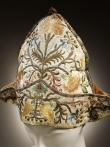
The so-called undress cap was an informal indoor cap for men, which was popular among wealthier, urban groups from the late seventeenth and through the eighteenth century. These caps were usually dome-shaped with a loosely fitting and decoratively shaped brim. The caps were particularly worn by men in informal circumstances to replace the more formal wigs that men used to wear.
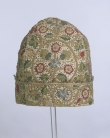
There were various forms of informal indoor caps for men, which were popular among wealthier, urban groups from the early seventeenth to the early twentieth centuries in Europe and elsewhere. The main forms were the large nightcaps, the undress caps and the smoking caps. Examples of all three forms were often embroidered.
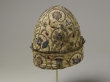
In the seventeenth century and later, there were various forms of informal indoor caps for men, which were popular among wealthier, urban groups in West Europe. One type that was popular in the seventeenth century was the so-called nightcap, and despite its name it was actually worn during the daytime.
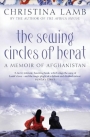
The Sewing Circles of Herat: a Memoir of Afghanistan is a non-fiction book published by award-winning British journalist, Christina Lamb (1966) in 2002. The book is about a group of Afghan women living in Herat, who meet together in secret to discuss books and literary criticism under the guise of learning to sew, while the city was controlled by the fundamentalist Taliban (1995-2001).
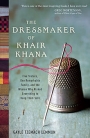
The Dressmaker of Khair Khana is a non-fiction book. It was published in March 2011 by American foreign policy analyst and journalist, Gayle Tzemach Lemmon (1973). It is the story of Kamila Sidiqi, still a teenager in 1996 when the Taliban take control of Kabul, where she is living. Sidiqi has just received a teaching certificate, but is soon banned under Taliban regulations, because she is a female, from further education or work.
Sammal is an obscure late nineteenth century term for a type of woollen cloth used for certain types of ecclesiastical embroidery in Northern Europe.
More...
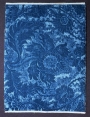
Stamped Utrecht velvet is a mid- to late nineteenth century term for a type of stamped velvet that was used to decorate furniture. It was often embroidered.
In the late nineteenth century, the term stamped plush was used to describe strips about 10-15 cm wide that were used to decorate the borders of curtains, upholstery and so forth.

Plush is an English term used to describe a shaggy, hairy kind of cloth that is used for clothing or upholstery. The pile or nap is softer and longer than that of velvet and resembles fur. There are accounts of plush dating back to at least the sixteenth century. Plush can be made of a variety of fibre types, including camel hair, cotton, goat hair, silk, wool, or some combination of these. In addition, the length of the pile can also vary.
Satin veiné is a late nineteenth century French term that was sometimes applied to the veins of leaves or the tendrils of flower sprays worked in satin stitch.