
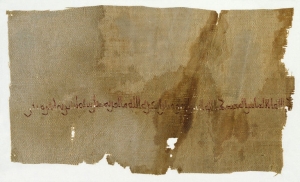
Tiraz is a term related to a medieval Middle Eastern textile that carries an inscription of some kind. The term tiraz probably derives from a Persian word for embroidery (compare tarazidan, 'to embroider'). The term tiraz is in particular used to indicate an embroidered, woven, painted, printed, or applied text on a piece of textile.
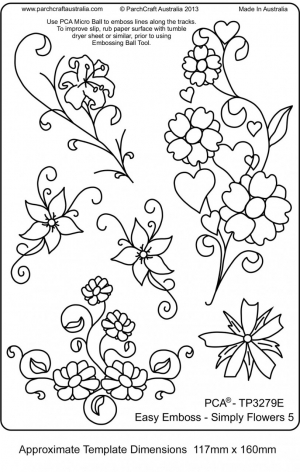
A template is a design or shape, such as a circle, hexagon, leaf, stylised flower or triangle, used to (re)create an accurate representation of a particular form on another material.
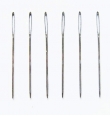
A tapestry needle is a form of needle with a long eye, which can take thick or multi-stranded embroidery threads. This type of needle is normally between 4-6 cm in length and slightly thicker at the eye end to prevent the embroidery thread from rubbing and wearing while in use.

Tællesyning is a form of counted thread embroidery from Denmark within the Hedebo tradition, whereby geometric patterns are created using satin stitch over a set number of threads in the ground material. The technique can be found all over the country. Tællesyning motifs include stars, triangles, as well as stylised animals, human figures and trees.
Syede Hedeboblonder (Hedebo edges) is a form of free-style embroidered lace in white, which developed in the Hedebo region and spread to the rest of Denmark in the early eighteenth century. It was primarily used as a decorative edging technique.
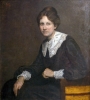
A portrait of Johanne Ryder (born Johanne Margrethe Rasmussen) shows some characteristic Danish embroidery. Johanne Ryder was a Danish woman who married in 1896 a medical doctor, Fr. Vilh. Ryder, in Copenhagen, Denmark.

The National Museum of American History (Washington, DC) covers many aspects of the United States of America’s history. The museum was set up in 1964 as the Museum of History and Technology and was given its current name in 1980. The mission of the Museum is the collection, conservation, study and interpretation of objects that reflect the experience of the American people.


Albert Frank Kendrick was a textile historian and keeper of the department of Textiles, Victoria and Albert Museum (V&A), London, England. He worked at the museum from 1897 until 1924. One of his responsibilities was the re-organization of the textile department while the museum was closed for renovation in the early 1900's (the museum was re-opened in 1909).
More...
Kabuli embroidery is associated with Kabul, the capital and largest city of Afghanistan.

Craftsmen in India and beyond produce various types of metal threads and metal thread embroidery. The general Indian term for goldwork embroidery is zari. The word zari is ultimately derived from the Persian word for gold, zar. The term zari can be used to describe various types of metal threads and ways that they are used as embroidered decoration.

Sir Norman Bishop Hartnell was a British fashion designer. He held a Royal Warrant as Dressmaker to Queen Elizabeth, the Queen Mother, from 1940, and to Queen Elizabeth II from 1957.