

Michaels Arts and Crafts is a popular retail chain throughout the USA and Canada, which was set up in 1973 and by 2014 had over one thousand outlets. Michaels Arts and Crafts sells inexpensive art and hobby supplies, including needles, cross stitch and other needlecraft kits, beading supplies, frames and embroidery threads.
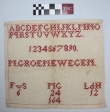
A marking sampler is a small piece of cloth with the alphabet, numbers (up to ten) and possibly the name of the girl who made the sampler. The alphabet and ciphers were regarded as enough for a person to show that she would be able to mark an object (such as a garment) with a name and number, even if she was semi-literate.
Maison Lesage, or Lesage et Cie, is a French embroidery house that specialises in embroidery and working with sequins. The Lesage family has been running an embroidery atelier (Maison) in Paris since 1860. In 1924 its director, Albert Lesage, bought another embroidery atelier, that of Albert Michonet in Paris, both of which he then built up, under the name Maison Lesage, to cater for French haute couture designers.
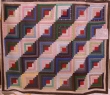
A log cabin quilt refers to a patchwork quilt made of blocks made up of narrow strips of fabrics (logs) formed around a central square. Blocks of the log cabin quilts often consist of light and dark coloured strips, repeated throughout the quilt. Materials could vary according to the quilter’s economic status, from silk and velvet to wool and cotton.

The Keiskamma Guernica in South Africa is a commemorative embroidery based on the famous painting by the Spanish artist, Pablo Picasso (1881-1973). The painting (1937) depicts the bombing of a village in Spain by German warplanes at the request of the Spanish Nationalist Government.

The Kensington stitch was originally called opus plumarium (‘plumage’ or ‘feather work’), due to its resemblance to the plumage of a bird. The Kensington stitch may be appropriately used for working out any floral design, no matter where the finished work is to be used. It is also sometimes used for working animals, human figures and landscape details, such as rocks or hills, where a massed effect of light and shade is desired.

Kantha (compare Skt: Kanthā for rag, patched garment) work is a form of free style embroidery from Northeast India and Bangladesh. It is traditionally made from layers of old cloth (usually cotton or silk), which are sewn together forming a quilt, generally using a running stitch(often called a kantha stitch) with a relatively coarse thread.
More...
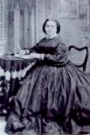
Kezia Elizabeth Hayter was matron on board the ship Rajah, which left Woolwich, England, on 5th April 1841. The Rajah is directly linked to a 1841 convict quilt called the Rajah quilt.

Susan Glaspell was an American author and playwright, most famous for A Jury of Her Peers, a play that Susan Glaspell later turned into a short story. In the play a woman has murdered her husband, but the (male) officials cannot find any evidence.

The Freedom Quilting Bee was a quilting co-operative of rural African-American women, founded in Rehobeth, Alabama (USA), in 1966. The co-operative had two major goals: to raise money for the civil rights movement and to improve living standards for the quilters’ families.

Fine Cell Work is a registered UK charity that teaches prisoners the crafts of embroidery, quilting, cross stitch embroidery and other fine needlework. The finished products are sold and the money goes to the prisoner. The charity works with about 450, mostly male prisoners per year. The charity was started in 1997 and now works in 29 prisons in England, Scotland and Wales.