
Art in Needlework, A Book about Embroidery was published in 1900 by the British decorative artist, Lewis Foreman Day (1845-1910), in collaboration with Mary Buckle (apparently because the author was afraid he would not be taken seriously as a man writing about a 'female' subject). Day was an important figure in the Arts and Crafts Movement.
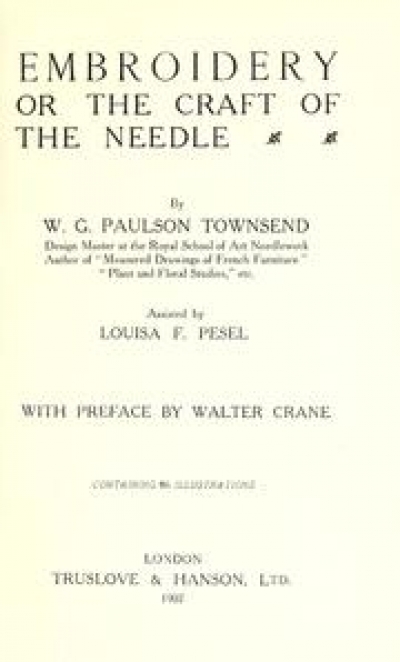
Embroidery or the Craft of the Needle was published in 1899 by W.G. Paulson Townsend (1868-1941), in cooperation with Louisa Pesel. The Preface was written by the artist, Walter Crane (1945-1915). Townsend was design master at the Royal School of (Art) Needlework.
Church Vestments: Their Origin, Use and Ornament was published in 1868 by Mrs Anastasia Dolby. The previous year she published Church Needlework: Ancient and Modern. Some years later, 1872, Mrs Dolby became one of the founders, together with Lady Victoria Welby, and the first director of the Kensington School of Needlework, later to become the Royal School of Needlework.

Church Needlework: Ancient and Modern was published in 1867 by Mrs Anastasia Dolby. The ensuing year she published Church Vestments: Their Origin, Use and Ornament. Some years later, in 1872, Mrs Dolby became one of the founders, together with Lady Victoria Welby, and the first director of the Kensington School of Needlework, later to become the Royal School of Needlework.

Church Needlework: with practical remarks on its arrangement and preparation was published in 1844 by Miss Frances Lambert, who in 1842 had published her Hand-Book of Needlework. In her book, she provides the reader with practical information as to where the decorations should be applied to the garments and other ecclesiastical textiles.

English Medieval Embroidery is a classic study from 1938 writtten by Mrs Archibald H. Christie. Its subtitle is: A Brief Survey of English Embroidery Dating from the Beginning of the Tenth Century Until the End of the Fourteenth : Together with a Descriptive Catalogue of the Surviving Examples : Illustrated with One Hundred and Sixty Plates and Numerous Drawings in the Text.
Needlework Through the Ages. A short survey of its development in decorative art with particular regard to its inspirational relationship with other methods of craftsmanship was published in 1928 by Mary Symonds (Mrs Guy Antrobus) and Louisa Preece. This book includes embroideries from parts of the world outside of Europe; embroidery is regarded, not only as aesthetic and historic, but also as ethnographic.
More...
The History of English Secular Embroidery was published in 1910 by the British writer on English furniture and design, Margaret A. Jourdain (1876-1951). In 1902 she had already published an updated version of Mrs. Bury Palliser's History of Lace, originally published in 1865.
The Handbook of Embroidery, not to be confused with a book with the same name published in 1842 by Miss Frances Lambert, came out in 1880. It was written by Miss Letitia Higgin, secretary of the School of Art Needlework, which later became the Royal School of Needlework. It was dedicated to the School's President, H.R.H. Princess Christian (1846-1923), of Schleswig-Holstein, Princess of Great Britain and Ireland.
Hand-Book of Needlework was published in 1842 and written by Miss Frances Lambert. The book contains brief historical introductions to the various technical details. The book, published simultaneously in England and America, was an immediate success and went through a series of reprints and revised editions, including various pirate editions in the USA, including The Ladies' Complete Guide to Needlework and Embroidery (1859).
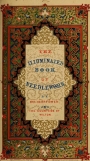
The Illuminated Book of Embroidery was first published in 1847 and was bound together with the previously published The Art of Needlework (1840; now called A History of Needlework), which was published by Mary Margaret Egerton, Countess of Wilton, but authored by Mrs. Elizabeth Stone.