

Inspirations, with the subtitle "The world's most beautiful needlework magazine", is an Australian magazine that was was published in 1993 and comes out four times per year.
Kyo-nui is the general Japanese term for the embroidery traditions in Kyoto. WV

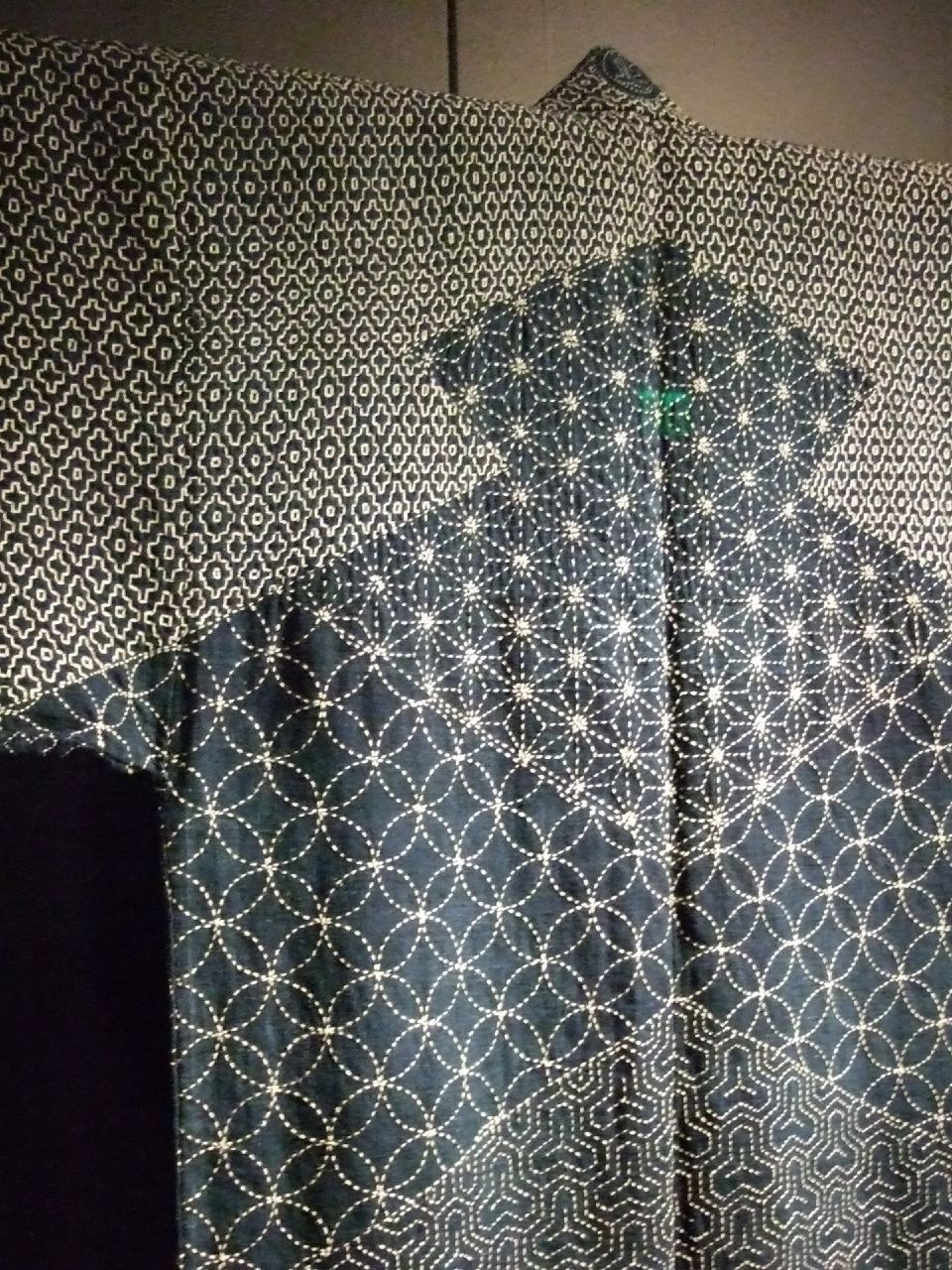
The Victoria and Albert Museum in London houses a woman's kimono from Japan that dates to the late nineteenth or early twentieth century. It derives from the Aomori Prefecture in the northern part of Honshu Island. The kimono measures 129 x 100 cm. It is made of indigo-dyed plain-weave ramie, with stitched cotton decoration in the kogin style.
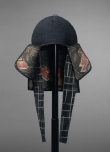
The Victoria and Albert Museum in London houses a special fireman's hood (haori) from Japan. It dates to the late nineteenth or early twentieth century. It is made of a quilted material decorated in the sashiko style. The thick cloth would be drenched with water before the fireman would try to extinguish the fire. The hood measures 31.5 x 42.5 cm.

Moyouzashi sashiko is a very simple form of sashiko, whereby use is made of straight or curved lines of running stitches and the stitches never cross each other. Garments are made by sewing together smaller pieces of cloth, using small running stitches. The stitches form straight or curved lines.

The Art Research Center (ARC) of Ritsumeikan University, Kyoto, Japan, was established in 1998. The ARC conducts historical and social research and analyses tangible and intangible cultural properties, such as visual and performing arts and craftsmanship, but also records, organises, preserves and disseminates the research outcomes.
More...

Omoto Shoten is possibly Japan’s only embroidery thread shop that still sells a wide range of pure silk threads, including fresh threads that still need to be dyed. The shop receives orders from all over the world. Silk threads are sold by the weight, using a scale.

Tokuda Shoten is a firm in Kyoto, Japan, that makes and sells tools and instruments for the embroidery industry. The traditional shop is filled with embroidery frames, needles, spools, and thread-twisting machines.

Iida Shinshichi III (1852-1909) was the director of the Takashimaya department store. He is credited with the promotion and export of Japanese embroidery, especially Kyoto embroidery, onto the world market.
The embroiderer Rishichi Tanaka from Kyoto, Japan, initiated embroidery trading and thereby stimulated and promoted the art of embroidery.