• F1
  • F3
  • F4
  • F2

For nearly two years we have been meaning to go, and then longing to go, and finally yesterday we were allowed to go, to the small town of Maaseik in northeastern Belgium, close to the border with the Netherlands. Why all this interest in a small Belgian town?

Maaseik is home to a group of Anglo-Saxon embroideries associated with the Frankish Saints Harlindis and Relindis. The two saints lived in a Benedictine establishment at the nearby village of Aldeneik, which was set up by their parents around AD 730.

The so-called Casula of Saints Harlindis and Relindis, before conservation and separation of the constituent parts. Early medieval. Photograph courtesy of the Musea Maaseik.The so-called Casula of Saints Harlindis and Relindis, before conservation and separation of the constituent parts. Early medieval. Photograph courtesy of the Musea Maaseik.

The sun is shining again here in Leiden and with it came some very good news! For quite a few years we have been working together with Bloomsbury Publishers, London, on the World Encyclopedia of Embroidery series (see blog). The series is changing the way in which hand embroidery around the globe is being perceived and studied, academically and for the sheer love of the subject.

Chantilly lace skirt flounce (c. 1870s, France; TRC 2021.1903).Chantilly lace skirt flounce (c. 1870s, France; TRC 2021.1903).We have recently been cataloguing a collection of lace given by Styske Wijnsma that includes a range of handmade and machine made lace, with some lovely lace collars. Among the bobbin lace examples there are several pieces of black Chantilly lace from the latter half of the 19th century. Two pieces, in particular, caught my eye, one is a long, deep length that was probably used as a skirt flounce (TRC 2021.1903), the other piece is a lappet (TRC 2021.1902). The latter raises two basic questions, what is Chantilly lace and what is a lappet?

Detail of straw and leather hat from western Africa (TRC 2021.1962).Detail of straw and leather hat from western Africa (TRC 2021.1962).Thanks to the help of Dr. Annette Schmidt, curator for sub-Saharan Africa at the Volkenkunde Museum, Leiden, we have some more details about the straw/grass hat with leather details (TRC 2021.1962) mentioned in an earlier TRC Blog.

This type of hat has been worn since at least the mid-19th century by nomads and cattle herders living in West Africa. It is particularly associated with the Fulani, Hausa, as well as the Zerma. Examples of this type of headwear, with variations such as the height of the crown and decoration, can be found in Burkina Faso, Cameroon, Ivory Coast, Ghana, Mali, Niger, Nigeria, as well as Togo.

Straw and leather hat from Mali, western Africa. Courtesy collection of the Nationaal Museum van Wereldculturen (RV-739-1525).Straw and leather hat from Mali, western Africa. Courtesy collection of the Nationaal Museum van Wereldculturen (RV-739-1525).The Nationaal Museum van Wereldculturen has several examples of this form of headwear, some of which date from before 1889 (such as RV-739-1521, RV-739-1523 and, probably of more recent date, RV-739-1525). I have just spotted examples in the British Museum Collection as well.

Such headwear is also mentioned in Norma H. Wolff’s article ‘Hausa in Nigeria and diaspora’, in J. B. Eicher and D. H. Ross (2010), Berg Encyclopedia of World Dress and Fashion Vol 1, Africa, Oxford: Berg Publishers, p.306.

However, we still have not been able to identify the leather form of headwear that was also mentioned in the previous blog (TRC 2021.1963), and once again any help would be greatly appreciated.

Gillian Vogelsang, Director TRC, 19 June 2021.

Hand knitted cap from Peru, late-20th century (TRC 2021.1917).Hand knitted cap from Peru, late-20th century (TRC 2021.1917).We have just had a donation of textiles, garments and headwear from the Hobijn family here in Leiden. The items were collected over many years by Hilde van der Linden's parents-in-law, Joop en May Hobijn-Roth, who were passionate about textiles. The items come from many parts of the world, literally from Indonesia to Guatemala via China, India and Africa and include a wide variety of techniques.

The first group, in fact, was catalogued this morning (Thursday) and include fourteen pairs of knitted socks that show a variety of heel and toe techniques, as well as patterns and colour combinations (TRC 2021.1936a-b – TRC 2021.1949a-b). One of them, TRC 2021.1940a-b, has a delicate lacey design plus toes with a trellis work enclosing rosettes.

Haute Bordure: Catalogue to the exhibition with the same titel in the Fries Museum, Leeuwarden, the Netherlands (2021).Haute Bordure: Catalogue to the exhibition with the same titel in the Fries Museum, Leeuwarden, the Netherlands (2021).Willem and I have just returned from another visit to Friesland, both to see an embroidery exhibition at the Fries Museum, Leeuwarden, and to hear further details about Akke Scheepsma from the village of Schettens, who stitched a sampler in 1852. We were also privileged to go to the village of Pingjum in order to see an early Mennonite chapel that is ‘hidden’ behind a small private house (more below on all these subjects).

For over a year we have been unable to go anywhere, let alone see exhibitions, so it was with great relief when on Friday we went to the Frisian capital of Leeuwarden to see Haute Bordure, about 400 years of hand embroidery in the Netherlands, and especially that associated with Friesland. We were shown around by Eveline Holsappel, the curator of the exhibition.

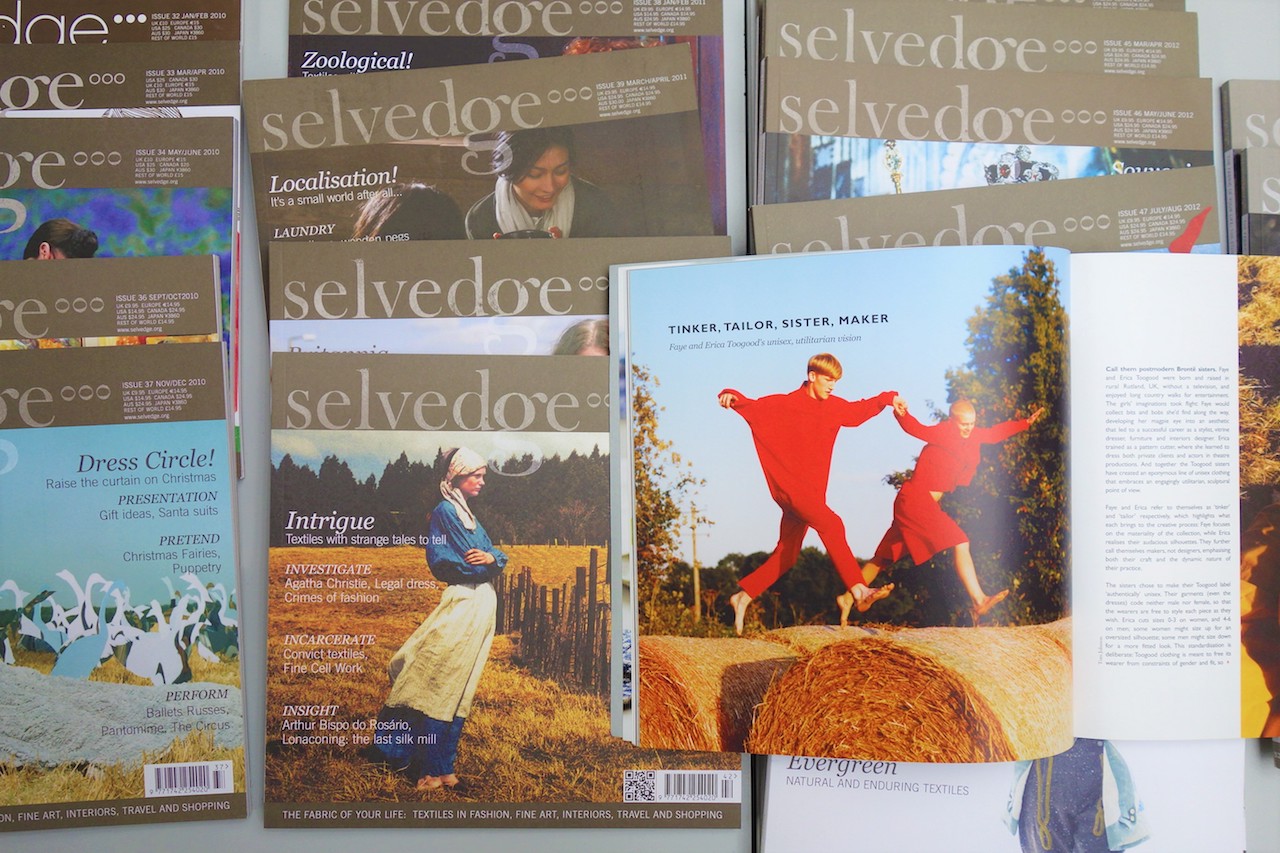
It is a lovely exhibition that is well-worth seeing. It shuts on the 18th July, so you have to be quick. You need to book in advance and we were told that many tickets are already booked. The exhibition includes examples of embroidery of various types that date from the early seventeenth century to ‘yesterday’, including regional, fashionable and royal forms for men and women. I have been asked to write a review of the exhibition for Selvedge, the London based textile journal. As soon as it is published I will let you know.

We officially opened on Monday (5th June) and straight away at 10.00 there were two visitors to see the paisley exhibition, and the promise of more visitors for the exhibition over the next few weeks! Life really is returning to the TRC premises!

Quilting is not limited to bedspreads. Print published in the UK in 1885, showing quilted armour for men and horses, from Abyssinia (Ethiopia) (TRC 2021.0284).Quilting is not limited to bedspreads. Print published in the UK in 1885, showing quilted armour for men and horses, from Abyssinia (Ethiopia) (TRC 2021.0284).

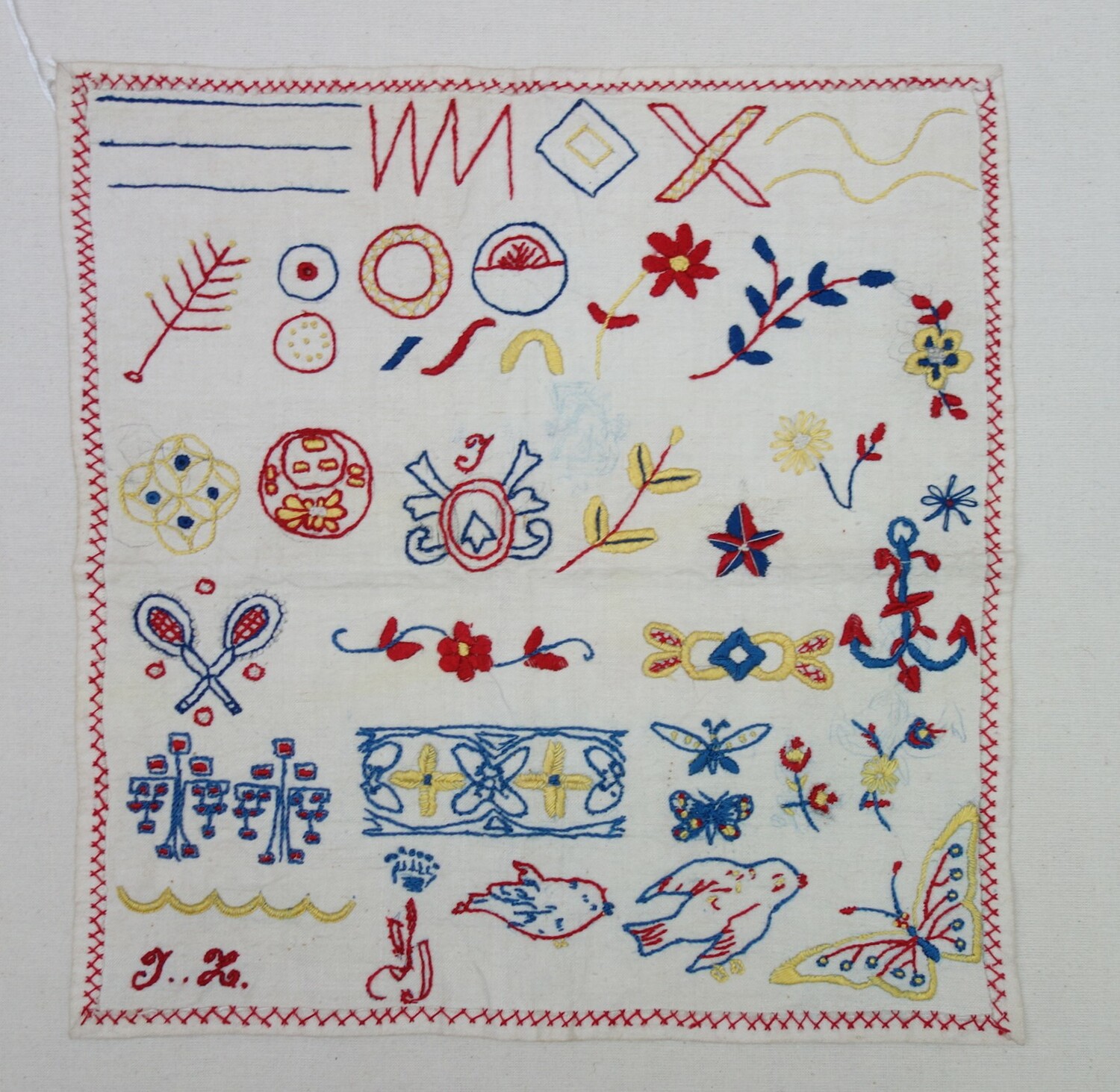
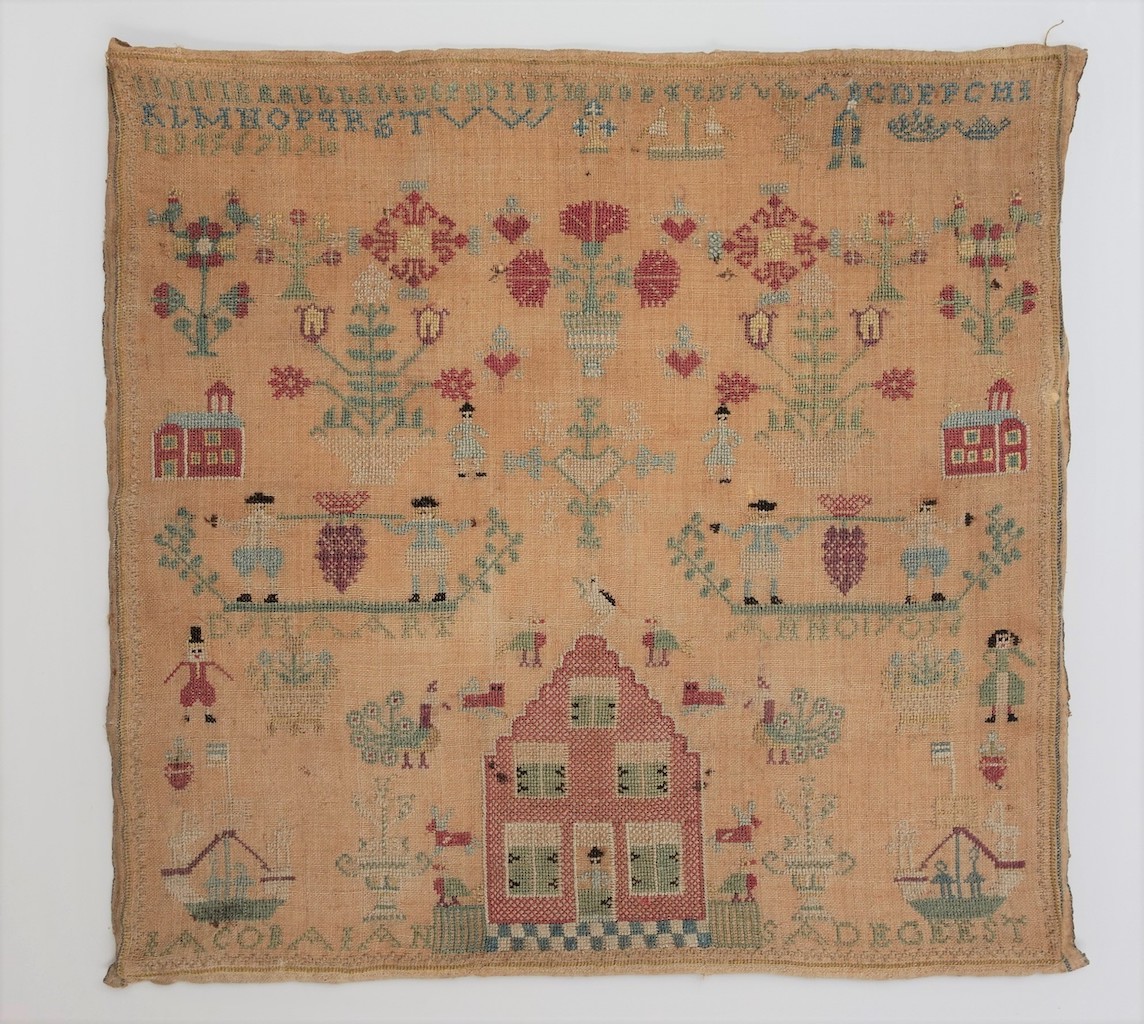
Sampler made by Akke Scheepsma, aged 12 or 13, Schettens, Friesland, in 1852 (TRC 2021.1805).Sampler made by Akke Scheepsma, aged 12 or 13, Schettens, Friesland, in 1852 (TRC 2021.1805).A few weeks ago the TRC Leiden welcomed 25 samplers of various types, from Belgium, Germany and the Netherlands, which date from the mid-19th to the early 20th century. One of the pieces caught our eye, namely TRC 2021.1805. It has a (partly faded) black ground. The colour black for the ground is generally associated with Friesland in the north of the Netherlands. The ground is made of linen and is embroidered with woollen yarns in cross stitch and double running stitch (Holbein stitch).

The central design is a stylised tree of life in the form of a decorative V-shape with a pair of small, stylised birds. The tree is surrounded by vases of flowers. Along the upper edge of the sampler there is the name AKKE S SCHEEEPSMA and the date of 1852. Akke, it should be added, is a traditional Frisian name for a girl or woman.

Who was she? A Google search led us to a woman with the same name who in the nineteenth century lived in the village of Schettens, Friesland. With the help of a local historian, André Buwalda, we subsequenly learnt more about the girl. She was known as Akke Simons Scheepsma. She was born in the village of Schettens, some 30 km southwest of Leeuwarden, on 1st October 1839 to a well-established farming family. Her father was Symon Klazes Scheepsma (1811-1857) and her mother was Gerbrig Wybrens' Scheepsma-Douwsma (1805-1886). Her parents married in 1835. They had six children, Akke being the third.

Zoek in TRC website

Contact

Boerhaavelaan 6
2334 EN Leiden.
Tel. +31 (0)6 28830428  
office@trcleiden.org

facebook 2015 logo detail


instagram vernieuwt uiterlijk en logo


Bankrekening

NL39 INGB 0002 9823 59, t.a.v. Stichting Textile Research Centre.

Openingstijden

Het TRC is gesloten tot maandag 4 mei vanwege de verhuizing naar de Boerhaavelaan. We blijven bereikbaar via email (office@trcleiden.org) of telefoon: 06-28830428.

Financiële giften

Het TRC is afhankelijk van project-financiering en privé-donaties. Al ons werk wordt verricht door vrijwilligers. Ter ondersteuning van de vele activiteiten van het TRC vragen wij U daarom om financiële steun:

Giften kunt U overmaken op bankrekeningnummer (IBAN) NL39 INGB 000 298 2359, t.n.v. Stichting Textile Research Centre. BIC code is: INGBNL2A

U kunt ook, heel simpel, indien u een iDEAL app heeft, de iDEAL-knop hieronder gebruiken en door een bepaald bedrag in te vullen: 


Omdat het TRC officieel is erkend als een Algemeen Nut Beogende Instelling (ANBI), en daarbij ook nog als een Culturele Instelling, zijn particuliere giften voor 125% aftrekbaar van de belasting, en voor bedrijven zelfs voor 150%. Voor meer informatie, klik hier