• F4
  • F2
  • F3
  • F1

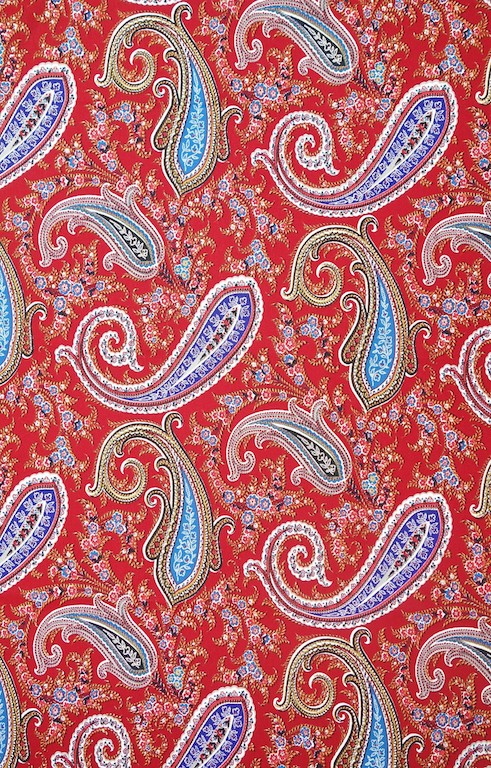
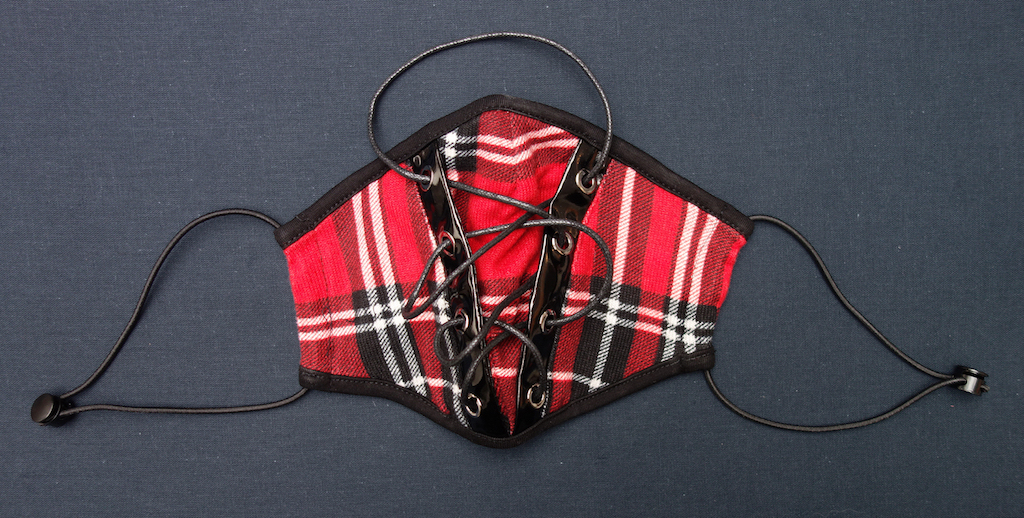
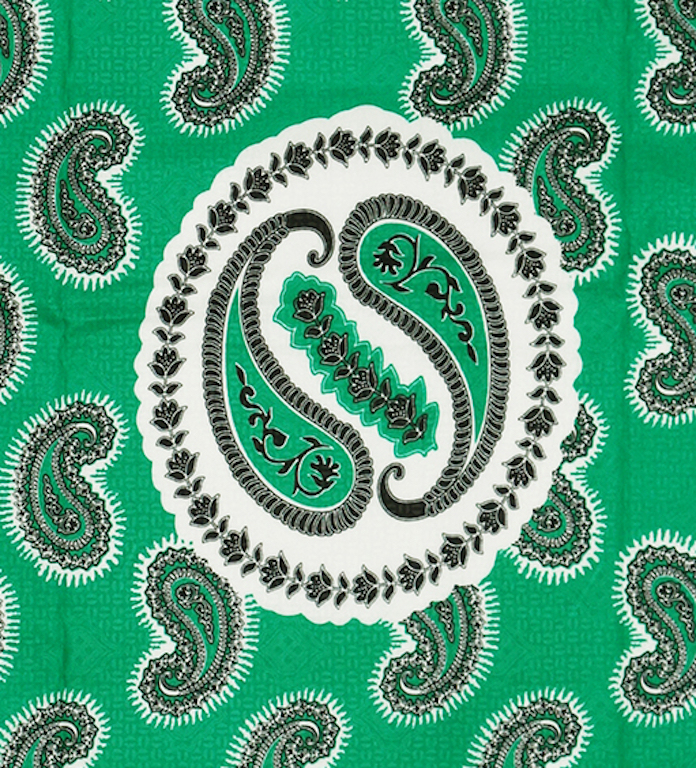
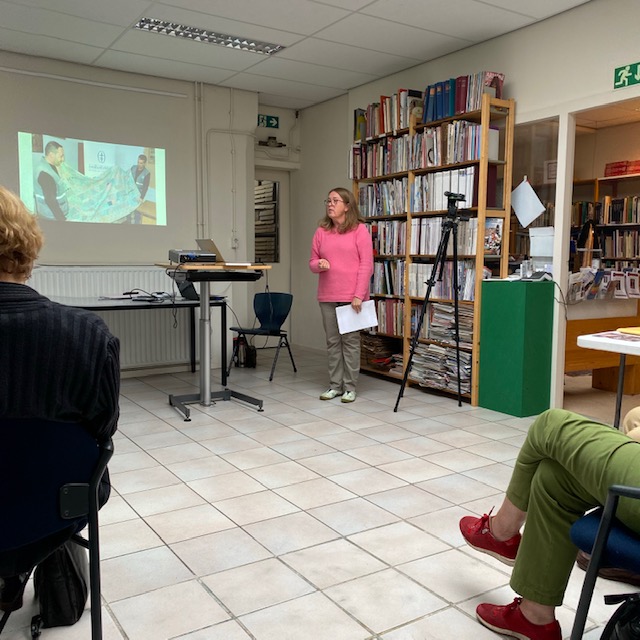
Collecting face masks for the TRC COVID-19 collection at the TRC in Leiden has opened up a fascinating world for me. The variety in face masks is astonishing—almost as astonishing as the stories behind the masks. Here are just a few of those stories.

Corona face  mask from Kenya, with Zebra design, 2020 (TRC 2020.3759).Corona face mask from Kenya, with Zebra design, 2020 (TRC 2020.3759).

Various people have seen the TRC’s latest exhibition, Textile Tales from the Second World War, and one of the comments we hear from elderly visitors is that they had as a child or at home a necklace, bracelet, ring or even cufflinks made with Dutch silver coins, especially the 10 cents (dubbeltje), 25 cents (kwartje), guilder (gulden) and the rijksdaalder (2.5 guilders).

What surprises people is there there are two related stories about these items. The first story concerns the coins that are dated from 1941 or earlier. The second is based on the coins from 1941 to 1944.

Bracelet made from Dutch silver 10 cent coins minted in Utrecht, 1941, and during the war made into a patriotic bracelet (TRC 2020.2714).Bracelet made from Dutch silver 10 cent coins minted in Utrecht, 1941, and during the war made into a patriotic bracelet (TRC 2020.2714).

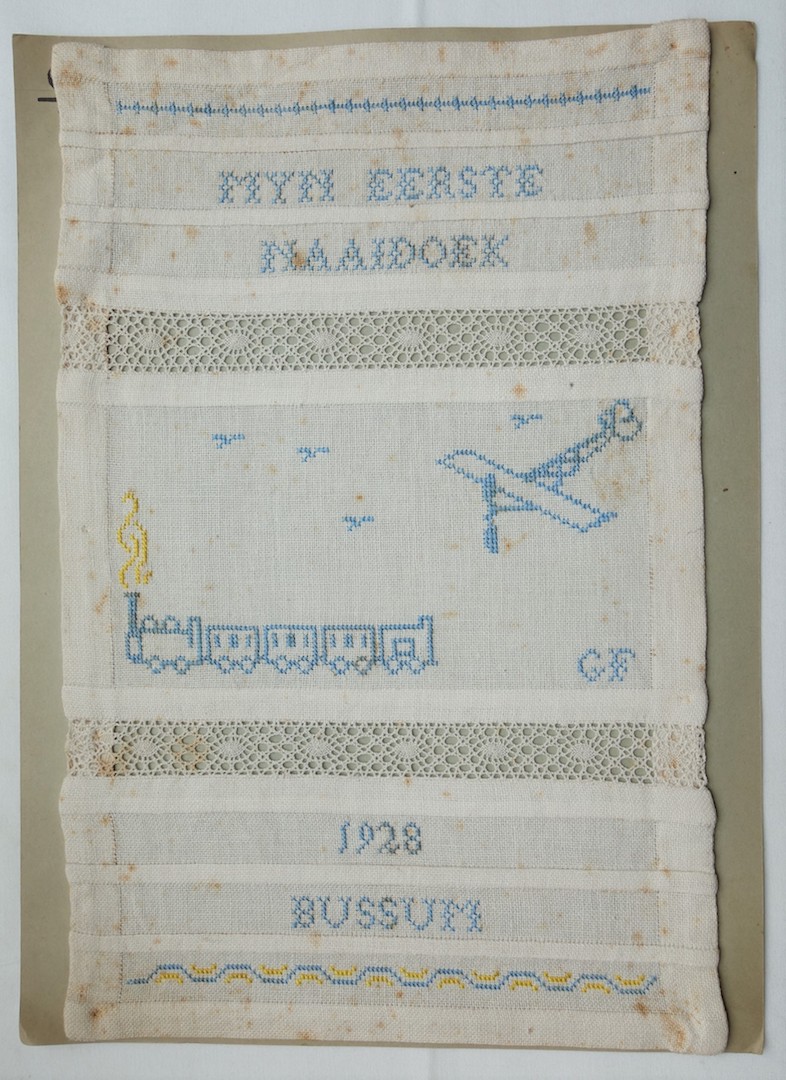
Cover of the booklet Merklappen. Oud en Nieuw, by Ms H. Bottema (1942).Cover of the booklet Merklappen. Oud en Nieuw, by Ms H. Bottema (1942).Some weeks ago we published a blog about an intriguing booklet, published in 1942, called  Merklappen Oud en Nieuw ('Samplers. Old and New') by Hillegonda Bottema (1913-1968; Kampen: J.H. Kok). It contains a series of embroidery charts, originating from various older sources. Some people having read the article have asked whether they could have a copy of the booklet, or at least have a look at it.  A copy of it is in the TRC Library, and we are pleased to attach a PDF-file of a scanned version for anyone who is interested. Please bear in mind that some of the pages are difficult to scan and read because of the original colours.

Just click here for the PDF-file. Enjoy!

Gillian Vogelsang, 19 September 2020.

Corner of a linen tablecloth with a border design of three flag, with the Union Jack in the middle. Early 20th century (TRC 2020.3744).Corner of a linen tablecloth with a border design of three flag, with the Union Jack in the middle. Early 20th century (TRC 2020.3744).We have just published a blog (18 September 2020) about the donation by Ann Cable of various textiles that used to belong to her mother, Constance Whitehead. In particular, we described one item, a woollen wall hanging with a design by the famous Dutch artist, Maurits Escher. In this blog attention will be focussed on a white tablecloth (TRC 2020.3744) with a deep, crochet border.

Initially Ann was not going to donate the tablecloth, which she remembers as always being at her mother’s home and which was, perhaps, a little too ‘ordinary’. But we had said to bring everything and to decide together what the TRC would be interested in, so she brought the tablecloth anyway. We are really glad that she did, as this cloth may reflect a dramatic episode in European history, and is also linked to the TRC’s current exhibition about textiles and war.

Constance Whitehead, 1921-2020.Constance Whitehead, 1921-2020.The TRC has just been given a donation of various textiles that belonged to Mrs. Constance Whitehead (1921-2020), who sadly died not long ago. The following account of Mrs. Whitehead and her love of textiles was written by her daughter, Ann Cable, who now lives in Leiden.

"My mother was widowed in 1945 when her husband's Mosquito plane was shot down over Germany. Her second husband, George Whitehead, was a diplomat, which led to a peripatetic life. She lived in Australia, India and Canada and travelled widely, particularly with her daughters, to places such as Pakistan and Syria.

Constance Whitehead was a remarkable needlewoman. As children our dresses were beautifully hand smocked. In Kolkata she knitted baby jackets for Mother Teresa’s clinic where she worked as a volunteer. In Canada she started making patchwork quilts. She would pore over fabrics looking to see how she could combine different textures and colours.

Whenever she travelled she would pick up different examples of the local textiles - on one occasion, while our bus was at a traffic light in Syria, she got me to haggle out of the window for a damask tablecloth which I still have. As she grew older she downsized much of the beautiful china and glass she had had in her diplomatic life, but she kept all her textiles and had many of them on display so she could be 'surrounded by beautiful things' as she said."

All of the pieces given to the TRC are currently being catalogued and it has been decided that several items from the donation will be the subject of various blogs over the next few weeks. The first of these blogs concerns a woollen wall hanging.

Not long ago (6th September 2020) we published a blog by Charles Knobler about a tapestry weaver called Michael Rohde from southern California, and in particular one of his tapestries that featured the Dalai Llama. While preparing the blog I thought about how few tapestry woven items we actually had in the TRC Collection.

Wall hanging, mid-20th century. The design is based on a print by the Dutch artist, Maurits Cornelis Escher (1898-1972). The print is called "Reptiles" and was printed in 1943 (TRC 2020.3742).Wall hanging, mid-20th century. The design is based on a print by the Dutch artist, Maurits Cornelis Escher (1898-1972). The print is called "Reptiles" and was printed in 1943 (TRC 2020.3742).By coincidence, among the objects from Mrs Whitehead there was a tapestry panel based on an etching by the famous Dutch graphic artist, Maurits Cornelis Escher (1898-1972). In 1922 Escher visited Spain, and in particular went to the amazing Moorish palace known as the Alhambra in Granada (southern Spain).

The palace has numerous walls covered in intricate and interlocking tiles. He became intrigued by these tiles and this led to a series of designs of interlocking, repetitive patterns. He revisited the Alhambra in 1936 and continued his study of the tiles and their mathematical principles that come under the heading of tessellation. One of the first examples of Esher’s tessellation was a watercolour called ‘Study of Regular Division of the Plane with Reptiles' (1939). This was used for a lithograph called 'Reptiles' that was published in 1943.

It is this design that was used for the tapestry panel now in the TRC Collection (TRC 2020.3742). It has white cotton warps and woollen wefts in dark brown, dark red, brown, grey and white yarns, and is woven using a tapestry technique.

Unfortunately, there are no details concerning when (it must have been post 1943), where or indeed who wove the panel, but it is clear that it is very precisely woven and shows considerable skill in how the various colours and shapes were worked to re-create Escher’s intricate tessellated design.

Ann Cable and Gillian Vogelsang, 18th September 2020

Feestrok made by Ms Cornelia van Ingen Schenau, dated 1947 (TRC 2020.3753).Feestrok made by Ms Cornelia van Ingen Schenau, dated 1947 (TRC 2020.3753).Yesterday was a day of hard work, seeing friends, the opening of the new exhibition (Textile Tales from the Second World War) and, to top it all, an unexpected parcel with a wonderful surprise. When the postman gave me three packages I was initially not so intrigued, as I had been expecting some items for the next exhibition about the Paisley motif.

So I was a little confused, after opening one of the parcels,  when I saw (literally) a patchwork of textile scraps. I was not expecting a quilt top! Then it dawned on me, it was a feestrok! These are unique Dutch items from the late 1940’s and were made from a colourful patchwork of cloth pieces. They were made at home to celebrate the liberation of the country after the Second World War. Over the last few years we have published several TRC blogs about these garments.

Over the last few months we have been working very hard on organising, preparing and setting up the TRC’s latest exhibtion, ‘Textile Tales from the Second World War’.

We had originally planned an official opening with a special guest, a large audience, a lecture, buffet meal, etc. Instead, and directly thanks to the covid-19 virus, we had to change our plans, but we still wanted to mark the event, so this afternoon there was a ‘non-opening opening’!

Because of social distancing and the general limit on the number of people who could be present in the TRC Gallery, we decided to celebrate the opening of the exhibition with representatives from the Mennonite community, the TRC Board and community, and those who have helped put up the exhibition. Seven people were at the opening and most had the chance to say a few words about the history of the exhibition, to make some general comments, as well as to provide more personal accounts about certain objects.

Cover of the booklet 'Merklappen. Oud en Nieuw' ("Samplers. Old and New") by Hillegonda Bottema (Kampen, 1942).Cover of the booklet 'Merklappen. Oud en Nieuw' ("Samplers. Old and New") by Hillegonda Bottema (Kampen, 1942).The new TRC exhibition, Textile Tales from the Second World War, opens next week (16th September 2020). The exhibition contains many objects, almost all of them with a story behind them, some of which are sad and moving, while others are deep, funny and/or intriguing.

Over the next few months we are going to publish a series of blogs about one or more items from the exhibition. These will be written by various people and cover a wide range of subjects.

Zoek in TRC website

Contact

Boerhaavelaan 6
2334 EN Leiden.
Tel. +31 (0)6 28830428  
office@trcleiden.org

facebook 2015 logo detail


instagram vernieuwt uiterlijk en logo


Bankrekening

NL39 INGB 0002 9823 59, t.a.v. Stichting Textile Research Centre.

Openingstijden

Het TRC is gesloten tot maandag 4 mei vanwege de verhuizing naar de Boerhaavelaan. We blijven bereikbaar via email (office@trcleiden.org) of telefoon: 06-28830428.

Financiële giften

Het TRC is afhankelijk van project-financiering en privé-donaties. Al ons werk wordt verricht door vrijwilligers. Ter ondersteuning van de vele activiteiten van het TRC vragen wij U daarom om financiële steun:

Giften kunt U overmaken op bankrekeningnummer (IBAN) NL39 INGB 000 298 2359, t.n.v. Stichting Textile Research Centre. BIC code is: INGBNL2A

U kunt ook, heel simpel, indien u een iDEAL app heeft, de iDEAL-knop hieronder gebruiken en door een bepaald bedrag in te vullen: 


Omdat het TRC officieel is erkend als een Algemeen Nut Beogende Instelling (ANBI), en daarbij ook nog als een Culturele Instelling, zijn particuliere giften voor 125% aftrekbaar van de belasting, en voor bedrijven zelfs voor 150%. Voor meer informatie, klik hier