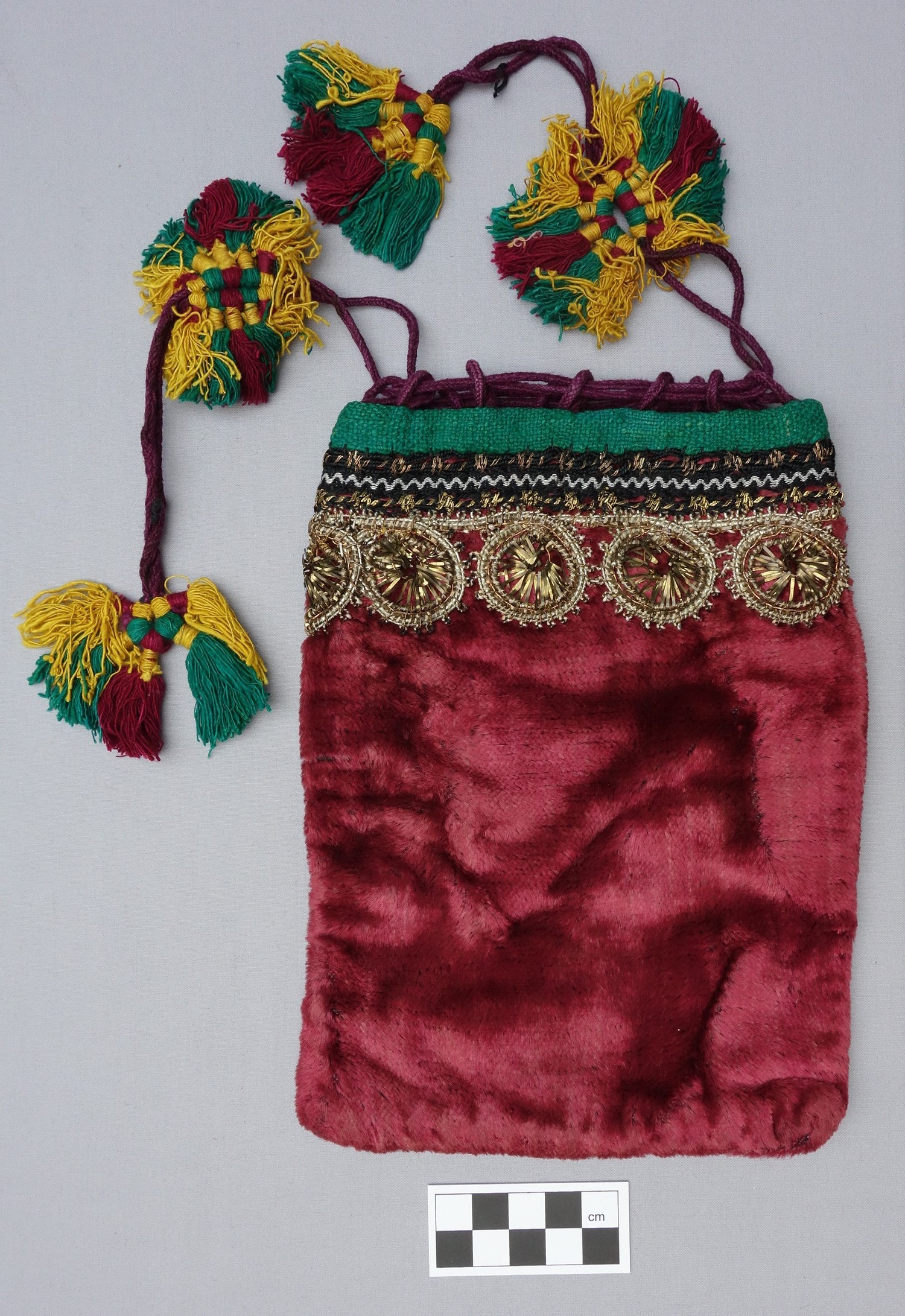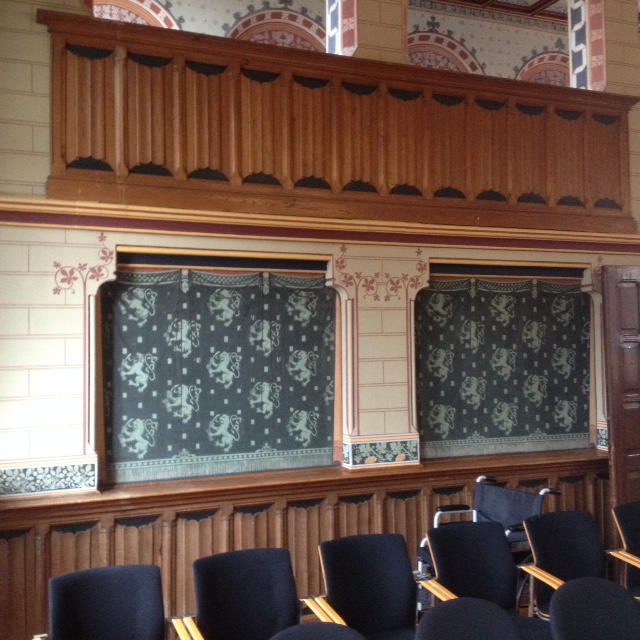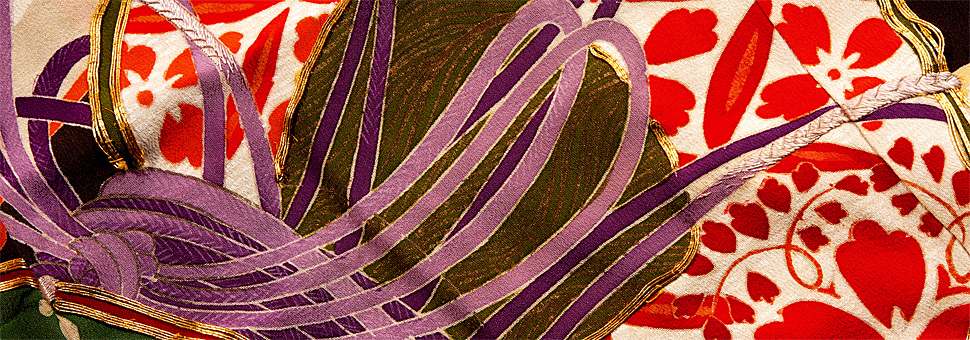
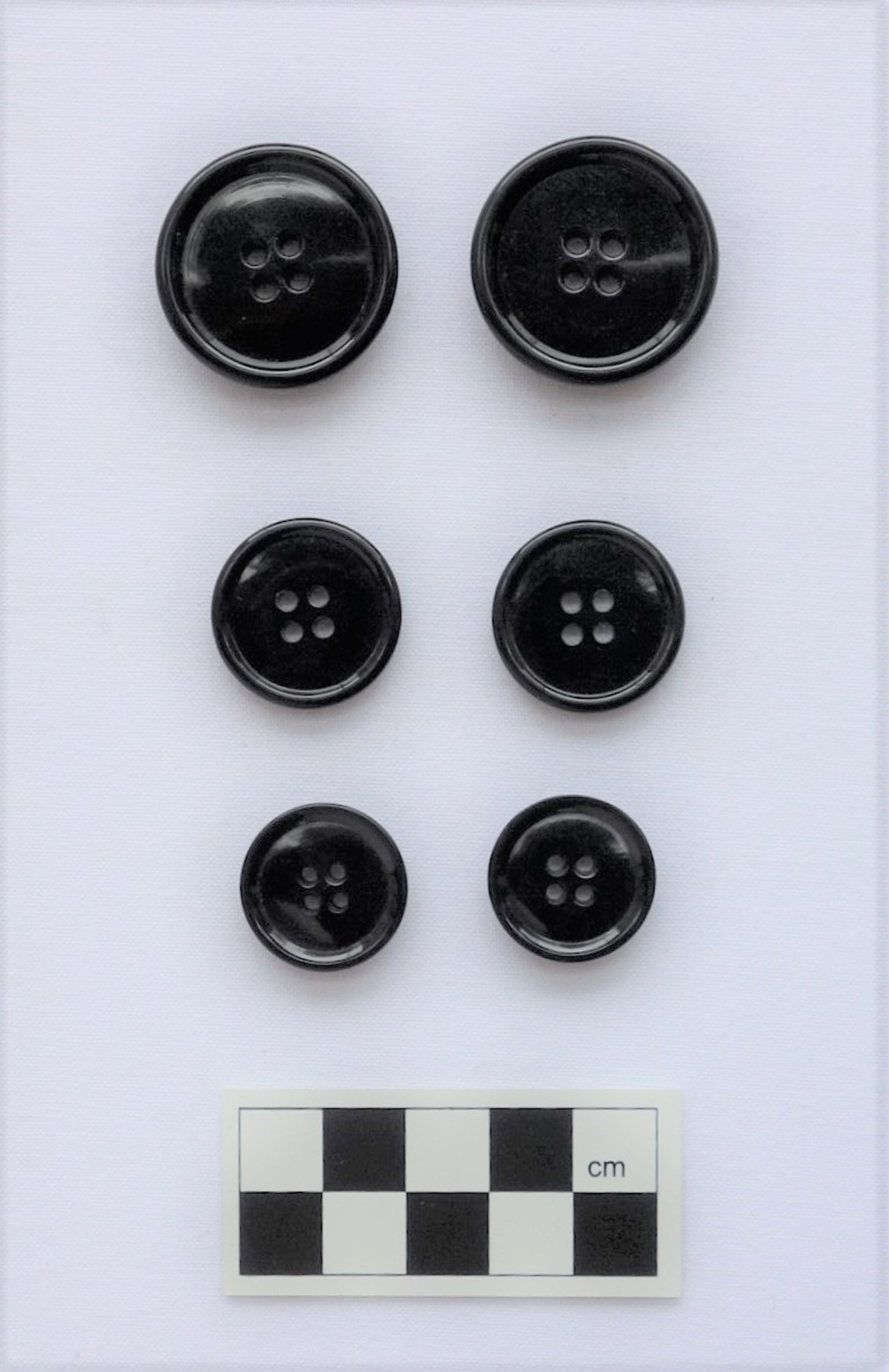
• F4
  • F2
  • F3
  • F1

Bark cloth garment from Sulawesi, Indonesia, c. 1945/1950 (TRC 2018.0042).Bark cloth garment from Sulawesi, Indonesia, c. 1945/1950 (TRC 2018.0042).It is only the third week of January, but we are already including some new and very diverse objects into the TRC Collection. The first few items include an original Gingham Girl cloth and notebook, both from c. 1925 and acquired in the context of the current exhibition at the TRC about feedsacks. The  acquisition of these items means that we have an almost complete range of objects on display that really represent the fascinating history of the American feedsack.

We are also welcoming groups of quilters coming to the exhibition. They are especially attracted by the many quilts made from feedsacks, and their intriguing and colourful designs. So far, the 'Flying Geese' quilt seems to be the most popular. The exhibition can be seen until the end of June 2018. One the groups that we welcomed was actually a birthday party. Perhaps an idea for others?

Woman's cloth for a Turkish woman, used for the Umrah pilgrimage to Mecca (TRC 2018.0038a).Woman's cloth for a Turkish woman, used for the Umrah pilgrimage to Mecca (TRC 2018.0038a).Another range of new acquisitons is equally fascinating. Mrs. E. Güney, a long-standing friend of the TRC who is very active within the Turkish community in Leiden, came to the TRC with various items relating to Turkish Muslim life, namely, Hajj and Umrah clothing for men and women, worn when on pilgrimage to Mecca. This set included two prayer cloths, prayer beads and books explaining how to perform the Hajj and Umrah, in both Arabic and Turkish. In 2017 she gave the TRC a range of cloths, soaps, perfumes, etc, relating to the burial of a Muslim. Over the next few years she wants to build up the Turkish collection at the TRC in order to represent this aspect of Turkish life in The Netherlands. The objects are donated in the name of the Stichting Güney, Leiden.

On Friday last (26th January) we were given five bark cloth garments that date from about 1945/1950. These come from eastern Sulawesi (Indonesia) and were given by the Van Strien family. They had initially been given to Mr. P.T. van Strien, who was appointed as a Dutch colonial administratior to the region in 1945. The garments include two sarongs, a blouse and a large roundel. All of these have been painted with stylised foliage, birds and geometric shapes, mainly in brown and black. Because of the Japanese occupation of the islands during the Second World War (1939-1945), there was an acute shortage of cotton material for clothing and many people were forced to wear bark cloth garments.

Gillian Vogelsang, Saturday 27th January 2018

Saint DistaffSaint DistaffToday, 7th January, is Saint Distaff Day. You may never have heard of her, and to be honest, she never existed. But she has been adopted as the patron saint of the TRC, so - Happy Saint Distaff Day to you all.

St. Distaff is a medieval English joke. We discovered her when preparing an exhibition on handspinning in 2011.  The 7th of January was an unofficial medieval celebration. It  observed the day that women went back to household work after twelve days of celebrating Christmas. It was the day that women could make jokes at the expense of men. The men themselves returned to work on the Monday (sometimes called Plough Monday) immediately following St. Distaff day.

A distaff is an ancient tool used by spinners to support extra fibres (usually flax or wool) while at work. So it is an appropriate 'female' tool for a 'saint' to be named after. 

Shelley Anderson, Sunday 7th January 2018.

Vier ervaren breisters van het TRC Zijden Kousen Project, 29 december 2017.Vier ervaren breisters van het TRC Zijden Kousen Project, 29 december 2017.Sinds de aankondiging van het TRC Zijden Kousen project zijn we overladen met enthousiaste reacties. Momenteel zijn er meer dan honderd deelnemers voor de workshops waarin we de zijden kousen van het Texelse zeventiende-eeuwse scheepswrak gaan reconstrueren. Er zijn zelfs mensen die vanuit de Verenigde Staten en Canada mee willen doen.

Ter voorbereiding op de workshops die begin 2018 plaats gaan vinden, zijn enkele ervaren breisters alvast aan de slag gegaan om ons te helpen de juiste breipennen en zijden garens te selecteren. Op vrijdag 29 december kwamen ze bijeen en begonnen aan de eerste proeflapjes. Op pen 0.7 en 1, want dikker gaat het helaas niet worden.

‘Chez Poiret’, cover of Les Modes, with designs by Paul Poiret, drawn by Georges Barbier, April 1912. Gemeentemuseum Den Haag‘Chez Poiret’, cover of Les Modes, with designs by Paul Poiret, drawn by Georges Barbier, April 1912. Gemeentemuseum Den HaagPaul Poiret was an influential fashion designer in Paris. Nicknamed ‘Le Magnifique’, he produced innovative fabrics and clothing for both women and men that incorporated bright colours, Japanese-style kimono sleeves and graceful drapery. His dresses for women were all designed—shockingly for the time—to be worn without a corset. The Gemeentemuseum in the Hague has designed the exhibition ‘Art Deco’ as a fitting tribute to him, and to the many other creators of this iconic, early 20th century style.

‘Art Deco’ features furniture, stunning jewellery by Cartier and paintings by Kees van Dongen, Sonia Delaunay, Picasso, Dufy and Iribe. But the exhibition’s highlight are the dozens of garments by Poiret. There is ‘Toujours’, a velvet, ankle-length dress with grosgrain ribbon, created in 1911, and a stunning 1912 silk dress in deep blue. My favourite is a Poiret from 1923 called ‘Braque’, after the painter. It is a white silk dress with large black geometric patterns.

Poiret incorporated avant-garde art styles like Cubism and Constructivism in his designs and hired painters like Picasso, Modigliani, Raoul Dufy and Paul Iribe to work for him. Garments by other designers are also on display, most notably the cream-coloured pleated silk ‘Peplos’, designed by Mariano Fortuny in 1914.

Part of Poiret’s genius lay in his comprehensive vision. When he opened his house Maison Martine in 1905, he concentrated on interior décor and fabrics. In addition to his corset-free clothing and shoes, he introduced new features such as the home bar and sunken baths. His bright fabrics with large floral patterns, and the use of luxury materials such as fur, velvet, silk and satin, caused a sensation, as did his perfume line. He also pioneered ways to sell his creations by inventing the cat walk, and toured with his models around the country. He designed costumes for Diaghilev’s Ballets Russes and for the new medium of films.

But it was his ambitious vision that also led to his downfall. At the 1925 Exposition Internationale des Arts Décoratifs et Industriels Modernes (from whence comes the term ‘art deco’), Poiret showcased his work by outfitting three barges on the Seine. The first promoted his perfumes, the second was a restaurant, while in the third, with the tapestries of Dufy as back drops, daily fashion shows where held. This, plus the new styles of designers such as Coco Chanel, led to bankruptcy in the late 1920s. It is said that when Poiret first saw Chanel’s iconic little black dress, he said to her, “But who are you in mourning for?” Chanel fired back, “For you.”

‘Art Deco’ is on at the Gemeentemuseum in the Hague until 4th March 2018.

Shelley Anderson, 9th December 2017

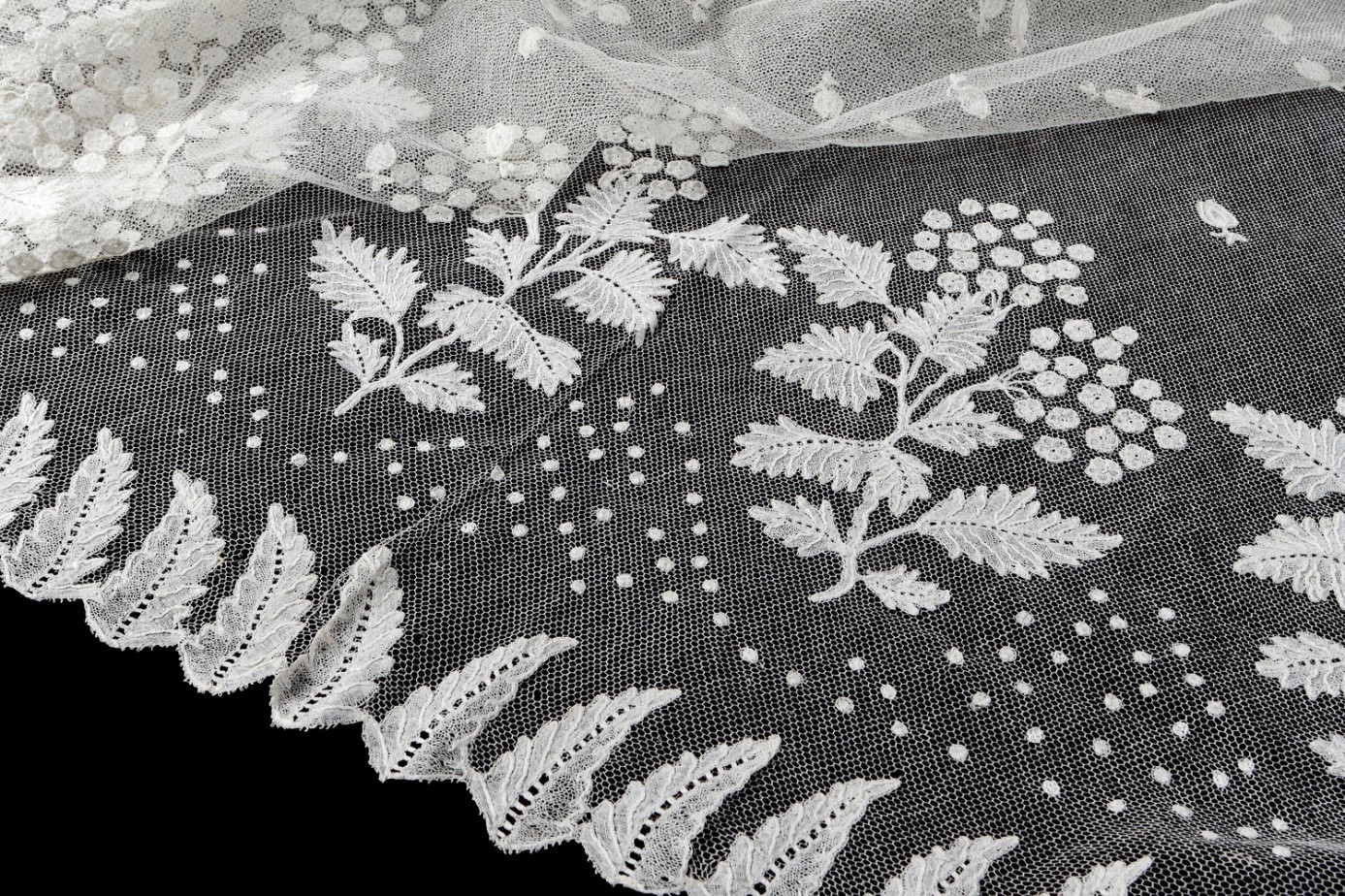
Kanten kraagje voor een japon, begin 20ste eeuw. TRC 2017.3324.Kanten kraagje voor een japon, begin 20ste eeuw. TRC 2017.3324.In het weekeinde van 4 op 5 november werd in het atelier van het TRC de boeiende workshop van Olga Ieronima over het uitgebreide onderwerp “hoe herken je kant” gehouden. Hoewel het buiten goot en de regen op de lichtkoepel van het atelier van het TRC kletterde, luisterden binnen zeven zeer geïnteresseerde en in textielkennis al ervaren deelnemers naar Olga’s heldere uitleg van de verschillen tussen bijvoorbeeld naaldkant en kloskant, geborduurd tule en gehaakt kant, filetwerk en tamboereerwerk en bijvoorbeeld hoe machinaal kant eruit ziet.

De zeer ervaren Olga had haar eigen grote ronde kloskant-kussen meegenomen en gaf daar een korte demonstratie van. Er was ook een kloskant-kussen in the TRC collectie met alle variaties die er te vinden zijn in soorten kantklosjes. Waarschijnlijk is die indertijd klaargemaakt toen het TRC in 2014 een expositie “Over kant Gesproken” had opgezet, waarover toen een alleraardigst informatieboekje is geschreven.

Bovendien had Olga voor elk van ons een uitgebreide en uitgeprinte beschrijving van de geschiedenis van de kanthistorie, uitgewerkte fotovoorbeelden en tekeningen gemaakt dat we als naslagwerk voor later konden gebruiken. De voorraad én de kwaliteit van de enorme variatie aan voorbeelden van kant van het TRC zijn immens! Ze lagen allemaal keurig gesorteerd klaar om niet alleen bekeken, maar ook aangeraakt en gevoeld te worden. Dit is een bijzondere specialiteit van het TRC, die door de deelnemers erg gewaardeerd werd.

Na afloop van dit weekeinde wisten we veel meer over kant én kregen we ongelooflijk veel bewondering voor de makers van kant én konden we zelfs (weliswaar met enige moeite) de verschillende soorten kant van elkaar onderscheiden! Helaas regende het nog steeds flink toen we tevreden naar huis gingen……

Esmeralda Zee, donderdag 16 november 2017

TRC weekend lace workshop, 4-5 November 2017TRC weekend lace workshop, 4-5 November 2017There were eight participants (from four different countries) at the TRC’s recent weekend workshop on “Identification of Lace”. The workshop was expertly led by Olga Ieromina, a TRC volunteer and an enthusiastic lace maker herself. Olga began by giving a working definition of lace as a decorative openwork fabric, in which the pattern, and any ground that links the pattern parts, are gradually built up by the interworking of free threads.

She explained four different markers that can be used to identify lace: how is it made (for example, handmade or machine made, the type of stitches used in construction, etc); what type of lace (needle lace, bobbin lace, hairpin lace, etc.); what kind of thread is used (examples included linen, silk, cotton, synthetic, wool or metal); and the lace’s country of origin and date.

A brief history of lace followed, from its 15th century origins in southern European embroidery and cut work, through the 17th century’s stunning needle lace (much of which originated in Venice), to the rise of Flemish bobbin lace in the 18th century and on to the 19th century’s machine lace.

TRC weekend lace workshop, 4-5 November 2017TRC weekend lace workshop, 4-5 November 2017We then began the most enjoyable part of a very enjoyable weekend—identifying, examining and handling many different and beautiful examples of lace in the TRC collection, from continuous to guipure, looped or appliqued; made by hand and by a variety of machines (including Puschers, Barmen and chemical). Our learning was enhanced by a series of short video clips, which showed how different laces were made and by the experiences of the participants themselves, whether we were curators, collectors, craftswomen, conservators or in the vintage business. Olga also produced a very useful handout on lace identification for each participant. I came away from the workshop with more knowledge and even more admiration for the creators of such complex and beautiful textiles.

Shelley Anderson.

Friday, 10th November 2017

Display of clothing and objects associated with Bishop Mor Julius Yeshù Çiçek. 5th Nov. 2017. Photograph by Gewargis Acis.Display of clothing and objects associated with Bishop Mor Julius Yeshù Çiçek. 5th Nov. 2017. Photograph by Gewargis Acis.Sunday 5th November: The last few days have seen some interesting events and developments at the TRC. As seen from a previous blog, we had a donation of a christening gown dating from 1947. It is embroidered with the names of 17 babies who had been christened in the gown. An item about it was also put on the TRC’s facebook page and many people have seen the item and reacted to it.

Saturday and Sunday saw a new development at the TRC, namely a two-day course on the identification of lace and its many different forms and types. The course was given by Olga Ieromina, one of the TRC volunteers and a dedicated lace maker and responsible for the TRC’s collection of lace. More details about the course will come online shortly.

In the meantime Willem and I have been hard at work at the Syriac Monastery in Glane, in the east of the Netherlands. We have been helping the community to prepare a display about the previous Syriac bishop, called Mor Julius Yeshù Çiçek, who died in 2007 and who had a strong influence then, and indeed now, on the monastery and the people associated with it. Saturday was spent getting the final details of the exhibition in order, text boards hung, podiums and stands covered, objects in order (especially three outfits worn by the bishop) and finally getting the object descriptions written and translated into Dutch and English. Two showcases for the display were provided by the Volkenkunde Museum, Leiden.

Christening gown from 1947 made from parachute silk, embroidered with the names of seventeen young children who were baptised in the gown, between 1947 and 2013 (TRC 2010.0070a)Christening gown from 1947 made from parachute silk, embroidered with the names of seventeen young children who were baptised in the gown, between 1947 and 2013 (TRC 2010.0070a)Today the TRC received a very special new acquisition for the collection: it is a christening gown from the Netherlands, which was made in 1947 from parachute silk that the grandfather of the baby had acquired during the war (TRC 2010.0070a).  He had three daughters, and each of them got part of the silk cloth. Two sisters used it to make themselves a blouse, the third to make the christening gown for her first child. Not an easy thing to do, because the gown had to be made from a bias cut length of material with a diagonal seam across the middle of the gown. In order to hide that seam, the young mother embroidered along the seam the name, date of birth and place of birth of her little daughter. Later she added the date of the christening, the name and place of the church, the name of the vicar and the Bible text of the christening.

The christening gown was used many times in the family, and each time the name of the baby and all other details were embroidered onto the gown. And after seventeen babies the gown is almost completely covered. The last name to be added is dated the 12th March 2013, for a baptism in the town of Harderwijk.

Zoek in TRC website

Contact

Boerhaavelaan 6
2334 EN Leiden.
Tel. +31 (0)6 28830428  
office@trcleiden.org

facebook 2015 logo detail


instagram vernieuwt uiterlijk en logo


Bankrekening

NL39 INGB 0002 9823 59, t.a.v. Stichting Textile Research Centre.

Openingstijden

Het TRC is gesloten tot maandag 4 mei vanwege de verhuizing naar de Boerhaavelaan. We blijven bereikbaar via email (office@trcleiden.org) of telefoon: 06-28830428.

Financiële giften

Het TRC is afhankelijk van project-financiering en privé-donaties. Al ons werk wordt verricht door vrijwilligers. Ter ondersteuning van de vele activiteiten van het TRC vragen wij U daarom om financiële steun:

Giften kunt U overmaken op bankrekeningnummer (IBAN) NL39 INGB 000 298 2359, t.n.v. Stichting Textile Research Centre. BIC code is: INGBNL2A

U kunt ook, heel simpel, indien u een iDEAL app heeft, de iDEAL-knop hieronder gebruiken en door een bepaald bedrag in te vullen: 


Omdat het TRC officieel is erkend als een Algemeen Nut Beogende Instelling (ANBI), en daarbij ook nog als een Culturele Instelling, zijn particuliere giften voor 125% aftrekbaar van de belasting, en voor bedrijven zelfs voor 150%. Voor meer informatie, klik hier