

Point de Saxe
See Dresden work.
Point de Dresde
See Dresden work.
Gros Point de Venice (Italy)

Gros Point de Venice, or simply Point de Venice, is a type of needlepoint lace produced in Venice from the seventeenth century. It is characterised by its floral patterns and other floral motifs set in relief, hence its other name, 'Gros' Point de Venice. Venetican lace is often described as the origin of many types of French lace, as for instance Point de France and Point de Sedan.
Irish Crochet
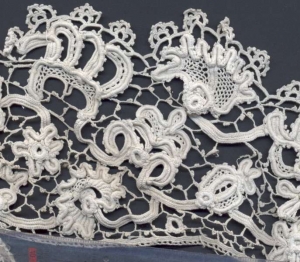
Irish crochet or Irish crochet lace was developed in Ireland in the mid-nineteenth century. It imitates Venetian point laces. It includes separately crocheted motifs, which are brought together and provisionally basted to a ground before being joined with chains and picots, after which the ground is removed.
Aemilia Ars Needlepoint Lace
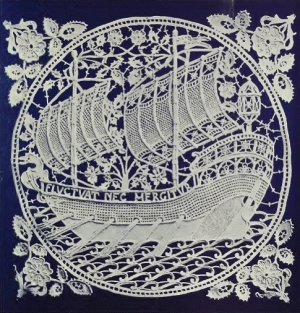
Aemilia Ars needlepoint lace (It. Punto in Aria di Bologna) is linked to the establishment in 1898 of the Aemilia Ars Society, in Bologna, Italy. The Foundation propagated the revival of the old crafts of the Emilia region, including that of embroidery and lace.
Swiss Embroidery
Textile Museum, St. Gallen
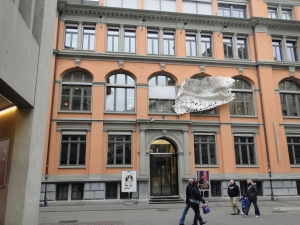
The Textile Museum at St. Gallen reflects the intriguing history of the huge local embroidery industry that developed here, mainly following the invention and introduction of hand machine embroidery machines in the early nineteenth century.
French Canvas
Gota Work
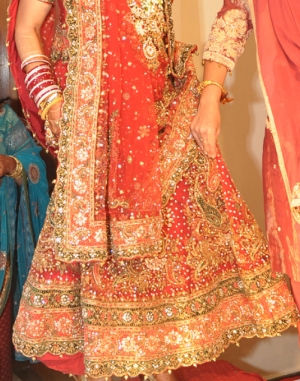
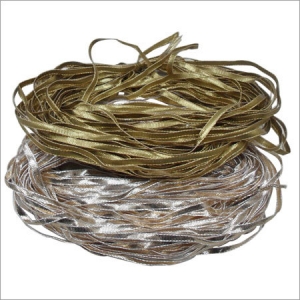
Gota work, or gotapatti, is an Indian embroidery technique that originated in Rajasthan, Western India, where it is still being produced. Basically, gota work is an appliqué technique that fastens silver or gold (coloured) ribbons (gota) onto the ground material, with the edges of the ribbon sewn down, thus creating elaborate designs.