

Ghent Lace
Ghent lace is a form of bobbin lace, very similar to Valenciennes lace. WV
Modano
Modano is a Renaissance Italian term for a form of square-meshed, knotted lace.
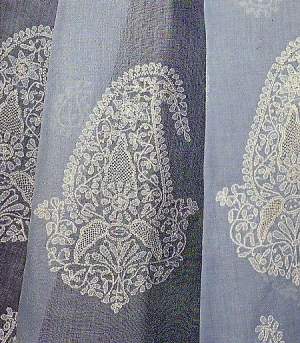
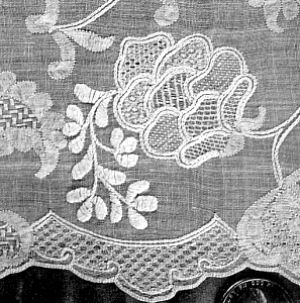
Delhi Lace
See Lucknow lace and chikan.
Brussels lace
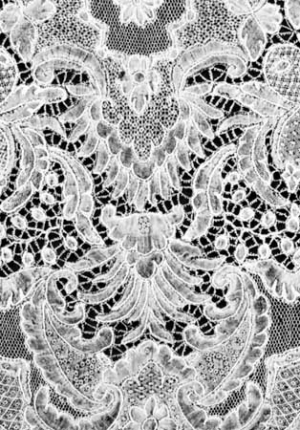
Brussels lace is the name given to various forms of lace produced over the centuries in and around Brussels. More specifically, it is applied to various forms of non-continuous bobbin lace: the bobbin-lace patterns are made separately from the net (réseau).
Schematic Survey of Needle Made Lace Types
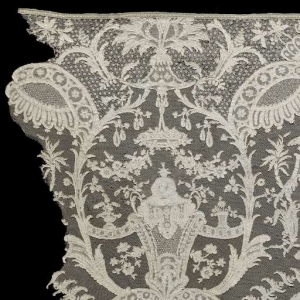
Lace can be divided into various groups on the basis of its production method. This survey focuses on the types of lace that are made with a needle and with decorative stitching, thus excluding many other types of lace, such as bobbin, knotted and looped forms. Please bear in mind that the names of the various lace types may vary and are not always universally accepted.
Khaarek
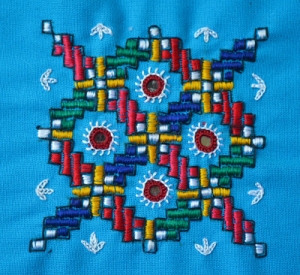
Khaarek is a form of satin stitch used for counted thread work in western India (Kutch). Khaarek embroidery is carried out by Sodha, Rajput and Meghwal communities. Geometric patterns are first outlined on a fabric and then filled in with bands of satin stitches (kharek) that are worked along the warp and weft from the front.
Kutch Jat embroidery
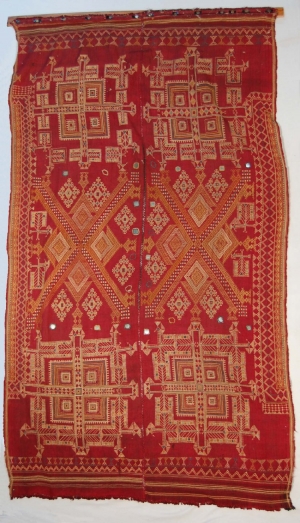
The Jats are a conglomeration of peoples who live in parts of Pakistan and northwestern India (Haryana, Gujarat, Kutch and Rajasthan). Traditionally they make their living by herding or farming. The diversity of the Jats means that they may be Hindus, Muslims or Sikhs. The Kutch Jats are known for their embroidery work, which comes in a diversity of forms.