

Gourd Stitch
See peyote stitch.
Pinckney, George (c. 1625 - c. 1681)
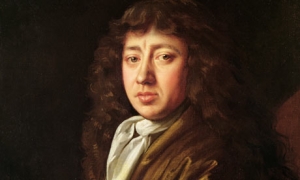
George Pinckney (also written Pinkney) was the King’s Embroiderer after the restoration of Charles II (r: 1660-1685) to the English throne. Pinckney was given the post of embroiderer in 1660/1, a position he shared with William Rutlish and Edmund Harrison. They were succeeded by J. Moseley (1680).
Gee's Bend Quilts
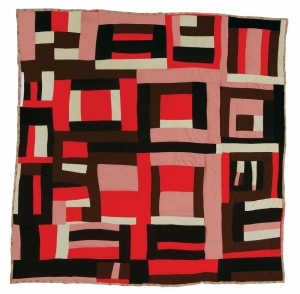
Gee's Bend quilts are a particular type of patchwork quilt noted for their striking colours, asymmetry and geometrical shapes. The quilts are produced by women living in Gee’s Bend and by the freedom quilting bee in nearby Rehoboth (Alabama, USA).
Fry, Elizabeth (1780-1845)

Elizabeth Fry (née Gurney) was a social reformer, who is most noted for her work in prisons. She was born in Norwich, England, into a Quaker family. In 1799 she married Joseph Fry (1777-1861), a banker in London, with whom she had eleven children. Elizabeth Fry became a Quaker minister in 1810.
Fabric
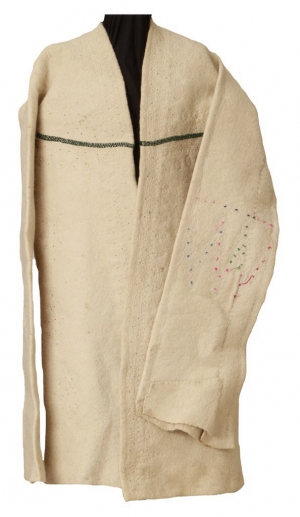
Fabric is a general term for any manufactured cloth-like material, produced through weaving, crocheting, knitting, etc., made for use in clothing, coverings, hangings, etc.
Embroidery Block
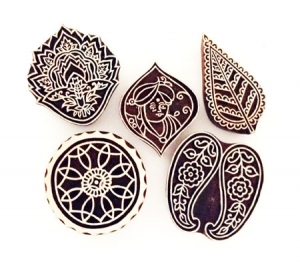
An embroidery block is a small block used to hand-print a design outline onto a ground cloth. It is normally c. 3-5 cm in size and can come in a variety of shapes, such as squares or triangles. The required design may be (a) carved into the block, (b) formed by metal strips, (c) engraved onto a metal plate and then fastened to a wooden base, (d) rubber moulded, or (e) made by some other technique.
Dickel Lace
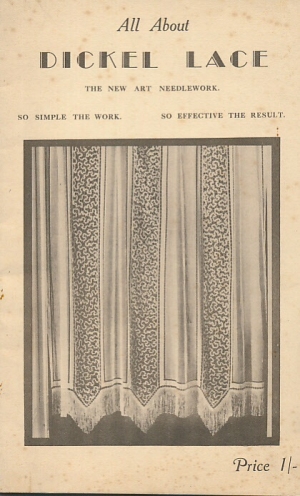
Dickel lace is a form of tape lace designed in the early twentieth century by the German lace maker, Franziska Dichtl. It would appear that this type is based on eighteenth century forms of tape lace, but re-styled for contemporary tastes.
Crochet de Lunéville

The crochet de Lunéville is an embroidery hook used specifically for the broderie perlée et pailletée of Luneville embroidery.
Crewel Embroidery

Crewel embroidery (or crewel work) literally is any embroidery worked using crewel thread, which is a fine, strong, worsted form of thread. Crewel embroidery on a linen ground has been worked in Europe since the early Medieval period, although the term crewel embroidery/work, as far as is known, dates back only to the seventeenth century.