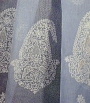
In the eighteenth century, Argentan was a form of needlepoint lace that was produced in Normandy. It is named after the local town of Argentan, which lies close to Alençon, another lace producing centre. Argentan lace is characterised by its very fine work, with sometimes up to ten buttonhole stitches per mesh.
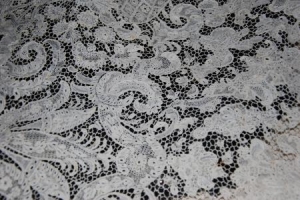
Point de Sedan is a form of needlepoint lace, with a raised design ('gros'), which is named after the town of Sedan, in northeastern France. The lace was produced during the late seventeenth and eighteenth centuries.
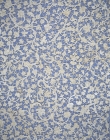
Point de neige is a form of 'Venetian' raised needlepoint lace, with small tiered flowers and stars made from elaborate bars with picots that were regarded as being like snow crystals. Point de neige was made from about the 1650's to 1710. It may have been made at Burano, near Venice, in the eighteenth century and it may have continued to be made on the island under the name of rosseline.
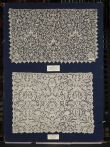
Point de France, next to Point de Sedan, is the general term for the needlepoint lace that was produced in France in the second half of the seventeenth century, mainly in order to counter the import of expensive laces from Italy (Gros Point de Venice) and Flanders.
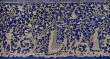
Point Colbert is a form of needlepoint lace, with a raised design ('gros'), made in Bayeux, France, in the mid-nineteenth century. It is said to have been inspired by seventeenth century Alençon lace. Point Colbert is named after Louis XIV’s (1638-1715) finance minister, Jean-Baptiste Colbert (1619-1683). Point Colbert is characterised by its use of stylised flowers, seams and so forth, on a background of bars (‘brides’).
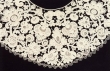
A slightly raised and fine needlepoint lace developed in the mid-nineteenth century on the basis of Venetian and Spanish needlepoint forms. It was still being produced in the early twentieth century. Inishmacsaint lace was worked with flax threads.
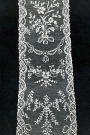
Alençon lace is a form of needlepoint lace that originates from the town of Alençon, Normandy, France, where from the sixteenth century an industry had developed of cutwork and other forms of embroidery. By the end of the seventeenth century it was selected as a centre for the production of Point de France, and by the early eighteenth century a distinctive form of lace had developed, now known as Alençon lace.

Youghal lace (also called Youghal needlepoint lace or Point d'Irlande) is a form of needlepoint lace from Ireland. This style of lace was first made commercially at the Presentation Convent, Youghal, County Cork, Ireland, when a school, with lacemaking facilities, was opened in 1852 after Mother Mary Ann Smith had learnt the techniques by unpicking some old Venetian raised needlepoint forms.

Punto in aria is regarded as a very early form of lace. It is a needle lace, closely related to reticella, and developed in Italy. While reticella still is very much based on a ground material, whereby more and more threads are being removed, with punto in aria the lace is worked without a ground material.

The Aemilia Ars society was founded in the Italian town of Bologna on the 3rd December 1898, drawing inspiration from the Arts and Crafts Movement in the United Kingdom. It aimed at promoting and supporting the decorative arts in the region of Emilia, taking its inspiration from Nature and regarding the Renaissance as the period of the greatest beauty and the pinnacle of crafts.
More...