

Point de Gaze is a type of needlepoint lace produced in Brussels, Belgium, named after its gauze-like net background material. It was popular in the second half of the nineteenth century, and it is apparently still made for the tourist trade.
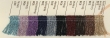
Lurex is a registered brand name for a type of thread with a metallic appearance. Lurex is made from a very fine strip of metal (such as aluminium, silver or gold) that is laminated between two layers of synthetic film. The technique was developed in 1946 by the Dobeckmun Company (USA).
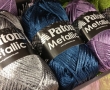
Various methods are used in the twenty-first century to produce metallic yarns. The two most widely applied processes nowadays are laminating and metalizing. The Dobeckmum Company (USA) is said to have produced the first modern metallic yarn in 1946, using the process of laminating.

The term tiraz originally comes from the Persian verb for embroidering (tirazidan, 'to embroider'). In Arabic it came to mean the embellishment of a piece of cloth or another material with a text of some kind.

The Celtic Revival was part of various artistic movements that sprang up in the 1840's and reached a peak in various parts the world in the late nineteenth and early twentieth centuries. Groups involved in this revival included the Arts and Crafts Movement and the Glasgow School.
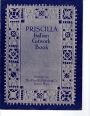
Italian cutwork combines cutwork with whitework and needle lace techniques. The small designs are mostly geometric, but little figures or birds also occur. The ground material is linen. The cut-out designs are filled with stitches, generally buttonhole stitch. The stitches are attached to the surrounding ground material, which is further embellised with whitework worked in raised stitches, such as bullion stitch or detached overcast stitch.