


Silk is a general term given to the continuous filament (fibroin) secreted by various species of insects, especially the larvae of the caterpillar Bombyz mori, generally known as the (cultivated) silkworm. The silk from the silkworm is secreted as a viscous fluid from two glands in the lateral parts of the body.

Taffeta is a general term for a group of fabrics that are smooth, thin and shiny. They are made from a tabby weave (as opposed to satin cloth, which is a shiny fabric made from a satin weave). It normally has a finely ribbed effect created by the weft threads being heavier than the warp threads.
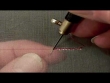
Tambour beading is a technique that developed in Europe in the late eighteenth century. A small hook (tambour hook) is used to attach the beads to the ground cloth, rather than a needle. The word tambour is French for ‘drum’ and is named after the drum-shaped tensioning frame that was originally used. The technique of tambour embroidery originated, so it is assumed, in India in the seventeenth century or earlier.

The so-called Dürer embroidery design is a knotwork embroidery pattern apparently developed by the German artist Albrecht Dürer (1471-1528). Knotwork was very popular in sixteenth century Europe and included the interlacing of one or more bands, straps or threads in such a way as to create a decorative effect. It was probably used for textiles and decorative needlework.

The pallium, or pall, is a liturgical vestment worn by an archbishop and the Pope. It is a narrow strip of material worn around the shoulders with a strip hanging down at the front and at the back. It is usually made of white wool, and decorated with embroidered crosses.
Art Needlework is a late nineteenth century form of free-style embroidery, which became popular in Britain and quickly spread elsewhere. The concept of Art Needlework was developed under the influence of the Pre-Raphaelite artists and the Arts and Crafts Movement. In particular it was associated with the English designer, William Morris and his daughter, May Morris.
More...
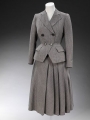
Worsted cloth is smooth, napless cloth woven from yarn that has been spun from combed wool (worsted threads). Some examples of worsted cloth are gabardine and serge. The name is derived from the village of Worstead (Norfolk, England), where this type of thread and cloth was originally produced.

A printing block is a tool used for producing a repeat pattern on textiles, felt, leather, etc. The blocks are closely related to paper printing blocks and embroidery blocks. Printing blocks have been used for decorating textiles throughout the world. Traditional textile printing blocks can vary in size from a few centimetres to c. 40 cm.