
A spangle (USA) is a flat, ornamental disc applied to cloth as a decoration. It can be made from metal, plastic, shell, etc., and is usually circular with a single hole.
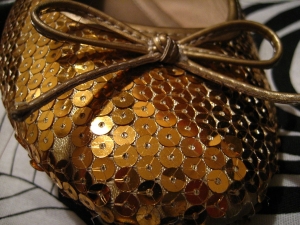
A spangle (UK) is a small, thin disc of metal with a hole in the middle. Spangles, in the UK meaning, are made by cutting a small segment (single winding) off a spirally wound metallic wire. This part is used to form a small ring that is then flattened between rollers or under a hammer. A characteristic feature of a spangle is a small indentation on the outer edge.
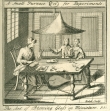
G. Smith was the author of The Laboratory or School of Arts (1756), which includes references to the dyeing of fibres used, amongst others, for embroidery. G. Smith is sometimes referred to as Godfrey Smith, Geoffrey Smith or George Smith.
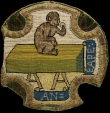
A slip is a medieval, and later, English term for a small decorated piece of fabric, sometimes in the form of a single flower or animal. The slip is worked on a separate cloth and then cut out and sewn down onto a larger item, such as a hanging. It is related to a gardening term for a small twig, spring or shoot that is grafted onto another plant.
Sleave silk (or sleeve silk) is a late sixteenth century English term for floss silk or unspun silk, which can be used for embroidery.

Silkwoman is an English term for a woman who imported silk and metal threads, worked them into embroideries and/or braids, fringes and other types of passementerie. There is written evidence for the existence of 'silkwomen' in Paris (France) in the fourteenth century.

A shuttle is a boat-shaped device used to carry thread. With respect to decorative needlework, shuttles are used for netting and tatting. Shuttles for decorative needlework are made of a variety of materials, including bone, ivory, metal, plastic, tortoiseshell or wood. They are usually made of three elements: top, core and bottom (the top and bottom are normally identical) and are of varying sizes.

The Shorncliffe Military Hospital quilt is a commemorative quilt or autograph quilt, linked to the Shorncliffe Military Hospital (Folkestone, England). During the First World War (1914-1918) wounded soldiers, including Canadians, were treated here. In 1915, the Women’s Institute in Georgetown, Canada, decided to create something for ‘their’ soldiers in the hospital:
More...

Shaded threads or cloth are a type of material that is dyed, printed or woven in gradations of one colour, from light to dark. It is sometimes called ombré. The term ombré derives from the French word meaning ‘shaded’. It was popular in western Europe from the 1840's onwards.

A sequin is a smooth and round disc with a hole in the middle. It can be made of glass, plastic or some comparable material, but not of metal. In the 1920's, sequins were made from painted glass, later they were made from coloured glass.

The Scottish diaspora tapestry is a commemorative embroidery and a form of community art work organised by Baron Gordon Prestoungrange. The tapestry was designed on the theme of the emigration of Scots around the world. Communities and institutions (such as schools) in 25 countries where Scots have settled worked on the panels.
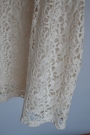
Sicilian lace is the term for various types of embroidered lace, notably buratto embroidery, drawn thread work and darned net, made in Sicily from the sixteenth century onwards. Sicilian lace was used for both secular and religious purposes. Some forms of Sicilian lace were embroidered with coloured silks, notably, bluish green, rose pink and canary yellow.