

The Dressmaker of Khair Khana, 2011
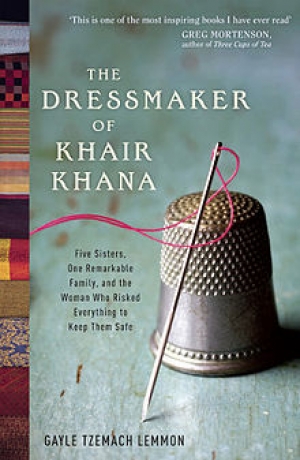
The Dressmaker of Khair Khana is a non-fiction book. It was published in March 2011 by American foreign policy analyst and journalist, Gayle Tzemach Lemmon (1973). It is the story of Kamila Sidiqi, still a teenager in 1996 when the Taliban take control of Kabul, where she is living. Sidiqi has just received a teaching certificate, but is soon banned under Taliban regulations, because she is a female, from further education or work.
Sammal
Sammal is an obscure late nineteenth century term for a type of woollen cloth used for certain types of ecclesiastical embroidery in Northern Europe.
Stamped Utrecht Velvet

Stamped Utrecht velvet is a mid- to late nineteenth century term for a type of stamped velvet that was used to decorate furniture. It was often embroidered.
Stamped Plush
In the late nineteenth century, the term stamped plush was used to describe strips about 10-15 cm wide that were used to decorate the borders of curtains, upholstery and so forth.
Plush
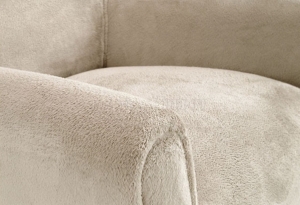
Plush is an English term used to describe a shaggy, hairy kind of cloth that is used for clothing or upholstery. The pile or nap is softer and longer than that of velvet and resembles fur. There are accounts of plush dating back to at least the sixteenth century. Plush can be made of a variety of fibre types, including camel hair, cotton, goat hair, silk, wool, or some combination of these. In addition, the length of the pile can also vary.
Satin Veiné
Satin veiné is a late nineteenth century French term that was sometimes applied to the veins of leaves or the tendrils of flower sprays worked in satin stitch.
Rond Bosse
According to Sophia Caulfeild and Blanche Saward (1882), 'rond bosse' is a term for a raised embroidery.

Six-Strand Embroidery Floss

Six-strand(ed) embroidery floss is the American term for a type of embroidery thread that is produced, among others, by the company of J. & P. Coats. The term six strand(ed) embroidery floss is known on the British market as 'six-stranded embroidery thread' (or occasionally as a 'six-stranded mercerised cotton thread'). The floss/thread is used for a wide range of embroidery forms.
Coats
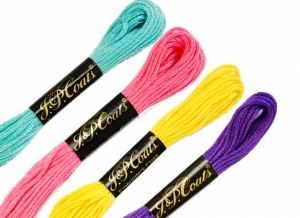
J. & P. Coats is an originally Scottish fine-thread company that was founded by a weaver called James Coats (1774-1857) and his brother Patrick, in Paisley, near Glasgow. The story of Coats is complicated, as it involves British as well as North American based companies, run by various members of the Coats family. It was also closely involved in the activities of the rival Scottish company of Clark.