

Mamluk Emblems
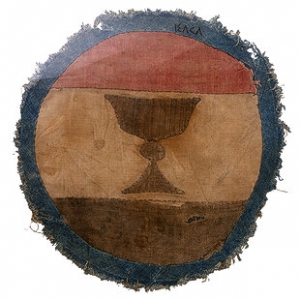
The medieval Mamluk rulers (1250-1517) of Egypt developed a system of emblems to signify and identify the role of courtiers serving under the various sultans. Some of the emblems are very simple, others are complex. They were used to decorate a variety of different materials, such as glass, metal, paintings, stone, stucco, as well as textiles (appliqué, embroidered, woven forms).
Blazon
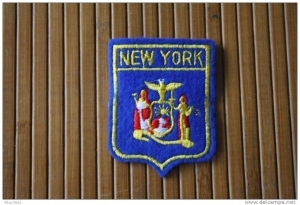
A blazon is originally a medieval term for a coat of arms. The word derives from the Old French blason for 'shield'. The term is used in heraldry for the formal description of a coat of arms, and for the design of a coat of arms itself. Blazons are displayed on a wide range of materials, notably glass, metal and stone. In addition, they are sometimes displayed in woven, appliqué and embroidered forms.
Chung, Young Yang (b. 1936)

Young Yang CHUNG (c. 1936) is a South Korean textile historian and vembroiderer who specialises in traditional East Asian textiles. She was born in Seoul, but during the Korean War (1950-1953) she and her family sought refuge in a village southwest of the capital. Here she is said to have taught local women to embroider in the Western (French) style and where she learnt about Korean styles of embroidery.
Chung Young Yang Embroidery Museum, Seoul

The Chung Young Yang Embroidery Museum is an educational, exhibition and research facility dedicated to embroidery and the textile arts, especially those from East Asia. The museum is part of Sookmyung Women’s University, Seoul, Korea. The university was established in 1907 by the then Korean royal family. The Museum was established by Dr. CHUNG Young Yang and opened in May 2004.
Heavenly Evening Jacket by Elsa Schiaparelli
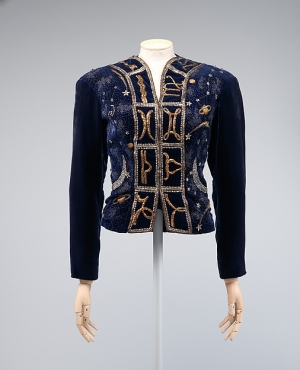
Illustrated is a blue, silk evening jacket decorated with signs of the zodiac and other 'heavenly' symbols. The jacket was created by the Italian fashion designer, Elsa Schiaparelli (1890–1973) and embroidered by the French couture embroidery atelier, Maison Lesage. The jacket dates from 1937.
Embroidered Evening Dress by Antonio del Castillo
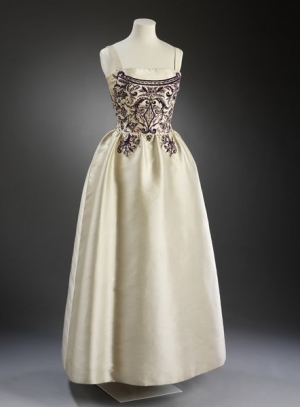
Illustrated is an embroidered evening dress designed by Don Antonio Canovas del Castillo de Rey, also known as Antonio del Castillo (1908–1984), for the couture house of Lanvin, Paris (France). The dress was made in 1957. The evening dress is made from cream silk zibeline (a heavy silk cloth with a twill weave). It is full length with a fitted bodice and shoulder straps. The tulip-shaped skirt is slightly gathered.
Dugourc, Jean-Démosthène (1749-1825)
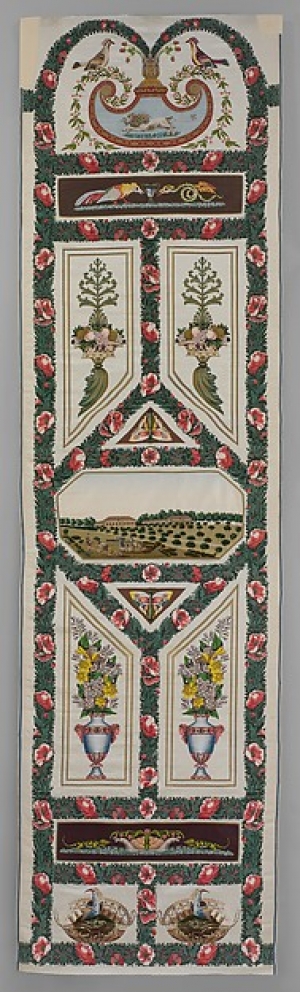
Jean Démosthène Dugourc (1749-1825) was a French designer, who worked for various royal and noble families in the late eighteenth century. His clients included the French nobility and the royal houses of Europe. In 1780 he was named as designer to the Comte de Provence (the future Louis XVIII) and helped to redecorate the Château de Brunoy (just southeast of Paris).
Simple Loop Stitch
The simple loop stitch is a variation on a running stitch, but instead of the thread being pulled tight so that it lies flat on the surface of the cloth, a small loop is made.
Roumanian Joining Stitch
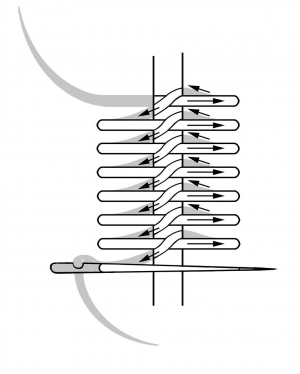
The Roumanian joining stitch is a variation on the Roumanian stitch, in which the stitch is used to join two pieces of cloth. The stitches can be worked close together or with a little distance. The nature of the stitch means that the join is ‘hinged’ and is flexible. It may be used, for example, to join together a bodice and a sleeve, or for sewing two pieces of fine cloth together to use as a head and body covering.
Threaded Reverse Arrowhead Stitch
The threaded reverse arrowhead stitch is a variation on a reverse arrowhead stitch.