

Oriental Laid Stitch
See Roumanian couching.
Scissors
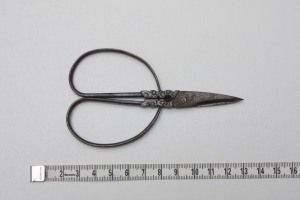
Scissors, or 'pair of scissors', are a tool for cutting cloth and thread. The precursors of scissors were flint blades and shears. The English word scissors derives from the late Middle English 'sisources', which in its turn comes from the Old French word cisoires, meaning shears. The word cisoires derives from the late Latin word cisorium, the name for a cutting instrument.
Shears

The earliest textiles and threads were probably cut with sharp stones and later with fine, stone blades, such as those made of flint. The next stage in the development of equipment for cutting thread and cloth was the introduction of metal shears (sometimes called spring scissors). This appears to have taken place by the second or first millennium BC in Southwest Asia
Chatelaine

A chatelaine is an ornamental belt clasp or hook, from which chains are hung. It derives from the French term chatelaine, meaning ‘mistress of the chateau’. Chatelaines were worn by European women from the medieval period until the twentieth century and the advent of handbags and (outside) pockets in women’s clothing.
Tutankhamun and Decorative Needlework (Egypt)
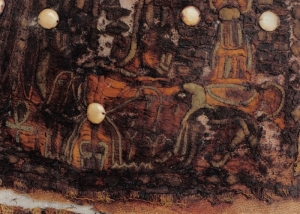
Tutankhamun was an ancient Egyptian pharaoh who reigned from approximately 1333 until 1323 BC. He became pharaoh when he was about eight years old and died at the age of about 19. He was buried with a wide range of luxury and daily life objects, including furniture, weapons, chariots, beds, chests, jewellery, perfumes, games, as well as the textiles from his wardrobe, many of which were decorated in some manner.
Relief Quilting
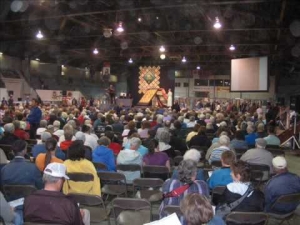
The term relief quilting is used in the USA for quilts that are made either for sale to raise money for a charity, or to be distributed directly to people in need. Both the Mennonite and Lutheran Churches in the USA, for example, have programmes whereby quilters throughout the country regularly gather (normally monthly) to make quilts.
Piecework
Term often used for (pieced) patchwork. See also pieced patchwork.
Filet Lace (UK)
See darned netting.
Net Embroidery
See embroidered net.
Double Back Stitch

A double back stitch can be worked on either the front or the back of a piece of cloth. When worked on the front it is done as two parallel rows of back stitches, which create the effect of a closed herringbone stitch on the reverse side of the material (A). If it is worked on the reverse side it is carried out in the form of a closed herringbone stitch, which produces the effect of two parallel rows of back stitch on the front side (B).