

Vinyl Weave
See plastic canvas.
Raised Satin Stitch
See padded satin stitch.
Crimean Quilts
See military quilts.
Soldiers' Quilts
See military quilts.
Military Quilts

Military or soldiers’ quilts are a form of nineteenth century patchwork quilts made by British soldiers from the wool serge or woven worsted and twill cloth used to make military uniforms. Apparently in the Great Exhibition of 1851, over thirty examples of quilts were submitted by military personnel. Soldiers were encouraged to take up sewing as an alternative to drinking and gambling.
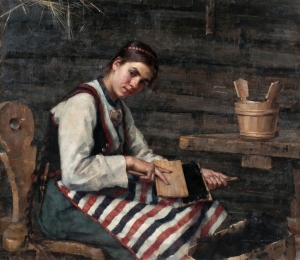
Madder
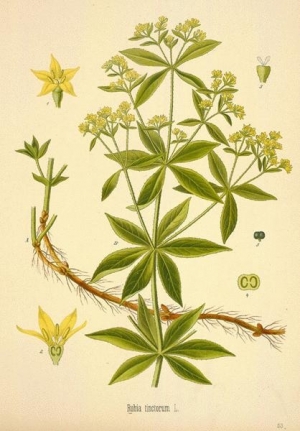
For thousands of years, people in Africa, Asia and Europe have obtained a fast, red dye from the roots of the Rubia plants. The term Rubium comes from the Latin word ruber meaning ‘red’. The English word madder derives from the Old English mædere and can refer to both the name for a plant (Rubia genus) and the red dyestuff obtained from its roots.
Basket Weave
See extended tabby.
Extended Tabby
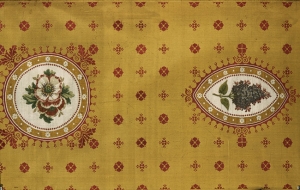
An extended tabby is a tabby weave in which the warp (ends) and weft (picks) threads are normally used in groups of two or more. Sometimes, however, the warps are used in pairs while the weft threads are single, or the other way around.
Tucks and Pin Tucks
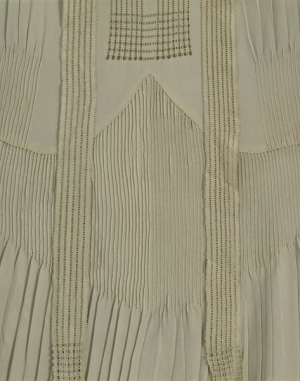
With respect to sewing and decorative needlework, a tuck is a fold or pleat in a piece of material that is sewn in place. When these tucks are very narrow they are called pin tucks.