

Ingrain Marking Cotton
See ingrain cotton.
Ingrain Cotton
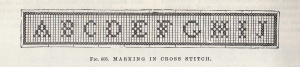
Ingrain cotton is a nineteenth century English term for a coloured, usually red, cotton thread used for marking. For example, in Mrs Beeton’s Book of Needlework (1870), the author refers to coloured ingrain cotton for marking, while in Mrs Warren’s The Ladies Treasury from 1882 there are several references to “Messrs. Walter Evans & Co.'s Scarlet Ingrain Marking Cotton.”
Glass Cloth
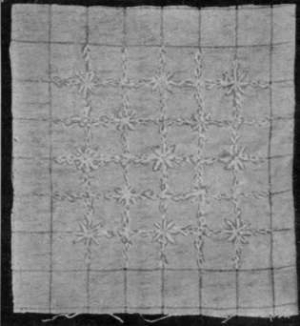
From the end of the nineteenth century there were various products sold under the general heading of glass cloth. These included (a) textiles made from glass fibre; (b) a fine cloth coated with finely powdered glass, which was used for polishing or smoothing surfaces, and (c) a type of English linen cloth woven in a tabby weave with checks and/or warp stripes of various colours, including blue, green and red.
American Patchwork
American Crazy Patchwork
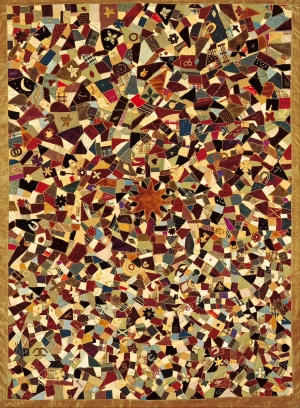
American crazy patchwork is very similar to the (American) crazy quilts, but it is used for other purposes, rather than as a (bed) covering or quilt. It may be used for clothing, as well as items such as cushion covers or curtains.
Aloe Thread Embroidery
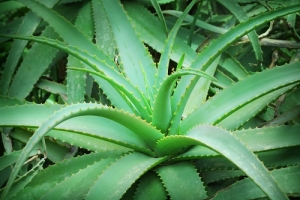
Aloe thread embroidery is a product introduced in Britain in the latter half of the nineteenth century. Aloe thread embroidery was made with the threads from the aloe plant (genus Aloe; family Xanthorrhoeaceae).
DMC Diamant
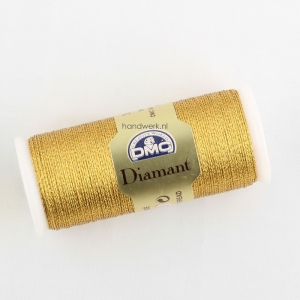
DMC Diamant is a single-stranded metallic thread that was produced from the end of the twentieth century by the French company of DMC, initially in twelve metallic colours.
Hair Lace
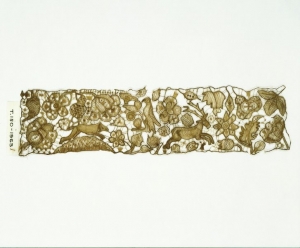
Hair lace is a form of bobbin and needlepoint lace made from human hair. This type of work is sometimes called point tresse. Hair lace was particularly popular in Europe during the seventeenth century. Because of the smoothness and springiness of human hair, however, it can be difficult to work.