

Threaded Stitches
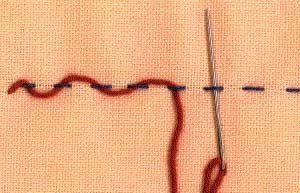
Threaded stitches, also known as laced stitches, are a group of stitches characterised by a 'foundation’ stitch that is combined with a second thread.
Free Embroidery
See embroidery styles.
Needlepoint Embroidery
See canvas embroidery.
Canvas Work
See canvas embroidery.
Canvas Embroidery
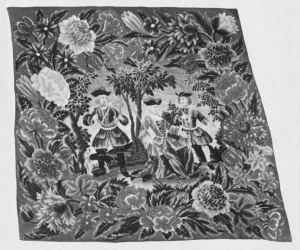
Canvas embroidery is a form of counted thread embroidery, in which decorative stitches are worked on a canvas ground to create a dense pattern that covers much of the ground material. There are various forms of canvas work such as Berlin wool work and Florentine work.
Surface Embroidery
Surface embroidery is an American English term for a form of free style embroidery.
Embroidery Styles
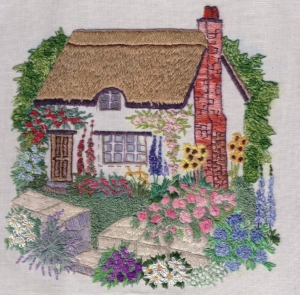
Defining and cataloguing a piece of embroidery is always subjective and often depends on the reason why someone (artist, collector, producer, seller, user) is trying to define a particular object. For the purpose of this encyclopaedia it was regarded as necessary to at least attempt to present various definitions of embroidery styles and techniques that can be found throughout the world.
Structural and Decorative Stitching
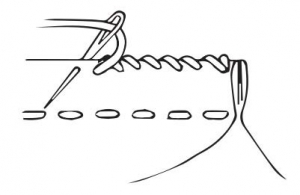
There are different forms of stitching, depending on whether the primary aim is structural or decorative. With respect to structural sewing, if a sleeve, for example, is sewn onto a garment with stitches and then these are removed, then the sleeve will fall off.
Decorative Needlework
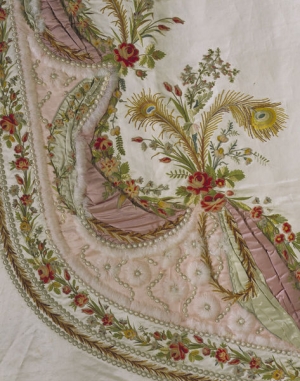
There are various definitions for decorative needlework and these have changed over time. For the purpose of this encyclopaedia, the term is used as an umbrella concept that includes a range of decorative textile techniques, such as applied decoration, appliqué, beadwork, embroidery, patchwork and quilting.
Dalmatic
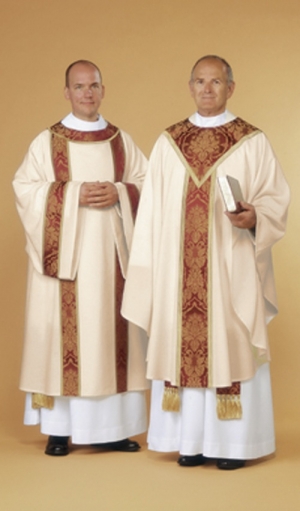
A dalmatic is a garment used as a Christian Church liturgical vestment. It takes the form of a long, wide-sleeved garment, often open at the sides, having become almost identical with the tunicle. The colour of the dalmatic varies according to when it is worn within the Church calendar (see: Christian liturgical colours).