
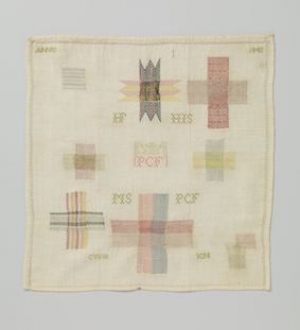
In decorative needlework, the word sample is used to describe a simple or randomly worked form of sampler. The intention of making a sample is to try out various techniques, designs or lay-outs, or to remind the worker of the technique and/or patterns, or to show them to a few others.
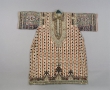
Raf-Raf is a town on a headland southeast of Bizerte, Tunisia. It is famous for its embroidered bridal costumes, especially the tunics and waistcoats. The wedding wardrobe of the Raf-Raf women consists of several types of outfits worn on different days.
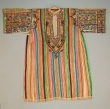
Raf-Raf is a small town, southeast of Bizerte, Tunisia. It is famous for its regional bridal costume and its everyday tunic or chemise for women (suriya mabdu). This latter style of dress was still being worn at the end of the twentieth century, but its use is rapidly dying out. The suriya mabdu is made in various forms. Basically, it is a rectangular garment, previously of linen, now of cotton, with a decorative plastron.
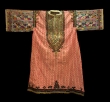
Raf-Raf is a small town on a headland southeast of Bizerte, Tunisia. It is famous for its embroidery. The embroidery is used for its elaborate, everyday tunics for women (suriya mabdu) and for the elaborate regional Raf-Raf wedding outfit. The evolution of the Raf-Raf costume has been described by the Tunisian costume historian, Aziza ben Tanfous, in Les Costumes Traditionnels Feminins de Tunisie (1978:60, pls. 13-17).

Mercerisation is a treatment of raw cotton or cotton yarns. The individual fibres are made to swell in a strong alkaline, which is afterwards neutralised in a special acid bath. This process causes the fibres to permanently swell, which straightens and strengthens them while giving them a shiny or lustrous appearance.
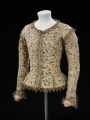
The Layton jacket is an example of an early seventeenth century English woman’s jacket (sometimes described as a waistcoat, using the seventeenth century meaning of the word, namely a coat that came to the waist). It is an example of the type of garment worn on formal occasions by English women at the end of the sixteenth and in the early seventeenth centuries.
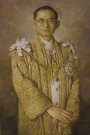
Cha long phra ong khrui is a Thai term used to describe a very formal coat worn by the Thai king on important ceremonial occasions. The coat is basically made from a gold net embellished with gold embroidery. The garment is classed as a sua khrui, which means the ‘official or insignia robe,’ but the term cha long phra ong khrui refers specifically to the king’s version.
More...
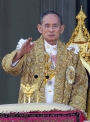
Sua khrui is a term that was used in Thailand to describe a particular type of court garment that indicated the rank of the male wearer. It is a loose-fitting outer garment with long sleeves. It is open down the front and usually reaches to the knees or mid-calves.
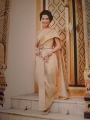
In 1960, King Bhumibol and Queen Sirikit of Thailand embarked on an extended tour of the world. As part of this trip the Queen wanted to wear Thai as well as Western style garments. It was soon realised, however, that the Thai court dress for women, especially that worn from the early twentieth century, was a mixture of Western and Thai elements and this dress was regarded as unsuitable, because visually it was not Thai enough.

The Queen Sirikit Museum of Textiles is a specially designed textile and clothing museum that was opened on 9th May 2012. It is named after Queen Sirikit, wife of the former King, and is housed in the grounds of the Grand Palace, Bangkok. The museum contains textiles and garments from Southeast, South and East Asia with an emphasis on the textiles and clothing associated with Thailand and its royal court.
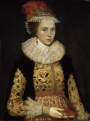
Margaret Browne (Brown, Brawne; c. 1590-1641) was the daughter of a wealthy London merchant and the wife of Francis Layton (1577-1661) of West Layton and Rawdon (W. Yorkshire, England). Her portrait, probably by the Belgian artist, Marcus Gheeraerts (the Younger; 1561-1636) and painted in about 1620, together with the embroidered jacket actually worn by the sitter, are now in the Victoria and Albert Museum, London.