

Lefkara lace, also known as Lefkaritika and Lefkaritika lace, is a form of pulled thread embroidery with satin stitch details. It is often classed as a form of embroidered lace. Lefkaritika lace originally comes from the village of Lefkara, Cyprus, and is locally called tayiadha (compare Italian punto tagliato).
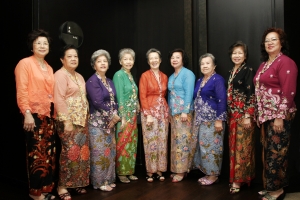
A kebaya is a traditional Malayan woman's garment in the form of a long-sleeved, hip-length blouse. It is worn with a sarong. Kebayas are often decorated with some form of embroidery, such as cutwork, needlepoint lace or stitched embroidery (both hand and machine forms). The blouse is often fastened down the front with brooches, known as peniti or kerosang/kerongsang, instead of buttons.
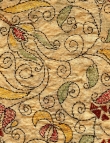
A kantha stitch is identical to a running stitch, and used for (Indian) kantha work. GVE
Housewife is an English (UK) term to describe a pocket-size sewing kit containing buttons, needles, pins, scissors, threads and other sewing accessories. The term is often (but not exclusively) associated with sewing kits issued to the British military. In the mid-eighteenth century, it was written huswife or hussive and these forms can still be found at the end of the twentieth century (Shorter Oxford English Dictionary).
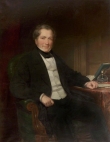
John Heathcoat was an English engineer from Duffield (Derbyshire), who developed various machines for textile production. During his apprenticeship he made an improvement to the warp loom so that it could produce mitts (fingerless gloves) with a lace-like appearance.

The Hardwick Hall collection is some four hundred years old. It is the largest collection of sixteenth and seventeenth century embroidery, laces, tapestry and other textiles to have been preserved by a single, English private family. The objects include bedcovers, pillow covers, slips (including examples embroidered by Mary Queen of Scots), table covers (such as the Tobit table carpet), upholsteries and wall hangings.
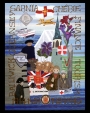
The Guernsey tapestry is a commemorative embroidery illustrating one thousand years of Guernsey (Channel Islands, UK) history. It is officially known as the Bailiwick of Guernsey Millennium tapestry (BGMT).
Grounding is a nineteenth century English term referring to the act of filling in the embroidery background after the main pattern is worked.
Grounding is a medieval and later English term (both UK and USA) referring to the stitched background area of a pattern. It is also called the ground.
A ground stitch is a generic name for any stitch used to fill in the background or ground of an embroidery. The act of working any of such stitches is called grounding. GVE
More...
The ground (also called grounding) is the stitched background area to a decorative design. It should be distinguished from the term ground material. GVE

The Great Tapestry of Scotland is a commemorative embroidery illustrating 12,000 years of Scottish history, from prehistoric times to the present. The Tapestry was commissioned by the fiction writer, Alexander McCall Smith, after seeing the Prestonpans tapestry. The design of the Great Tapestry of Scotland is by Alistair Moffat and the artist, Andrew Crummy.
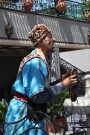
The Gnawa are an ethnic minority in Morocco, whose ancestors can be traced back to slaves that were moved from sub-Saharan Africa, notably Burkina Faso, Mali and Senegal. The outfits worn by many Gnawa musicians in Morocco include belts and bandoleers decorated with applied work with cowrie shells. In addition, some wear a cap decorated with a long tassel, some embroidery and again cowry shells.

The Embroiderers' Guild of America (EGA) is a society that started in New York in 1958 as a branch of the (British) Embroiderers' Guild. In 1970 the EGA withdrew from its London association and became independent.